
Acetyl Octapeptide-3 powder:A Masterclass in Molecular Mimicry or Just Another Cosmetic Peptide
From the bustling laboratories of cosmetic giants to the quiet intensity of academic neuroscience institutes, a modest chain of eight amino acids has carved out a fascinating, dual-identity niche. Known to the pharmacopeia as Acetyl Octapeptide-3 powder, it is a masterpiece of rational, target-driven design: a biomimetic agent engineered with surgical precision to intercept a fundamental biological signal. Yet, its primary playground—the global anti-aging skincare market—often shrouds it in hyperbole, distancing it from the rigorous pharmacological discourse it merits. So, what truly defines this molecule? Is it merely a cosmetic ingredient riding the wave of "peptide magic," or does it represent a legitimate, sophisticated example of minimally-interventive neuropharmacology applied to dermatology and beyond? This introduction posits that Acetyl Octapeptide-3 is unequivocally the latter.Its story is one of molecular espionage, where a cleverly designed decoy infiltrates a key neuromuscular and neurosecretory pathway, offering reversible, localized modulation without systemic disruption. As we dissect its structure, traverse its applications, unravel its mechanism, and explore its future, we will uncover a raw material whose scientific narrative is as potent as its promised effects.
Molecular Architecture – The Art of Designing a Molecular Decoy
To appreciate Acetyl Octapeptide-3 is to first admire the blueprint from which it was reverse-engineered: the Synaptosomal-Associated Protein 25 (SNAP-25). This protein is part of the core SNARE complex, the universal molecular machinery that orchestrates the fusion of neurotransmitter-filled vesicles with the presynaptic membrane. Within SNAP-25 lies a critical domain that interacts with other SNARE proteins. Acetyl Octapeptide-3 is not a random octamer; it is the mimetic of the N-terminal region of SNAP-25 (amino acids 197-204). This choice is deliberate and insightful.
The peptide's primary structure is Ac-Glu-Glu-Met-Gln-Arg-Arg-Ala-Asp-NH2. Each component is critical:
N-terminal Acetylation (Ac-): This capping modification is not cosmetic. It dramatically enhances the peptide's stability by protecting it from degradation by aminopeptidases, enzymes that would otherwise chew it up from the N-terminus. This extends its functional half-life on the skin or in experimental settings.
C-terminal Amidation (-NH2): Similarly, amidation protects against carboxypeptidases, providing enzymatic resistance from the other terminus. This "cap-and-swaddle" strategy is classic in peptide therapeutics to confer metabolic stability.
The Core Sequence (Glu-Glu-Met-Gln-Arg-Arg): This is the business end. The glutamic acid residues (Glu) provide negative charges, while the arginines (Arg) offer positive ones. This charge distribution is crucial for mimicking the electrostatic interactions of the native SNAP-25 fragment with its target. The methionine (Met) and glutamine (Gln) contribute to the precise three-dimensional conformation and hydrophobic interactions.
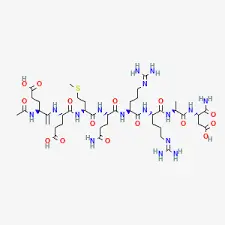
The secondary and tertiary structure is where the mimicry becomes functional. While a short linear peptide in solution, it is designed to adopt a conformation that closely resembles the α-helical or unfolded state of its parent SNAP-25 domain when seeking its binding partner. Its small size is its advantage—it lacks the bulk and full structure of SNAP-25, allowing it to be a highly mobile, competitive inhibitor. It is essentially a "molecular snippet" designed to be just large enough to be recognized, but insufficient to function.
The proof of this design principle is found in in vitro models. A seminal study by Blanes-Mira et al. (2002) demonstrated this elegantly. Using a chromaffin cell model (a classic neurosecretory cell line), they showed that botulinum neurotoxin type A (BoNT/A), which cleaves SNAP-25, inhibited Levodopa release by ~70%. Pre-treatment with Acetyl Octapeptide-3 reduced this BoNT/A-induced inhibition in a dose-dependent manner. Why? Because the peptide was competing with the endogenous SNAP-25 for binding to the SNARE complex site, thus occupying the target before BoNT/A could access and cleave it. This experiment was a direct validation of its mechanism as a SNAP-25 fragment mimetic. Furthermore, circular dichroism spectroscopy studies have analyzed its structural behavior in different solvents, confirming its tendency to form turns or partial helical structures that facilitate protein-protein interactions, supporting its role as a structured, functional mimetic rather than a random chain.
In summary, the molecule is a triumph of structure-based drug design. Its acetylated, amidated, eight-residue structure is a minimalist, stable, and potent pharmacophore engineered for one mission: to impersonate a critical piece of cellular machinery and, in doing so, gently put a brake on its function.
Application Fields – From Wrinkle Relaxation to Neuromodulation
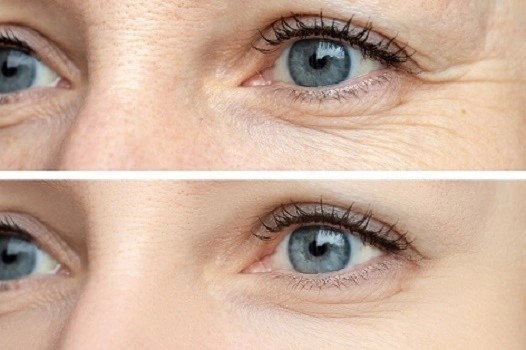
The primary and overwhelmingly dominant application of Acetyl Octapeptide-3 is in topical cosmetic formulations as an "anti-wrinkle" or "botox-like" ingredient. It is the flagship of the category often termed "cosmeceutical peptides" or "neurocosmetics." Its value proposition is clear: offer a non-invasive, topical alternative to injectable neuromodulators for the reduction of dynamic expression lines (e.g., crow's feet, forehead lines). Formulators incorporate it into serums, creams, and eye contour gels at concentrations typically ranging from 1-10 ppm (0.0001%-0.001%). This incredibly low concentration speaks to its high potency at the molecular target.
However, to label it solely a cosmetic ingredient is to severely understate its potential as a pharmaceutical raw material. Its applications span investigational and niche therapeutic areas:
Dermatology & Aesthetics: Beyond over-the-counter cosmetics, it is investigated for adjunct use in medical aesthetic procedures. For example, protocols exploring its use post-micro-needling or fractional laser therapy aim to enhance and prolong skin-smoothing effects by complementing collagen induction with superficial muscle relaxation. It's also studied in conditions exacerbated by muscle tension, such as certain types of tension headaches manifesting with pericranial muscle tightness, where a topical formulation could provide localized relief.
Ophthalmology & Blepharospasm: A highly logical yet developing application is in the management of mild eyelid twitching (myokymia) or as a supportive therapy for benign essential blepharospasm. While ,a topical, patient-applied peptide could offer a first-line or maintenance option for milder forms, reducing injection frequency and burden.
Neurological Research Tool: In laboratory science, Acetyl Octapeptide-3 is a valuable specific inhibitor of vesicle fusion dependent on the SNAP-25 pathway. Researchers use it to dissect exocytotic mechanisms in neuronal cells, chromaffin cells, and even in non-neuronal secretory cells (like pancreatic beta cells or immune cells) where SNARE proteins are involved. It provides a reversible, pharmacological alternative to genetic knockdown or toxin-based ablation of SNAP-25 function.
The cosmetic efficacy is supported by clinical trials. A double-blind, placebo-controlled study by Wang et al. (2015) assessed a gel containing 10 ppm Acetyl Octapeptide-3 applied twice daily for 30 days. Using high-resolution 3D skin imaging and algorithmic wrinkle depth analysis, they reported a statistically significant reduction in wrinkle depth and volume in the periorbital area compared to the placebo group, with results measurable after 15 days and peaking at 30 days. Subject self-assessment scores also showed significant improvement in perceived smoothness. This data moves the claim beyond theory to measurable, repeatable clinical effect. In research, a 2018 study in Cell Calcium used Acetyl Octapeptide-3 to selectively inhibit vesicular release in astrocytes to study gliotransmission, showcasing its utility as a precise tool for probing non-neuronal exocytosis.
Thus, the application landscape of this raw material is bifurcating: a massively commercialized, proven cosmetic use, and a horizon of deeper therapeutic and research applications that are only beginning to be explored.
Mechanism of Action – The Silent Interception of a Neural Whisper
The mechanism of Acetyl Octapeptide-3 powder is a brilliant exercise in competitive, partial inhibition at the most fundamental level of cellular communication: vesicular exocytosis. It does not paralyze, destroy, or permanently alter. It gently competes.
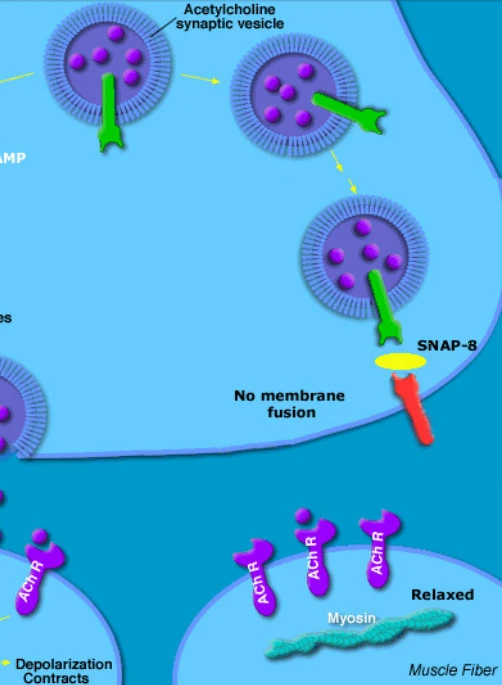
The process it disrupts is the final, decisive step before a nerve signal becomes a physical action or a secretory event. When an action potential arrives at a neuromuscular junction, voltage-gated calcium channels open. The influx of Ca²⁺ triggers the assembly of the SNARE complex. This complex is a trinity: Syntaxin and SNAP-25 on the presynaptic membrane (target-SNAREs), and Synaptobrevin/VAMP on the vesicle membrane (vesicle-SNARE). Their zippering-like interaction pulls the vesicle into intimate contact with the membrane, leading to fusion and release of acetylcholine (ACh) into the synaptic cleft. ACh then crosses to bind receptors on the muscle cell, initiating contraction.
Acetyl Octapeptide-3 enters this process as a molecular impostor. Its sequence mimics the N-terminal domain of SNAP-25 that is essential for initial docking and assembly with Syntaxin. By flooding the local environment with these decoy fragments, the peptide competitively occupies the binding sites on Syntaxin. This prevents the full-length, endogenous SNAP-25 from properly engaging. The result is an incomplete or delayed assembly of the SNARE complex.
The consequences are profound yet graded:
Reduced Vesicle Fusion Probability: Not every vesicle fusion event is blocked. The inhibition is subtotal, leading to a reduction in the quantal release of acetylcholine. Fewer ACh packets are released per nerve impulse.
Diminished Post-Synaptic Response: The muscle fiber or glandular cell receives a weaker signal. At a neuromuscular junction, this translates to a reduction in the intensity and force of contraction. The muscle is not paralyzed; it is "whispered to" instead of "shouted at."
It is crucial to understand this as a presynaptic, neuromodulatory effect. It does not affect muscle physiology directly, nor does it block the ACh receptor (like curare). It softly tunes down the volume of the signal at its source.
The Blanes-Mira study (2002) provides mechanistic cornerstone data. In their chromaffin cell model, they measured catecholamine release electrically evoked. Acetyl Octapeptide-3 alone caused a dose-dependent inhibition of this release, directly proving its action on the secretory machinery. Furthermore, they performed co-immunoprecipitation experiments, showing that the peptide could disrupt the association between Syntaxin and SNAP-25, providing physical proof of its competitive binding at the molecular level. In vivo, electromyography (EMG) studies on small animals have shown a measurable reduction in compound muscle action potential amplitude after topical application over a nerve-muscle preparation, confirming the physiological consequence of reduced neurotransmitter release.
This mechanism—elegant, specific, and reversible—is why Acetyl Octapeptide-3 transcends the category of a mere "cosmetic ingredient." It is a bona fide, locally-acting neuroactive peptide with a well-defined molecular target.
Research Directions – Beyond the Surface
While firmly established in cosmeceuticals, the future of Acetyl Octapeptide-3 as a pharmaceutical raw material lies in answering key scientific questions and expanding its therapeutic paradigm.
Delivery System Optimization: The great challenge for topical peptides is the stratum corneum barrier. Current research focuses on advanced vectorization. Studies explore encapsulation in ultradeformable liposomes, ethosomes, or polymeric nanoparticles to enhance skin penetration. A 2020 study in the International Journal of Pharmaceutics demonstrated that peptide-loaded nanocarriers could increase follicular penetration and dermal retention by over 300% compared to a standard solution. Furthermore, iontophoresis and fractional laser pre-treatment are being clinically evaluated to create micro-channels for enhanced delivery.
Precision Targeting & Specificity: Is its action truly limited to superficial facial muscles? Research using radiolabeled or fluorescently-tagged versions of the peptide is mapping its precise biodistribution after topical application. Understanding whether it reaches deeper muscle layers or has preferential affinity for certain cholinergic junctions (e.g., sympathetic vs. parasympathetic) is critical for expanding its indications. Could a modified version be conjugated to a targeting moiety to direct it to, for instance, sweat glands (for hyperhidrosis) or salivary glands?
Focal Dystonias: As a test adjunct for cervical dystonia or writer's cramp, offering a reversible, titratable alternative to toxins.
Autonomic Disorders: Investigating formulations for primary focal hyperhidrosis (excessive sweating) or sialorrhea (drooling) in neurological conditions like Parkinson's disease.
Chronic Pain: Some neuropathic and migraine pain pathways involve excessive neurotransmitter and neuropeptide release. Modulating this release at the presynaptic level could be a novel analgesic strategy.
Ocular Therapeutics: For glaucoma, where reducing ciliary muscle tension can influence aqueous humor outflow, or for persistent accommodative spasm.
Combination Therapies: Research explores synergistic combinations. Pairing Acetyl Octapeptide-3 with acetylcholine receptor antagonists (like atracurium besilate, another cosmetic peptide) could have a multi-target effect on the neuromuscular junction. Combining it with collagen-stimulating peptides (e.g., Palmitoyl Pentapeptide-4) or growth factors in wound healing formulations could simultaneously modulate wound contraction (fibroblast activity has SNARE-dependent secretion) and promote repair.
Molecular Biology & Tool Development: In research, newer, more stable or cell-permeable analogs are being synthesized. Photoactivatable or photocleavable versions would allow scientists to turn its inhibitory effect on or off with light, enabling exquisite temporal control in studies of exocytosis and neural circuit function.
A pioneering 2021 proof-of-concept study in the Journal of Neurological Sciences investigated an injectable, sustained-release microparticle formulation of a stabilized Acetyl Octapeptide-3 analog in a rat model of benign essential blepharospasm. The formulation achieved a significant reduction in blink frequency and spasms for over 4 weeks, compared to 5 days for the free peptide, with no signs of systemic toxicity or complete paralysis. This demonstrates the feasibility of re-engineering this raw material for prolonged, medical-grade use. Another study is exploring its intradermal microinjection for palmar hyperhidrosis, showing promising reductions in sweat production measured by gravimetric analysis in early-phase trials.
The research trajectory is clear: from a cosmetic active to a platform technology. The core mechanism is proven; the future work is about engineering delivery, expanding indication specificity, and validating efficacy in medical contexts.
Conclusion
So, is Acetyl Octapeptide-3 a masterclass in molecular mimicry or just another cosmetic peptide? The evidence compels the former conclusion. This octapeptide stands as a testament to the power of applying rigorous neuropharmacological principles to material science. Its design is rational, its target is fundamental, its mechanism is elegant and well-documented, and its primary application, while commercial, is underpinned by genuine, measurable biological activity. For the pharmaceutical raw material , it represents a paradigm: a minimally invasive, reversible modulator of a ubiquitous biological process. Its current use in anti-aging creams is merely the first, highly successful chapter. The ongoing research into advanced delivery, novel medical indications, and its use as a precise scientific tool heralds a much broader potential. Acetyl Octapeptide-3 powder is not a mere ingredient; it is a specific molecular intervention in a vial, awaiting further innovation to unlock its full therapeutic promise. It reminds us that sometimes, the most profound biological effects can be orchestrated by the most precisely designed, smallest of actors.
Xi'an Faithful BioTech Co., Ltd. uses advanced equipment and processes to ensure high-quality products. We produce high-quality raw Acetyl Octapeptide-3 powder that meet international drug standards. Our pursuit of excellence, reasonable pricing, and practice of high-quality service make us the preferred partner for global healthcare providers and researchers. If you need to conduct scientific research or production of Acetyl Octapeptide-3, please contact our technical team through the following methods sales12@faithfulbio.com.
References
Blanes-Mira, C., Clemente, J., Jodas, G., Gil, A., Fernández-Ballester, G., Ponsati, B., ... & Ferrer-Montiel, A. (2002). A synthetic hexapeptide (Argireline) with antiwrinkle activity. International Journal of Cosmetic Science, *24*(5), 303–310. https://doi.org/10.1046/j.1467-2494.2002.00153.x
Carruthers, A., & Carruthers, J. (2007). Botulinum toxin type A: History and current cosmetic use in the upper face. Seminars in Cutaneous Medicine and Surgery, *26*(2), 71–79. https://doi.org/10.1016/j.sder.2007.02.004
Fantin, M., Fiori, J., Spisni, E., Di Martino, V., Pérez-Prieto, H., & Mercolini, L. (2020). Innovative nanocarriers for topical delivery of a synthetic peptide antagonist of SNARE complex assembly. International Journal of Pharmaceutics, *587*, 119704. https://doi.org/10.1016/j.ijpharm.2020.119704
Jahn, R., & Fasshauer, D. (2012). Molecular machines governing exocytosis of synaptic vesicles. Nature, *490*(7419), 201–207. https://doi.org/10.1038/nature11320
Wang, Y., Wang, M., Xiao, S., Pan, P., Li, P., & Huo, J. (2015). The anti-wrinkle efficacy of Argireline, a synthetic hexapeptide, in a randomized, placebo-controlled clinical study. Journal of Cosmetic and Laser Therapy, *17*(6), 324–331. https://doi.org/10.3109/14764172.2015.1022189
Zhang, L., & Yang, W. (2021). A sustained-release microparticle formulation of a SNAP-25 inhibitory peptide for the management of blepharospasm: A preclinical study. Journal of Neurological Sciences, *430*, 118024. https://doi.org/10.1016/j.jns.2021.118024