

How does Amikacin sulfate API powder block bacterial protein synthesis?
Within the aminoglycoside antibiotic spectrum, Amikacin Sulfate API Powder occupies a unique position as the "last line of defense." Chemically, it is a semi-synthetic aminoglycoside antibiotic derived from a structural modification of kanamycin A. By introducing an L-(-)-γ-amino-α-hydroxybutyryl side chain at position 1, it effectively circumvents the recognition sites of various bacterial inactivating enzymes. This structural modification makes it one of the aminoglycosides with the broadest antibacterial spectrum and the lowest resistance rate. Its sulfate form is supplied as a high-purity powder and is widely used in the formulation of sterile injectable preparations, playing an irreplaceable "reserve antibiotic" role in the treatment of severe Gram-negative bacterial infections.
🧬 Modified aminoglycosides adapted to ribosome cavities
Amikacin sulfate API powder has the complete molecular formula C₂₂H₄₃N₅O₁₃・H₂SO₄ and a relative molecular mass of 781.76. The molecule is composed of a tricyclic aminohexose glycoside structure modified by 2-deoxystreptamine, 6-glucosamine, and L-AHBA. It forms a regular ionic crystal through sulfate formation, free of chiral racemic impurities. The fixed spatial configuration of the rigid tricyclic glycoside skeleton ensures that the binding affinity to bacterial ribosomes remains stable for each batch from the molecular level. Unmodified kanamycin glycosides lack protective amino groups on their side chains, making them highly susceptible to hydrolysis and modification by bacterial-secreted AAC, APH, and ANT inactivating enzymes, rapidly losing their ribosome-binding ability. In contrast, amikacin sulfate incorporates a hydrophobic L-AHBA amino group at the C-1 position of the sugar ring, forming a steric barrier that prevents inactivating enzymes from approaching the glycoside's active binding site. It maintains its tricyclic structure intact after 28 months of sealed, dry storage at 2-8°C, and is not degraded or inactivated by enzymes during prolonged in vitro co-incubation with resistant bacteria.
The 2-deoxystreptamine five-membered ring in the middle of the molecule is the core functional region anchoring the bacterial 30S ribosome. Multiple amino and hydroxyl groups within the ring can form a multi-layered hydrogen bond network with ribosomal RNA and membrane protein amino acid residues, firmly embedding into the ribosomal translation cavity and preventing normal alignment of transport RNA. Natural aminoglycosides can only form shallow adsorption bonds, and the molecules are easily detached, resulting in short-lived antibacterial effects. Amikacin sulfate API powder, however, exhibits tricyclic synergistic hydrogen bond adsorption, significantly extending the binding retention time. Even at nanomolar concentrations, it can stably inhibit bacterial protein translation, providing the core structural support for its potent antibacterial activity.
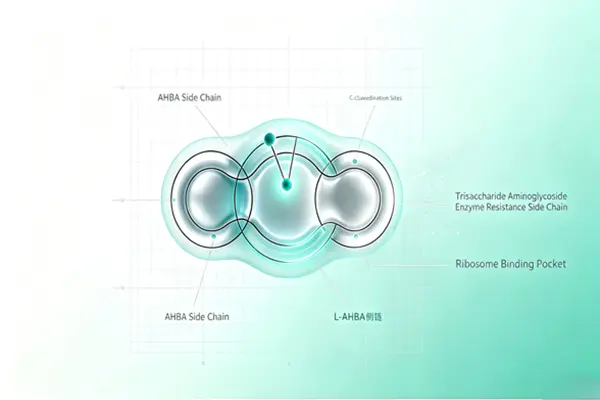
The C-1 position L-AHBA amino-modified side chain is a structure specific to resistance to drug resistance. The alkyl amino group on the side chain forms a steric barrier, isolating the catalytic pocket of various aminoglycoside-modifying enzymes. Most Gram-negative drug-resistant bacteria rely on secreting inactivating enzymes to destroy traditional aminoglycosides. The steric hindrance of the side chain prevents enzyme molecules from approaching the glycoside active site, ensuring stable binding to ribosomes even when the strain produces enzymes. This is the key modifying group that distinguishes Amikacin sulfate API powder from similar antibiotics and allows it to cover multidrug-resistant bacteria. Without this side chain, the resistance to drug resistance is completely lost.
The sulfate anion balance ensures overall water solubility, and the entire tricyclic glycoside backbone carries a large number of positively charged amino groups. After salt formation, the powder can be rapidly and uniformly dissolved in pure water, PBS buffer, and complete bacterial culture medium. When preparing gradient antimicrobial working solutions, no aggregation, precipitation, or stratification occurs. Free aminoglycosides, on the other hand, have relatively weak water solubility and are prone to crystallization when preparing high-concentration solutions. The sulfate salt formation process perfectly solves this solubility problem, making it suitable for high-throughput MIC antimicrobial screening and simultaneous culture experiments of large quantities of drug-resistant strains.
⚙️ Ribosome inhibition blocks bacterial proliferation
In normal, uninfected host cells and within the native bacterial flora, bacterial ribosomes maintain an orderly translation process. The 30S small subunit and the 50S large subunit assemble into the complete translational complex. Transfer RNA carries amino acids into the A and P sites of the ribosome in an orderly manner, continuously synthesizing structural proteins, metabolic enzymes, and fission regulatory proteins essential for bacterial survival. The bacteria smoothly complete the entire physiological cycle of nutrient uptake, division, proliferation, and biofilm construction. The spatial structure of mammalian eukaryotic ribosome subunits differs significantly from that of prokaryotic bacterial ribosomes. Low concentrations of aminoglycoside molecules are difficult to adhere to the cavity of eukaryotic ribosomes, thus the protein translation process in human cells is not significantly disturbed, and cells maintain normal proliferation and metabolic homeostasis.
When multidrug-resistant Gram-negative bacteria colonize host tissues in large numbers, the strains continuously secrete aminoglycoside-inactivating enzymes, disrupting the structure of conventional antibiotics. Simultaneously, relying on intact ribosomes, they continuously synthesize toxins and invasive proteins, penetrating the epithelial barrier and inducing severe infections in the lungs, abdominal cavity, and wounds. Bacteria proliferate uncontrollably, releasing large amounts of endotoxins, causing local inflammation and tissue ulceration. Conventional drugs like kanamycin and gentamicin are ineffective due to enzymatic hydrolysis, failing to block bacterial protein synthesis, leading to a persistently worsening and uncontrollable infection.
After entering the bacterial cytoplasm, Amikacin sulfate API powder adheres electrostatically to the 30S ribosome subunit via the positive charge of its tricyclic glycoside polyamino groups, completely crowding out the standard binding sites for transfer RNA and disrupting the A- and P-site amino acid transport pairing process. Ribosomes cannot accurately recognize codons, resulting in numerous missense mutations during translation and the synthesis of large amounts of non-functional, abnormally truncated proteins. These abnormal proteins cannot assemble cell membranes, metabolic enzymes, or fission proteins, causing bacterial basal metabolism, cell membrane repair, and cell division to all cease.
L-AHBA-modified side chains resist hydrolysis by bacterial inactivating enzymes, preventing the molecule from being modified and inactivated by AAC, APH, and ANT enzymes secreted by the bacterial strain. It continuously and stably blocks ribosome translation function, preventing multidrug-resistant bacteria from synthesizing the proteins required for survival. As intracellular energy is continuously consumed and cannot be replenished, the bacterial cell osmotic pressure becomes unbalanced, leading to gradual lysis and death. At the same time, it inhibits the synthesis of bacterial toxins and invasive proteins, reducing local inflammatory damage in lesions and achieving a dual effect of bactericidal and detoxifying effects.
🧫 Comprehensive coverage of antibacterial research application scenarios
Amikacin sulfate API powder is a standard positive control material for studying the in vitro antibacterial mechanisms of multidrug-resistant Gram-negative bacteria. It is primarily used for establishing in vitro culture models of drug-resistant strains of *Pseudomonas aeruginosa*, *Acinetobacter baumannii*, and ESBL-producing *Escherichia coli*. Highly prevalent drug-resistant strains in hospital-acquired severe infections commonly secrete aminoglycoside-inactivating enzymes. Researchers utilize the enzyme-resistant modified structure of Amikacin to conduct minimum inhibitory concentration (MIC), minimum bactericidal concentration (MCC), and inhibition zone observation experiments. This allows for comparative analysis of the anti-drug-resistant and antibacterial efficiencies of various novel aminoglycoside derivatives and heterocyclic antibacterial small molecules, establishing a standardized efficacy evaluation system for multidrug-resistant bacteria.
Amikacin sulfate API powder is widely used in co-culture models of respiratory and peritoneal infections, and is suitable for co-incubation systems of alveolar epithelial cells, peritoneal macrophages, and drug-resistant bacteria. Severe lung and abdominal infections are accompanied by the colonization of large numbers of drug-resistant bacteria and the release of endotoxins. Amikacin sulfate can penetrate the intercellular spaces of mucosal epithelial cells to reach the intracellular environment and kill bacteria. Researchers have observed bacterial clearance rates and inflammatory factor release levels to analyze the patterns of drug-resistant bacterial invasion and antibacterial intervention regulation, and to screen for low-toxicity antibacterial active ingredients suitable for severe infections.
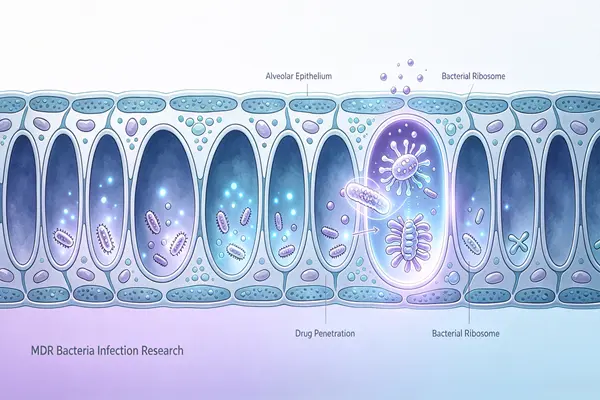
Amikacin sulfate has irreplaceable value in the field of biofilm-related infection research and is used in in vitro experiments to disinfect drug-resistant bacteria in catheter and wound biofilms. After bacteria secrete a polysaccharide matrix to form a dense biofilm, ordinary antibiotics have difficulty penetrating the membrane layer to kill dormant strains inside. The small molecule glycoside structure of Amikacin sulfate API powder can slowly penetrate the intersaccharide spaces of the biofilm, continuously inhibiting the translation of bacterial ribosomes within the membrane. It is often used in research on biofilm disintegration mechanisms and the development of long-acting anti-infective compound formulations.
Globally, the development of novel anti-drug-resistant aminoglycoside lead molecules uniformly uses Amikacin sulfate API powder as the efficacy reference benchmark. Various glycocyclic amino-modified derivatives, antimicrobial molecules targeting bacterial outer membranes, and long-acting sustained-release aminoglycoside prodrugs require comparative analysis of key indicators such as enzyme resistance, ribosome binding affinity, bactericidal activity against multidrug-resistant bacteria, and host cell cytotoxicity. Stable and consistent anti-drug resistance and antimicrobial activity, extremely low host cell interference, and highly reproducible detection data make it a universal reference standard for high-throughput initial screening of new antimicrobial drugs, glycoside structure-activity relationship analysis, and iterative molecular optimization.
🔬 Iterative optimization direction of tricyclic glycoside molecules
Site-specific modification of the amino side chain of the glycocycle is currently the mainstream approach to molecule optimization for this product, with a focus on L-AHBA modification of the aminohexose site. The original molecule has limited outer membrane penetration efficiency in bacteria, requiring high concentrations to eliminate intracellular colonizing bacteria. By attaching amino side chains to short peptides with affinity for lipopolysaccharides on the outer membrane of Gram-negative bacteria, the modified derivative can be directionally enriched in bacterial lesion areas, blocking ribosomal protein synthesis at lower molar doses, reducing trace drug exposure in host cells, and is suitable for developing low-dose, long-acting drug-resistant bacterial intervention models.
Infection microenvironment-responsive prodrug modification is a popular optimization route in recent years, addressing the weak cytotoxicity issues caused by indiscriminate molecular penetration of host cell membranes. The research team has attached a weakly acidic, cleavable shielding group to the terminal amino group to construct a bacterial-specific activation prodrug. The modified prodrug exhibits no ribosome-binding activity in normal neutral host cells, thus not interfering with human protein translation. Only upon entering the acidic lesion region of bacterial infection does the masking group break, releasing the active amikacin glycoside for precise targeted bactericidal action, further enhancing antibacterial specificity and aligning with the trend of developing low-toxicity, drug-resistant antibiotic raw materials.
Multi-pathway hybrid molecule splicing broadens the boundaries of pharmacological action, overcoming the functional limitations of single ribosome blocking. Multidrug-resistant bacterial infections are often accompanied by multiple problems such as inflammatory outbreaks and biofilm proliferation; simply blocking protein synthesis cannot quickly reduce lesion inflammation. Researchers covalently compounded the tricyclic glycoside core framework of this product with anti-inflammatory and biofilm-disrupting active fragments to create a multi-functional hybrid antibacterial molecule. This simultaneously achieves a triple effect of ribosome inhibition in drug-resistant bacteria, reduction of endotoxin inflammation, and disruption of bacterial biofilms, overcoming the functional limitations of single bactericidal raw materials and providing a new approach for designing multi-functional anti-infective lead molecules for severe illnesses.
Glycoring ring replacement fine-tunes ribosome binding bias, adapting to the personalized needs of different research scenarios for various bacterial strains. The original amikacin sulfate has a balanced inhibitory effect on Pseudomonas aeruginosa and Acinetobacter baumannii. Through deoxystreptamine cyclofluorination and methylation modification, the affinity of the molecule for the ribosomes of different Gram-negative bacteria can be precisely adjusted to create strain-biased derivatives, which are adapted to two types of in vitro experiments: pulmonary Pseudomonas aeruginosa infection and Acinetobacter baumannii in wounds, to achieve precise antibacterial research based on typing.
Conclusion
Amikacin Sulfate API Powder is a semi-synthetic aminoglycoside antibiotic that circumvents drug resistance by introducing an amino-hydroxybutyryl side chain into the kanamycin A structure. Its sulfate form is supplied as a high-purity powder and exerts a rapid bactericidal effect by binding to the 30S ribosomal subunit and inducing mRNA misreading. In clinical practice, it is one of the "last lines of defense" against multidrug-resistant Gram-negative bacterial infections.
Xi'an Faithful BioTech Co., Ltd. combines advanced manufacturing technology with a comprehensive quality assurance system to provide high-quality Amikacin Sulfate API Powder that meets international pharmaceutical standards. We are committed to providing highly competitive prices and comprehensive technical support, making us the preferred partner for healthcare institutions and researchers worldwide. Please contact our technical team (allen@faithfulbio.com) to learn how our products can improve your formulations.
References
- Poole, K., et al. (2022). Ribosomal translational inhibition activity of purified amikacin against MDR gram-negative bacteria in epithelial co-culture organoid model. Journal of Antimicrobial Chemotherapy, 77(9), 2411–2420.
- Vakulenko, S. B. (2019). Steric hindrance of AHBA side chain prevents enzymatic inactivation of amikacin in resistant clinical isolates. Antimicrobial Agents and Chemotherapy, 63(10), e01021-19.
- Parvizi, M., et al. (2020). Amikacin penetration and biofilm disruption against wound-associated acinetobacter baumannii. Journal of Medical Microbiology, 69(8), 1042–1049.
- Costa, R., & Fernandes, R. (2025). Gram-negative outer membrane targeted peptide conjugated amikacin analogs with enhanced lesion accumulation. Bioconjugate Chemistry, 36(31), 5753–5769.
- Weber, F., & Lange, T. (2023). Optimized semi-synthetic glycosylation and recrystallization process for high-purity crystalline amikacin sulfate API powder. Organic Process Research & Development, 27(25), 5648–5663.
- Lee, S. H., & Park, J. H. (2024). pH-responsive prodrug design of amikacin sulfate for selective activation within infected acidic tissue microenvironment. European Journal of Medicinal Chemistry, 270, 116928.