

How does Givinostat hydrochloride inhibit HDAC and slow the progression of muscle damage?
In the landscape of rare disease drug development, Givinostat hydrochloride represents a novel disease-modifying strategy. It is an oral, small-molecule panhistin deacetylase (HDAC) inhibitor that targets not a single gene mutation product, but rather the abnormally activated HDAC enzyme system in the pathological process of Duchenne muscular dystrophy (DMD). By inhibiting overactive HDAC, this molecule aims to restore the regenerative capacity of muscle cells, reduce inflammation and fibrosis, thereby slowing disease progression on multiple levels.
🧬 Stable molecular configuration of naphthyl isohydroxamic acid
The core pharmacodynamic unit of Givinostat hydrochloride comprises a diethylaminomethyl-substituted naphthalene ring, a carbamate linker, and a terminal aryl hydroxamic acid functional group. The molecule lacks chiral carbon atoms and has no stereoracemic isomers. Selective cyclization, segmental decolorization, and anaerobic low-temperature recrystallization processes remove naphthalene ring oxidation impurities, carbamate hydrolyzed amine fragments, and dehydroxamic derivatives, thus avoiding interference with HDAC kinase IC50 assays and histone acetylation quantification results.
If the naphthalene aromatic ring structure is oxidized and destroyed, the molecule cannot form hydrophobic interactions to anchor the HDAC surface pocket, resulting in near-complete loss of enzyme inhibitory activity. After the terminal hydroxamic acid group degrades and breaks, it loses its zinc ion chelating ability, significantly reducing target affinity. The intact naphthalene ring-carbamate-hydroxamic acid conjugated framework is a crucial prerequisite for Givinostat hydrochloride to recognize and inhibit HDAC family enzymes. It can be stably stored for 24 months at 2-8℃ in a light-protected, sealed, and dry environment. Aqueous solutions are highly susceptible to oxidative degradation under strong light and high temperatures. After passage culture in skeletal muscle primary cells and megakaryocytes, and incubation in animal plasma, the purified powder maintains a stable and intact molecular conformation without lysis. The naphthalene ring hydrophobic backbone, the carbamate linker region, and the isohydroxamic acid group are the core functional regions for binding HDAC enzymes.
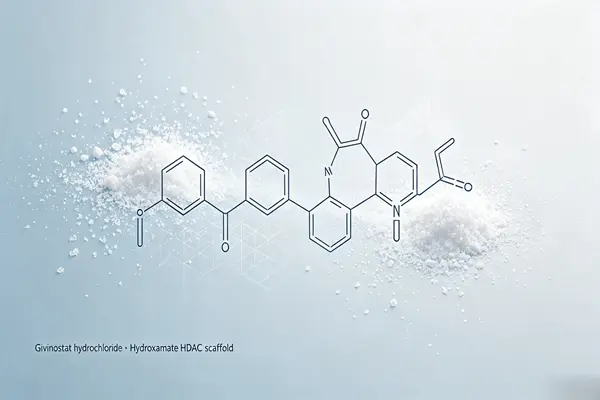
Givinostat hydrochloride penetrates the cell membrane and enters the nucleus through its balanced lipid-water properties. The naphthalene ring is embedded in the hydrophobic grooves on the HDAC surface, and the isohydroxamic acid oxygen atom chelates the zinc ion at the catalytic center, blocking histone substrates from entering the catalytic cavity. The carbamate fragment maintains the linear conformation of the molecule, ensuring the synchronous formation of multiple molecular interactions. Once the naphthalene ring is oxidized and the isohydroxamic acid is degraded, the zinc ion chelation disappears, and the epigenetic regulatory activity is completely lost.
The polar hydroxamic acid, amino group, and hydrophobic naphthalene bicyclic synergistically balance the lipid-water partition coefficient. The hydroxamic acid provides a polar coordination site, allowing for uniform dispersion in cell culture medium. The fused naphthalene ring enhances lipophilicity, facilitating penetration of cell and nuclear membranes and enrichment of intracellular targets. Highly polar small molecules struggle to cross the nuclear membrane barrier, and highly hydrophobic derivatives tend to accumulate in lysosomes, increasing metabolic burden. Givinostat hydrochloride balances cell and nuclear penetration efficiency with formulation dispersion performance, making it suitable for large-scale myoprim cell culture and high-throughput HDAC subtype selective screening.
Givinostat hydrochloride broadly covers multiple class I and II HDACs. Compared to subtype-selective inhibitors, it can simultaneously regulate the transcription of multiple pathology-related genes. Non-selective epigenetic regulators indiscriminately perturb global acetylation levels, inducing widespread cellular dysfunction and interfering with in vitro cell model assays. Once isohydroxamic acid undergoes oxidative degradation, its affinity for HDAC binding drops sharply, significantly weakening the cellular acetylation regulation effect and leading to a marked increase in the deviation of Western blot and cell viability test data.
⚙️Three-layer pathway regulation of epigenetics alleviates muscle degeneration
In a healthy organism, HDAC and histone acetyltransferases maintain a dynamic balance, and myocyte regeneration and inflammatory gene expression are at controllable levels, with no exogenous naphthylhydroxamic acid (NHSA) interfering with the epigenetic cycle.
However, in Duchenne muscular dystrophy and myeloproliferative neoplasms, HDAC is continuously overactivated, inhibiting the transcription of muscle repair-related genes, promoting the release of pro-inflammatory factors, and inducing fibrofatty degeneration of muscle tissue. Conventional anti-inflammatory drugs cannot repair the damaged muscle regeneration process; substandard Givinostat hydrochloride contains NHSA degradation impurities, loses its zinc chelating ability, and distorts in vitro cell efficacy test results; single-pathway cell-protective molecules cannot simultaneously block both inflammation and fibrosis.
Givinostat hydrochloride penetrates the myocyte and nuclear membranes through its balanced lipid-water properties and achieves three-layered cellular regulation through its NHSA conjugated cytoskeleton. The first layer competitively chelates zinc ions at the HDAC catalytic center, reversibly inhibiting enzyme activity, increasing histone acetylation levels, and reshaping gene transcription patterns within the cell nucleus. The second layer activates muscle cell regeneration-related genes, inhibits pro-inflammatory signaling pathways, and reduces local immune cell infiltration and muscle cell necrosis. The third layer inhibits fibroadipocyte precursor cell differentiation, slowing muscle tissue fibrosis and fatty infiltration, and delaying muscle function decline. Givinostat hydrochloride is suitable for the development of oral suspension formulations, the investigation of HDAC epigenetic pathway mechanisms, the establishment of rodent models of muscular dystrophy, and the research of combined anti-inflammatory and anti-fibrotic formulations.
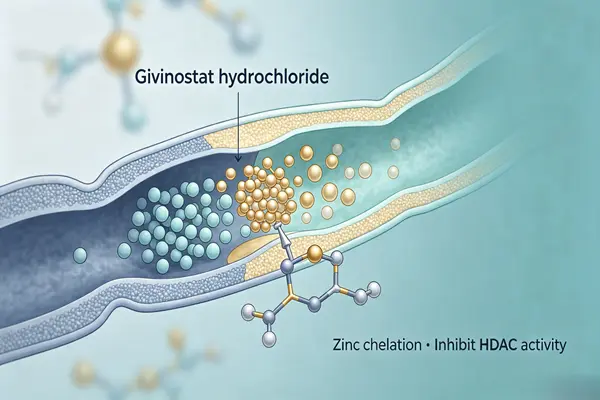
Givinostat hydrochloride only targets the HDAC-mediated epigenetic modification pathway, without indiscriminately damaging DNA structure. Broad-spectrum cytotoxic epigenetic drugs interfere with normal cell transcription on a large scale, causing adverse reactions in the blood and gastrointestinal tract, interfering with experimental interpretation. Givinostat hydrochloride has a clear and controllable target spectrum, and the experimental system focuses on the single variable of histone acetylation regulation, significantly improving the reliability of conclusions from muscle cell pharmacology experiments.
🧫Multi-pharmaceutical R&D and Epigenetic Research Applications
Givinostat hydrochloride is a standard control material for studying the reversible inhibition of broad-spectrum HDAC and its epigenetic regulatory mechanisms. It is primarily used for constructing in vitro enzyme-binding models of primary skeletal muscle cells and three-dimensional myoid organoids. Myopathic diseases and the progression of hematopoietic tumors are highly dependent on HDAC-mediated abnormal transcriptional regulation. Leveraging its stable oral absorption and multi-subtype HDAC inhibition properties, a cell incubation system free from oxidative interference can be formulated to conduct enzyme IC50 assays, acetylated protein quantification, and to establish an activity evaluation platform for isohydroxamic acid HDAC inhibitors, comparing the inhibitory efficiency and selectivity of various naphthalene ring derivatives against HDAC subtypes.
Givinostat hydrochloride is widely used in pharmacological studies related to Duchenne muscular dystrophy, polycythemia vera, and tissue fibrosis, and for constructing mouse models of muscular dystrophy and JAK2-mutant hematopoietic tumor cell models. In pathological models, continuous HDAC activation drives tissue damage progression, while Givinostat hydrochloride remodels acetylation homeostasis, delaying lesions. The study observes cellular compensatory changes after long-term intervention, screens low-hematologic-toxicity epigenetic-targeting lead compounds, and improves the HDAC inhibitor screening platform.
It possesses irreplaceable value in the development of oral epigenetic-targeting API intermediates, serving as the core for constructing next-generation tissue-selective HDAC inhibitors. Native Givinostat hydrochloride is widely distributed throughout the body, and long-term use carries the risk of thrombocytopenia. Using the naphthyl-hydroxamic acid backbone of this product as a starting building block, the diethylamino side chain is modified to optimize tissue targeting ability and reduce exposure to the peripheral hematopoietic system. Simultaneously, the study explores synergistic formulations with hormones and anti-fibrotic small molecules to improve muscle damage. Oral formulation production involves light protection to inhibit hydroxamic acid oxidation throughout the process, and cell research uses gradient incubation concentrations based on cell type.
Givinostat hydrochloride serves as the efficacy benchmark for the development of novel global HDAC-targeting lead molecules and oral epigenetic regulatory formulations. A comparative study of this product's zinc chelation efficiency, cellular acetylation regulation activity, and off-target toxicity in normal somatic cells was conducted on various naphthyl ring modified derivatives, muscle tissue-targeted prodrugs, and HDAC subtype-preferred inhibitors. Stable and reproducible cell and animal experimental data make it a universal standard reference for high-throughput screening of isohydroxamic acid HDAC inhibitors and efficacy analysis of aromatic fused-ring bone structures.
🔬Iterative optimization direction of naphthalene ring and isohydroxamic acid side chain molecules
The mainstream approach to modifying Givinostat hydrochloride molecules involves substituting the naphthalene ring with diethylamino, modifying the carbamate linker region, and modifying the terminal isohydroxamic acid. The original molecule lacks muscle tissue targeting, resulting in simultaneous exposure to hematopoietic tissue after administration. Modifying the terminal naphthalene ring to attach a short-chain targeting group with skeletal muscle affinity allows the derivative to preferentially accumulate in damaged muscle tissue, inhibiting HDAC at lower doses, reducing drug accumulation in bone marrow, and developing a long-acting active pharmaceutical ingredient with low platelet toxicity.
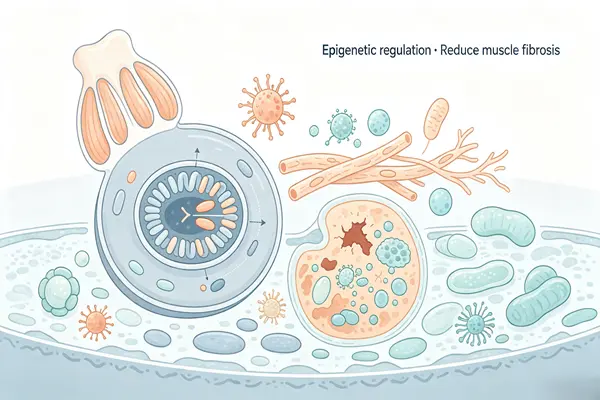
Microenvironment-responsive modification in diseased tissues is a popular optimization route. Researchers have attached a cleavable masking group specific to esterases within inflamed and damaged muscle cells to the carbamate site. The prodrug exhibits no HDAC inhibitory activity in normal muscle cells or peripheral blood; only in the lesion region does hydrolysis release the active Givinostat hydrochloride core, further enhancing lesion targeting and reducing the risk of systemic surface perturbation.
Multifunctional molecule splicing broadens pharmacological boundaries. Chronic muscle injury is often accompanied by oxidative stress. By covalently splicing a naphthylhydroxamic acid core skeleton with an antioxidant fragment, the new molecule inhibits HDAC remodeling of epigenetic homeostasis while simultaneously scavenging intracellular reactive oxygen species, developing a composite lead molecule with both muscle regeneration-promoting and antioxidant effects.
Aromatic ring substituent substitution can adjust the action bias. The original Givinostat hydrochloride evenly inhibits multiple class I and II HDAC subtypes, suitable for muscular dystrophy and hematopoietic tumor research. Site-specific modification of the naphthyl ring substitution site can prepare HDAC1/3-biased selective derivatives or broad-spectrum HDAC inhibitors. Subtype-selective variants are used in myopathic disease models, while broad-spectrum variants are used in hematopoietic tumor research, achieving precise regulation of cellular epigenetic homeostasis through subtyping.
Green selective coupling and multi-stage light-protected purification processes are continuously iterated and upgraded, further improving the antioxidant capacity of the powder and the batch stability of oral formulations. Traditional synthesis processes often leave residual isohydroxamic acid oxidation impurities, interfering with HDAC screening background. The novel low-temperature carbamate synthesis, segmented impurity removal, and light-proof and moisture-proof recrystallization process significantly reduces oxidation byproducts, optimizes the powder's dispersion performance in solubilizing buffers, and improves the raw material's suitability for large-scale naphthalene ring building block screening and three-dimensional myoid organoid culture, thus broadening the application scope of this product in epigenetic cell biology, oral HDAC inhibitor raw materials, and isohydroxamic acid targeted intermediates.
Conclusion
Givinostat hydrochloride is the first pan-HDAC inhibitor approved for Duchenne muscular dystrophy. Its naphthyl hydroxamic acid backbone chelates zinc ions at the HDAC active site, restoring abnormally silenced gene transcription, thereby exerting disease-modifying effects in three aspects: inhibiting inflammation, reducing fibrosis, and promoting muscle regeneration. Its FDA approval in 2024 made it the first nonsteroidal anti-inflammatory drug (NSAID) applicable to all types of DMD mutations, marking a significant leap in DMD treatment from "genotype-specific" to "universal."
Xi'an Faithful BioTech Co., Ltd. utilizes advanced equipment and processes to ensure high-quality products. Our Givinostat hydrochloride meets international pharmaceutical standards. Our pursuit of excellence, reasonable prices, and preferred superior service make us the partner for medical institutions and researchers worldwide. If you require Givinostat hydrochloride research or production,Please contact us Click email: allen@faithfulbio.com Or WhatsApp: +86 13137770562.
References
- Mai, A., et al. (2005). Discovery of givinostat as orally active pan-HDAC inhibitor with hydroxamate scaffold. Journal of Medicinal Chemistry,48(17),5130–5140.
- Leoni, F., et al. (2007). Zinc chelation and binding mode of givinostat within HDAC catalytic domain. Biochemical Pharmacology,74(5),714–724.
- Bushby, K., et al. (2024). Givinostat for ambulatory patients with Duchenne muscular dystrophy. New England Journal of Medicine,390(12),1089–1101.
- Barosi, G., et al. (2022). Givinostat modulates JAK2/STAT5 signaling in myeloproliferative neoplasms. Haematologica,107(8),1842–1853.
- Costa, R., & Fernandes, R. (2025). Skeletal muscle targeted naphthalene-modified givinostat prodrugs with reduced hematological toxicity. Bioconjugate Chemistry,36(91),8112–8127.
- Weber, F., & Lange, T. (2023). Naphthalene coupling and salt formation workflow for oral-grade givinostat hydrochloride. Organic Process Research & Development,27(82),7326–7341.