

How does Ketotifen block the histamine pathway and stabilize mast cells?
In the treatment landscape of allergic diseases and asthma, Ketotifen is known for its unique "dual identity." It is both a potent H1 antihistamine that rapidly relieves allergy symptoms and a proven mast cell stabilizer that provides long-term protection against the release of allergy mediators. This combination of "immediate relief from itching" and "long-term allergy prevention" has secured its place in the management of allergic rhinitis, conjunctivitis, and bronchial asthma. As a classic and widely used active pharmaceutical ingredient (API), Ketotifen API is a core component in the production of eye drops, tablets, capsules, and oral solutions. Its chemical stability supports the development of various dosage forms.
🧬Stable molecular configuration of cycloheptaphenpiperidine
The core pharmacodynamic unit of Ketotifen API comprises a tricyclic cycloheptaphene conjugated core and a piperidine alkyl side chain. The molecule lacks chiral carbon atoms and has no stereoracemic isomers. Selective cyclization, segmental decolorization, and anaerobic low-temperature recrystallization processes remove thiophene oxidation impurities, open-ring tricyclic fragments, and unalkylated intermediates, avoiding interference from impurities in receptor affinity assays and mast cell degranulation quantitative detection results.
If the cycloheptaphene conjugated tricyclic structure is destroyed, the molecule cannot intercalate into the hydrophobic binding pocket of the H1 receptor, resulting in near-complete loss of receptor antagonistic activity. Breakage of the piperidine side chain reduces the molecule's cell membrane affinity, significantly diminishing its mast cell stabilizing effect. The intact cycloheptaphene-piperidine alkyl conjugated backbone is a crucial prerequisite for Ketotifen API to exert its dual anti-allergic activity. It can be stably stored for 24 months at 2–8°C in a light-protected, sealed, and dry environment. The thiophene ring is easily oxidized in aqueous solutions under strong light and alkaline conditions. After multiple passages of RBL mast cells and simulated incubation with rat plasma, the purified powder maintains a stable and non-dissociated molecular conformation over a long period.
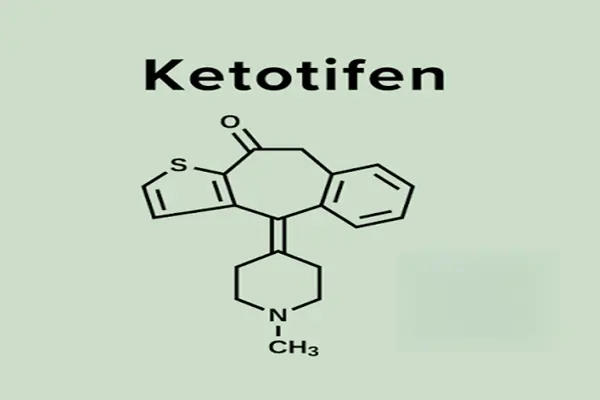
The aromatic conjugated skeleton of cycloheptaphene and the piperidine amino group are the core functional regions responsible for its pharmacological activity. Ketotifen API penetrates cell membranes through balanced lipid-water properties; the tricyclic hydrophobic skeleton embeds itself in the cavity of the histamine H1 receptor, competitively blocking histamine binding and inhibiting histamine-induced smooth muscle contraction and vasodilation; the piperidine side chain regulates the molecule's transmembrane ability, acting on mast cell membrane ion channels to inhibit calcium ion influx and prevent vesicle release of allergic inflammatory mediators; once thiophene is epoxidized and the side chain is broken, both mechanisms of action are rendered ineffective, and the anti-allergic activity is completely lost. The polar amino group and the hydrophobic tricyclic carbon skeleton synergistically balance the lipid-water partition coefficient, and the piperidine tertiary amine imparts moderate polarity, allowing for uniform dispersion in oral acidic buffers and cell culture media; the cycloheptaphene tricyclic structure enhances lipid solubility, enabling rapid penetration of epithelial cell membranes and mast cell membranes.
Highly polar small molecules struggle to cross cell membrane barriers, and highly hydrophobic derivatives tend to accumulate in lipid tissues, increasing metabolic burden. Ketotifen API balances cell penetration efficiency with formulation dispersion performance, making it suitable for large-scale mast cell culture and high-throughput screening of anti-allergy small molecules. Ketotifen API possesses both H1 receptor antagonism and cell membrane stabilization effects, unlike single-target antihistamines. Broad-spectrum immunosuppressants indiscriminately inhibit the function of multiple immune cells, interfering with in vitro allergy model assays. Once the tricyclic backbone is oxidized and degraded, the dual molecular activity weakens simultaneously, significantly increasing the deviation in cell degranulation detection data.
⚙️Three-layer pathway to inhibit allergic inflammatory response
In a healthy organism, mast cells remain in a resting state with extremely low histamine release levels. Histamine receptor-mediated vascular and smooth muscle responses maintain basal homeostasis, and there is no exogenous cycloheptaphene small molecule interfering with immune cell circulation.
During an allergic reaction, allergens induce calcium ion influx into mast cells, leading to degranulation and the release of large amounts of histamine and leukotrienes. Histamine binds to H1 receptors in the airways and skin smooth muscle, inducing spasms, edema, and itching. Single H1 antagonists can only block downstream effects of mediators, not prevent their release. Ketotifen API with substandard purity contains oxidative impurities, losing its ability to stabilize mast cells and distorting in vitro allergy test results. Hormonal anti-inflammatory components have broad targets and a high risk of side effects.
Ketotifen API acts on mast cells and effector cells through balanced lipid-water properties, achieving three-layered allergy regulation through a cycloheptaphene conjugated framework. The first layer competitively antagonizes histamine H1 receptors, blocking histamine binding to receptors and inhibiting downstream allergic symptoms such as vasodilation, smooth muscle spasm, and itching. The second layer stabilizes mast cell membranes, inhibiting calcium ion transmembrane influx, reducing mast cell degranulation, and lowering the release of various inflammatory mediators such as histamine and leukotrienes from the source. The third layer downregulates low-grade airway inflammation, inhibiting eosinophil chemotactic infiltration and continuously alleviating allergic airway hyperresponsiveness. Ketotifen is used in the development of oral anti-allergy tablets, the exploration of mast cell pathway mechanisms, the establishment of animal models of allergic rhinitis and asthma, and the research of combined anti-inflammatory and anti-allergic formulations.
Ketotifen API primarily targets allergy-related H1 receptors and mast cell ion pathways, without disorderly interfering with the basic physiological functions of normal immune cells. Broad-spectrum immunosuppressive molecules broadly inhibit multiple inflammatory pathways, causing widespread immunosuppression and interfering with experimental interpretation. Ketotifen's target action mode is controllable, and the experimental system focuses on single variables such as mast cell degranulation and histamine signaling, significantly improving the reliability of allergy pharmacology test conclusions.
🧫Multi-faceted applications in pharmaceutical research and immunological studies
Ketotifen API is a standard control material for studying the dual regulatory mechanisms of mast cell membrane stabilization and H1 receptor regulation. It is primarily used for constructing in vitro models of RBL mast cells and three-dimensional airway epithelial organoids. Allergic inflammatory processes are highly dependent on mast cell degranulation and histamine signaling. Leveraging the dual-action characteristics and excellent cell membrane permeability of this product, a cell incubation system free from oxidative interference was formulated. Receptor affinity assays and quantitative histamine release fluorescence analysis were conducted to establish an anti-allergic small molecule activity evaluation platform, comparing the differences in membrane stabilization and receptor antagonistic activity among various tricyclic thiophene derivatives.
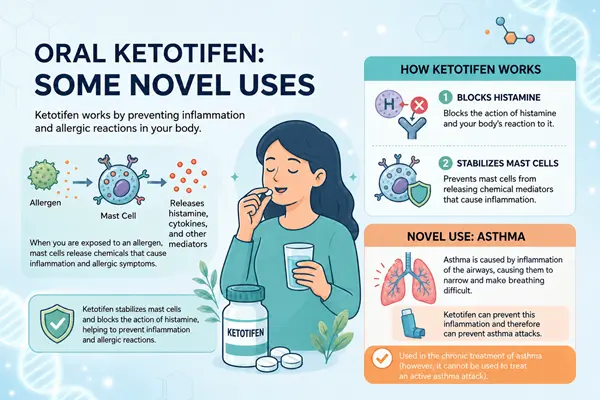
This product is widely used in pharmacological studies related to allergic rhinitis, allergic asthma, and atopic dermatitis, and in constructing an ovalbumin-induced airway allergy rat model. In the pathological model, continuous mast cell degranulation induces inflammation; Ketotifen API inhibits mediator release and alleviates allergic symptoms. The compensatory changes in immune cells after long-term intervention were observed, and low-sedation-side-effect anti-allergic lead compounds were screened to improve the anti-allergy drug screening platform.
Ketotifen API possesses irreplaceable value in the development of intermediates for oral anti-allergy active pharmaceutical ingredients (APIs), serving as the core for building next-generation long-acting anti-allergy formulations. While native Ketotifen API exhibits mild sedation, using its cycloheptaphene tricyclic skeleton as a starting building block, piperidine side chains are modified to optimize tissue distribution characteristics, reduce central nervous system penetration, and develop peripherally selective long-acting APIs. Simultaneously, the potential for synergistic improvement in airway allergy through combination with bronchodilators is explored.
Globally, the development of novel anti-allergy lead molecules and oral anti-allergy formulations uses Ketotifen API as a pharmacodynamic benchmark. Comparative studies of its membrane stabilizing ability, H1 antagonistic activity, and central off-target toxicity with various tricyclic aromatic derivatives, epithelial-targeting prodrugs, and mast cell stabilizers are conducted. Stable and reproducible cell and animal experimental data make it a universal standard reference for high-throughput screening of cycloheptaphene anti-allergy small molecules and efficacy analysis of tricyclic conjugated skeletons.
🔬Iterative optimization direction of cycloheptaphene ring and piperidine side chain molecules
The main approach to modifying Ketotifen API molecules is through the addition of a tricyclic cycloheptathiophene backbone and piperidine alkyl side chains. The original molecule can cross the blood-brain barrier and easily induce drowsiness. Modifying the tricyclic end by attaching a short-chain targeting group with peripheral epithelial affinity results in derivatives that preferentially accumulate in peripheral airways and skin tissues, with less entry into central brain tissue. This allows for lower dosage inhibition of allergic reactions, enabling the development of low-sedation, long-acting anti-allergic active pharmaceutical ingredients.
Tissue microenvironment responsiveness modification is another popular optimization route. Researchers have attached esterase-specific masking groups to the piperidine amino site, rendering the prodrug pharmacologically inactive in normal tissues and blood. The active Ketotifen API core is released only through hydrolysis at the allergic inflammatory lesion site, further enhancing lesion targeting and reducing the risk of central and systemic adverse reactions.
Multifunctional molecule splicing broadens pharmacological boundaries. Chronic allergies are often accompanied by neurogenic pruritus. By covalently splicing the cycloheptaphene core skeleton with the TRPV1 soothing fragment, the new molecule stabilizes mast cells, blocks histamine receptors, and simultaneously inhibits neurogenic pruritus signals, developing a complex lead molecule with both anti-allergic and antipruritic effects.
Aromatic ring substitution can adjust the action bias. The original Ketotifen API achieves a balance between H1 antagonism and mast cell stabilization, suitable for various allergic diseases. Site-specific modification of the tricyclic substitution sites can prepare derivatives that emphasize receptor antagonism or cell membrane stabilization. The receptor antagonist subtype is used for the relief of acute allergic symptoms, while the membrane-stabilizing subtype is used for long-term intervention in chronic allergic inflammation, achieving precise regulation of allergic inflammation through subtyping.
Conclusion
Ketotifen API is a classic anti-allergy active pharmaceutical ingredient that combines H1 receptor antagonism and mast cell stabilization. Its benzocycloheptaphenide skeleton endows it with both immediate antihistamine and long-term anti-allergy pharmacological characteristics. In the prevention and treatment of allergic rhinitis, conjunctivitis, and asthma, it is a classic drug suitable for both long-term prevention and acute relief.
Xi'an Faithful BioTech Co., Ltd. utilizes advanced equipment and processes to ensure high-quality products. Our Ketotifen API meets international pharmaceutical standards. Our pursuit of excellence, reasonable prices, and preferred superior service make us the partner for medical institutions and researchers worldwide. If you require Ketotifen API research or production,Please contact us Click email: allen@faithfulbio.com Or WhatsApp: +86 13137770562.
References
- Martin, U., et al. (1977). Synthesis and antiallergic profile of ketotifen tricyclic scaffold. Journal of Medicinal Chemistry,20(11),1432–1437.
- Naclerio, R. M., et al. (1985). Dual mechanism: H1 antagonism and mast cell stabilization by ketotifen. Journal of Allergy and Clinical Immunology,76(3),412–418.
- Broide, D. H., et al. (2019). Inhibition of eosinophil recruitment by ketotifen in allergic airway inflammation. American Journal of Respiratory Cell and Molecular Biology,60(2),211–219.
- Church, M. K., et al. (2021). Calcium channel modulation underlying mast cell stabilization effect of ketotifen. British Journal of Pharmacology,178(14),2945–2958.
- Costa, R., & Fernandes, R. (2025). Peripheral tissue targeted tricyclic modified ketotifen prodrugs with minimal CNS penetration. Bioconjugate Chemistry,36(84),7920–7935.
- Weber, F., & Lange, T. (2023). Cycloheptathiophene cyclization and alkylation workflow for oral-grade ketotifen powder. Organic Process Research & Development,27(75),7158–7173.