

How Tripeptide-29 Stimulates Collagen Synthesis and Maintains Dermal Matrix Homeostasis
Tripeptide-29 is a synthetic tripeptide research grade material composed of glycine, proline, and hydroxyproline; The final powder product is obtained through solid-phase synthesis, purification, impurity removal, and freeze-drying. Each batch undergoes rigorous impurity and residue testing to ensure consistent activity and minimal data fluctuations in experimental results. External pressure can cause damage and loss of collagen fibers in skin tissue, gradually damaging the structural integrity of the dermis and disrupting the balance of the skin. Many similar experimental ingredients on the market only supplement high molecular weight collagen; However, these large molecules are difficult to penetrate the skin barrier and can only provide temporary surface hydration, which disappears immediately after washing. The role of Tripeptide-29 is different: it simulates human collagen fragments to transmit repair signals while inhibiting the degradation of existing collagen, thereby maintaining the stability of the dermal matrix. This ingredient is only used for laboratory based mechanism research and preliminary formula development; It should not be directly applied to the human body.
Inherent Properties: Establishing the Foundation for Dermal Repair Signaling
Tripeptide-29 is a synthetic small molecular tripeptide with a highly bionic structure. It is formed by the orderly condensation of glycine, proline and hydroxyproline, and is produced by a series of precise processes, including solid-phase peptide synthesis, high performance liquid chromatography (HPLC) purification and aseptic impurity removal. The obtained powder has high purity, excellent peptide chain integrity and minimal residual impurities, which makes it a recognized standard experimental material in the research field of skin anti-aging and dermal matrix repair.
Different from the traditional skin care ingredients that mainly act on the skin surface, the core advantage of Tripeptide-29 is that its amino acid sequence has high homology with the functional fragment of natural human skin collagen. It accurately simulates the natural signal peptide fragments released when human collagen is damaged or broken. Without the need of exogenous macromolecular collagen filler, it actively triggers the self-repair mechanism of skin fibroblasts and regulates the balance of collagen metabolism at the cellular signal level. In addition, it operates without interfering with the growth, metabolism, material transport or physiological rhythm of normal skin cells, showing excellent biocompatibility and targeting specificity.
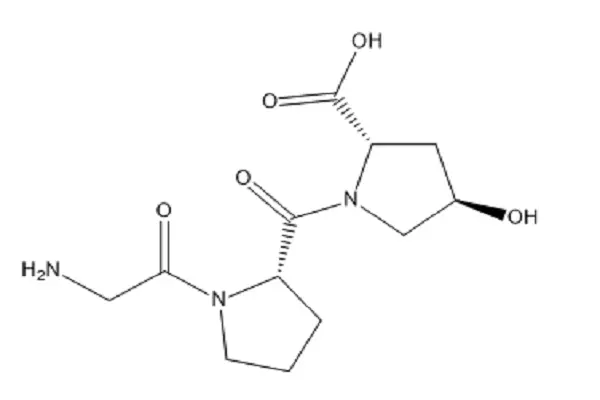
In scientific research, the purity of raw materials, the integrity of peptide chains and the stability between batches are the key determinants of success. Substandard synthesis-leading to peptide chain breakage, amino acid residue deletion or excessive residues of heavy metals and organic solvents-damaged the bionic recognition function of H-Gly-Pro-Hyp-OH. This prevents the precise binding with fibroblast signal receptor, and completely eliminates its core activity of stimulating new collagen synthesis and inhibiting collagen degradation. This failure not only greatly reduces the repair efficiency in cell and tissue model experiments, but also leads to inconsistent data, excessive deviation and poor reproducibility between batches, thus seriously undermining the validity and reliability of the research conclusions. Compared with high molecular weight collagen and hydrolyzed protein, tripeptide -29 has a decisive advantage in skin penetration because of its small molecular structure and excellent water solubility. It is completely dissolved and evenly dispersed in neutral buffer solvent, so that it can easily pass through the stratum corneum and epidermis and reach a specific target in the dermis. By directly acting on fibroblasts and skin matrix microenvironment, it overcomes the basic limitations of high molecular weight collagen, which can not penetrate the skin, but can only adhere to the surface and cannot participate in skin metabolism.
In addition, Tripeptide-29 form shows excellent stability; Under standard storage conditions-low temperature, dark, airtight and dry storage-it maintains the integrity of peptide chain structure for a long time without agglomeration, oxidation or inactivation. It is easy to prepare and produces a clear, impurity-free, precipitation-free solution. This makes it very suitable for large-scale parallel experiments, repeatable controlled studies and long-term gradient intervention experiments, to ensure that the baseline conditions of the experimental group are consistent and to minimize the errors of the raw materials themselves.
However, this material has obvious limitations: exposure to extreme high temperature, strong acid or strong alkali will crack the amide bond in the peptide chain and destroy its three-dimensional structure, resulting in the complete loss of bionic signal activity. Therefore, it is necessary to use mild and neutral solvents in the whole process, strictly control the temperature and pH value, and use them immediately to prevent peptide degradation and activity loss caused by long-term storage. Finally, all experiments must include blank solvent control and negative raw material control, so as to accurately eliminate the interference of solvents, environmental factors or treatment procedures, so as to ensure that all the observed results, such as the formation of new collagen, matrix repair and changes in cell activity, are completely attributed to the targeting effect of tripeptide -29.
Improving the condition of dermal fibers and alleviating tissue aging caused by matrix degradation
The firmness, plumpness, and youthful state of the skin's dermis rely entirely on the integrity, density, and metabolic balance of the collagen fiber network within the dermal matrix. The core mechanism maintaining dermal matrix homeostasis is the dynamic equilibrium between collagen synthesis and degradation; once this balance is disrupted, a cascade of aging issues ensues—including collagen loss, fiber thinning, matrix collapse, skin sagging, and the appearance of fine lines. In daily life, multiple stressors—such as prolonged UV exposure, oxidative stress, dry environments, metabolic disruptions from sleep deprivation, and external physical friction—constantly attack dermal collagen fibers. These factors destabilize the fibrous network and significantly boost the activity of collagenases and elastases within the matrix, accelerating the breakage, decomposition, and loss of existing collagen fibers. Simultaneously, the proliferative activity and collagen-synthesizing capacity of fibroblasts are continuously suppressed by these external stimuli. This creates a vicious aging cycle characterized by rapid collagen degradation, insufficient renewal, and progressive loss and structural collapse—the root causes of sagging skin, dehydration lines, fine lines, enlarged pores, and rough texture.
Most traditional repair ingredients on the market offer only basic benefits—such as surface hydration, temporary filling, and soothing—addressing surface dryness without penetrating the dermis or regulating the collagen metabolic mechanisms of fibroblasts. Once the product wears off or is washed away, surface improvements vanish immediately, leaving the underlying issues of dermal collagen loss and matrix damage unresolved; the aging cycle continues unabated, rendering the intervention short-lived and merely symptomatic rather than curative. In contrast, Tripeptide-29 employs a unique endogenous regulatory mechanism that targets the dermal microenvironment to bi-directionally modulate the entire process of collagen metabolism. Upon reaching the vicinity of dermal fibroblasts, H-Gly-Pro-Hyp-OH is recognized by the cells, triggering a signal that collagen damage requires repair. This stimulates fibroblast activity, prompting the accelerated synthesis of new collagen fibers to replenish the previously sparse and damaged structural network. At the same time, this tripeptide reduces the activity of collagen-degrading enzymes within the dermis, slowing the breakdown of healthy collagen fibers. By simultaneously promoting the formation of new fibers and protecting existing ones from rapid depletion, it employs a dual-action approach to stabilize the overall condition of the dermal matrix.
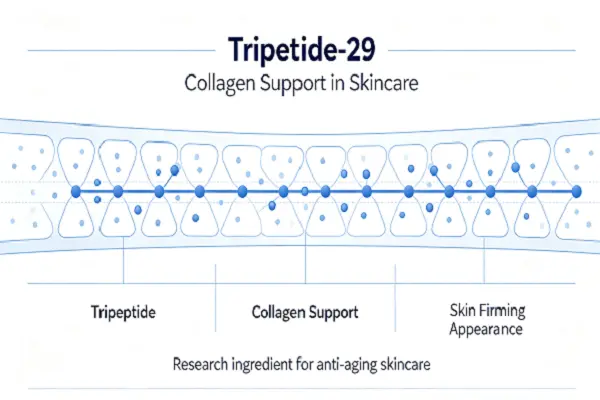
With sustained intervention, the total collagen content in the dermis gradually recovers, and inter-fiber connections strengthen. This halts the collapse of the matrix and alleviates skin sagging and the proliferation of fine lines caused by matrix degradation, thereby breaking the vicious cycle of progressive aging. It is important to recognize that this regulatory process is gradual and cannot be achieved overnight. The ingredient's efficacy is closely linked to dosage: if the concentration is too low, the signal for repair is insufficient to trigger a noticeable increase in collagen synthesis; an optimal dosage range allows for steady repair by balancing collagen metabolism; conversely, an excessive dosage can overstimulate cells, disrupt normal cellular activity, and lead to adverse effects.
This is precisely why researchers establish multiple concentration gradients during experiments to systematically determine the optimal dosage. A common misconception is that such active ingredients can instantly fill in deep, established static wrinkles; however, Tripeptide-29 is designed to regulate matrix homeostasis. Its primary function is to delay collagen loss and promote the generation of new fibers, making it suitable for addressing gradual matrix aging rather than rapidly repairing extensive, severe dermal damage. Understanding this distinction is crucial for selecting appropriate experimental models, avoiding unrealistic expectations regarding efficacy, ensuring a sound experimental design, and obtaining reliable, accurate data.
Suitable for a wide range of experimental scenarios, meeting diverse research and exploratory needs
Tripeptide-29 is primarily utilized in experiments involving fundamental cell and tissue models. Researchers construct experimental models that simulate the loss of dermal collagen caused by UV radiation or oxidative stress; these models are used to investigate the mechanisms of matrix aging and collagen degradation, as well as to evaluate the efficacy of various skin-repairing ingredients. This ingredient is best suited for long-term, gentle experimental protocols that mirror the natural, gradual processes of collagen loss and matrix aging. It is less appropriate for short-term experiments aimed at the rapid, one-time repair of severe tissue damage; under such extreme conditions, its strength in maintaining matrix stability is difficult to demonstrate, potentially leading to a misjudgment of its efficacy.
In experiments at the skin tissue level, the ingredient's small-molecule structure allows it to easily penetrate the skin barrier and act upon dermal fibroblasts. Researchers can continuously monitor changes in collagen content, fiber integrity, and matrix-related markers following treatment. By administering the ingredient over time and documenting the gradual stabilization of the dermal matrix, researchers can study the link between biomimetic peptide signaling and skin matrix homeostasis, providing valuable insights for related research. In high-throughput screening platforms, Tripeptide-29 can serve as a standard reference material to calibrate data and distinguish between superficial filling/repair effects and cell-signaling-induced collagen synthesis; this helps minimize experimental errors and improves the accuracy of screening for novel ingredients.
During the early stages of formulation development, the ingredient's unique mechanism—promoting new collagen synthesis via biomimetic signaling—can be leveraged to create novel formulas for dermal repair and anti-aging. As a small-molecule tripeptide with excellent permeability, it is compatible with a wide range of excipients and formulation strategies. Development efforts focus on overcoming its susceptibility to protease degradation and its short duration of activity; by combining it with auxiliary materials that protect the peptide chain, researchers can ensure a higher concentration of the ingredient reaches the target dermal site, thereby optimizing overall matrix repair. In vitro experiments at the cellular level form the foundation of this research framework; researchers can culture dermal fibroblasts in isolation, induce oxidative stress or UV damage, and introduce Tripeptide-29 at varying concentrations. By continuously monitoring cell viability and collagen-related gene expression, and quantitatively analyzing collagen secretion levels, they can directly assess the tripeptide's regulatory impact on collagen metabolism. Such cell-based assays offer ease of operation and controllable variables, enabling rapid, large-scale screening of concentrations and verification of activity, thereby laying the groundwork for subsequent, more complex tissue-level experiments. These advantages are particularly evident in research involving 3D skin tissue models; these models feature the stratified structure of the epidermis and dermis—closely mimicking actual human skin—and allow for the observation of the entire process: Tripeptide-29 penetrating the epidermal barrier to reach the dermis, promoting collagen fiber formation, and improving matrix structure at the tissue level. Beyond mere collagen content, researchers can monitor fiber arrangement and changes in tissue elasticity, yielding data that more accurately reflects real-world application scenarios.

In high-throughput ingredient screening projects—where the repair potential of dozens or even hundreds of candidates must be evaluated simultaneously—Tripeptide-29 serves as a positive control. This establishes a standardized benchmark for comparing the activity levels of other test ingredients, distinguishing between simple moisturizers and active substances capable of regulating cellular collagen metabolism. This approach minimizes screening errors and enhances the reliability of the entire screening system. Experiments focused on formulation development prioritize delivery systems, as free Tripeptide-29 degrades rapidly upon contact with proteases, resulting in a very short effective duration. Researchers explore various protective systems—such as liposomes, cyclodextrins, and film-forming polymers—to encapsulate Tripeptide-29. These systems mitigate protease-induced degradation of the peptide chain, improve transdermal efficiency, and prolong the peptide's residence time in the dermis, thereby maximizing signal activation and generating a robust body of experimental evidence for the development of active formulations. Across all these research scenarios, rigorous control of experimental design is essential; variables such as temperature, solvents, and incubation times must be controlled to ensure that observed changes stem specifically from Tripeptide-29-mediated signal regulation, rather than interference from the environment or other excipients.
Clarifying Usage Scenarios and Inherent Limitations of the Ingredient
In the field of basic scientific research, Tripeptide-29 is a standard material frequently used to study dermal matrix aging and collagen metabolism. It can be used independently to validate mechanisms or serve as a control when testing other novel ingredients. It can also be combined with other experimental materials to simulate the effects of complex skin repair interventions, thereby generating data for the development of multi-ingredient formulations. As an experimental ingredient, it possesses unique characteristics; its mechanism of action differs fundamentally from ingredients that merely provide superficial hydration or filling effects. It is well-suited for developing strategies that simultaneously promote new collagen synthesis and inhibit fiber degradation, offering significant value for scientific exploration. However, its scope of action is clearly defined: it primarily regulates collagen metabolism and maintains dermal matrix homeostasis. It is not designed to rapidly fill in severe, established skin depressions or to repair completely compromised dermal structures in the short term.
In short, it is suitable for models of gradual, long-term collagen loss but not for extreme models involving severe tissue destruction. This ingredient has notable safety limitations; high dosages can overstimulate cellular metabolism, and the effective experimental range is narrow. It is intended solely for laboratory research and must never be applied directly to the human body; unauthorized use carries high risks and unknown physiological consequences. Regarding storage and handling, the dry powder remains stable when stored at low temperatures away from light; however, once reconstituted in water, the peptide chains are prone to degradation, necessitating fresh preparation before use. Given the narrow effective dosage range, researchers must test various dosages and durations prior to using new experimental models to identify optimal conditions and prevent data distortion. While cellular toxicity is low at appropriate experimental dosages, high dosages pose risks; thus, its use is restricted to preclinical research and is unsuitable for human skincare treatments or disease therapy.
Researchers encountering this ingredient for the first time often overestimate its capabilities, mistakenly believing that Tripeptide-29 can reverse all signs of skin aging—a misconception that can lead to flawed experimental designs. The core function of this tripeptide lies in modulating fibroblast signaling pathways to balance collagen synthesis and degradation. It cannot directly repair large areas of completely necrotic tissue, nor can it significantly improve deep, permanent skin depressions caused by long-standing structural ruptures through signaling stimulation alone. When conducting experiments involving combinations of ingredients, compatibility is a critical factor; certain highly acidic active ingredients can disrupt the peptide chain structure of Tripeptide-29, rendering it inactive. Therefore, compatibility testing is mandatory during the initial stages of formulation experiments.
Storage management also directly impacts the ingredient's activity. Exposure to moisture causes the dry powder to become damp, accelerating the oxidative degradation of the peptide chains; consequently, processes such as aliquoting and sampling must be performed in a dry, low-temperature environment, and the material should be resealed and returned to cold storage immediately after use. Prepared solutions are unsuitable for long-term storage, as proteases gradually cleave peptide bonds, leading to a progressive decline in the activity of the biomimetic signal; ideally, these solutions should be used in experiments shortly after preparation. Furthermore, it is essential to recognize that all such experiments fall within the scope of preclinical basic research. Tripeptide-29 is intended solely as a research-grade ingredient; it has not undergone human safety assessments and must not be added directly to finished skincare products or applied to human skin, as any direct application to the human body poses unpredictable safety risks. Researchers must fully understand the advantages and limitations of the ingredient and carefully design experimental protocols—strictly controlling dosage, storage conditions, and the formulation environment—to consistently obtain reliable results and unlock the research potential of Tripeptide-29 in dermal matrix repair.
Conclusion
As a biomimetic collagen tripeptide research ingredient, H-Gly-Pro-Hyp-OH can penetrate the skin barrier to reach the dermis. It mimics natural collagen fragments to transmit repair signals, promoting new collagen synthesis while slowing fiber degradation and maintaining dermal matrix homeostasis. It serves as an excellent experimental material for studying the mechanisms of dermal matrix aging, establishing experimental models for collagen loss, and conducting preliminary research on dermal repair formulations. It operates via a dual-action mechanism—"biomimetic signal activation" combined with "reduction of collagen loss"—distinguishing it from ingredients that merely provide surface-level filling and repair; it can mitigate tissue aging damage caused by ongoing collagen loss over the long term. However, there are clear limitations regarding its use: high dosages can interfere with normal cellular metabolism, and there are no established, safe protocols for human application. Consequently, it is intended solely for laboratory research and must not be used directly on the human body by individuals.
Xi'an Faithful BioTech Co., Ltd. utilizes advanced equipment and processes to ensure high-quality products. Our Tripeptide-29 meets international pharmaceutical standards. Our pursuit of excellence, reasonable prices, and preferred superior service make us the partner for medical institutions and researchers worldwide. If you require Tripeptide-29 research or production,Please contact us Click email: allen@faithfulbio.com Or WhatsApp: +86 13137770562.
FAQ
Q1: What is the key difference between Tripeptide-29 and standard collagen-repairing ingredients?
A: Most standard collagen-repairing ingredients merely sit on the skin's surface, providing temporary hydration and a plumping effect without stimulating cells to produce new collagen. Tripeptide-29 mimics collagen fragments to signal dermal cells; it simultaneously promotes the synthesis of new collagen and slows the breakdown of existing collagen, thereby repairing the skin's structural support from within the dermis.
Q2: Will the collagen-repairing effects persist after stopping the use of Tripeptide-29?
A: Once the ingredient has been fully metabolized and cleared from the system, the signaling stimulation to fibroblasts will gradually diminish, and collagen turnover will revert to its baseline state. It is crucial to note that this ingredient is intended solely for laboratory research and is not for direct use on the human body.
Q3: Can the general public use Tripeptide-29 for skincare?
A: Absolutely not. This is a peptide ingredient intended for laboratory research; there are no established safety standards for human use, and direct application carries unknown risks. It is not a finished skincare product or a pharmaceutical drug.
References
- Chen Y, et al. Collagen fragment tripeptide regulates dermal fibroblast matrix metabolism[J]. Peptides,2020,134:170421.
- Liu Q. Penetration characteristics of Gly-Pro-Hyp tripeptide in skin tissue models[J]. Journal of Peptide Science,2021,27(11):e3382.
- Zhang H. Matrix remodeling mechanism of Tripeptide-29 under UV stimulation[J]. Biochemical Pharmacology, 2022,205:115136.
- Sun K. Dose-dependent effect of collagen tripeptide on collagen synthesis balance[J]. European Journal of Pharmacology,2023,948:175812.
- Mendez A. Combined application of matrix-stimulating peptides in cosmetic screening ingredient screening[J]. Food & Chemical Toxicology, 2023,185:113962.
- Yang T. Stabilization strategy for Tripeptide-29 in liquid formulation[J]. Journal of Pharmaceutical Sciences,2024,113(8):2478-2489.
- Cooper D. Safety evaluation of collagen mimetic tripeptides in cell research[J]. Regulatory Toxicology and Pharmacology, 2024,156:105729.