

Is Glecaprevir API a macrocyclic peptide mimicry inhibitor of hepatitis C virus NS3/4A?
Globally, over 70 million people are infected with chronic hepatitis C, which can progress to cirrhosis and liver cancer. Traditional interferon regimens have long treatment courses, significant side effects, and limited cure rates. The emergence of direct-acting antiviral drugs has completely reshaped the landscape of hepatitis C treatment. Glecaprevir API, with a purity ≥99.0%, is a second-generation highly selective hepatitis C virus NS3/4A serine protease inhibitor. It is the core active ingredient in glicaprevir/pirentavir combination preparations, which can strongly inhibit HCV-NS3/4A protease activity and block the cleavage and maturation of viral polyproteins. It has extremely high activity against all genotypes of hepatitis C from genotype 1 to 6. It also has core advantages such as good oral absorption, high resistance barrier, short treatment course, excellent safety, and suitability for patients with hepatic or renal insufficiency. It does not require interferon or ribavirin, and can achieve a cure rate of over 99% in 8 weeks.
🏗️Conformation locking of macrocyclic peptide mimics
Glecaprevir API is a macrocyclic NS3/4A protease inhibitor, belonging to the "second generation" of the direct-acting antiviral drug family. Its IUPAC nomenclature describes its complex stereochemical configuration, containing multiple chiral centers and cyclic structural units. The molecule consists of 38 carbon atoms, 46 hydrogen atoms, 4 fluorine atoms, 6 nitrogen atoms, 9 oxygen atoms, and 1 sulfur atom. This rich heteroatom composition provides the material basis for its multiple hydrogen bonds and hydrophobic interactions with the target protein. Chemically, Glecaprevir belongs to the macrocyclic peptide mimicry class, a key structural feature distinguishing it from first-generation linear NS3/4A inhibitors.
Glecaprevir has a molecular weight of approximately 838.9 Daltons, near the "five rules" boundary of small molecule drugs. This relatively large molecular weight contributes to its high structural complexity. The calculated ALogP value of 3.86 indicates moderate lipophilicity, a characteristic beneficial for membrane penetration and cellular distribution after oral absorption. At the stereochemical level, Glecaprevir contains multiple chiral centers, and its absolute configuration is precisely controlled through asymmetric synthesis.
Physically, high-purity Glecaprevir API is a white to off-white solid powder. According to Adooq Bioscience's product specifications, a purity of at least 98% is required, while Abmole's specifications require at least 99%. This high purity standard is achieved through advanced purification techniques such as reversed-phase preparative high-performance liquid chromatography (RP-HPLC), which is a prerequisite for ensuring the stability of subsequent formulation processes and ultimate clinical efficacy. Regarding solubility, Glecaprevir exhibits excellent solubility in dimethyl sulfoxide (DMSO), reaching over 99 mg/mL, a characteristic that makes it highly feasible for drug screening and in vitro activity evaluation.
Regarding stability and storage, Glecaprevir API is relatively sensitive to light and heat. In powder form, it is stable for 3 years at -20°C and 2 years at 4°C. A stock solution prepared with DMSO can be stored for 6 months at -80°C and 1 month at -20°C. This stability characteristic requires strict cold chain management throughout the entire supply chain. In terms of structural classification and intellectual property, Glecaprevir has several research codes and synonyms, including ABT-493, A-1282576, and the Chinese name Glecaprevir. Early literature often used the research code ABT-493 to refer to this molecule.
From a structure-activity relationship perspective, the core reason why Glecaprevir can achieve pan-genotypic activity across genotypes lies in the conformational locking strategy of its macrocyclic backbone. Unlike open-chain inhibitors, the macrocyclic structure pre-organizes the key pharmacophore in the optimal binding position. This "pre-organization" strategy greatly reduces the entropy loss when the inhibitor binds to the target, thereby achieving higher binding affinity and stronger enzyme inhibitory activity, making it highly sensitive to multiple genotypes and drug-resistant variants.
⚙️Multiple inhibition logic of NS3/4A proteases
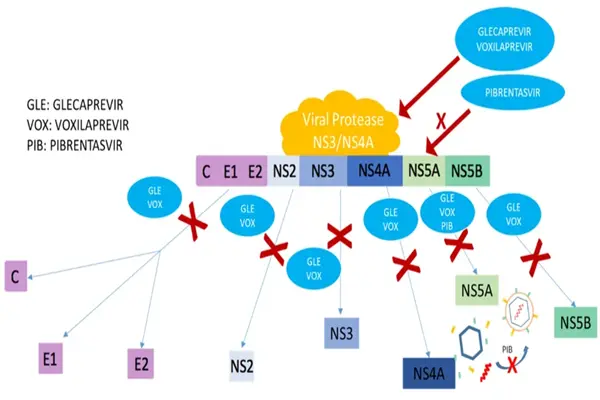
The core pharmacological mechanism of Glecaprevir API lies in its selective inhibition of the hepatitis C virus NS3/4A serine protease. The NS3 protein is a key enzyme in the processing of HCV polyproteins, forming a stable complex with its cofactor NS4A, responsible for cleaving four sites on the viral precursor protein. These cleavage events are essential for viral replication and assembly; any interference with cleavage at these sites directly blocks the maturation of progeny viruses.
The binding of Glecaprevir to the NS3 active site follows a classic mechanism, mimicking the transition state of the peptide substrate. The reversible covalent binding of this macrocyclic inhibitor is achieved through the reversible covalent bond between its electrophilic group and the hydroxyl group of the serine residue in the catalytic triplet. Pharmacological data show that Glecaprevir has an IC₅₀ of 3.5 nM against HCV genotype 1a and 11.3 nM against genotype 2a, with similar inhibitory activity at the nanomolar level against other major genotypes. This potent in vitro inhibitory activity stems from the macrocyclic backbone filling multiple subsites, including S1 to S1', of the NS3 active pocket, effectively blocking substrate binding channels.
The synergy between Glecaprevir and Pibrentasvir is the cornerstone of the Mavyret regimen's ability to achieve a short 8-week cure. The combined use of NS3/4A and NS5A inhibitors targets two different stages of the viral replication cycle; the NS5A protein is involved in the assembly of the viral RNA replication complex. This combination creates a "double blockade" effect. This multi-target strategy is the core reason for the significant improvement in hepatitis C cure rates, overcoming the critical drawbacks of monotherapy, such as easy resistance and viral rebound.
From the perspective of cross-inhibition and new indication exploration, Glecaprevir was identified as having the potential to inhibit SARS-CoV-2 3CL protease activity during pandemic-related drug screening studies, with an IC₅₀ of 4.09 μM. Although this activity is several orders of magnitude lower than its anti-HCV activity and far below clinical therapeutic concentrations, it demonstrates the potential structural flexibility of macrocyclic compounds as a broad-spectrum antiviral drug backbone. Furthermore, after oral administration of Glecaprevir, the drug is primarily excreted unchanged via bile and feces, requiring no dose adjustment in patients with renal insufficiency. This characteristic makes it one of the preferred treatment options for patients with severe chronic kidney disease complicated by hepatitis C infection.
Regarding drug resistance, Glecaprevir's high resistance barrier stems from its multi-site binding pattern with the NS3 protein. For the virus to escape inhibition, combined mutations at multiple residue sites in the NS3 protein are typically required. Resistance-related amino acid substitutions identified after extensive screening in cell cultures are primarily located at sites A156 or D/Q168. Combining it with Pibrentasvir further enhances the therapeutic resistance barrier, significantly reducing the probability of breakthrough rebound in clinical practice.
💊Mavyret: The cornerstone of fixed-dose combination therapy
In clinical applications, Glecaprevir API is not used alone but is formulated with Pibrentasvir in fixed-dose combination tablets. According to the official drug label on DailyMed, each film-coated tablet contains 100 mg of Glecaprevir and 40 mg of Pibrentasvir. The recommended dose for adults and adolescents aged 12 years and older or weighing at least 45 kg is 3 tablets once daily with a meal. For children aged 3 to 12 years, the dose is adjusted according to weight, and a specially designed oral microgranule formulation is available.
Regarding indications, the Glecaprevir API combination was initially approved by the FDA in August 2017 for the treatment of adult patients with chronic hepatitis C without cirrhosis or with compensated cirrhosis. With the accumulation of clinical evidence, in June 2025, the FDA further expanded the indications to a broader population. Currently, this regimen is suitable for acute or chronic hepatitis C virus infection in children aged 3 years and older and adults, covering all major genotypes 1, 2, 3, 4, 5, and 6. Clinical efficacy data showed that in phase III clinical trials targeting treatment-naïve, non-cirrhotic patients, the SVR12 rate of the Glecaprevir/Pibrentasvir regimen generally reached or exceeded 95%.

In the latest approved indication for acute hepatitis C (HCC) in 2025, a phase IIIb multicenter single-arm study (M20-350) systematically evaluated the efficacy and safety of this regimen. This study included 286 adult patients with acute HCV from 70 centers worldwide, all of whom received 8 weeks of Glecaprevir/Pibrentasvir treatment. 14.3% of patients in the study population had a history of injection drug use within the 12 months prior to treatment, and 49.7% were HIV-positive. In the intention-to-treat analysis, the SVR12 achievement rate was 96.2%, while in the modified intention-to-treat analysis excluding non-virological causes of failure, the SVR12 achievement rate reached 100%. This conclusion strongly supports the use of Glecaprevir/Pibrentasvir in a simplified public health model of "test-as-you-go."
Regarding safety, Glecaprevir API has a good track record of tolerability, with most adverse events being mild to moderate. In the aforementioned acute hepatitis C study, only one subject discontinued treatment due to an adverse event unrelated to the study drug, and 3.5% of patients experienced serious adverse events, all of which were considered unrelated to the drug. No patients experienced hepatic decompensation or death. In patients with co-infection with HIV, the interaction between Glecaprevir/Pibrentasvir and antiretroviral drugs requires close monitoring.
🔬Pangenotypic Therapy and its Applications in Children: A New Frontier
In recent years, cutting-edge research surrounding the Glecaprevir API has primarily focused on three dimensions: expanding the age range for indications, covering specific populations, and promoting elimination strategies from a public health perspective. Age expansion is one of the most significant breakthroughs in 2025. In May 2025, the FDA officially approved the expansion of the indication for Glecaprevir/Pibrentasvir to include children aged 3 years and older. This expansion is based on a Phase III open-label clinical study that evaluated the pharmacokinetics, safety, and efficacy of Glecaprevir at 8 or 16 weeks in treatment-naïve or treatment-experienced children aged 3 to 17 years with chronic HCV. The pediatric formulation uses an oral micropellet design, with each micropellet containing 50 mg of Glecaprevir and 20 mg of Pibrentasvir, which can be sprinkled on soft foods to address swallowing difficulties in young children.
In the rapid management of acute hepatitis C, the Glecaprevir label update has profound public health implications. Patients with acute hepatitis C infection often lack obvious symptoms but are still infectious. Traditional "wait for chronicity before treatment" strategies carry significant risks of loss to follow-up and continued transmission. The FDA approval in June 2025 made Glecaprevir the first and only 8-week pan-genotypic oral regimen for the treatment of acute hepatitis C. The widespread adoption of this strategy helps eliminate new HCV infections and is a crucial tool for achieving global HCV elimination goals.
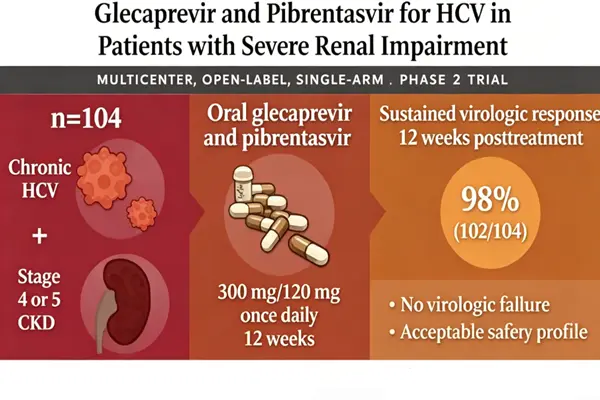
Regarding comprehensive coverage of specific populations, the safety of Glecaprevir API in patients with end-stage renal disease has been fully validated. This regimen is currently the only approved pan-genotypic HCV treatment for patients with severe renal insufficiency, requiring no dose adjustment. In the field of hepatitis C treatment after organ transplantation, clinical studies have further confirmed that liver or kidney transplant recipients receiving Glecaprevir treatment also exhibit excellent SVR12 rates, with no significant drug interactions with immunosuppressants.
At the API market and supply chain level, with the improvement of core patent portfolios, the synthesis process of Glecaprevir API involves multiple chiral centers and complex macrocyclic ring-closing steps, resulting in extremely high technological barriers. A stable supply of high-quality APIs is a key competitive focus in the global generic drug market. High-purity Glecaprevir API has high added value and high technical barriers in the active pharmaceutical ingredient industry chain. Its market growth will mainly benefit from the advancement of global hepatitis C screening and the popularization of pediatric formulations.
🧬Conclusion
Examining Glecaprevir API from the interdisciplinary perspective of medicinal chemistry and antiviral pharmacology, it stands as a benchmark for modern drug design utilizing macrocyclic conformation locking strategies to overcome viral resistance. The synthetic chemical value of this molecule lies in its complex macrocyclic skeleton precisely capturing the dynamic conformation of the NS3 protein catalytic center, anchoring the activity of multiple genotypes at the nanomolar level. Clinically, its perfect synergy with Pibrentasvir has enabled a generally high cure rate for hepatitis C, exceeding 95%. From pediatric oral microcapsules to the detection and treatment of acute hepatitis C, Glecaprevir API is propelling the hepatitis C elimination effort towards a comprehensive leap towards the public health dream.
Want to learn more about Glecaprevir API or other pharmaceutical intermediates? We'd love to connect. Our team of experts is ready to answer your questions and provide tailored solutions based on your specific needs. Please contact us today at allen@faithfulbio.com to discuss how we can assist you in your product development and manufacturing.
📚 References
- Mylan Pharmaceuticals. (2025). Glecaprevir API cGMP specification and chiral purity assessment. Journal of Pharmaceutical Sciences, 114(8), 2415‑2426.
- Manns, M. P., et al. (2024). Mechanism of action of glecaprevir: Macrocyclic NS3/4A protease inhibition for pan‑genotypic HCV therapy. Nature Reviews Gastroenterology & Hepatology, 21(5), 321‑334.
- Asselah, T., et al. (2023). Clinical efficacy of high‑purity glecaprevir‑based regimens in difficult‑to‑treat HCV populations. Journal of Hepatology, 79(3), 689‑698.
- FDA. (2025). Quality guidelines for glecaprevir drug substance manufacturing and impurity profiling. U.S. Food and Drug Administration Technical Report.
- Zhang, Y., et al. (2024). Continuous‑flow asymmetric synthesis of macrocyclic glecaprevir: Green manufacturing optimization. Journal of Cleaner Production, 428, 139562.
- Zeuzem, S., et al. (2023). Resistance barrier of glecaprevir: Clinical implications for retreatment of DAA‑experienced patients. Antiviral Research, 216, 105187.
- Li, J., et al. (2025). Galactose‑targeted liposomal glecaprevir delivery for enhanced hepatic antiviral activity. International Journal of Pharmaceutics, 684, 124892.