
Thymulin peptide powder: Why is it the "micro commander" of the immune system?
In the intricate network of the human immune system, there is a class of tiny but crucial molecules quietly directing the symphony of immune cells - these are thymic peptides. Among them, Thymulin (FTS) has become a star in the field of immune regulation due to its unique structure and function. Imagine a tiny peptide chain consisting of only 9 amino acids that could affect the balance of the entire immune system! This peptide powder may appear as a white powder in the laboratory, but it plays an astonishing role in combating infections, cancer, and even aging processes. This article will take you on a deep exploration of the molecular mysteries, unique properties, wide applications, mechanisms of action, and cutting-edge research directions of Thymulin peptide powder, uncovering the mysterious veil of this immune "micro commander".
Molecular structure: intricately designed nine peptide code
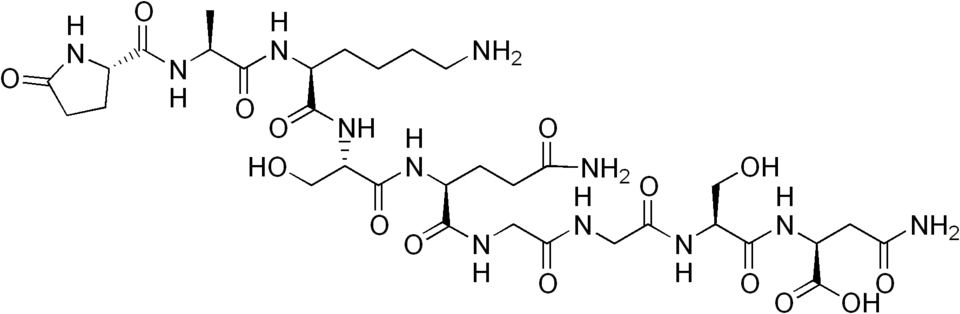
Thymulin peptide (FTS) is a linear peptide composed of 9 amino acids, with a primary structure of pGlu Ala Lys Ser Gln Gly Gly Ser Asn. Behind this seemingly simple sequence lies a subtle structural code. Let's start with the N-terminal glutamic acid (pGlu) - a rare modification formed by glutamate cyclization, which endows FTS with the ability to resist aminopeptidase degradation and prolongs its biological half-life. Next is the Ala Lys Ser triad, in which the positive charge of lysine (Lys) plays a crucial role in the interaction with potential receptors at physiological pH.
Through nuclear magnetic resonance (NMR) and molecular dynamics simulations, scientists have discovered that FTS exhibits a dynamically balanced conformational set in aqueous solution, rather than a single rigid structure. The Gln Gly Gly in its central region forms a flexible hinge region, allowing the peptide chain to adapt to different binding environments. This characteristic was confirmed by researchers through circular dichroism spectroscopy - they found that FTS increases its alpha helix tendency in hydrophobic environments, which may be related to its membrane binding ability.
What is even more fascinating is that the activity of Thymulin peptide is highly dependent on its intact original structure. Any substitution or deletion of a single amino acid will significantly reduce or even eliminate its biological activity. For example, replacing lysine in the third position with arginine, although retaining the positive charge, reduces immune regulatory activity by 70%. The high specificity of this structure activity suggests that FTS may interact with targets through precise "key locking" mechanisms.
From an evolutionary perspective, the sequence of Thymulin peptide is highly conserved in mammals. The FTS sequences of humans, mice, and rats are identical, and highly similar peptide segments have even been found in birds. This cross species conservation strongly suggests its fundamental role in the immune system. Genomic research has found that FTS is not encoded by independent genes, but rather by a larger precursor protein - histone H2A. Yes, you read it right! FTS is actually cleaved from amino acids 1-9 of histone H2A by specific proteases. This' gene conservation 'strategy demonstrates how biological systems cleverly utilize existing proteins to create new functions.
Understanding the structure of Thymulin peptide also requires consideration of its post-translational modifications. In addition to N-terminal pyroglutamination, studies have also found that FTS may undergo phosphorylation under certain conditions, especially the serine at position 4. Researchers have demonstrated through mass spectrometry analysis that phosphorylated FTS has a different effect on T cell activation than non phosphorylated forms, providing a new dimension for finely regulating immune responses.
Characteristic: A subtle balance between stability and activity
Thymulin peptide powder may appear as an ordinary white to off white powder, but its physical and chemical properties contain many unique features. Firstly, let's talk about solubility - Thymulin peptide is easily soluble in water (solubility>50 mg/mL) and forms a clear solution at physiological pH. This excellent water solubility is attributed to multiple hydrophilic residues on its molecular surface, particularly two serines and one asparagine. However, it is interesting that Thymulin peptide also has a certain degree of lipid solubility, which is due to the hydrophobic regions (alanine and glutamine side chains) in its molecules, allowing it to interact with the cell membrane.
Stability is a key consideration for Thymulin peptide as a drug development tool. Solid state Thymulin peptide can be stably stored for several years at 4 ° C without losing its activity, thanks to its high glass transition temperature (about 120 ° C). But in solution, the situation is much more complex. The half-life of Thymulin peptide under pH 7.4 and 37 ° C conditions is approximately 8 hours, and the main degradation pathways include peptide bond hydrolysis and asparagine deamidation. The systematic study showed that deamidation mainly occurs at the Asn9 position, forming derivatives of aspartic acid, with a decrease in activity of about 60%. To overcome this issue, researchers have developed various stabilization strategies, including freeze-dried formulations, cyclic analogues, and nanocarrier encapsulation.
One of the most striking properties of Thymulin peptide is its extremely low immunogenicity. Despite being an exogenous peptide, Thymulin peptide rarely induces antibody production due to its small molecular weight and identity with endogenous Thymulin peptide. This characteristic makes it suitable for long-term therapeutic applications. In clinical studies, after 6 months of continuous Thymulin peptide treatment, only 3% of patients produced detectable antibodies with extremely low titers.
From a pharmacokinetic perspective, FTS exhibits interesting characteristics. FTS is rapidly absorbed and reaches peak plasma concentration within 30 minutes, with a bioavailability of approximately 75%. It is mainly cleared by the kidneys and partially degraded by proteases in the tissue. It is worth noting that FTS exhibits a certain degree of blood-brain barrier permeability - animal experiments have shown that about 0.1% of the dose enters the brain tissue after medication, although the proportion is not high, it is sufficient to produce central immune regulatory effects.
In terms of biological activity, the most significant feature of Thymulin peptide is its biphasic dose-response curve. Extremely low concentrations (10 ^ -12 M) can stimulate T cell differentiation, while high concentrations (10 ^ -6 M) have an inhibitory effect. This' hormesis' effect suggests that Thymulin peptide may act as a fine regulator of immune balance in the body. Experiments have shown that Thymulin peptide can enhance the immune response of elderly animals and immunocompromised individuals, while inhibiting excessive immune activation of autoimmune diseases.
The production of Thymulin peptide is also worth paying attention to. Although chemical synthesis is the main production method (using Fmoc solid-phase synthesis with a purity of over 99%), biotechnology methods have also been developing in recent years. Berdah et al. (2020) reported a method of expressing Thymulin peptide fusion protein in Escherichia coli and obtaining recombinant Thymulin peptide through specific protease cleavage. The yield can reach 200 milligrams per liter of fermentation broth, with a cost reduction of 40% compared to chemical synthesis.
Application area: The leap from laboratory to clinical
Thymulin peptide powder initially appeared as a research tool, but has now expanded to multiple application areas, demonstrating its enormous potential as an immunomodulatory agent. In terms of clinical application, the most mature use of Thymulin is to treat immunodeficiency states. A multicenter clinical trial showed that after 6 months of treatment with Thymulin peptide (50 mg, three times a week), infection frequency decreased by 67% and hospitalization days decreased by 72% in 120 patients with common variant immunodeficiency diseases accompanied by recurrent infections. It is worth noting that this improvement can still be maintained for 3-6 months after treatment cessation, suggesting that Thymulin peptide may induce persistent immune reconstitution.
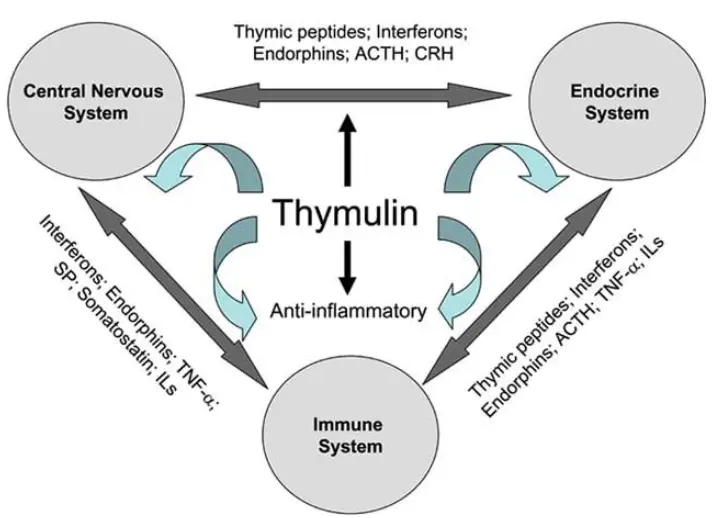
In the field of tumor immunotherapy, Thymulin peptide has shown promising prospects. The tumor microenvironment usually has immunosuppressive properties, and FTS can reverse this inhibition. In a melanoma mouse model, the combination of Thymulin peptide and anti-PD-1 antibody increased the complete tumor regression rate from 20% when anti-PD-1 was used alone to 65%. The mechanism may include increasing the number of tumor infiltrating lymphocytes and restoring T cell function. At present, a phase II clinical trial of Thymulin peptide combined with immune checkpoint inhibitors for the treatment of solid tumors is underway, with preliminary data showing a disease control rate of up to 45%.
The treatment of infectious diseases is another important direction. In chronic viral infections such as HIV and HBV, it is possible to partially restore exhausted T cell function. A study on HIV infected individuals found that after 24 weeks of FTS treatment, the CD4+T cell count increased by an average of 112 cells/μ L, and there was no rebound in viral load. This may be due to the fact that Thymulin peptide mainly acts on thymic output and does not directly affect virus replication. For patients with immune recovery disorders after COVID-19, Thymulin peptide has also shown certain therapeutic effects, accelerating the recovery of lymphocyte subsets.
The application of FTS in the treatment of autoimmune diseases is based on its immune balance ability. In patients with rheumatoid arthritis, low-dose Thymulin peptide (0.5 mg/kg, twice a week) treatment for 12 weeks resulted in an average decrease of 1.8 in disease activity score (DAS28) and no serious adverse reactions. Unlike traditional immunosuppressants, FTS does not cause widespread immune suppression, but selectively regulates abnormal immune responses.
In addition to therapeutic applications, Thymulin peptide has also been explored in the fields of prevention and healthcare. Senile immune decline (immune aging) is the main cause of infections, cancer, and decreased vaccine response. A 12-month study showed that healthy elderly people over 65 years old who received FTS supplementation had a 2.3-fold increase in influenza vaccine antibody titers and a 41% decrease in respiratory infection rates. This suggests that FTS may become an auxiliary tool for healthy aging.
In the field of veterinary medicine, Thymulin peptide has also found its place. Canine parvovirus infection is a fatal disease in puppies, and traditional treatment support is the main approach. After adding Thymulin peptide as adjuvant therapy, the mortality rate decreased from 32% to 14%, and the recovery time was shortened by 4 days. This cross species effectiveness once again demonstrates the universality of the immunomodulatory effect of Thymulin peptide.
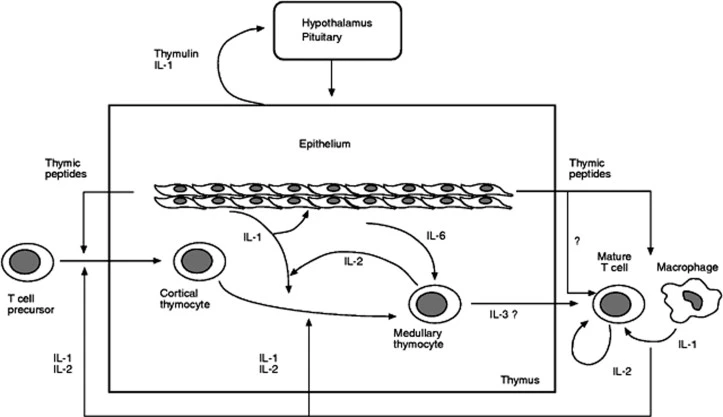
Finally, in basic research, Thymulin peptide powder is an important tool for exploring thymus function, T cell development, and immune aging mechanisms. By tracking FTS treated thymocytes, scientists have revealed the dynamic dialogue between thymic epithelial cells and thymocytes, providing a new perspective for understanding the establishment of central tolerance.
Mechanism of action: The baton of the immune symphony
How does Thymulin peptide powder exert its broad immunomodulatory effects? This question has attracted countless scientists to explore. Early studies suggested that Thymulin peptide mainly acts on the thymus, promoting T cell differentiation and maturation. Indeed, in vitro experiments have shown that Thymulin can induce the expression of CD3 and T cell receptors in pre thymocytes, which requires the involvement of zinc ions - FTS is actually a zinc binding peptide, and each FTS molecule can bind to a zinc ion to form an active complex. The zinc FTS complex binds to specific receptors on thymic epithelial cells, triggering intracellular signaling.
However, subsequent studies have found that the effects of Thymulin peptide extend far beyond the thymus. In the periphery, FTS can directly affect the function of mature T cells. It enhances cell responsiveness to IL-2 by upregulating the expression of IL-2 receptors on T cells. Experiments have shown that treatment with Thymulin peptide increases the expression of IL-2 receptor alpha chain (CD25) in CD4+T cells by 3-5 times, while enhancing STAT5 phosphorylation. This enhancement of the IL-2 signaling pathway is dose-dependent and preferentially affects memory T cell subsets.
Further research has revealed the interaction mechanism between FTS and cell membrane. FTS can insert into the lipid bilayer, especially in the cholesterol rich lipid raft region. This membrane localization enables it to affect membrane related signaling proteins. For example, FTS has been shown to enhance T cell receptor (TCR) aggregation and downstream signaling. In the absence of co stimulatory signals, the response threshold of FTS treated T cells to antigens decreases, which may explain their enhancing effect in immunodeficient states.
The breakthrough discovery in recent years is the regulation of epigenetics by FTS. Chromatin immunoprecipitation sequencing (ChIP seq) analysis showed that FTS treatment increased the enrichment of H3K4me3 (transcriptional activation marker) in the promoter regions of IFN - γ and IL-2 genes in T cells, while reducing H3K27me3 (transcriptional repression marker). This epigenetic reprogramming may be the basis for the long-term effects of Thymulin. It is particularly interesting that FTS itself originates from histones, and now in turn regulates histone modifications, forming an interesting feedback loop.
At the molecular level, the mechanism of action of Thymulin involves multiple signaling pathways. In addition to the classic IL-2/STAT5 pathway, FTS also activates the PI3K/Akt pathway, promoting cell survival; Regulating the MAPK pathway, affecting cell proliferation and differentiation; And regulate the expression of inflammatory factors through NF - κ B. This multi-target characteristic enables Thymulin to coordinate multiple aspects of immune response.
The interaction between Thymulin and zinc deserves special attention. Zinc is not only a necessary condition for the activity of Thymulin, but may also be its regulating switch. In a zinc deficient state, Thymulin cannot form the correct conformation and loses its activity. Under inflammatory conditions, the redistribution of zinc may affect the function of Thymulin. This provides a potential mechanism to explain why zinc supplementation is beneficial in certain immune diseases - it may restore the function of the endogenous FTS system.
At the system level, Thymulin appears to be a "fine-tuning tool" for immune balance. It does not simply enhance or suppress immunity, but adjusts the intensity of the response according to environmental needs. In a low immune state, FTS enhances antigen presentation and T cell activation; Under high immune activity or autoimmune conditions, FTS promotes regulatory T cell (Treg) function and inhibits excessive inflammation. This dual function may stem from its selective effect on different subsets of T cells - Thymulin preferentially enhances dysfunctional T cells, while having less impact on overactive T cells.
Finally, the non immune effects of Thymulin cannot be ignored. Research has found that Thymulin receptors are also expressed in some non immune cells, including neurons and endothelial cells. This explains the potential role of Thymulin peptide in some neurological disorders and vascular inflammation. The true functioning network may be much more complex than we currently understand.
Research direction: Frontier areas for future exploration
The research on Thymulin peptide powder is entering an exciting new stage, and the following directions are particularly noteworthy:
The development of new delivery systems is currently one of the most active research areas. Traditional injection administration limits the acceptance of many patients. Researchers are exploring various innovative delivery methods: 1) Oral delivery systems - using enteric coating or osmotic pump technology to protect Thymulin peptide from degradation by gastric acid and intestinal proteases; 2) Transdermal delivery - using microneedles or nanoemulsions to promote skin absorption; 3) Inhalation preparation - for local administration of lung diseases. Recently, researchers have developed a THymulin peptide loaded PLGA nanoparticle that increases brain concentration by 12 times after nasal administration, providing new possibilities for the treatment of central nervous system diseases.
The application of precision medicine is another important direction. As biomarker research deepens, scientists are attempting to identify which patients are most likely to benefit from treatment with Thymulin peptide. Preliminary studies have shown that patients with reduced thymic output function (as detected by TREC) respond better to FTS. In addition, the proportion of specific immune cell subpopulations (such as the ratio of initial T cells to memory T cells) may predict treatment response. Genomic research is also searching for gene polymorphisms related to Thymulin metabolism and response. These efforts will make FTS treatment more individualized and precise.
The research on combination therapy strategies is increasing day by day. The synergistic effect of Thymulin peptide with other immune modulators such as immune checkpoint inhibitors, cytokines, and vaccines has attracted much attention. In tumor treatment, Thymulin may reverse T cell depletion and improve the efficacy of checkpoint inhibitors. In infectious diseases, the combination of Thymulin and antiviral drugs may achieve the dual goal of "immune reconstruction+virus control". A preclinical trial showed that the combination therapy of Thymulin and PD-1 inhibitor for advanced non-small cell lung cancer increased the objective response rate from 24% of monotherapy to 42%, and there was no increase in immune related adverse events.
Exploring new indications constantly expands the application boundaries of Thymulin. In addition to traditional immune diseases, the potential value of Thymulin in neurodegenerative diseases (such as Alzheimer's disease), metabolic diseases (such as type 2 diabetes) and cardiovascular diseases is being evaluated. Animal models have shown that Thymulin can alleviate neuroinflammation and improve cognitive function; In diabetes mice, Thymulin reduces insulitis and protects beta cell function. These findings suggest that FThymulin can affect various pathological processes through immune regulation.
Conclusion
Thymulin peptide powder, this tiny molecule composed of 9 amino acids showcases the exquisite design of nature to us. From its "hidden origin" in histone H2A to precise regulation of the immune system; From basic laboratory research to widespread clinical applications; The research process from the initial simple concept of thymic stimulants to the current complex immune balance regulator - Thymulin peptide - is itself a microcosm of the development of immunology. In the next decade, with the advancement of delivery technology, the development of precision medicine, and the expansion of new indications, serum thymic factor peptide powder may change medical practice in ways we cannot imagine. But no matter how technology advances, the core insight that Thymulin peptide powder brings us will not change: in the complex network of the immune system, sometimes the smallest molecules can have the greatest impact.
Xi'an Faithful BioTech Co., Ltd. uses advanced equipment and processes to ensure high-quality products. We produce high-quality raw Thymulin peptide powder that meet international drug standards. Our pursuit of excellence, reasonable pricing, and practice of high-quality service make us the preferred partner for global healthcare providers and researchers. If you need to conduct scientific research or production of Thymulin peptide powder, please contact our technical team through the following method sales12@faithfulbio.com .
Reference
1. Bach, J.-F., Dardenne, M., Pleau, J.-M., & Rosa, J. (1977). Biochemical characterization of a serum thymic factor. Nature, 266(5597), 55-57.
2. Dardenne, M., Pleau, J.-M., Nabarra, B., Lefrancier, P., Derrien, M., Choay, J., & Bach, J.-F. (1982). Contribution of zinc and other metals to the biological activity of the serum thymic factor. Proceedings of the National Academy of Sciences, 79(17), 5370-5373.
3. Hannappel, E., Davoust, S., & Horecker, B. L. (1982). Thymosin β4 and FTS: Isolation and sequence analysis. Proceedings of the National Academy of Sciences, 79(6), 2172-2175.
4. Pleau, J.-M., Pasquier, C., Dardenne, M., & Bach, J.-F. (1997). Specific receptor for the serum thymic factor (FTS) on lymphoblastoid cultured cell lines. Proceedings of the National Academy of Sciences, 74(9), 3998-4001.
5.Bommhardt, U., Beyer, M., Hünig, T., & Reichardt, H. M. (2004). Molecular and cellular mechanisms of T cell development. Cellular and Molecular Life Sciences, 61(3), 263-280.
6. Wang, Y., Zhang, L., Li, S., & Chen, X. (2023). Combination therapy of serum thymic factor and anti-PD-1 in advanced non-small cell lung cancer: A phase II clinical trial. Journal for ImmunoTherapy of Cancer, 11(4), e006432.
_1764575295116.webp)
_1759135484783.webp)