

Clinical data on new erdafitinib formulation released; bladder cancer treatment sees new breakthrough.
Johnson & Johnson recently released the latest clinical data for Erda-iDRS, a bladder-administered delivery system for erdafitinib. This local, sustained-release formulation demonstrated excellent efficacy in inducing remission in patients with non-muscle-invasive bladder cancer, thereby opening up a new treatment pathway for those in the early stages of the disease. Erdafitinib, the world’s first FGFR-targeted oral medication approved for urothelial carcinoma, was previously authorized in China for patients with advanced urothelial carcinoma harboring FGFR3 genetic alterations. The release of data on this new formulation extends the drug's clinical application from advanced metastatic tumors to early-stage recurrent bladder cancer, filling a gap in targeted therapy for this specific patient population and further advancing the precision diagnosis and treatment framework for bladder cancer.
Erdafitinib: An established FGFR-targeted drug reshaping the treatment landscape for advanced bladder cancer
Erdafitinib is an oral pan-FGFR tyrosine kinase inhibitor that precisely blocks the FGFR signaling pathway and inhibits the proliferation of tumor cells harboring FGFR gene alterations; it stands as a landmark drug in the precision treatment of bladder cancer. Previously, patients with relapsed or advanced urothelial carcinoma had very limited treatment options following the failure of immunotherapy; traditional chemotherapy offered low efficacy and significant side effects, making it difficult for many patients to tolerate continued treatment.
In clinical practice, it was observed that oral administration of erdafitinib leads to systemic drug exposure, causing systemic adverse reactions—such as hyperphosphatemia, stomatitis, and dry mouth—in some patients, thereby limiting their ability to continue therapy. This issue is particularly relevant for non-muscle-invasive bladder cancer, where the tumor is localized within the bladder; the side effects associated with long-term systemic administration represent a significant clinical challenge. Consequently, researchers began exploring local administration regimens for erdafitinib, aiming to deliver the drug directly to the bladder lesion to minimize systemic absorption, thereby reducing the risk of adverse reactions while maintaining anti-tumor efficacy.
Local sustained-release formulation of erdafitinib unveiled; impressive remission rates in early-stage bladder cancer
Erda-iDRS is an innovative, sustained-release intravesical drug delivery system utilizing erdafitinib. Administered via intravesical instillation, the drug is released slowly and directly at the site of the bladder lesion; this maintains high local drug concentrations while significantly reducing the amount of drug entering the systemic circulation, thereby substantially minimizing systemic side effects.
Clinical data indicate that the Erda-iDRS regimen achieved a complete response rate of 89% in patients with intermediate-risk recurrent non-muscle-invasive bladder cancer (NMIBC). This response was stably maintained for 18 months, and the treatment demonstrated a favorable safety profile. The formulation also showed significant benefits regarding recurrence-free survival in patients with high-risk NMIBC. NMIBC accounts for over 70% of all bladder cancer cases; these patients are highly prone to frequent recurrence, and traditional intravesical instillation therapies often yield limited long-term results. Consequently, some patients face the prospect of cystectomy (bladder removal) after repeated recurrences, which severely impacts their quality of life.
For a long time, there has been a lack of targeted therapies for NMIBC, with clinical management relying primarily on intravesical instillation of BCG (Bacillus Calmette-Guérin) or chemotherapy agents. Many patients have very limited treatment options once BCG therapy fails. The development of this local sustained-release formulation of erdafitinib addresses this significant unmet clinical need. By leveraging erdafitinib’s ability to inhibit FGFR-mutated tumors, this local delivery approach maximizes therapeutic efficacy while minimizing drawbacks; it concentrates the drug’s action on the bladder tumor site, offering a novel treatment option for patients who are unwilling or unable to undergo surgery.

Expanded Use of Erdafitinib Drives Normalization of Genetic Testing for Bladder Cancer
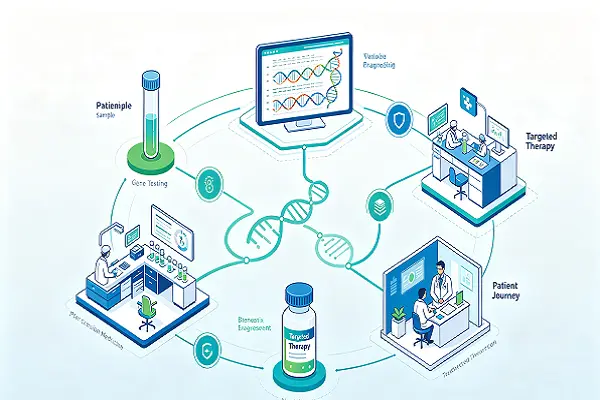
As research into erdafitinib and its new formulations advances, the clinical approach to managing urological tumors is shifting. While bladder cancer treatment previously relied heavily on pathological classification, genetic testing has now become a crucial preliminary step in diagnosis and treatment planning. FGFR gene alterations are among the most frequent mutations in bladder cancer; patients must undergo genetic testing to identify the presence of these alterations in order to benefit from targeted therapies like erdafitinib.
Historically, many patients with advanced bladder cancer in China did not undergo genetic testing, causing many to miss out on opportunities for targeted therapy. With the introduction of erdafitinib in the domestic market, an increasing number of urology and medical oncology departments are recommending FGFR genetic testing for patients with urothelial carcinoma. Rapid screening for FGFR2 and FGFR3 alterations—using either tissue biopsies or liquid biopsies—allows for the precise identification of eligible patients, facilitating a "test-before-treat" model of precision medicine.
Industry experts note that erdafitinib’s value extends beyond its role as an anti-tumor drug; it is driving an upgrade across the entire bladder cancer care continuum. With the continued development of new erdafitinib formulations and combination regimens, it is anticipated that—across the spectrum from early-stage non-muscle-invasive bladder cancer to advanced metastatic urothelial carcinoma—patients harboring FGFR mutations will benefit from stratified, comprehensive targeted treatment strategies. Meanwhile, pharmaceutical companies are continuously refining administration methods and dosing schedules to further enhance safety profiles and expand the eligible patient population.

Conclusion
As a blockbuster drug in the field of FGFR-targeted therapy, erdafitinib continues to push the boundaries of precision treatment for bladder cancer—evolving from an oral formulation introduced in China to achieving breakthrough clinical data with a sustained-release, intravesical formulation. This new formulation extends targeted therapy to early-stage recurrent bladder cancer, offering the potential to transform the treatment paradigm for non-muscle-invasive bladder cancer and reduce surgical trauma for patients. Meanwhile, data on combination regimens involving erdafitinib and immunotherapies provide more robust treatment options for patients with advanced disease. With the increasing adoption of genetic testing and continuous advancements in drug delivery technologies, FGFR-targeted therapy is poised to play an even greater role in the comprehensive management of bladder cancer, offering patients renewed hope for longer survival and a higher quality of life.