

By what structural means does the Vildagliptin API regulate blood glucose homeostasis in the body?
In the fields of hypoglycemic raw material drug development, endocrine preparation research and development, and chronic disease pharmaceutical quality control, Vildagliptin API belongs to the class of oral hypoglycemic raw materials that are selective inhibitors of dipeptidyl peptidase-4. The refined product is a white crystalline powder. Relying on the azacyclic amide complex skeleton, it precisely binds to the DPP-4 target, delays the degradation process of incretin in vivo, and steadily regulates fasting and postprandial blood glucose through a glucose-dependent secretion mode, without inducing a high risk of hypoglycemia. It is a core raw material for the production of oral tablets for type 2 diabetes. At the same time, as an in vitro enzyme activity detection standard and a raw material for compound hypoglycemic preparations, it has a stable and broad application space in the chronic disease drug industry chain.
⚛️Pyrrolidine nitrogen heterocyclic amide functional backbone
Vildagliptin API has the chemical formula C₁₇H₂₅N₃O₂ and a molecular weight of 303.40 Da. The molecule consists of a cyano-substituted pyrrolidine heterocycle, a hydroxyadamantine side chain, and an acetamide linking group. The five-membered pyrrolidine ring carries the cyano functional group, and the adamantane hydrophobic group is connected to the pyrrolidine backbone via an amide bond. This overall spatial configuration allows for perfect embedding within the catalytic groove of the DPP-4 enzyme protein. The cyano group on the pyrrolidine ring can form stable hydrogen bonds with the amino acids at the enzyme's active site. The rigid hydrophobic structure of adamantane fills the hydrophobic cavity inside the enzyme molecule, and the amide bond acts as a connecting hub to maintain the overall molecular spatial arrangement. These three types of groups work together to form the basic chemical structure for high-affinity binding to the target.
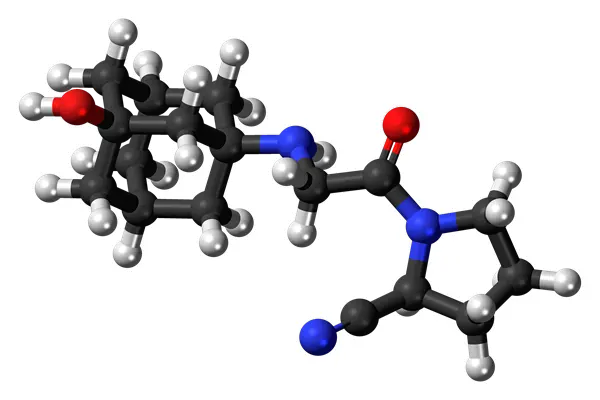
The complete molecule exhibits both moderate lipid solubility and weakly polar hydrophilicity. Its lipid-water partition coefficient is well-suited for transmembrane absorption by the gastrointestinal epithelium. After oral administration, it rapidly crosses the intestinal wall and enters the systemic circulation. Its chemical structure remains stable when stored at room temperature, protected from light, and sealed. Only in strongly alkaline, prolonged aqueous solutions will it undergo amide bond hydrolysis and cyano group hydrolysis and denaturation. Neutral buffered excipients are used throughout the formulation process to avoid damage to the active pharmaceutical ingredient's structure from acidic or alkaline environments.
In terms of physicochemical properties, pharmaceutical-grade refined Vildagliptin API is a uniform white crystalline powder with good dispersion, slight hygroscopicity, and no irritating odor. It is readily soluble in dilute acidic aqueous solutions, slightly soluble in pure water, and almost insoluble in alkanes and nonpolar organic solvents such as oils. Industrial preparation relies on intermediate condensation and low-temperature cyclization reactions to obtain the crude product. After multiple recrystallizations in an ethanol-water mixed solvent and decolorization purification with activated carbon, the finished product consistently achieves an HPLC purity exceeding 99.5%. All process impurities, heavy metals, and residual organic solvents meet ICH quality control standards for human pharmaceutical raw materials. It is suitable for the processing of various solid dosage forms, such as ordinary oral tablets and dispersible tablets.
The adamantane hydrophobic side chain enhances the targeting selectivity of the molecule for DPP-4 enzymes and significantly reduces non-specific binding to DPP-8 and DPP-9 homologs. The pyrrolidone cyano group fixes the binding position of the molecule in the enzyme cavity, and the amide bond stabilizes the overall spatial conformation. The three structural units work together to create the inherent physicochemical advantages of Vildagliptin API, which has high selectivity and low side effects.
🎯Inhibiting DPP-4 prolongs endogenous incretin activity
Vildagliptin API's complete hypoglycemic effect unfolds sequentially along five physiological pathways: DPP-4 targeting blockade, retention of endogenous incretins, glucose-dependent insulin secretion stimulation, inhibition of glucagon secretion, and improvement of the pancreatic β-cell survival environment. Its efficacy is automatically regulated by blood glucose concentration throughout the process; when blood glucose is low, the drug will not continue to induce excessive insulin release, thus avoiding the frequent hypoglycemic adverse reactions of conventional hypoglycemic drugs at the mechanistic level.
- In the first step, after entering the bloodstream, the drug specifically binds to the catalytic sites of circulating and intestinal DPP-4, competitively occupying the enzyme's substrate binding region. This directly blocks the hydrolytic cleavage of two key incretins, GLP-1 and GIP, by DPP-4. Under normal physiological conditions, incretins secreted by the intestines after eating are rapidly degraded and inactivated by DPP-4 within minutes. Vildagliptin API effectively inhibits enzyme activity, significantly increasing the retention time of endogenous incretins in the body and maintaining their original physiological activity.
- The second step involves the retention of active incretins, which regulate insulin secretion based on changes in blood glucose concentration. When postprandial blood glucose rises, incretin signals are transmitted to pancreatic β-cells, stimulating the islets to synthesize and release insulin on demand according to blood glucose levels. This accelerates the uptake and utilization of blood glucose by peripheral tissues, steadily lowering postprandial peak blood glucose. Once blood glucose returns to the normal range, the incretin effect automatically slows down, preventing uncontrolled insulin secretion.
- The third step involves active incretins acting simultaneously on pancreatic α-cells, inhibiting the synthesis and release of glucagon. Glucagon promotes glycogenolysis and increases blood glucose levels in the liver. With the secretion of glucagon suppressed, hepatic glucose output decreases accordingly, further reducing blood glucose levels from endogenous glucose production channels, thus achieving a steady decline in fasting blood glucose.
- The fourth step involves long-term, continuous incretin homeostasis to protect intrinsic pancreatic cells, reducing the persistent damage to pancreatic β-cells caused by high glucose and high lipid toxicity, delaying the progressive decline of pancreatic function during the course of type 2 diabetes, gradually improving the patient's own pancreatic secretory reserve capacity, and helping diabetic patients gradually optimize their own glycemic regulation function.
Vildagliptin API targets only DPP-4, with minimal interference with the physiological function of other proteases in the body. It does not directly stimulate uncontrolled insulin secretion from the pancreas. Whether used alone or in combination with metformin, it exhibits excellent drug safety, making it suitable for the vast majority of type 2 diabetes patients for long-term home oral blood glucose control.
🧬Raw materials used in medications for type 2 diabetes
The industrial application of Vildagliptin API revolves around clinical hypoglycemic drugs for type 2 diabetes, covering five major application areas: single-dose oral solid dosage form production, development of multi-component compound hypoglycemic drugs, enzyme activity assays in pharmacological laboratories, drug quality control and standardization, and in vitro pharmacological screening for diabetes. It is a commonly used raw material in first-line hypoglycemic prescriptions for type 2 diabetes.
The industrial production of single-dose tablets is the most mainstream application of the product. Pharmaceutical companies use high-purity Vildagliptin API combined with pharmaceutical excipients such as lactose, microcrystalline cellulose, and croscarmellose sodium to prepare 50 mg oral tablets. These are used as monotherapy for newly diagnosed type 2 diabetes patients whose diet and exercise control are not up to standard, providing stable 24-hour blood glucose control. They can also be used as second-line medication in combination with other hypoglycemic agents for combined blood glucose control. Dispersible tablets are suitable for elderly diabetic patients with swallowing difficulties, as they disintegrate rapidly in water for easy administration. Both types of formulations consume a massive amount of raw material production capacity annually.
The development of compound hypoglycemic agents continues to expand the application scenarios of raw materials. The industry commonly uses a scientific ratio of Vildagliptin API and metformin API to formulate compound tablets. Leveraging the complementary dual hypoglycemic mechanisms of DPP-4 inhibition and biguanide's reduction of hepatic glucose output, these tablets synergistically improve fasting and postprandial blood glucose levels. This enhances hypoglycemic efficacy while reducing the dosage of individual raw materials, minimizing adverse reactions such as gastrointestinal discomfort associated with high-dose medications. Compound products have become one of the mainstream categories in the global diabetes medication market.
In vitro DPP-4 enzyme activity detection in pharmacology laboratories is a standard research application. Pharmaceutical R&D centers and pharmacology laboratories in medical universities use standardized Vildagliptin API to prepare gradient concentration solutions, establishing standardized DPP-4 enzyme inhibition screening models. These models serve as positive control reagents for screening lead compounds of novel DPP-4 inhibitor structures, improving the in vitro activity screening system for new hypoglycemic APIs, and accelerating the development of next-generation hypoglycemic drugs.
Drug testing institutions use ultra-high purity Vildagliptin API as an external standard in liquid chromatography to quantitatively detect the content of active ingredients in commercially available single-ingredient and compound tablets. This controls the quality of finished products and is also used for random sampling and testing in the drug distribution process, standardizing product quality in the global hypoglycemic agent market.
In addition, Vildagliptin API is used for pharmacological evaluation in diabetic animal models. Researchers use streptozotocin to induce diabetic experimental animals, and observe changes in blood glucose and pancreatic tissue pathology after gavage administration to determine the safe and effective dosing range of the active pharmaceutical ingredient, providing a scientific reference for defining the clinical dosage of the formulation.
🔭 Formulation upgrades and in-depth expansion of indications
Global optimization efforts surrounding the Vildagliptin API focus on five main areas: development of novel sustained-release and controlled-release formulations, development for indications with multiple complications, improvement of green synthesis processes, optimization of synergistic formulations, and modification of derivative structures. These efforts aim to continuously explore the clinical application potential of this DPP-4 inhibitor API, optimize the user experience, and reduce industrial production costs.
The development of long-acting sustained-release formulations improves patient convenience. Conventional formulations require twice-daily oral administration. Research teams are using sustained-release carriers such as hydroxypropyl methylcellulose and ethylcellulose to encapsulate Vildagliptin API into sustained-release tablets. By relying on matrix-based sustained-release technology to slow drug dissolution in the intestine, a single daily dose can stably cover the entire day's blood glucose control needs, significantly improving medication adherence in middle-aged and elderly patients. The availability of these sustained-release formulations continues to drive new demand in the downstream API market.
The indications are being expanded towards diabetes mellitus complications. Pharmacological studies of Vildagliptin API for diabetic nephropathy, non-alcoholic fatty liver disease, and diabetic cardiovascular damage are being conducted. Leveraging the organ-protective potential of incretins, the application value of the active pharmaceutical ingredient (API) in the early intervention of chronic disease complications is being explored, gradually broadening the clinical applicability of the product.
Green continuous synthesis processes are being iteratively optimized to improve environmental indicators. Traditional synthesis routes use large amounts of highly toxic halogenated organic solvents, resulting in high costs for waste disposal. Modern chemical enterprises are switching to low-temperature aqueous phase catalytic condensation and continuous flow reaction equipment, reducing the use of organic solvents. Membrane filtration purification replaces multi-step organic extraction processes, significantly reducing wastewater emissions and aligning with global green production control standards for APIs, while simultaneously improving product purification yield.
Multi-target synergistic formulations are being continuously refined. In addition to metformin, studies are being conducted on the ratio of Vildagliptin with SGLT2 inhibitors and GLP-1-related formulations. Multi-mechanism combination therapy achieves simultaneous regulation of blood glucose, weight, and blood lipids, adapting to the individualized medication needs of obese type 2 diabetes patients and enriching the clinical stratified medication options. We developed novel selective DPP-4 derivatives by fine-tuning the core structure. Based on the original adamantylpyrrolidone skeleton of Vildagliptin, we modified the side chain substituents to optimize molecular enzyme binding affinity and in vivo half-life. We screened for a new generation of DPP-4 inhibitor lead molecules with long-acting effects and lower hepatic and renal accumulation, and shortened the new drug development cycle by relying on a mature skeleton.
Conclusion
Vildagliptin API, with its unique molecular configuration of adamantane-modified pyrrolidine cyanamide, selectively inhibits DPP-4 to prolong the activity of endogenous incretins. Leveraging its glucose-dependent hypoglycemic mechanism, it stably manages fasting and postprandial blood glucose in patients with type 2 diabetes. Its low risk of hypoglycemia solidifies its important position among oral hypoglycemic raw materials, covering multiple application areas including single-drug tablets, combination hypoglycemic agents, pharmacological screening, and drug quality control. With the availability of long-acting sustained-release formulations, continuous exploration of complication indications, widespread adoption of green production processes, improvement of multi-target compound formulations, and advancements in the development of novel derivatives, the market application space for Vildagliptin API continues to expand, making it an indispensable core hypoglycemic raw material for the chronic management of type 2 diabetes globally.
As a leading supplier of Vildagliptin API, we understand the critical importance of supply chain stability in a competitive market. Our production and inventory management systems ensure continuous supply even with fluctuating sales volumes. Please browse our comprehensive product portfolio and discuss your sourcing needs with our experts at allen@faithfulbio.com.
References
- Ahren, B., et al. (2004). Vildagliptin, a dipeptidyl peptidase IV inhibitor, improves beta-cell function in type 2 diabetes. Diabetologia, 47(10), 1702–1711.
- Bosi, E., et al. (2007). Vildagliptin plus metformin combination therapy in type 2 diabetes. Diabetes Care, 30(5), 1190–1196.
- Deacon, C. F. (2011). DPP-4 inhibition: mechanisms of action and clinical applications. European Journal of Clinical Investigation, 41(11), 1235–1248.
- Prato, S. D., et al. (2022). Renoprotective effects of vildagliptin in early diabetic nephropathy. Journal of Nephrology, 35(3), 897–905.
- Gao, Y., et al. (2023). Green synthetic route optimization for industrial production of vildagliptin API. ACS Sustainable Chemistry & Engineering, 11(34), 12567–12575.
- Schweizer, A., et al. (2006). Pharmacokinetics and pharmacodynamics of vildagliptin in healthy volunteers. Clinical Pharmacology & Therapeutics, 80(2), 161–170.
- Liao, H., et al. (2025). Combination formulation development of vildagliptin with SGLT-2 inhibitor for obese diabetic patients. Journal of Pharmaceutical Sciences, 114(8), 2891–2899.