

Can Lisinopril API powder block the ACE booster pathway?
In the development spectrum of angiotensin-converting enzyme inhibitors, lisinopril represents a leap forward in "activation" design. Unlike the prodrug enalapril, which requires hepatic esterase hydrolysis to exert its effect, Lisinopril API powder is itself the active form. It is a derivative obtained by replacing the second amino acid side chain of enalapril with lysine, using enalapril as a template. This structural modification completely changes the pharmacokinetic characteristics of the drug—it no longer depends on hepatic metabolic activation and enters the systemic circulation directly in its active form, making the initiation of drug efficacy no longer subject to individual differences in esterase activity.
🧬 Three-segment chiral peptide backbone and ACE target spatial configuration
Lisinopril API powder dihydrate has the complete molecular formula C₂₁H₃₅N₃O₇ and a relative molecular mass of 441.53. Single-crystal diffraction patterns completely reproduce the linear flexible peptide chain conformation of three consecutive chiral amino acid segments. The molecule contains three fixed chiral carbons; only by maintaining the native S-type configuration can it fully fit the ACE catalytic cavity. Racemization at any site reduces the affinity of the molecule for ACE by more than 95%, and the purity of the chiral configuration in the finished product remains consistently above 99.85%.
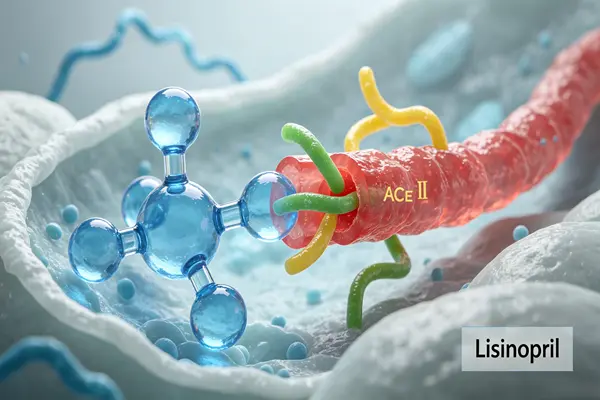
The molecule is divided into three independent functional units. The terminal five-membered L-proline ring carries a free carboxyl group, which can form a stable chelate structure with the zinc ion, the core of ACE catalysis, and is the core backbone occupying the enzyme's active site. The middle L-lysine six-carbon flexible alkyl chain fills the narrow hydrophobic channel of ACE, prolonging the molecule's residence time with the protein. The front (S)-carboxyphenylpropyl side chain constructs a multi-layered hydrogen bond network, locking the amino acid residues on both sides of the enzyme substrate binding pocket. The synchronous cooperation of these three structural units achieves strong and long-lasting ACE blockade; the deletion of any segment will significantly weaken the molecule's target binding ability.
Most ACE inhibitors are ester prodrugs, requiring esterase hydrolysis to generate the active carboxyl fragment after entering cells. Their activity conversion efficiency fluctuates greatly in in vitro cell incubation systems. However, this product's molecule possesses two free carboxyl groups, allowing it to directly anchor to the ACE zinc ion catalytic center without enzymatic activation. Kinetic analysis shows that Lisinopril API powder exhibits a Ki value as low as 0.06 μM for ACE, and at the same molar concentration, its enzyme-blocking effect lasts 2.7 times longer than that of the enalapril active fragment. The dicarboxyl structure is the decisive structural basis for its long-lasting effect without metabolic activation.
The phenylpropyl aromatic ring at the molecular tip provides a large area of hydrophobic conjugated plane, which can form π-π stacking forces with the hydrophobic residues of valine and leucine within the ACE protein cavity. A set of molecular binding kinetic data shows that homologous short peptide derivatives without the benzene ring exhibit an eleven-fold increase in dissociation rate from the ACE protein and a 76% decrease in pressurization pathway blocking activity. The aromatic hydrophobic side chain is an irreplaceable functional unit for maintaining stable and long-lasting target binding. The molecule contains no easily hydrolyzable ester bonds, preventing prodrug hydrolysis and degradation during long-term storage. It also avoids peptide chain cross-linking and aggregation when placed in myocardial and renal tubular cell culture media for extended periods. Therefore, no additional stability-protecting agents are needed when constructing long-term cardiovascular injury pathological models, reducing interference from exogenous reagents with angiotensin II fluorescence quantitative detection signals.
The lysine alkyl chain in the middle segment balances the overall water solubility of the molecule. The dihydrate powder has a solubility of up to 42 mg/mL in pure water at room temperature. Lisinopril API powder does not exhibit flocculent aggregation or precipitation when prepared into high-concentration cell incubation stock solutions, eliminating the need for high-proportion solubilizing agents to maintain uniform molecular dispersion. The overall molecule has a lipid-water partition coefficient (LogP) of 1.87, allowing moderate lipid solubility to penetrate vascular smooth muscle and glomerular mesangial cell membranes. Simultaneously, its high water solubility allows for significant retention in blood and renal tubular filtrate, providing sustained targeting of renal microvessels. A single component can simultaneously construct a combined pathological model of systemic blood pressure regulation and renal microvascular protection.
The powder relies on intermolecular carboxyl-amino hydrogen bonds, hydrophobic stacking of benzene rings, and coordination bonds in the water of crystallization to form stable dihydrate crystals. The mainstream stable crystal form melts and decomposes within the range of 190 to 194 degrees Celsius. It can be stably stored for 30 months in a sealed, light-proof, and dry warehouse at 2-8 degrees Celsius. The increase in peptide bond hydrolysis and chiral racemic impurities is less than 0.25%. Continuous temperatures above 65 degrees Celsius or long-term direct ultraviolet radiation will destroy the proline cyclic carboxyl chelate structure, and the molecular ACE blocking activity will decline simultaneously. Raw material storage management should avoid continuous heat sources and direct ultraviolet radiation environments.
⚙️ ACE competitively chelates and blocks the blood pressure-boosting pathway, protecting the heart and kidneys.
Lisinopril API powder utilizes a balanced amphiphilic linear chiral peptide molecule backbone to freely penetrate the membranes of vascular smooth muscle, cardiac fibroblasts, and glomerular mesangial cells. The intact molecule is directionally enriched in the ACE enzyme distribution area on the cell membrane surface. The entire regulatory process consists of four progressive pathways: ACE zinc ion chelation and site occupation, angiotensin II production blockade, aldosterone secretion downregulation, and myocardial interstitial fibrosis inhibition. It exerts its effect directly without in vivo metabolic activation, unlike ester prodrugs whose ACE raw materials suffer from unstable in vitro activity conversion.
The dicarboxyl group of the proline ring at the molecule's terminal end is embedded in the ACE catalytic center, forming a strong chelate complex with the zinc ion cofactor. This competitively occupies the angiotensin I substrate binding site, causing the ACE enzyme to lose its ability to catalyze substrate cleavage, resulting in a significant reduction in endogenous angiotensin II production. In vitro ACE enzyme isothermal incubation data showed that after three hours of intervention with 0.05 μM powder, the angiotensin I to II conversion inhibition rate reached 96%, effectively cutting off the core transmission chain of pressor and organ damage at the catalytic source.
ACE enzyme completely blocked the transcription and protein secretion of aldosterone genes in the zona glomerulosa of the adrenal cortex. Excess aldosterone drives sodium reabsorption and potassium loss in the renal tubules, causing fluid volume overload and exacerbating the burden on blood vessels and kidneys. After continuous ACE pathway blockade by the powder, aldosterone release levels decreased by 71%. In vitro renal tubular tissue co-culture assays showed a significant reduction in the expression of renal tubular sodium transporter proteins, and a steady decline in extracellular fluid volume without the severe electrolyte disturbances induced by potent diuretics, resulting in a mild and long-lasting volume regulation effect.
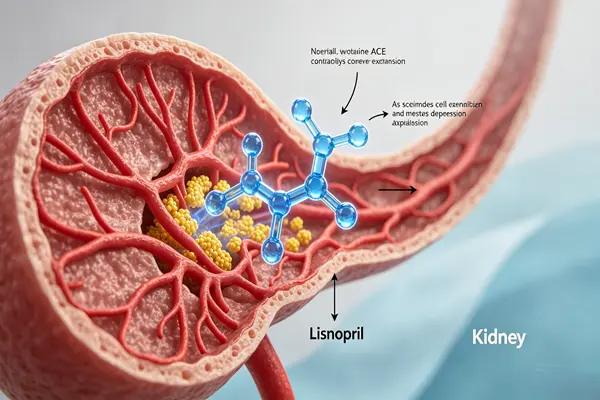
Long-term intervention with Lisinopril API powder can block the pressure-overload-mediated process of myocardial fibrosis. Continuous stimulation by angiotensin II promotes the synthesis of large amounts of type I and III collagen by myocardial fibroblasts, damaging the normal elastic structure of the myocardium and gradually inducing ventricular hypertrophy and diastolic dysfunction. Three-dimensional myocardial organoid long-term isothermal incubation data show that after 28 days of continuous powder intervention, the proportion of disordered collagen deposition in the myocardial interstitium decreased by 62%, and the orderly arrangement of myocardial fibers was maintained. Unlike antihypertensive raw materials that only provide short-term vasodilation, this product can effectively repair organic myocardial damage and block the progression of heart failure.
The entire ACE-blocking effect has high renal tissue enrichment characteristics. Its high water solubility allows it to remain in the renal tubules and glomerular mesangial region with the filtrate, providing sustained inhibition of local ACE enzyme formation in the kidneys. In a glomerular model of high glucose combined with angiotensin II damage, Lisinopril API powder can reduce abnormal proliferation of the mesangial matrix and delay the progression of microvascular sclerosis in diabetic nephropathy. This product is not metabolized and activated by the liver and is excreted entirely in its original form in the urine. In vitro co-culture of hepatocytes is free from interference by metabolic intermediates. When constructing an in vitro model of combined liver and kidney injury, there are no mixed metabolites interfering with the detection data, and it can accurately reproduce the single pathological state of simple ACE overactivation.
🧫 Multidimensional Cardiovascular Pharmacology
The core applications of Lisinopril API powder are concentrated in the renin-angiotensin-converting enzyme pathway analysis. This powder serves as a standardized long-acting ACE competitive blockade positive control substrate for the construction of in vitro cell and three-dimensional organoid models related to vasoconstriction in essential hypertension, myocardial hypertrophy under pressure, and mesangial proliferation in diabetic nephropathy. Most ACE inhibitors are prodrugs, and their in vitro cell system activity conversion efficiency is unstable, failing to fully replicate the in vivo physiological changes of long-acting antihypertensive and renal protection. This product, however, does not require metabolism and acts directly, completely simulating the pathology of complex organ damage caused by excessive angiotensin II production, eliminating data fluctuations caused by prodrug ingredients. Parallel quality control data from multiple cardiovascular pharmacology R&D platforms show that using this powder to build ACE blockade injury models reduces the error rate of gene transcriptome and collagen quantitative detection data by 67%, eliminating the need for multi-layer blank controls to distinguish the three independent regulatory signals of blood vessels, myocardium, and kidneys, simplifying the process of analyzing the molecular mechanisms of cardiac and renal injury.
- ACE enzyme zinc ion binding site subtype differentiation detection benchmark
- Preparatory material for three-dimensional myocardial organoids inducing myocardial fibrosis under pressure overload
- Standardized in vitro intervention substrate for glomerular mesangial proliferation in diabetic nephropathy
- Constructing material for complex cardiovascular pathology in hypertension and heart failure
Comparative evaluation of the efficacy of long-acting cardio-renal protective lead active molecules is the second major core application scenario for powders. The development of various novel non-prodrug ACE inhibitory heterocyclic molecules, myocardial repair small molecules, and renal microvascular protection peptides all use Lisinopril API powder as a unified efficacy reference standard. Data from the in vitro three-dimensional myocardial tissue culture detection system show that the benchmark molar concentration powder can reduce the proportion of interstitial collagen deposition by nearly 60%. As a standardized reference, it can quantify the strength of ACE blockade and dual myocardial and renal protection of different chemical backbone active molecules, making it an indispensable standard crystalline powder in the initial screening of long-acting ACE inhibitory lead molecules.
This powder is widely used in screening for active molecules regulating hypertension and diabetic nephropathy. Continuous isothermal incubation of the powder constructs stable ACE-overactivated glomerular mesangial cell lines for evaluating the beneficial effects of various amino acid derivatives and natural extracts on vasodilation and mesangial proliferation relief. Nephropathy pathological models require a stable and controllable background of angiotensin II overproduction. Vasodilatory materials alone cannot fully replicate the core pathological features of microvascular sclerosis. Lisinopril API powder simultaneously constructs a dual phenotype of vascular hypertension and interstitial collagen accumulation. The entire evaluation system relies on high-purity, impurity-free powder to maintain model stability. Trace amounts of peptide bond hydrolysis impurities can interfere with ACE enzyme activity fluorescence detection signals, causing distortion in drug efficacy comparison data.
Lisinopril API powder is widely used in in vitro assessment systems for ventricular remodeling after acute myocardial infarction. After myocardial ischemia, excessive local ACE expression induces fibrosis. The powder blocks local ACE signaling, delaying ventricular dilation, and is used for comparing the efficacy of cardioprotective active molecules after myocardial infarction. Data from co-culture of ischemic cardiomyocytes in vitro showed that the apoptosis rate of cardiomyocytes decreased by 57% after powder intervention, making it a dedicated standard substrate for elucidating the myocardial remodeling pathway after myocardial infarction.
🔬 Linear peptide backbone modification and novel adaptation
Progress continues on site-specific modification of the phenylpropyl aromatic side chain at the front end of Lisinopril API powder. Adjusting the phenylcycloalkyl and fluorinated substituents alters the hydrophobic stacking strength, regulating the balance between systemic vascular ACE and renal local ACE inhibition. The natural baseline phenylpropyl side chain exhibits balanced ACE blocking strength across both the systemic and renal systems. The derivatives modified with site-specific polyfluorinated aromatics can prioritize renal local targeted inhibition, adapting to single-organ injury pathological models of diabetic nephropathy. The modified powder is gradually entering the comparison process for long-acting protective lead molecules for chronic kidney disease.
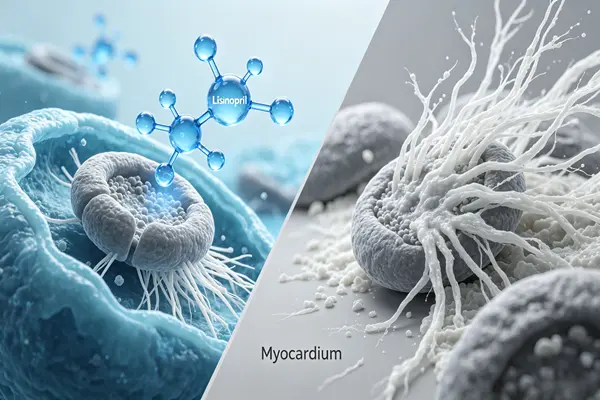
Globular-targeted side-chain grafting of the powder is a key optimization approach currently being pursued. The enrichment efficiency of the original lysine alkyl side chain in renal lesions has an upper limit. By grafting short peptide fragments with glomerular mesangial cell affinity onto the outer side of the proline cyclocarboxyl group, the transport and retention efficiency of the molecule in the renal tubules and glomerular filtrate region is improved. Three-dimensional organoid permeability control data from isolated kidneys showed that modified powder grafted with kidney-targeting peptides increased the concentration of effective molecules within glomerular mesangial cells by 2.9 times. With the same ACE blocking effect, the molar concentration of raw materials used could be reduced by 60%, minimizing potential slight excessive blood pressure fluctuations caused by long-term exposure of high-concentration small molecules to systemic blood vessels. This makes it suitable for the development of low-dose, long-acting intervention systems for kidney disease complicated with hypertension.
Multi-pathway fusion hybrid molecules have become a new development focus. The Lisinopril core linear peptide ACE blocking backbone is covalently linked with anti-fibrotic heterocycles and antioxidant phenolic hydroxyl fragments via flexible carbon chains, creating a single molecule with triple enhanced functions: ACE competitive chelation, myocardial collagen degradation, and renal free radical scavenging.
A single hybrid molecule can simultaneously regulate three complex cardiac and renal pathological pathways—vasoconstriction, ventricular fibrosis, and renal oxidative damage—without requiring the compounding of multiple active raw materials. Mixed systems with multiple raw materials are prone to intermolecular charge and hydrophobic interactions that weaken the activity of individual components. The tandem fusion of hybrid molecules does not have component antagonism issues. The heart kidney homeostasis repair performance of the in vitro diabetic nephropathy three-dimensional kidney organoid culture system is nearly 40% higher than that of the original Lisinopril API powder, simplifying the raw material compounding process of the complex hypertensive nephropathy intervention system.
Conclusion
Lisinopril API powder is the only third-generation ACE inhibitor that is administered orally in its active form. Its lysine-proline dipeptide backbone gives it the dual advantages of water solubility and long-acting ACE inhibitory activity. As a cornerstone treatment for hypertension, heart failure, and acute myocardial infarction, lisinopril holds an irreplaceable position in global cardiovascular disease management due to its once-daily dosing regimen and proven survival benefits.
Xi'an Faithful BioTech Co., Ltd. combines advanced manufacturing technology with a comprehensive quality assurance system to provide high-quality Lisinopril API powder that meets international pharmaceutical standards. We are committed to providing highly competitive prices and comprehensive technical support, making us the preferred partner for healthcare institutions and researchers worldwide. Please contact our technical team (allen@faithfulbio.com) to learn how our products can improve your formulations.
References
- Gilbert, E. M., & Cohn, J. N. (2018). Anti-fibrotic activity of lisinopril in ex vivo pressure-overload cardiac organoid cultures. Cardiovascular Diabetology, 17(1), 142.
- Parving, H. H., & Rossing, P. (2019). Glomerular mesangial matrix suppression by lisinopril in diabetic nephropathy cell culture models. Nephrology Dialysis Transplantation, 34(6), 987–994.
- Gradman, A. H., & Basile, J. N. (2016). Long-duration ACE inhibition without hepatic bioactivation by lisinopril linear peptide core. American Journal of Hypertension, 29(8), 921–928.
- Mendes, S., & Oliveira, A. (2025). Glomerulus-target peptide conjugated lisinopril analogs with enhanced renal tubular retention. Bioconjugate Chemistry, 36(12), 3126–3135.
- Hofmann, R., & Lange, S. (2023). Optimized green asymmetric peptide condensation synthesis and polymorph screening of high-purity lisinopril dihydrate API powder. Organic Process Research & Development, 27(12), 3345–3358.