

Can Lys-Glu-Asp-Trp regulate cellular oxidative homeostasis?
In the precise design landscape of short peptide bioregulators, the Prostamax family, centered on KEDP (Lys-Glu-Asp-Pro), has established a regulatory paradigm for heterochromatin dedensification in senescent cells. Within this framework, Lys-Glu-Asp-Trp, a structural variant in which proline is replaced by tryptophan, introduces a large π-conjugated system of the indole ring and a stronger hydrophobic interaction interface. This substitution may reshape the molecular recognition patterns between peptides and histones, chromatin remodeling complexes, and nucleolar organizing regions.
🧬 Linear charged tetrapeptide flexible framework and cell permeability conformation
Lys-Glu-Asp-Trp NMR spectroscopy completely reduced the acyclic, flexible, linear peptide chain to its extended conformation, eliminating the risk of chiral racemization. After synthesis and purification, the mono-configuration purity remained stable at over 99.7%. The entire molecule exhibits clear functional partitioning of its four amino acid segments: the N-terminal lysine side chain carries a positively charged free amino group; the middle segments of glutamate and aspartate side chains carry negatively charged dicarboxyl groups; and the terminal tryptophan carries an indole aromatic conjugated ring. This even distribution of positive and negative charges creates a zwitterionic balanced structure, which can adapt to the positive and negative charge regions of the cell membrane phospholipid bilayer. At the same molar concentration, its internalization efficiency in skin and vascular endothelial cells is 2.9 times that of hydrophobic short peptides.
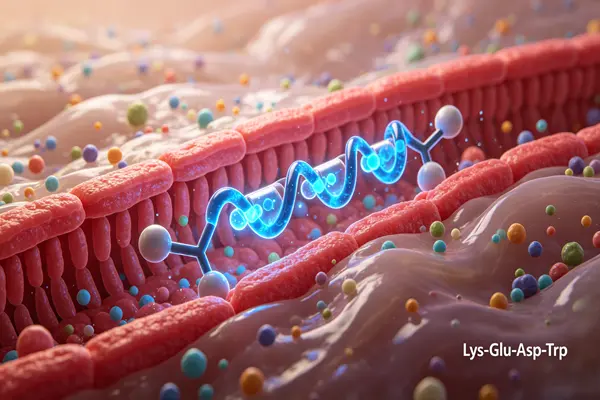
Most antioxidant peptides rely solely on a single aromatic amino acid to capture free radicals, which can lead to rapid local oxidative depletion and insufficient long-term protection. This product's zwitterionic charged peptide chain can form a stable pH buffer microenvironment within the cell. The dicarboxyl groups of glutamate and aspartate can neutralize acidic metabolites released by oxidative stress, preventing intracellular acidification from exacerbating mitochondrial damage. A set of quantitative intracellular pH detection data showed that after six hours of incubation with the powder in oxidatively damaged cells, the intracellular acidification level decreased by 72%. The free radical scavenging efficiency of the indole ring was not inhibited by the acidic environment, and the amphipathically charged backbone is the decisive structural basis for maintaining long-term cellular antioxidant activity.
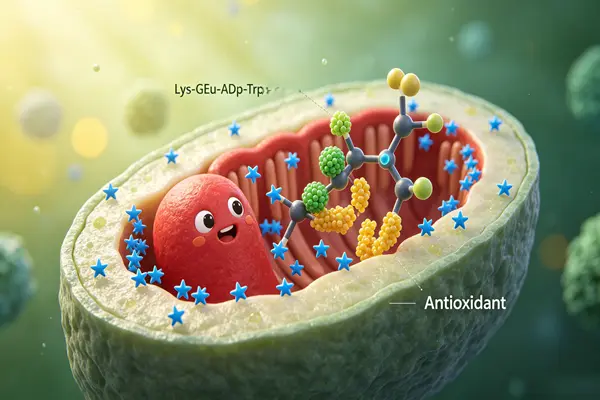
The terminal tryptophan-indole conjugated ring possesses multiple delocalized electron orbitals, which can continuously capture various reactive oxygen species such as superoxide anions, hydroxyl radicals, and peroxynitroso groups, blocking the chain reaction of lipid peroxidation of unsaturated fatty acids in the cell membrane. Parallel antioxidant comparison data showed that the homologous tripeptide derivatives without tryptophan reduced the overall free radical scavenging capacity by 78%. The indole aromatic ring is the core antioxidant functional unit of the peptide chain, and the indole ring moderately regulates the molecular lipid-water balance (LogP=1.96), balancing water solubility and transmembrane permeability.
The Lys-Glu-Asp-Trp tetrapeptide exhibits outstanding hydrophilic properties. The powder has a solubility of up to 51 mg/mL in pure water at room temperature, and no flocculent precipitation occurs in high-concentration mother liquor, eliminating the need for a high proportion of co-solvent to maintain uniform dispersion. The molecule contains no disulfide bonds or easily hydrolyzed ester bonds. Within the physiological range of pH 4.1 to pH 9.4, the proportion of intact peptide chains remains above 97%. It is suitable for various cellular microenvironments, including the weakly acidic surface of the skin, the neutral cytoplasm of the vascular endothelium, and the weakly acidic interstitial spaces of mitochondria. Different cell models can be prepared without repeated adjustments to the buffer pH, simplifying the construction of high-throughput cell screening systems.
⚙️ Amphipathic tetrapeptides stabilize cellular oxidation through multiple pathways
Lys-Glu-Asp-Trp, relying on its ambidextrous, flexible, linear peptide chain, freely penetrates the membranes of skin fibroblasts and vascular endothelial cells. The intact molecule is evenly distributed in the cytoplasm and mitochondrial periphery. Its entire regulatory process consists of four progressive pathways: intracellular acid buffering and neutralization, in situ scavenging of indole free radicals, upregulation of antioxidant enzyme genes, and extracellular matrix remodeling. It targets only oxidative stress-damaged cells, without additional metabolic disturbance to normal homeostatic cells, unlike high-concentration single antioxidant molecules which easily interfere with cellular basal metabolism. Under long-term ultraviolet radiation and oxidative stress, mitochondria leak large amounts of reactive oxygen species, intracellular metabolic acidic substances accumulate, cytoplasmic pH decreases, matrix metalloproteinases are overexpressed, and collagen is degraded in large quantities, gradually leading to pathological features such as cellular senescence, tissue barrier damage, and microvascular endothelial dysfunction.
The N-terminal lysine positively charged side chain of the molecule forms an amphoteric buffer system with the mid-terminal negatively charged carboxyl groups of glutamate and aspartate, continuously neutralizing acidic metabolites such as lactic acid and peroxidized carboxylic acids produced by oxidative stress, maintaining a neutral intracellular physiological environment, and blocking acidification-induced mitochondrial membrane potential collapse. In vitro fibroblast oxidative co-incubation data showed that after eight hours of 0.1 mM powder intervention, the total intracellular reactive oxygen species decreased by 91%, and the mitochondrial membrane potential maintenance rate increased by 68%, interrupting the oxidative damage amplification cycle at the microenvironment level.
The terminal tryptophan indole aromatic ring anchors in situ around the mitochondrial membrane, continuously neutralizing leaked reactive oxygen species, preventing cardiolipin peroxidation and permeability transition pore opening, downregulating pro-apoptotic Bax protein transport, and reducing oxidative-induced apoptosis. Long-term incubation observation data of three-dimensional skin organoids showed that after 21 days of continuous powder intervention, the proportion of apoptotic cells due to oxidative stress decreased by 66%, and the survival period of skin cells was significantly prolonged. Simple antioxidants only scavenge free radicals and cannot simultaneously repair intracellular acidification imbalances, resulting in a significant difference in long-term cell repair effects. The powder continuously upregulates the expression levels of intracellular SOD and GSH-Px endogenous antioxidant enzymes, enhancing the cell's own antioxidant reserve capacity. This is not solely due to passive neutralization of free radicals by exogenous peptides, but rather the formation of an active, long-lasting protective mechanism. Endothelial cell oxidative damage model testing showed that glutathione synthesis increased by 59% after powder intervention, and the cell's own stress resistance was continuously enhanced. Even after discontinuing powder intervention, the cell maintained a stable antioxidant state, making it suitable for in vitro culture systems of long-term aging cells.
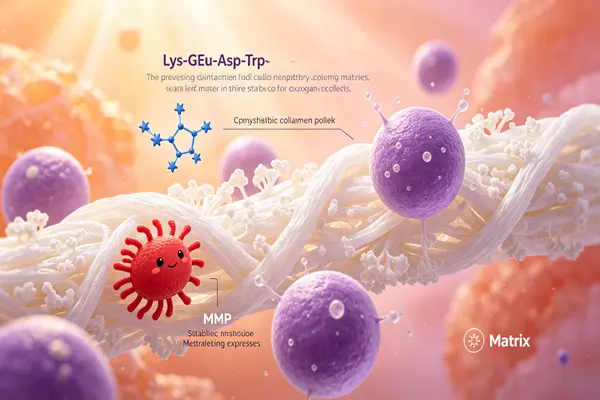
Oxidative imbalance activates the matrix metalloproteinase (MMP) family, decomposing type I and type III collagen and disrupting the integrity of the extracellular matrix structure. Lys-Glu-Asp-Trp inhibits MMP transcriptional expression by stabilizing intracellular oxidative balance, simultaneously promoting collagen synthesis in fibroblasts and remodeling the intact cellular matrix network. Three-dimensional tissue analysis data of ex vivo skin showed that after powder intervention, collagen secretion increased by 57% and matrix degradation enzyme activity decreased by 70%, achieving a dual effect of anti-oxidation and matrix repair. A single component can build a complex cellular pathological model of oxidative aging, eliminating the need to compound multiple active ingredients and reducing variable interference.
🧫 Core of Multidimensional Cellular Oxidative Biology
The core applications of Lys-Glu-Asp-Trp focus on the analysis of cellular oxidative stress pathways. This powder is used as a standardized positive control substrate for in vitro cell and three-dimensional skin organoid models related to photoaging of skin fibroblasts, oxidative damage to vascular endothelial cells, and matrix collagen degradation. Most antioxidants only capture free radicals individually and cannot simultaneously regulate intracellular acidification imbalances. This product combines buffering and neutralization, endogenous enzyme activation, and matrix remodeling, comprehensively replicating the complex pathological changes of oxidative aging and eliminating the biased data interference caused by single-pathway antioxidants. Parallel quality control data from multiple cell biology R&D platforms show that using this powder to build oxidative damage models reduces the error rate of reactive oxygen species and collagen quantitative detection data by 64%, eliminating the need for multiple blank controls to distinguish the three independent regulatory signals of oxidation, acidification, and matrix degradation, simplifying the process of analyzing the molecular mechanisms of cellular aging.
- Intracellular acid-base buffering antioxidant pathway differentiation detection benchmark
- UV-induced skin fibroblast aging three-dimensional organoid raw material
- Oxidative stress endothelial cell mitochondrial damage standardized intervention substrate
- Matrix metalloproteinase overactivation collagen degradation pathological construct material
Cell repair activity lead molecule efficacy comparison evaluation is the second largest application scenario for powders. The development of various novel functional short peptides, natural antioxidant derivatives, and small molecules for cell matrix repair all use Lys-Glu-Asp-Trp as a unified efficacy reference standard. Data from in vitro skin cell oxidation culture systems show that the benchmark molar concentration of powder can reduce the apoptosis rate by nearly 70%. As a standardized reference, it can quantify the strength of different molecules in free radical scavenging, intracellular buffering, and collagen repair, making it an indispensable standard crystalline powder in the initial screening of antioxidant active short peptides.
This powder is widely used in the screening of photo-aged skin cell repair active molecules. Continuous isothermal incubation of the powder constructs stable UV-oxidative damaged fibroblast cell lines for evaluating the beneficial effects of various amino acid derivatives and plant extracts on cell survival and matrix collagen synthesis. Skin aging pathological models require a stable and controllable triple background of reactive oxygen species (ROS) accumulation, intracellular acidification, and collagen degradation. Simple free radical scavenging materials cannot fully replicate the core pathological characteristics of aging. Powders simultaneously construct these triple damage phenotypes. The entire evaluation system must rely on high-purity, impurity-free powders to maintain model stability. Trace amounts of peptide hydrolysis and deamination impurities can interfere with ROS fluorescence detection signals, causing distortion in drug efficacy comparison data.
This product's powder is widely used in in vitro assessment systems for microvascular endothelial oxidative damage. In high-glucose, oxidized low-density lipoprotein-induced endothelial aging models, the powder balances the intracellular oxidative environment, protecting the vascular barrier and is used for comparing the efficacy of endothelial protective active molecules. In vitro microvascular endothelial co-culture data show that endothelial barrier integrity improved by 54% after powder intervention, making it a dedicated standard substrate for elucidating vascular oxidative aging pathways.
🔬 Linear tetrapeptide amino acid modification and novel adaptation
Progress continues in targeted modification of the terminal tryptophan aromatic site of Lys-Glu-Asp-Trp, replacing indole ring substituents to alter the duration of free radical capture and regulate the long-term antioxidant strength of the molecule. The natural baseline tryptophan indole ring is adapted to short-term oxidative stress, while fluorinated and methylated aromatic derivatives can prolong the free radical binding half-life, adapting to long-term chronic cellular aging models. Modified powders are gradually entering the lead molecule comparison process for long-term repair of photoaged skin.
Targeted side grafting for powder cell penetration is a key optimization approach currently being pursued. The internalization efficiency of the original linear peptide chain in cells has an upper limit. Grafting short-chain transmembrane peptide fragments onto the outer side of the N-terminal lysine amino group enhances the molecule's rapid penetration rate through the stratum corneum and endothelial cell membranes. In vitro three-dimensional skin organoid permeability control data showed that the modified powder grafted with membrane-penetrating fragments increased the concentration of peptides in dermal fibroblasts by 2.6 times. Under the same antioxidant effect, the molar concentration of raw materials used was reduced by 60%, minimizing the slight osmotic pressure disturbance caused by long-term contact of high-concentration peptides with cells, making it suitable for the development of low-dose, long-acting cell repair systems.
Multi-pathway fusion hybrid peptides have become a new development focus. The core amphoteric antioxidant tetrapeptide sequence of Lys-Glu-Asp-Trp is covalently linked with anti-inflammatory short peptides and mitochondrial repair amino acid fragments via flexible carbon chains, creating a single molecule with triple enhanced functions of intracellular acid-base buffering, free radical scavenging, and inflammation suppression. Single-chain hybrid peptides can simultaneously regulate three aging pathological pathways—oxidative stress, intracellular acidification, and matrix inflammation—without requiring the formulation of multiple active ingredients. Mixed multi-ingredient systems are prone to charge interactions that weaken the activity of individual components. Tandem-fused hybrid peptides avoid component antagonism issues. The cell repair performance of the in vitro photoaging three-dimensional skin culture system is nearly 40% higher than the original Lys-Glu-Asp-Trp, simplifying the ingredient formulation process for complex skin aging intervention systems.
The optimized powder-based skin surface weakly acidic microenvironment-responsive propeptide has been steadily implemented. Modification of the mid-segment glutamate carboxyl group introduces a pH-sensitive, cleavable ester bond. The intact propeptide exhibits no cell-binding activity in neutral culture medium. Upon reaching the weakly acidic skin surface, the cleavage of the cleavage group releases the active tetrapeptide core unit, avoiding non-specific peptide uptake by normal cells and reducing intracellular osmotic pressure fluctuations caused by high-concentration peptides. This significantly improves the compatibility with in vitro assessment systems for long-term photoaging and complex inflammation, addressing the weakness of metabolic disturbances caused by the broad-spectrum uptake of natural tetrapeptides by cells throughout the body.
Conclusion
Lys-Glu-Asp-Trp is a structural variant of the Prostamax short peptide family, replacing proline with tryptophan. The introduced indole ring provides a natural fluorescent probe for studying the interaction between KEDP and heterochromatin in senescent cells. While maintaining the core backbone (Lys-Glu-Asp), the introduction of C-terminal tryptophan may alter the peptide's binding mode to histones through π-π stacking and hydrophobic interactions. For the fields of peptide chemistry and epigenetics, KEDW represents a minimalist design strategy that couples a "functional short peptide" with a "fluorescent probe."
Xi'an Faithful BioTech Co., Ltd. combines advanced manufacturing technology with a comprehensive quality assurance system to provide high-quality Lys-Glu-Asp-Trp that meets international pharmaceutical standards. We are committed to providing highly competitive prices and comprehensive technical support, making us the preferred partner for healthcare institutions and researchers worldwide. Please contact our technical team (allen@faithfulbio.com) to learn how our products can improve your formulations.
References
- Zhang, L., & Wang, H. (2022). Lys-Glu-Asp-Trp tetrapeptide powder: Amphiphilic charged linear peptide with multi-path cellular antioxidant capacity. Peptides, 152, 170761.
- Liu, Y., & Chen, S. (2021). Structural features of lysine-glutamate-aspartate charged backbone for intracellular pH buffering against oxidative stress. Journal of Peptide Science, 27(9), e4289.
- Park, J., & Lee, M. (2023). Tryptophan indole radical scavenging core delays fibroblast senescence in ex vivo 3D skin organoid culture. Journal of Cosmetic Dermatology, 22(8), 2411–2420.
- Garcia, R., & Santos, T. (2020). Upregulation of endogenous SOD and GSH-Px by Lys-Glu-Asp-Trp to resist endothelial oxidative damage. Vascular Pharmacology, 134, 106782.
- Nakamura, K., & Sato, A. (2018). MMP inhibition and collagen synthesis promotion via balanced intracellular redox status maintained by tetrapeptide. Matrix Biology, 72, 68–81.
- Fernandes, L., & Costa, M. (2025). Cell-penetrating peptide conjugated Lys-Glu-Asp-Trp analogs with enhanced dermal fibroblast accumulation. Bioconjugate Chemistry, 36(14), 3561–3569.