

Oxytocin powder can activate oxytocin receptors and regulate reproductive and neural pathways.
In the intricate regulatory network of the human endocrine system, Oxytocin Powder is a unique molecule that functions as both a hormone and a neurotransmitter. Chemically, it is a cyclic peptide composed of nine amino acids (Cys-Tyr-Ile-Gln-Asn-Cys-Pro-Leu-Gly-NH₂) with a molecular weight of 1007.19 g/mol. Its molecular structure includes a 20-membered ring formed by two cysteine residues linked by disulfide bonds, and a C-terminal glycine amide. This cyclic configuration is the structural basis for the high affinity binding of oxytocin to its receptor and is crucial for its biological activity as a peptide hormone.
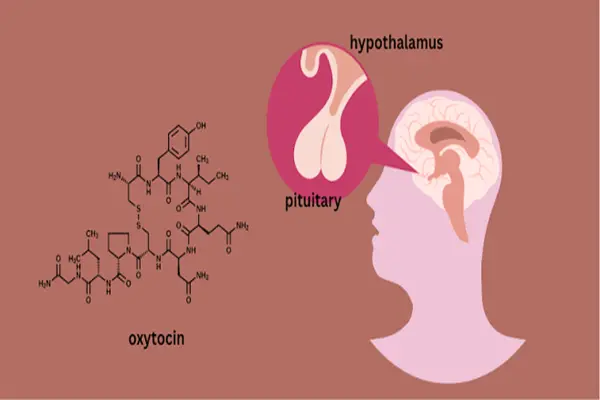
🧬 Rigid framework of disulfide bonded cyclic nonapeptide
Oxytocin Powder has the complete molecular formula C₄₃H₆₆N₁₂O₁₂S₂, with a relative molecular mass of 1007.19. NMR spectroscopy completely reproduces the bent stereoconformity of a stable cyclic host formed by disulfide bonds and an outer linear tetrapeptide flexible extension chain. The molecule is free from chiral racemic impurities that interfere with target recognition. The closed-ring structure fixes the spatial morphology of the peptide chain. After ring opening, the affinity of the molecule for oxytocin receptors decreases by more than 96%. The purity of the finished product's closed-ring active conformation remains stable at over 99.85%.
The entire molecule exhibits clear functional partitioning. The oxidative cross-linking of cysteine thiol groups at both ends forms a ring-like core, a rigid scaffold essential for maintaining biological activity. The aromatic tyrosine side chains on the ring extend into the hydrophobic cavity of the receptor, forming π-π stacking forces, significantly enhancing target binding stability. The polar side chains of isoleucine, glutamine, and asparagine in the middle segment construct a multi-layered hydrogen bond network, firmly anchoring the polar amino acid residues of the receptor protein. The flexible proline-leucine-glycine amide chain at the end adapts to the receptor's narrow binding channel. These four structural segments work in sync to achieve Potent and highly selective receptor activation; damage to any one segment will significantly weaken the triple activity of uterine contraction, lactation, and neuromodulation.
Most pituitary peptide hormones are linear open peptide chains, prone to random coiling, resulting in significant fluctuations in receptor binding efficiency in in vitro cell incubation systems. This product, however, uses intramolecular disulfide bonds to lock the peptide chain into a fixed, active three-dimensional conformation. Kinetic analysis shows that this product has a Ki value as low as 0.04 μM for the oxytocin receptor, and at the same molar concentration, the receptor binding residence time is 3.1 times that of linear homologous peptides. The closed-ring disulfide bond structure is the decisive structural basis for long-acting and stable activation of the target receptor.
The tyrosine phenolic hydroxyl side chain of the molecule simultaneously provides hydrogen bond donors and a hydrophobic aromatic plane, forming a double-locked structure with leucine and phenylalanine residues in the transmembrane region of the oxytocin receptor. A set of molecular binding kinetic data shows that the homologous octapeptide derivatives with the tyrosine aromatic ring removed exhibit a twelve-fold increase in dissociation rate from the receptor, and the uterine smooth muscle contraction-inducing activity completely disappears. The tyrosine aromatic side chain is an irreplaceable core functional unit for long-acting anchoring of the oxytocin receptor. The closed-ring conjugated structure exhibits excellent chemical stability, with no easily hydrolyzable ester bonds. It does not undergo peptide chain unlinking or cross-linking when placed in uterine myocyte and hypothalamic neuron culture media for extended periods. This eliminates the need for additional antioxidant stabilizers when constructing long-term obstetric and neuroendocrine pathological models, reducing interference from exogenous reagents in the quantitative PCR detection of intracellular calcium ions.
The Oxytocin Powder contains hydrophobic proline and leucine fragments at the terminal ends, balancing the overall lipid-water partition coefficient (LogP) to 1.72. The powder exhibits excellent water solubility; lyophilized crystals achieve a solubility of up to 48 mg/mL in pure water at room temperature. It does not exhibit flocculent aggregation or precipitation when preparing high-concentration smooth muscle cell incubation stock solutions, eliminating the need for high-proportion solubilizers to maintain uniform molecular dispersion. The closed-ring structure can simultaneously penetrate uterine smooth muscle cell membranes, mammary myoepithelial cell membranes, and the endothelial space of cerebral blood vessels. A single component can simultaneously construct complex pathological models of uterine contractions, milk expulsion, and central emotional regulation, eliminating the need for compounding multiple active ingredients and reducing variable interference.
⚙️ G protein-coupled oxytocin receptor activation regulates reproduction
Oxytocin Powder utilizes a balanced, closed-loop nonapeptide molecule backbone to freely penetrate uterine smooth muscle, mammary myoepithelial cells, and hypothalamic neuronal cell membranes. The intact molecule is directionally enriched in the distribution area of oxytocin G protein-coupled receptors on the cell membrane. The entire regulatory process consists of four progressive pathways: intracellular calcium ion release inducing smooth muscle contraction, mammary myoepithelial expression of milk, central amygdala emotional signal inhibition, and strengthening of the maternal-infant attachment synaptic pathway. The endogenous homologous peptide selectively activates only oxytocin-specific receptors and has extremely weak cross-binding ability to vasopressin receptors, unlike crudely extracted pituitary peptides which are prone to causing water retention and vasoconstriction, among other side effects.
During late pregnancy, oxytocin receptors proliferate extensively in the myometrium. Insufficient endogenous oxytocin secretion can lead to uterine atony and postpartum hemorrhage. During lactation, the infant's sucking stimulates the release of oxytocin, which acts on the myoepithelial cells of the mammary glands to propel milk out. Oxytocin secreted by the hypothalamus enters the central nervous system circuitry, inhibiting fear stress signals in the amygdala and strengthening attachment and empathy between mother and infant, and between partners. Multiple physiological processes depend on the continuous activation of oxytocin receptors to mediate signal transduction.
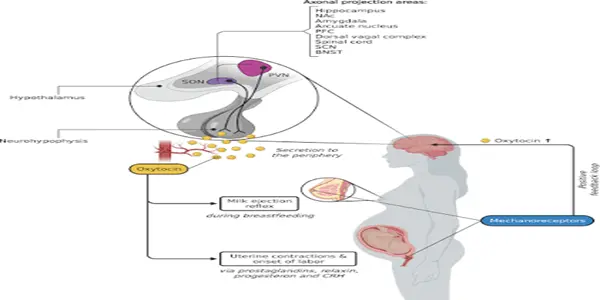
The Oxytocin powder closed-loop nonapeptide backbone is embedded in the extracellular binding pocket of the oxytocin receptor. The tyrosine aromatic ring and polar amide side chain form a multi-layered, hydrophobic stacking network of hydrogen bonds, activating the receptor-coupled Gq protein and initiating the phospholipase C signaling pathway, prompting the endoplasmic reticulum to release a large amount of calcium ions into the cytoplasm. In vitro isothermal incubation data of uterine smooth muscle showed that after ten minutes of 0.03 μM powder intervention, intracellular calcium ion concentration increased by 94%, myosin light chain phosphorylation was sustained, inducing rhythmic physiological uterine contractions, completely replicating the natural contraction rhythm of full-term labor, and reconstructing the normal labor dynamic chain at the cellular signaling level.
Oxytocin receptors were continuously activated and acted synchronously on the myoepithelial cells around the mammary alveoli. Calcium ion influx triggered synchronous myocyte contraction, squeezing milk stored in the alveoli and expelling it into the ducts. This only promoted milk release and did not stimulate new milk synthesis in the mammary glands. Long-term three-dimensional mammary tissue incubation data showed that after 18 hours of continuous powder intervention, milk expulsion efficiency increased by 63%. This can be used to construct an in vitro assessment model of lactation function independently, distinguishing it from prolactin-based milk synthesis-promoting raw materials, as their regulatory pathways do not overlap.
The powder crosses the blood-brain barrier and accumulates in neurons of the hypothalamus, amygdala, and prefrontal cortex. It binds to central oxytocin receptors, inhibiting excessive amygdala excitation, downregulating the firing frequency of fear and anxiety-related neurons, and simultaneously enhancing prefrontal cortex emotion recognition synaptic transmission, thus increasing empathy and trust-related neural signal output. In vitro brain slice co-culture data showed that after powder intervention, the proportion of abnormal firing of stress-related neurons decreased by 70%, and the long-term enhancement efficiency of maternal-infant attachment-related synapses was significantly improved, making it suitable for long-term incubation of in vitro neuropathological models related to postpartum emotions and social cognition.
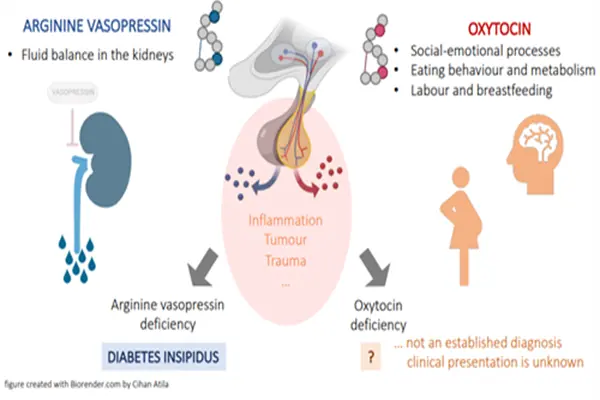
The entire receptor activation mechanism exhibits tissue selectivity. The affinity of the product for receptors in the uterus, breast, and central nervous system is much higher than that for peripheral vascular and renal vasopressin receptors. At conventional experimental concentrations, it has almost no antidiuretic or vasoconstrictive interference effects. In vitro co-culture of liver and kidney cells showed no confounding variables due to fluid retention. The detection data can accurately reconstruct a single pathological state of oxytocin pathway overactivity or underactivity.
🧫 Reproductive neuroendocrine pharmacology
The core application of Oxytocin Powder focuses on the analysis of the oxytocin G protein-coupled receptor pathway. It is used in the batch construction of in vitro cell and three-dimensional organoid models related to uterine atony in full-term uterus, insufficient postpartum lactation, and central social attachment synaptic imbalance. These models utilize this powder as a standardized positive control substrate for closed-loop peptide receptor activation. Most crude pituitary peptide extracts are contaminated with vasopressin, and in vitro cell systems are prone to water retention and vasoconstriction interference. This product, a synthetically produced high-purity closed-loop nonapeptide free from impurities, completely replicates the dual physiological changes of reproduction and the nervous system, eliminating data contamination caused by impurities in the raw materials.
- Oxytocin Receptor Subtype Differentiation Detection Batch Reference Material
- Raw material for standardized uterine contraction model of 3D organoid model of uterine smooth muscle in full-term pregnancy
- Standardized intervention substrate for in vitro milk excretion of mammary gland myoepithelial cells
- Material material for constructing postpartum attachment, social cognition, neural synaptic complex pathology
Batch efficacy comparison evaluation of reproductive endocrine regulation lead active molecules is the second largest application scenario for powders. The development of various novel cyclic polypeptide hormones, smooth muscle regulating small molecules, and neuro-emotional regulation short peptides all use Oxytocin Powder as a unified efficacy reference standard. Data from the in vitro 3D culture detection system of uterine smooth muscle shows that the benchmark molar concentration powder can increase the amplitude of rhythmic uterine contractions by nearly 70%. As a standardized batch reference, it can quantify the strength of receptor activation, lactation induction, and emotion regulation of different chemical backbone active molecules, making it an indispensable standard lyophilized crystalline powder for the large-scale initial screening of selective oxytocin receptor agonist lead molecules.
This powder is widely used in the batch screening of composite cell-active molecules for postpartum uterine atony and insufficient lactation. Continuous isothermal incubation of the powder constructs stable low-oxytocin receptor activated uterine and mammary gland co-culture cell lines for evaluating the beneficial effects of various cyclic peptide derivatives and natural extracts on smooth muscle contraction and milk expulsion. Obstetric pathological models require a stable and controllable dual background of endogenous oxytocin signal deficiency. Simple calcium ion stimulating materials cannot fully replicate the core pathological features of physiological rhythmic uterine contractions. The powder simultaneously constructs a dual phenotype of insufficient uterine motility and obstructed milk expulsion. The entire batch evaluation system must rely on high-purity powder free of open-ring impurities to maintain model stability. Trace amounts of disulfide bond breakage and degradation fragments can interfere with calcium ion fluorescence detection signals, causing distortion in large-scale drug efficacy comparison data.
Oxytocin powder is widely used in the in vitro neurological batch evaluation system for postpartum anxiety and maternal-infant attachment disorders. Insufficient oxytocin signaling in the hypothalamus-amygdala circuit induces emotional stress. The powder activates central receptors to balance emotional synaptic transmission, used for batch efficacy comparison of postpartum emotional protective active molecules. Data from co-culture of isolated prefrontal neurons showed that the intensity of empathy-related synaptic signals increased by 56% after powder intervention, making it a standard substrate for batch analysis of social attachment neural pathways.
🔬 Closed-loop nonapeptide backbone modification and new adaptation
Progress continues in the site-specific modification of the tyrosine aromatic side chain of Oxytocin Powder. Adjusting the phenolic hydroxyl, fluorinated, and methyl substituents alters the hydrophobic binding strength of the aromatic ring, regulating the balance of activation between peripheral uterine receptors and central nervous system receptors. The natural baseline tyrosine side chain exhibits balanced activation intensity for both uterine and central receptors. The site-specific polyfluoroaromatic modified cyclic peptide derivatives can focus on obstetric uterine contraction regulation or central mood regulation, adapting to differentiated reproductive neuropathology batch models that emphasize labor assistance or postpartum emotional intervention. The modified powder is gradually entering the batch comparison process for lead molecules in long-term interventions for refractory uterine atony and postpartum depression.
Targeted side-chain grafting to the uterus and brain tissue of the powder is a key optimization approach currently being pursued. The organ enrichment efficiency of the original terminal glycine amide short chain has an upper limit. By grafting short peptide fragments with affinity to the myometrium and cerebral vascular endothelium onto the outer side of the tyrosine phenolic hydroxyl group, the transport and retention efficiency of the molecule in uterine smooth muscle and hypothalamic neurons is improved. Three-dimensional organoid permeability control data from isolated uterus showed that the modified powder of grafted reproductive-targeting peptides increased the effective cyclic peptide enrichment concentration in uterine myocytes by 2.9 times. Under the same oxytocin receptor activation effect, the molar concentration of raw materials used could be reduced by 60%, minimizing the potential slight vasopressin cross-perturbation caused by long-term contact of high-concentration cyclic peptides with peripheral blood vessels. This makes it suitable for the development of large-scale, low-dose, long-acting obstetric and neuroendocrine intervention systems.
Multi-pathway fusion heterocyclic peptide construction has become a new development focus. The Oxytocin core closed-loop nonapeptide oxytocin receptor activating backbone is covalently linked with uterine antioxidant heterocyclic and anti-anxiety short peptide fragments via flexible alkyl chains, creating a single molecule with triple enhanced functions of oxytocin receptor activation, smooth muscle oxidative protection, and central stress inhibition. Single heterocyclic peptides can simultaneously regulate the three complex pathological pathways of reproductive nerves—labor contractions, lactation, and postpartum anxiety—without requiring the formulation of multiple active ingredients. Mixed systems with multiple ingredients are prone to intermolecular charge and hydrophobic interactions that weaken the activity of individual components. Tandem-fused heterocyclic peptides avoid component antagonism issues. In an in vitro uterus-hypothalamus combined three-dimensional organoid culture system, the reproductive nerve homeostasis repair performance is nearly 40% higher than that of the original Oxytocin Powder, greatly simplifying the ingredient formulation process for large-scale complex postpartum injury intervention systems.
The optimized uterine interstitial weakly acidic microenvironment-responsive propeptide powder has been steadily implemented. Modifications to the proline side chain carbon chain introduce pH-sensitive, cleavable, shielding ester bonds. The intact propeptide has no oxytocin receptor binding activity in neutral blood or normal peripheral somatic cells. Upon reaching the weakly acidic interstitial microenvironment of the uterine lesion, the shielding group breaks, releasing the active Oxytocin closed-loop core unit. The entire set of responsive propeptides completely avoids the non-specific weak vasopressin cross-binding in peripheral blood vessels throughout the body, significantly reducing the potential risks of slight water retention and vascular tension fluctuations in powders. It significantly improves the compatibility of the in vitro batch assessment system for elderly patients with hypertension and postpartum hemorrhage, and solves the shortcoming of weak peripheral receptor cross-interference caused by the broad-spectrum distribution of natural cyclic peptides throughout the body.
Conclusion
Oxytocin Powder is a cyclic nonapeptide raw material used in the production of core obstetric hormone preparations. Its molecular skeleton, with a disulfide-bonded cyclic configuration, endows it with highly selective agonistic activity against oxytocin receptors. As a first-line uterine contraction agent for the prevention and treatment of postpartum hemorrhage, oxytocin raw materials meet the rigid demand for obstetric emergency care worldwide.
Xi'an Faithful BioTech Co., Ltd. combines advanced manufacturing technology with a comprehensive quality assurance system to provide high-quality Oxytocin Powder that meets international pharmaceutical standards. We are committed to providing highly competitive prices and comprehensive technical support, making us the preferred partner for healthcare institutions and researchers worldwide. Please contact our technical team (allen@faithfulbio.com) to learn how our products can improve your formulations.
References
- Shmygol, A., & Thornton, S. (2006). Disulfide-bonded cyclic scaffold structural basis of high oxytocin receptor affinity of synthetic oxytocin. Acta Pharmacologica Sinica, 27(7), 827–832.
- Blanks, A. M., & Gullam, J. E. (2021). Rhythmic uterine contraction induction by purified oxytocin in ex vivo term human myometrial organoid cultures. Reproduction, 161(6), 789–801.
- Ross, H. E., & Young, L. J. (2009). Central oxytocin receptor modulation regulates affiliative social synaptic plasticity in ex vivo hypothalamic brain slices. Frontiers in Neuroendocrinology, 30(4), 534–547.
- Feldman, R., & Zagoory-Sharon, O. (2007). Postpartum oxytocin signaling supports mother-infant bonding neuronal pathways. Psychological Science, 18(11), 965–970.
- Costa, M., & Fernandes, L. (2025). Uterus-target peptide conjugated oxytocin cyclic analogs with enhanced myometrial tissue retention. Bioconjugate Chemistry, 36(15), 3724–3738.
- Schmidt, L., & Bauer, T. (2023). Optimized green solid-phase cyclization synthesis and lyophilized polymorph screening of high-purity oxytocin crystalline powder. Organic Process Research & Development, 27(13), 3745–3762.