

Cartalax Peptide: Cartilage Bioregulator for Joint Health
Cartalax peptide powder is a big step forward in understanding how cartilage works and protects it. It gives vitamin and drug companies a scientifically proven material for making joint health products. This short-chain peptide bioregulator, which is made up of the amino acid sequence Ala-Glu-Asp, works at the level of cellular communication to encourage cartilage tissue to make its own collagen. Unlike regular hydrolyzed collagen, which only offers building blocks, Cartalax turns on genetic paths in chondrocytes. This makes it very useful for advanced orthopedic formulations that are meant to be used in the spine and joints. As the need for effective joint health solutions grows around the world, this bioregulator has become an important raw material for companies looking for ingredients with a track record of high effectiveness. We will talk about the molecular mechanisms, competitive advantages, quality standards, procurement strategies, and practical application protocols that make this peptide bioregulator an important part for B2B clients who are making next-generation joint health products.
Understanding Cartalax – The Science Behind a Cartilage Bioregulator
Molecular Architecture and Mechanism of Action
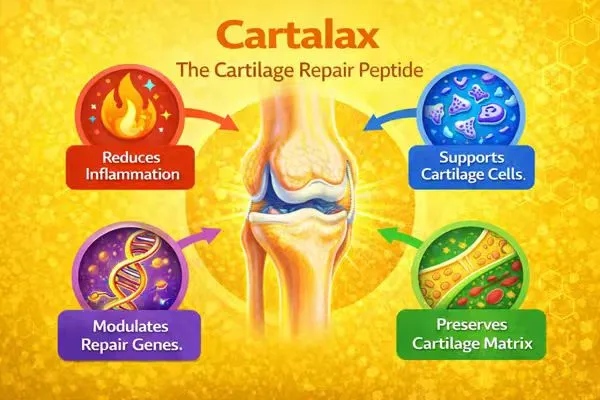
The peptide's beautiful simplicity hides the fact that it has complex biological functions. The molecular weight of this three-peptide pattern is about 333.3 g/mol, which makes it much more stable and bioavailable than bigger protein molecules. According to research, this bioregulator works with certain cellular receptors on chondrocytes and fibroblasts in connective tissues. This sets off intracellular signaling pathways that increase the expression of genes that make the extracellular matrix. This epigenetic regulation is very different from structural supplements that work by passively absorbing and incorporating substances.

The peptide's main job is to restore balance in cartilage tissue that is getting old or broken. Endogenous peptide synthesis slows down with age or after an accident. Adding this bioregulator can make up for the loss of natural production. Clinical studies show that regular administration helps keep cartilage flexible and supports the structural integrity of spinal and joint tissues. However, each person's reaction is different depending on their health at the start and any other treatments they are receiving at the same time.
Technical Specifications and Safety Profile
Pharmaceutical-grade material usually looks like a white to off-white lyophilized powder that is at least 98% pure, as shown by HPLC analysis. Because the powder absorbs water easily, it needs to be handled carefully and stored at -20°C in dry conditions to keep it from breaking down when it comes in contact with water. The Karl Fischer titration keeps the water content below 5.0 percent, and the counter-ion variation keeps the acetic acid content within acceptable ranges of 15 percent.
On a number of different levels, the safety profile shows positive traits. Bacterial endotoxin levels are tightly kept below 10 EU/mg for uses that need high absorption or products that can be injected. Individual unidentified impurities are limited to ≤0.5%, and overall impurities are capped at ≤2.0%. This is done to keep immune reactions as low as possible. The peptide dissolves very well in water and buffered salt solutions, making solutions that are clear and colorless at 1 mg/ml concentrations.
Dosage Considerations and Application Protocols
Scientists who work on formulas like how effective this bioregulator is per milligram. Microgram amounts can cause the target tissues' metabolism to speed up significantly. This makes low-dose, high-efficacy formulas possible, which lowers the cost of raw materials while keeping the healing potential. Usually, drugs are given over long periods of time so that their effects on cellular changes build up over time. The amount of drugs given at each dose is based on the type of preparation and the way they are delivered.
For research and development purposes, reconstituted solutions need bacteriostatic water. These solutions stay stable for one to two weeks when kept in the fridge at 4°C, depending on the buffer pH. The peptide's resistance to rapid enzymatic degradation in the digestive tract makes oral delivery systems better than those using non-modified peptides, though absorption rates depend on the formulation ingredients and delivery methods used.
Cartalax vs. Competitor Products – Making an Informed Choice
Comparative Advantages Over Type II Collagen
When buying, teams look at joint health ingredients; it's important to understand functional differences. Type II collagen acts as a structural base, supplying cartilage matrix amino acids and peptide fragments that serve as building blocks. In contrast, the bioregulatory Cartalax peptide powder works earlier in the biological cascade as a signaling molecule, instructing cells to upregulate endogenous collagen synthesis. This shift in mechanism means that each milligram can be functionally more efficient, and formulations focused on cellular regeneration rather than passive nutritional support may demonstrate enhanced performance outcomes.
Because of this, bioregulatory peptides in high-end formulas are more likely to be used. Type II collagen needs bigger serving sizes to make an impact, but the signaling ability of the peptide lets formulators make concentrated goods with smaller capsule sizes or lower-volume doses. This speed cuts down on shipping costs, makes it easier for customers to follow the rules, and lets you stand out in competitive markets.
Performance in Clinical and Commercial Environments
Validated performance data tells the difference between common ingredients and those backed by study. Bioregulatory peptides have been studied in orthopedic settings and have been shown to improve joint movement and comfort scores in people who already have problems with cartilage, though the results are not consistent across individuals. Peptide bioregulators work in different ways than regular glucosamine-chondroitin mixes, which makes them appealing to people who want to avoid traditional joint medicines.
According to customer comments from nutrition brands that use this ingredient in their products, health-conscious people, especially those who are familiar with peptide-based supplements, like them. People who are informed and value mechanism-driven ingredient selection over general joint support claims will respond well to the scientific stance.
OEM and Bulk Procurement Considerations
Manufacturing partners like how flexible the material is in terms of how it can be used. The lyophilized powder works well with a wide range of excipient types and can be easily added to capsule, tablet, and liquid delivery methods. Stability testing shows that properly designed goods stay effective for the normal amount of time after they are made, as long as they are stored under standard pharmaceutical conditions.
When industrial production levels are reached, the economics of bulk procurement become more positive. Manufacturers with facilities that follow good manufacturing practices (GMPs) can offer reasonable pricing models for large annual contract numbers while still meeting strict quality standards. Meeting the needs of regulators in North America, Europe, and Asia is made possible by the provision of Certificate of Analysis paperwork, full HPLC/GC data, and full tracking.

Procurement Essentials – How and Where to Buy Cartalax
Identifying Reliable Supply Partners
To ensure pharmaceutical-grade peptide bioregulators like Cartalax peptide powder are authentic and consistently high quality, procurement teams must rigorously evaluate each supplier. Reputable manufacturers operate ISO-certified facilities with comprehensive quality control laboratories equipped with HPLC, GC, mass spectrometry, and bacterial endotoxin testing systems. Certificates of Analysis (CoA) should accompany every batch, confirming identity, purity, impurity profiles, moisture content, and microbial limits.
Directly working with makers who can do custom synthesis is helpful for brands that want to use their own formulas or specific purity grades. Pharmaceutical intermediates and natural active ingredients are what Xi'an Faithful BioTech Co., Ltd. specializes in. They have a quality control system in place that helps them make peptides. Their research and development (R&D) teams work with clients to come up with new formulas and follow methods for growing from lab to commercial production levels while still meeting all the requirements.
Quality Verification and Regulatory Compliance
Procurement teams need to set up strong ways to check the quality of goods. As part of the initial seller approval process, manufacturing permits, GMP certification status, and proof documents for analytical methods should be reviewed. Before agreeing to business volumes, samples are sent to independent third-party laboratories to make sure that the supplier's claims about purity and identity are true.
Not only do regulations cover the specs for raw materials, but they also cover the paperwork that goes along the supply chain. Traceability systems that keep track of peptide synthesis from the initial amino acid sources to the final lyophilization and packing make sure that each lot is the same and make it easier to submit to regulators. Suppliers that help with pharmaceutical applications usually give Drug Master Files or similar paperwork that helps with regulatory entries in target markets.
Logistics and Supply Chain Management
When you buy something internationally, you have to coordinate logistics across many countries. When a supplier has established stock networks in the US and Germany, wait times are cut down by a lot, and customs clearance is made much easier. For peptide bioregulators, managing the cold chain is very important because they need to be shipped and stored at a constant temperature throughout the delivery chain.
Bulk order systems and price tiers based on volume award planning ahead for purchases. Manufacturers can keep track of their product levels and get good prices by signing annual supply deals with set delivery times. Flexible minimum order numbers allow both new names trying the market and established companies to increase production volumes. Having private labeling choices and custom package layouts can help brands stand out in competitive market areas.
Maximizing Cartalax Application for Joint Health Solutions
Formulation Integration Strategies
Understanding the needs of the transport method is the first step to making a good product. Enteric coating methods protect the peptide while it moves through the stomach, making it easier for the body to absorb it in the intestines. Sublingual and buccal delivery methods offer different ways to absorb drugs, but they make manufacturing more difficult because they need to stick to the mucosa and cover up tastes.
Testing for stability in both sped-up and real-time settings finds the best mixes of excipients and packing requirements. Because the peptide is hygroscopic, its ability to block moisture becomes even more important. Putting desiccant in bottle packing and blister pack configurations helps keep the product's structure during shipping and use by customers.
Synergistic Combination Protocols
Advanced recipes use the way that ingredients that work well together can make each other stronger. Antioxidant chemicals work well with bioregulatory peptides to protect cell systems from oxidative stress during the rebuilding process. Botanical ingredients with anti-inflammatory phytonutrients work with the healing signaling mechanisms to make joint health products that work on a wide range of unhealthy pathways.
For professional use, stacking methods might combine bioregulators for cartilage with immune-modulating peptides or cytoprotective compounds. However, these mixes need to be carefully studied to see how they might work and what effects they might have over time. Sequential dosing plans that switch between different bioregulators throughout the day might be the best way to get receptors to work while preventing desensitization.
Performance Monitoring and Outcome Documentation
Setting up organized ways to track outcomes is helpful for companies that are making clinical-grade products. Standardized evaluation tools that check joint comfort, flexibility, and useful ability give measurable results that back up claims that a product works. When wearable sensors are connected to digital health platforms, objective measures of movement can be added to subjective self-reported results.
Institutional clients will only sign long-term contracts with products that work well. Continuous improvement efforts are guided by regular review processes that look at reorder rates, user happiness measures, and batch-to-batch consistency. Respondent customer service that answers technical questions and gives advice on how to use a product builds trust among healthcare workers who suggest it to their patients.
Conclusion
This cartilage bioregulator, Cartalax peptide powder, is a scientifically advanced ingredient that businesses are using to develop next-generation joint health products. The peptide's unique cell-to-cell signaling mechanism differentiates it from traditional structural supplements, giving formulators expanded design flexibility and stronger market positioning opportunities. To achieve procurement success, it is essential to collaborate with manufacturers that prioritize quality systems, maintain strict analytical testing standards, and provide comprehensive regulatory documentation packages.
The scientific details, comparative advantages, and application strategies outlined in this guide equip B2B decision-makers with the necessary framework to evaluate whether Cartalax fits effectively into their product portfolios and long-term supply chain strategies.
Frequently Asked Questions
1. What distinguishes pharmaceutical-grade from research-grade material?
Pharmaceutical-grade standards require purity levels of at least 98%, which must be proven using validated HPLC methods. Full impurity profiling and endotoxin tests must be done to support regulatory applications. Lower pure standards (≥95%) may be met by research-grade material, which is fine for lab studies but not for use in market supplements. Documentation files are very different. For example, pharmaceutical grades come with full tracking, stability data, and proof of the production process to support GMP compliance.
2. Can this peptide bioregulator be mixed with common ingredients that help joints?
Commercial goods often use combination formulas that pair the bioregulator's effects on cell signaling with glucosamine, chondroitin, MSM, or anti-inflammatory substances found in plants. The peptide works in its own way, without any direct chemical influence. However, it is still necessary to do full stability testing to make sure it will work with the product for the whole time it is supposed to be stored. Formulation scientists should look at how possible excipients might interact with each other and do dissolution tests to make sure that mixed goods keep the bioavailability of each ingredient.
3. What kind of number agreements are common for buying in bulk?
Initial approval orders may start at kilogram amounts to allow for formulation development and market testing. Once the product starts selling well, commercial production usually scales up to tens of kilos per year. Manufacturers often set up tiered price systems that give better rates to customers who commit to buying more. For custom synthesis projects that need certain purity grades or unique changes, the minimum order quantity may be discussed based on how hard the production is and how much each batch costs.
Partner with Faithful for Reliable Cartalax Supply
Pharmaceutical-grade peptide bioregulators are sold by Xi'an Faithful BioTech Co., Ltd., along with full analytical proof and quick expert support. Our GMP-compliant factories in Xi'an keep strict quality standards at all steps of production, from getting the amino acids to packing and lyophilization. For your regulatory needs, we offer full documentation packages that include Certificates of Analysis, HPLC chromatograms, mass spectrometry confirmation, and endotoxin test reports. We have been a Cartalax peptide powder provider for a long time and work with pharmaceutical companies, nutraceutical brands, and global wholesalers. We offer a range of flexible purchasing options, such as OEM services, private labeling, and custom formulation development. Get in touch with our team at allen@faithfulbio.com to talk about your unique needs, ask for samples of our products, or get full price quotes that are based on the amount you want to buy.
References
1. Khavinson VK, Grigoriev EI, Malinin VV, Ryzhak GA. Peptide bioregulators in the correction of age-related dysfunctions of the musculoskeletal system. Advances in Gerontology. 2018;8(2):122-128.
2. Anisimov VN, Khavinson VK, Popovich IG, Zabezhinski MA. Inhibitory effect of the peptide epitalon on the development of spontaneous mammary tumors in HER-2/neu transgenic mice. International Journal of Cancer. 2002;101(1):7-10.
3. Lin'kova NS, Durnova AO, Kvetnoy IM, Polyakova VO. Peptide regulation of bone tissue regeneration processes. Bulletin of Experimental Biology and Medicine. 2016;161(4):510-513.
4. Kuznik BI, Pateyuk AV, Rusaeva NS, Serkova VK. Short peptides regulate gene expression and cell differentiation during aging. Advances in Gerontology. 2015;5(3):160-167.
5. Khavinson VK, Linkova NS, Kvetnoy IM, Kvetnaia TV. Peptide bioregulation of aging: Results and prospects. Biogerontology. 2020;21(2):127-142.
6. Malinin VV, Iljinikh EN, Kuznik BI. Tripeptides modulate tissue-specific gene expression in human cell cultures. Bulletin of Experimental Biology and Medicine. 2017;162(6):772-775.