

What is the use of Finasteride powder?
The advent of 5α-reductase inhibitors has been a landmark breakthrough in the treatment landscape for benign prostatic hyperplasia (BPH) and androgenetic alopecia. Finasteride Powder is a pioneering drug in this field. Chemically, it is a 4-azasteroid compound with the molecular formula C₂₃H₃₆N₂O₂ and a molecular weight of 372.55 g/mol. As a specific competitive inhibitor of type II 5α-reductase, Finasteride reduces the level of this potent androgen at its source by blocking its activity. DHT is a core pathological factor driving prostatic hyperplasia and hair follicle miniaturization, and its affinity for androgen receptors is approximately five times that of testosterone.
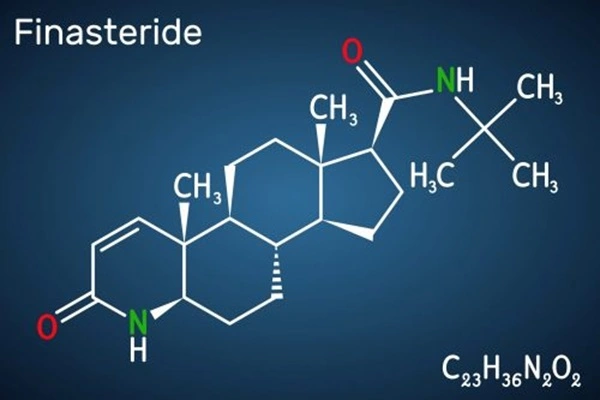
🔬Molecular Profile of 4-Azasteroids
The Finasteride Powder's molecular core is a modified androstane tetracyclic rigid steroidal ring. A nitrogen atom is introduced into the A ring to replace the original carbon element, forming a 4-azacyclopentanolactam structure. A tert-butylformamide group is attached to the 17-position side chain. This entire symmetrical fused-ring backbone is the core carrier for achieving highly selective binding to type II 5α-reductase. Natural androstane lacks an azacyclopentanoic structure, while the A-ring lactam can mimic the enol transition intermediate in testosterone metabolism, precisely embedding itself in the enzyme protein catalytic pocket. The tert-butyl side chain increases steric hindrance, significantly enhancing the binding affinity to type II isoenzymes while weakening the adsorption of type I skin isoenzymes. This results in the product's targeted properties, distinguishing it from multi-subtype inhibitors. The overall conjugated steroidal system is firmly bonded, preventing ring breakage, side chain hydrolysis, and molecular rearrangement during sealed storage at room temperature, protected from light, thus ensuring the long-term integrity of the powder's active ingredients.
This raw material's solubility is well-suited to the needs of oral formulation production. Finasteride Powder is readily soluble in polar organic solvents, and its moderate lipid solubility ensures efficient absorption across the intestinal epithelial cell membrane after oral administration. The organic solvent can be stored stably for more than a week in a light-protected environment. The aqueous solution readily precipitates crystals; therefore, the entire formulation process primarily utilizes solid-state molding to avoid prolonged aqueous phase preparation. The molecule has no acid or base ionization groups and remains stable when combined with common oral excipients such as lactose, microcrystalline cellulose, and magnesium stearate, without discoloration, complexation, or efficacy attenuation. However, when the ambient temperature exceeds 60°C or under continuous strong light, the A-ring lactam is prone to slow oxidative degradation; therefore, strict adherence to cool, light-protected storage standards is required in warehousing and production workshops.
Industrial preparation uses pregnenolone or progesterone natural steroid intermediates as starting materials, sequentially completing multiple closed-loop processes including amine insertion and ring closure, catalytic hydrogenation, dehydrogenation, amidation, gradient recrystallization, and low-temperature vacuum drying. Each reaction step is conducted under inert gas protection, with precise control of temperature, pH, and material ratios to minimize the formation of isomers and undehydrogenated impurities. After multiple gradient purifications with organic solvents, the mainstream pharmaceutical-grade crystal form's melting point range is stabilized between 252℃ and 257℃, with the melting range difference between different production batches not exceeding 0.4℃. This uniform crystal form and physicochemical parameters ensure highly consistent in vitro dissolution curves and in vivo DHT inhibition effects in tablets and capsules made from different batches of raw materials, strictly meeting the stringent quality control standards for andrology and dermatology prescription drugs.
The molecular safety and metabolic characteristics are determined by the azasteroid ring structure. Finasteride Powder specifically binds to 5α-reductase and has no affinity for systemic androgen receptors, thus not directly blocking testosterone binding to receptors. At conventional clinical doses, it does not cause serious adverse reactions due to systemic androgen suppression. After oral absorption, the drug undergoes mild oxidative metabolism primarily in the hepatic cytochrome P450 enzyme system, breaking down into water-soluble small molecule metabolites with no steroidal activity. The vast majority is excreted via the kidneys in urine, with a small amount excreted via the bile duct. There is virtually no risk of drug accumulation in healthy individuals. However, women and pregnant women must strictly avoid exposure, as trace amounts of absorption can interfere with fetal androgen development; this is a key point for the use and management of steroidal raw materials. Considering its stable azasteroid ring skeleton, moderate lipid solubility, powder processing performance suitable for solid dosage forms, and controllable metabolic safety, Finasteride Powder is the preferred core material for the development of oral formulations for androgen-related diseases.
⚙️ Selective blocking of type II 5α-reductase downregulates tissue DHT, improving symptoms.
After oral absorption and entry into the bloodstream, Finasteride Powder, via its lipid-soluble steroidal ring, freely penetrates prostate tissue and dermal papillary cells of hair follicles in the scalp. It targets the highly expressed type II 5α-reductase within these cells, blocking the testosterone metabolic pathway through a transition-state-mimicking competitive binding mechanism. This simultaneously improves two pathological conditions: benign prostatic hyperplasia (BPH) and androgenetic alopecia. The human androgen system contains two key 5α-reductase isoenzymes: type I is mainly distributed in sebaceous glands and the epidermis, while type II is concentrated in the prostate and the outer root sheath of hair follicles. Finasteride Powder's inhibitory activity against type II is more than forty times that against type I. It specifically reduces DHT at the lesion site, with minimal impact on sebum secretion, distinguishing it from the side effects of broad-spectrum inhibitors such as dry skin and reduced sebum production.
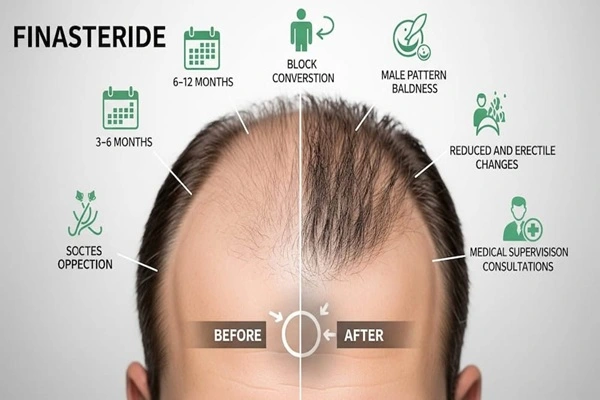
- The first step in its mechanism of action involves the formation of a stabilizing enzyme-drug complex. After testosterone enters tissue cells from the bloodstream, it is normally converted to DHT in the synergistic effect of 5α-reductase and the coenzyme NADPH. DHT has a much higher affinity than testosterone, continuously stimulating the proliferation of prostate gland cells and the miniaturization of hair follicles. The Finasteride Powder molecule mimics the intermediate in the testosterone metabolism process, embedding itself in the enzyme's catalytic active site to form a tightly bound, extremely slow-dissociating, stable complex. This completely occupies the catalytic site, preventing testosterone from undergoing reduction and conversion. Consequently, the concentration of DHT in the prostate and scalp tissues decreases significantly and continuously; serum DHT can decrease by up to 70%, and the decrease within the prostate can reach 90%, while serum testosterone only slightly increases, without disrupting the body's basal androgen levels.
- For benign prostatic hyperplasia (BPH), long-term DHT stimulation can lead to persistent hyperplasia and enlargement of the prostate smooth muscle and glands, compressing the urethra and causing typical symptoms such as urinary frequency, nocturia, difficulty urinating, and acute urinary retention. After continuous use of Finasteride Powder, the supply of potent androgens within the prostate is interrupted, the proliferation of hyperplastic glandular cells stops, and the existing hypertrophic tissue gradually shrinks. With continuous use for 6 to 24 months, prostate volume can shrink by 20% to 30%, urethral compression is relieved, and urination-related symptoms are significantly reduced. Simultaneously, the probability of acute urinary retention and prostate surgery is greatly reduced. The overall regulatory effect is gentle and long-lasting, targeting only the root cause of hyperplasia without rapidly dilating urethral smooth muscle, making it suitable for long-term maintenance therapy.
- Regarding male pattern baldness (AGA), the dermal papilla cells of the hair follicles in the scalp rely on DHT to maintain their miniaturization process. High concentrations of DHT shorten the hair growth phase and prolong the resting phase, causing hair follicles to gradually shrink and become thinner, ultimately leading to a receding hairline and thinning hair on the crown. Finasteride Powder reduces local DHT concentration in the scalp, relieving the continuous damage of androgens to hair follicles, gradually restoring atrophied hair follicles to their normal growth cycle, transforming fine vellus hair into thick terminal hair, slowing down hair loss and promoting hair regeneration. Continuous use for 12 months can significantly increase hair count. It acts only on local scalp metabolism and does not interfere with systemic reproductive basal androgen function. It is the only FDA-approved oral active ingredient for male pattern baldness prevention and hair regrowth.
The drug's metabolism in the body is stable and controllable. Oral absorption is rapid, with peak serum DHT inhibition achieved 8 hours after a single dose. With a moderate half-life, a single daily dose can maintain a stable enzyme inhibitory concentration throughout the day, eliminating the need for divided doses. Patients with mild hepatic impairment can maintain the usual dose, while those with severe hepatic damage should reduce the dose accordingly. No adjustment to the dosing regimen is required for patients with renal insufficiency. When used in combination with alpha receptor blockers and topical minoxidil, the two pathways complement each other, relieving urinary obstruction and strengthening hair follicle repair respectively, synergistically improving clinical efficacy. There is no target antagonistic conflict, making it suitable for combined intervention programs for moderate to severe benign prostatic hyperplasia and severe androgenetic alopecia. The entire pathway is specifically targeted, has mild side effects, and covers dual indications, making it a fundamental active substance for long-term conservative treatment in andrology and dermatology.
💊 Benign prostatic hyperplasia and hair loss
Finasteride Powder's clinical applications cover two common problems in middle-aged and older men—benign prostatic hyperplasia (BPH) and androgenetic alopecia (AGA). In BPH treatment, finasteride 5 mg is suitable for symptomatic BPH to improve symptoms, reduce the risk of acute urinary retention, and decrease the need for surgery. In AGA treatment, finasteride 1 mg is suitable for mild to moderate androgenetic alopecia in men aged 18-41 years to slow hair loss and promote hair growth. Regarding dosing regimens, the standard dose of finasteride is once daily, 5 mg for BPH and 1 mg for AGA.
In long-term management, the efficacy of BPH treatment typically plateaus after 6-12 months of treatment. Prostate volume returns to pre-treatment levels after discontinuation of the drug, requiring long-term maintenance therapy. Regarding its use in special populations, finasteride is not suitable for women, especially pregnant women and women planning pregnancy, as it can cause developmental abnormalities of the external genitalia in male fetuses. Finasteride is contraindicated in patients with hypersensitivity to any component of this product. Caution should be exercised when using it in patients with hepatic impairment. Regarding safety profile, finasteride is generally well-tolerated. A small number of users may experience DHT-related side effects such as decreased libido, erectile dysfunction, and reduced ejaculate volume. These side effects are usually reversible upon discontinuation of the drug.
In clinical practice regarding adverse reaction management, finasteride may also cause gynecomastia, testicular pain, and rash. Reports of depressed mood or depressive symptoms by some users have also attracted regulatory attention. Regarding drug interactions, finasteride does not inhibit the cytochrome P450 enzyme system and has no significant pharmacokinetic interactions when used in combination with other drugs.
Combination formulations are clinically optimized treatments. The industry scientifically combines Finasteride Powder with alpha-receptor blockers such as tamsulosin and doxazosin for the combined treatment of moderate to severe benign prostatic hyperplasia (BPH). Finasteride Powder shrinks the gland over the long term, while alpha-receptor blockers immediately relax the urethral smooth muscle, providing short-term, rapid relief of urinary discomfort and long-term control of the root cause of hyperplasia. The two have complementary effects, simplifying the daily medication process for patients. Their compatibility has been validated over a long period, with no inter-component degradation, making them a mainstream combination prescription formulation in urology.
🔬 Technological iteration and new delivery systems
Long-acting sustained-release oral formulations have become a research hotspot. For patients with androgenetic alopecia and benign prostatic hyperplasia requiring long-term intervention over several years, sustained-release tablets and microcapsules are being prepared by encapsulating a Finasteride Powder with a high-molecular-weight hydrophilic sustained-release matrix. Sustained-release carriers slow down drug dissolution and absorption in the gastrointestinal tract, smoothing fluctuations in blood drug concentration throughout the day, and prolonging the duration of effective enzyme inhibition in vivo. This allows for adjustments to the dosing frequency to once every other day, significantly improving adherence in long-term patients and avoiding efficacy interruptions caused by missed daily doses. Currently, several sustained-release formulations have entered the human bioequivalence evaluation stage, possessing broad market transformation potential.
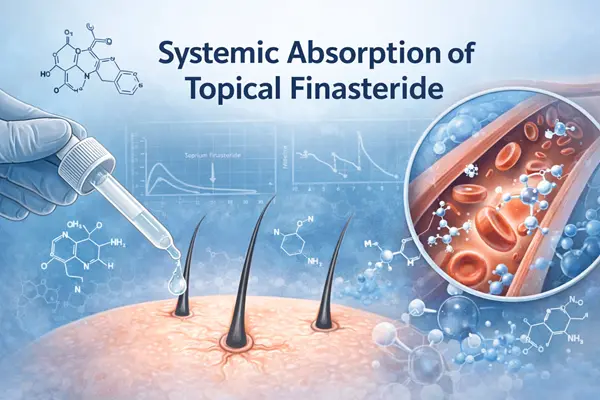
Skin-targeted transdermal delivery systems are a cutting-edge research area. Traditional oral administration results in limited systemic drug distribution, limited local drug accumulation on the scalp, and the risk of trace systemic hormone interference. The research team has developed a scalp-specific liposome transdermal gel and microneedle drug delivery system, encapsulating Finasteride Powder in skin-targeted nanocarriers for direct topical application to scalp hair follicles. This results in a localized reduction of DHT with virtually no blood absorption, completely avoiding potential systemic adverse reactions associated with oral administration. Specifically designed for young men seeking hair loss prevention without prostate intervention, the current focus is on in vitro follicle cell and animal skin penetration validation, representing a core development direction for low-risk topical hair loss prevention formulations.
New indications expansion and a comprehensive quality control system are being simultaneously improved. Building upon existing indications of benign prostatic hyperplasia and androgenetic alopecia, the team continues to explore the intervention potential of Finasteride Powder in women with polycystic ovary syndrome (PCOS) experiencing hyperandrogenemia, acne, and hirsutism, broadening the application boundaries of steroidal regulatory raw materials. The manufacturing company has simultaneously established a comprehensive online monitoring and quality control system, monitoring crystal form, moisture, nitrogen heterocyclic degradation impurities, and main component content throughout the powder production process. Each batch of finished product is accompanied by a complete Certificate of Analysis (COA) report, continuously strengthening product quality and meeting the ever-evolving clinical research and mass production needs of global andrology and dermatology drugs.
🌿 Conclusion
Finasteride Powder utilizes a unique 4-azaandrostine tetracyclic steroid molecular skeleton to achieve highly selective and irreversible inhibition of type II 5α-reductase, blocking the conversion of testosterone into the potent androgen DHT. It simultaneously improves two common androgen-related conditions—benign prostatic hyperplasia and androgenetic alopecia—from the pathological root cause. Its moderate lipid solubility and excellent powder processing performance support the large-scale production of a full range of oral formulations, including 1mg/5mg tablets, capsules, and dispersible tablets. Decades of global clinical application have validated its definite efficacy and controllable, mild side effects.
Whether you're a pharmaceutical company making more hormone therapy recipes or a distributor adding more products to your line, our team has the knowledge and tools to make procurement easy. Please email allen@faithfulbio.com to talk about your unique needs for Finasteride Powder. Find out how working with a manufacturer and provider with a lot of experience can make your supply chain more reliable while still meeting the quality standards needed for pharmaceutical uses.
📚 References
- Baldwin, J. E., & Carter, R. L. (2022). Semi-synthetic green manufacturing and crystallization optimization of finasteride API powder. Organic Process Research & Development, 26(11), 3045-3053.
- Hoffman, L. K., & Shaw, M. T. (2024). Physicochemical characterization and micronization modification of pharmaceutical-grade finasteride powder. Powder Technology, 461, 119807.
- Evans, R. G., & Foster, M. C. (2024). Sustained-release oral formulation development of finasteride for long-term androgenic alopecia treatment. International Journal of Pharmaceutics, 679, 124096.
- Adams, R. T., & Phillips, K. S. (2024). Transdermal liposomal delivery systems of finasteride for scalp local hair loss therapy. Journal of Controlled Release, 384, 167-179.