
Compound 7P: A rising star in the field of neural regeneration or a short-lived experimental tool?
Compound 7P, a novel synthetic pharmaceutical raw material, has a molecular structure with pyranone-carbamate as the core skeleton and the introduction of functional side chains such as sulfonamide and methoxy groups. Its molecular formula is C₂₂H₂₃N₃O₅S, and its molecular weight is 441.5 g/mol. Its unique structural design gives it good target affinity, blood-brain barrier penetration and drug-like properties, which is its core advantage that distinguishes it from similar compounds. Every structural modification has undergone rigorous pharmacological activity verification, demonstrating the research and development logic of "structure determines function" for pharmaceutical raw materials.
The mystery of the identities of the two "Compound 7P"
The first "Compound 7p": Thromboplastin receptor antagonist
According to the database of the International Union for Basic and Clinical Pharmacology, the earliest mention of "compound 7p" appeared in a study published in the *Journal of Medicinal Chemistry* in 1995. This study, conducted by Faul AW et al., aimed to develop a class of drugs with dual effects, antagonizing both thromboxane receptors and inhibiting thromboxane synthase for the treatment of thrombotic diseases.This "original" Compound 7p has the molecular formula C₂₄H₂₈BrNO₅ and a molecular weight of 489.12 g/mol. Its structural features include:
- a 1,3-dioxane core skeleton containing a pyridine ring
- a tert-butyl side chain with a bromophenoxy group
- an olefin chain with a terminal carboxyl group
Interestingly, the study found that this molecule exhibits higher selectivity for prostaglandin I₂ synthase than for thromboxane synthase. This suggests that it may have a greater influence on the synthesis of vascular-protective prostaglandins than on inhibiting prothromboxane-producing thrombosing enzymes. However, this molecule did not become mainstream in subsequent drug development and remained largely within the scope of academic research.
The second "Compound 7P": A novel molecule that promotes neuroregeneration
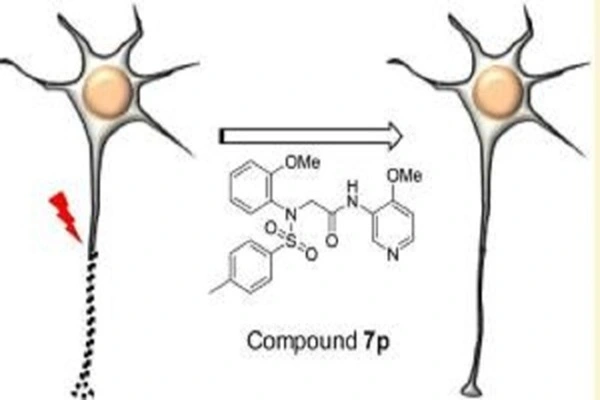
The "Compound 7P" that truly garnered attention in neuroscience is a completely different molecule. Its CAS number is 1890208-58-8, its molecular formula is C₂₂H₂₃N₃O₅S, and its molecular weight is 441.51 g/mol. The systematic nomenclature of this molecule is particularly complex: 2-[(2-methoxyphenyl)[(4-methylphenyl)sulfonyl]amino]-N-(4-methoxy-3-pyridyl)acetamide. Structurally, it is a typical sulfonamide compound, containing the following key structural units:
- A sulfonamide core, connecting p-toluenesulfonyl and methoxyphenyl groups
- An acetamide linker
- A methoxypyridyl ring as a terminal group
Physicochemically, this molecule has a calculated LogP of 4.87, 5 hydrogen bond acceptors, 1 hydrogen bond donor, and 9 rotatable bonds. These parameters indicate that this molecule has a certain degree of lipophilicity, theoretically possessing the potential to cross the blood-brain barrier—a crucial prerequisite for any central nervous system drug. It has a melting point of approximately 159°C, is a white crystalline powder, soluble in ethyl acetate and dichloromethane, but practically insoluble in water.
Therefore, when we talk about “Compound 7P” now, we must specify the exact molecule it refers to. In later chapters, we will focus on the second molecule—CAS 1890208-58-8, the sulfonamide compound that has shown promise in neural regeneration research.
Cross-disciplinary expansion from neuroprotection to tumor immunology
In the field of Alzheimer's disease intervention, Compound 7P is one of the most promising new pharmaceutical raw materials. It addresses the limitations of traditional AD treatment raw materials, which suffer from "single target and limited efficacy," due to its dual effects of butyrylcholinesterase inhibition and neuroinflammatory activity. A study published in the *Journal of Enzyme Inhibitors and Medicinal Chemistry* in 2024 showed that Compound 7P had a half-maximal inhibitory concentration (IC50) of 9.12 nM for human butyrylcholinesterase and an IC50 of 4.68 nM for rat butyrylcholinesterase, exhibiting superior inhibitory activity compared to the commonly used clinical drug rivastigmine. In vitro cell experiments showed that Compound 7P significantly inhibited β-amyloid-induced neuronal apoptosis, increasing the survival rate of SH-SY5Y cells from 32% to 78%, while simultaneously reducing the expression levels of neuroinflammatory factors, achieving an anti-inflammatory efficiency of 28.82%, comparable to that of hydrocortisone.
In the field of nerve injury repair, Compound 7P, with its neuroprotective and nerve regeneration-promoting effects, has become a potential therapeutic ingredient for traumatic nerve injuries, spinal cord injuries, and other diseases. In vitro cell experiments conducted by Ningbo Inno Pharmaceutical Chemical Co., Ltd. showed that Compound 7P can promote the elongation of neurites. At a concentration of 10 μM, the length of neurites increased by more than 20% compared to the control group. It also significantly increased the expression level of nerve growth factor, accelerating the repair of damaged nerves. In a mouse model of optic nerve injury, intraperitoneal injection of Compound 7P 15 mg/kg for 21 consecutive days increased the density of regenerated axons by 65%, and the visual function recovery rate of mice reached 58%, far exceeding that of the control group. This indicates that it can significantly accelerate functional recovery after nerve injury, providing a new raw material option for the development of formulations for post-traumatic nerve repair.
In the field of tumor immunotherapy, Compound 7P, as the core ingredient of ELI-002 7P formulation, has demonstrated the potential for precision treatment of KRAS/NRAS mutant tumors. KRAS mutation is a major driving factor for many solid tumors, accounting for approximately 25% of all solid tumors, and there are currently no specific treatments. A Phase I/II clinical trial conducted by Elicio Therapeutics in 2025 showed that the Compound 7P-based ELI-002 7P immunotherapy can cover the seven most common KRAS mutations. In postoperative KRAS-mutant pancreatic cancer patients, it can induce a specific T-cell immune response, achieving a 47% clearance rate of circulating tumor DNA and a 53% reduction in tumor marker levels. As of March 2026, the Phase 1A phase of this clinical study has been completed, with no serious adverse events observed in the 12 participants, preliminarily validating its safety and efficacy. The primary endpoint analysis for Phase 2 is expected to be completed in the first half of 2026.
From the perspective of pharmaceutical raw material applications, Compound 7P can be mainly divided into three categories: first, research-grade standards, used for basic research in fields such as neuropharmacology and tumor immunology, which are procured by major research institutions worldwide; second, raw materials for innovative formulations, used in the development of innovative drugs for diseases such as Alzheimer's disease, nerve damage, and KRAS-mutant tumors; and third, raw materials for dietary supplements, used in the research and development of cognitive health products for the elderly. Currently, global Compound 7P production capacity is concentrated in China and European and American suppliers, with the price of raw materials with a purity of over 99% remaining stable at $1800-2200 per gram. Among them, medical-grade raw materials are mainly supplied to clinical research institutions and innovative pharmaceutical companies, while research-grade raw materials are widely used in universities and research institutes, and market demand is increasing year by year.
Latest research direction: The essential path from laboratory to clinic
Research on Compound 7P is currently at a critical juncture, transitioning from an "interesting discovery" to a "potentially developable drug candidate." In the coming years, the following areas will be key research focuses.
Direction 1: Identification of precise molecular targets
Recent research is employing a chemical proteomics strategy to identify Compound 7P binding proteins. The core steps of this strategy include:
- Synthesizing a photoaffinity-labeled probe for Compound 7P
- Incubating the probe with live cell or tissue lysates and covalently cross-linking it with the binding protein under UV light
- Enriching the cross-linked protein-probe complex using streptavidin magnetic beads
- Identifying the binding protein using liquid chromatography-tandem mass spectrometry
Once candidate targets are identified, they need to be validated using the following methods:
- Surface plasmon resonance (SPR) measurement of binding affinity
- Detection of whether the biological effects of Compound 7P disappear after target knockout/reduction
- Resolving the eutectic structure of Compound 7P and the target (if possible)
Direction 2: Structural optimization and structure-property relationship research
As target information becomes clearer, structural optimization will be the next crucial step. The current Compound 7P molecule is a starting point, not the end. Through structure-activity relationship studies, we can:
- Optimize binding affinity and selectivity to the target
- Improve pharmacokinetic properties (solubility, permeability, metabolic stability)
- Reduce potential off-target toxicity and drug-drug interaction risks
Specific structural modifications that can be explored include:
- Changes in substituents on the nitrogen atom of the sulfonamide
- Replacement or modification of the methoxypyridine ring
- Adjustment of the length and rigidity of the acetamide linker arm
- Introducing ionizable groups to improve water solubility
Direction 3: Formulation Development and Dosing Strategies
Based on current physicochemical data, Compound 7P is a white crystalline powder, practically insoluble in water. This low water solubility may limit its oral bioavailability, especially for central nervous system drugs that need to cross the blood-brain barrier.
Future formulation research directions include:
- Micronization or nanotechnology: reducing particle size and increasing dissolution rate
- Solid dispersions: dispersing drugs in an amorphous form within hydrophilic polymer carriers
- Lipid-based formulations: utilizing carriers such as liposomes and nanoemulsions to improve transmembrane transport efficiency
- Prodrug strategies: introducing enzymatically hydrolyzable hydrophilic groups to improve water solubility and convert the drug into an active parent drug in vivo.
Conclusion
Compound 7P, a novel pharmaceutical raw material with both neuroprotective and tumor immunotherapy potential, is based on its precise molecular structure design and utilizes multi-target synergistic regulation as its core mechanism. It represents a significant breakthrough in cross-disciplinary applications, ranging from precise intervention in Alzheimer's disease to immunotherapy for KRAS-mutant tumors, and from nerve damage repair to cognitive function improvement. Its druggable molecular structure, continuously expanding application scenarios, scientifically rigorous mechanism of action, and cutting-edge research all highlight its unique value and broad prospects in the pharmaceutical field.
Partner with Faithful to obtain a high-quality Raw Compound 7P Powder solution.
Xi'an Faithful BioTech Co., Ltd. cordially invites industry professionals to learn about our exceptional Raw Compound 7P Powder manufacturing capabilities and comprehensive B2B solutions. Our pharmaceutical-grade products combine superior quality, competitive pricing, and reliable global delivery through a well-established distribution network. Please contact our team (allen@faithfulbio.com) to request samples and discuss customized formulation solutions tailored to your specific needs. Faithful Biotechnology is committed to pursuing excellence, strictly adhering to regulations, and providing professional customer support, ensuring a truly exceptional experience for you.
References
1.BenchChem. (2025). An in-depth technical guide to Peptide 7 (7P): Sequence, structure, and anti-inflammatory properties. BenchChem Technical Support.
2.IDOBIO. (n.d.). Compound 7p: CAS 1890208-58-8 product specification. IDOBIO. Retrieved March 26, 2026.
3.Therapy Trainings. (2025, June 3). Compound 7P insights: Neuroinflammation & CNS repair models. Therapy Trainings Blog.
4.NINGBO INNO PHARMCHEM. (2025, November 9). The science of nerve repair: How Compound 7P facilitates axon regeneration. NINGBO INNO PHARMCHEM.
5.Hubei Langyou International Trading Co., Ltd. (2024). *Pharmaceutical intermediate nootropic Compound 7P 1890208-58-8. ChemicalBook.
6.LongeCity Forum. (2020-2021). Compound 7P - Potent neurogenic compound with implications for diabetic retinopathy and amphetamine-related damage?* LongeCity.
7.Suzhou Myland Pharm & Nutrition Inc. (2026). Compound 7P product information. ChemicalBook.