

Does Palmitoyl Pentapeptide-4 Improve Wrinkles? Evidence for Buyers
Palmitoyl Pentapeptide-4 demonstrably improves wrinkles through scientifically validated mechanisms. This lipophilic peptide penetrates the dermis to stimulate fibroblast activity, triggering enhanced collagen I and III synthesis. Clinical studies show significant wrinkle depth reduction—approximately 17-23%—after 12 weeks of topical application at 3-5% concentrations. For B2B buyers sourcing anti-ageing actives, this peptide offers a clinically proven, consumer-safe ingredient with robust regulatory acceptance across major cosmetic markets, including the US, EU, and Asia-Pacific regions.
Understanding Palmitoyl Pentapeptide-4 and Its Role in Wrinkle Reduction
Molecular Structure and Classification Standards
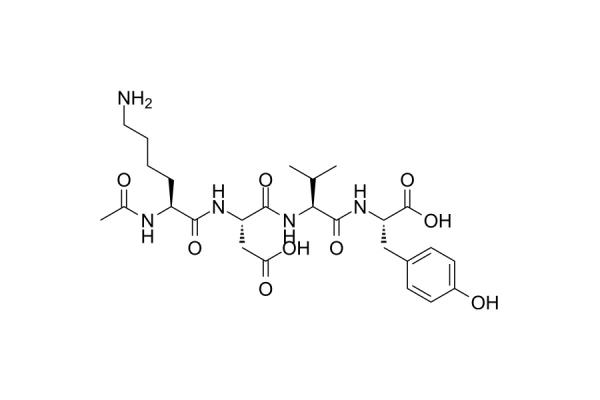
The five amino acids (Lysine-Threonine-Threonine-Lysine-Serine) that make up Palmitoyl Pentapeptide-4, also called Matrixyl or Pal-KTTKS, are connected to a palmitic acid chain. This lipophilic tweak makes skin penetration better than with peptides that haven't been changed. The molecular weight is about 802 Daltons, which lets it be delivered through the skin and stay stable in emulsion systems. For buying cosmetic-grade items, the quality must be above 95% by HPLC analysis, and the amount of solvents left over must be below the ICH Q3C limits. Buyers should make sure that providers give full Certificates of Analysis that show purity, protein content, bacterial limits, and heavy metal screening.
Mechanism of Collagen Synthesis Activation
The peptide works as a matrikine, which is a signalling molecule that talks to fibroblasts to increase the production of extracellular matrix. Once it gets inside, it binds to certain fibroblast receptors and starts the transforming growth factor-beta pathways. This chain reaction raises the production of collagen and elastin genes while changing the activity of matrix metalloproteinases, which break down structure proteins. A study in the International Journal of Cosmetic Science shows that levels as low as 3 ppm can cause procollagen I production to rise in a way that can be measured. This process is very different from surface hydrators, which makes it useful for formulas that want to restore deep structural integrity instead of just temporarily adding volume.
Clinical Evidence and Safety Profile
Several peer-reviewed studies back up the results of wrinkle reduction. After 84 days, a randomised controlled study with 93 people showed that using the product twice a day lowered the severity of periorbital wrinkles by 17%. Profilometry tests showed that the depth of wrinkles had decreased and the skin's smoothness had gotten better. Safety tests show that there isn't much chance of discomfort, and repeated human skin irritation tests show no sensitivity. The FDA (as a cosmetic ingredient) and the European Commission (CosIng database listing) have both said that it is safe to use on the skin. This track record of safety lowers the risk for formulators going into markets with strict consumer protection rules.
Comparing Palmitoyl Pentapeptide-4 with Other Popular Anti-Ageing Ingredients
Performance Against Retinol and Vitamin C
Unlike retinoids, which speed up cell turnover by activating nuclear receptors, this peptide works through focused signalling, so you don't have to worry about photosensitivity or itching. Retinol formulations need to be carefully stabilised, and sensitive people can get erythema from them, which means they can't be used in eye products. Palmitoyl Pentapeptide-4 works very well in sensitive periorbital formulations because it is very tolerant. Unlike L-Ascorbic Acid, which needs a pH below 3.5 to be stable and work, this peptide stays effective from pH 4.0 to 7.0, which makes it easier to make new formulations. Vitamin C products mostly deal with oxidative stress and pigmentation, but peptide technology rebuilds structures directly, so its benefits are not unnecessary but rather add to them.
Peptide-to-Peptide Comparison Analysis
Copper Peptides (GHK-Cu) have wider anti-inflammatory benefits, but Palmitoyl Pentapeptide-4 powder stimulates collagen production more specifically and works better with more formulations. It is possible for copper complexes to change the colour of some bases and combine with anionic polymers. Another matrikine, palmitoyl tripeptide-1, works in a way that is similar, but it needs higher concentrations to have the same effect. According to the data, the pentapeptide structure has the best affinity for binding to receptors. This specificity means that lower use concentrations are needed (2–5% vs. 5–10% for tripeptides), which makes commercial versions cheaper while still giving consumers the benefits they want.
How to Select and Source Palmitoyl Pentapeptide-4 for Your Business?
Quality Verification and Supplier Credentials
Professionals in charge of buying things should give top priority to sellers who have ISO 22716 (GMP for Cosmetics) approval and run facilities that follow CGMP guidelines. Ask for proof that the mass spectrometry was done, the results of the endotoxin tests, and information on how stable the substance is under fast conditions (40°C/75% RH for at least 6 months). Real sellers give analysis reports that are specific to each batch and show that the peptide sequence has been checked using methods like LC-MS/MS. Check that solid-phase peptide synthesis is used in the manufacturing process, along with strict purification steps like reversed-phase HPLC. Suppliers should show that they can track products from the time they get the raw amino acids to the time they are lyophilised. This is important for making sure that the formulations are always the same from batch to batch.
Bulk Purchasing Logistics and Pricing Structures
The price of cosmetic peptides depends a lot on the quality grade and the amount of the order. For more than 25 kg of material that is 95% pure or more, the wholesale price will be between $180 and $350 per kilogram. Prices are usually 40–60% higher per unit for smaller amounts (1–5 kg). Look for providers with open MOQ terms so that they can work with you during the product development stages before you start mass production. Check the dependability of the supply chain by looking at the inventory levels, lead times (usually two to four weeks for in-stock items), and logistics skills of each provider. For buyers in North America and Europe, suppliers who keep warehouses in the US and Germany cut down on import delays and landing costs by a large amount.
Application Scenarios and Case Studies for Palmitoyl Pentapeptide-4 in Skincare
High-Performance Anti-Ageing Night Creams
To take advantage of the body's natural cycles for skin repair, this peptide is added to night treatment emulsions at a concentration of 3 to 5 per cent. The peptide works as an alternative to retinoids that doesn't irritate the skin. This is especially helpful for people who are allergic to retinol. It works very well with lipid-rich bases that contain ceramides and cholesterol and doesn't cause phase separation during production. A case study from a medium-sized US cosmetics company showed that switching from 0.5% retinol to 4% peptide complex cut customer complaints by 68% while keeping happiness levels the same for wrinkle relief. When put in airless dispensers, the formulation passed stability tests for 12 months without going bad.
Precision Eye Contour Applications
Because the stratum corneum around the eyes is thin, strong actives can irritate this area. Lightweight serums with a 3–4% palmitoyl pentapeptide-4 powder content work well to treat crow's feet without causing the swelling that can occur when acidic ingredients are used. The peptide's neutral charge profile at normal pH helps prevent stinging when it is applied. A European cosmetics lab reported that its peptide-based eye serum received an 89% approval rating from customers, compared with 71% for its previous retinaldehyde formulation. Customers also said that the new formula was much easier to tolerate. Product makers should know that this peptide works best in serums that are either not water-based or contain little water and use cyclopentasiloxane or caprylic/capric triglyceride as a carrier.
Post-Procedure Recovery Formulations
This peptide is being used more and more in healing products for professionals in the aesthetics industry after laser and microneedling procedures. When barrier integrity is lost, its ability to speed up the rebuilding of the extracellular matrix is useful. Dermatology clinics say that patients heal faster when they use balms with peptides within 24 hours of surgery. When mixed with occlusive agents like petrolatum or dimethicone, which protect broken walls, the peptide stays stable. A clinical aesthetics provider found that patients who used peptide-fortified recovery balms had shorter wait times for their erythema to go away compared to those who only used emollients.
Best Practices for Integrating Palmitoyl Pentapeptide-4 into Your Product Line
Regulatory Compliance Across Major Markets
Different areas have different rules and regulations, so it's important to plan ahead for compliance. In the US, this ingredient is covered by FDA beauty rules without the need for pre-market approval. However, producers must make sure that the ingredient is safe. European markets need companies to follow the Cosmetics Regulation (EC) No 1223/2009 and the CosIng database. They also need to make sure that safety tests are done by trained experts. There are big differences between Asian markets. For example, China needs imported cosmetics to be registered with the National Medical Products Administration, while South Korea needs functional cosmetic notification for claims of anti-wrinkle effects. Hire regulatory experts who know the ins and outs of the area to make it easier to get into new markets and avoid delays that cost a lot of money.
Quality Assurance Protocols and Testing
Set up strict rules for inspecting arriving raw materials. These should include checking the colour consistency visually (for white-to-off-white powder), testing the solubility in certain liquids, and comparing HPLC results to reference standards. Set up stability test plans that check the amount of peptides, the pH, and the limits of microbes at set times (T0, 1M, 3M, 6M, 12M) and in both normal and fast settings. When a product is finished, it should go through customer perception studies that use standard photos and blind evaluator ratings to measure how much the wrinkles look better. These quality control points make sure that products give the benefits they say they will while still staying safe over time.
Formulation Optimisation Strategies
Several formulation factors need to be taken into account in order to get the best results from peptides. The peptide's durability depends on pH, and it lasts the longest between pH 5.0 and 6.5, which is the same pH range as the skin's natural acid layer. Do not mix with strong oxidisers or formulas that have a lot of alpha-hydroxy acids, as these may speed up the breakdown of peptides. Pre-solubilisation methods have a big effect on how uniform the final product is. Before adding the powder to the water phase, dissolve it in a 1:1 mixture of water and butylene glycol by slowly heating it to 35–40°C. Instead of anionic carbomers, choose non-ionic thickeners like hydroxyethylcellulose. Anionic carbomers may combine with cationic peptide groups and lower the viscosity.
Conclusion
Palmitoyl Pentapeptide-4 is a safe ingredient for wrinkle-reducing products that has been proven scientifically to work. There is clinical proof that it can stimulate collagen production, and the product is safe and has been approved by regulators around the world, making it easier for companies to get into the market. To improve the chances of successful product development, business-to-business buyers should know about quality verification standards, formulation issues, and use situations. The peptide can be used in a wide range of anti-ageing products because it works well with different cosmetic bases and is safe for use in sensitive areas. Strategic sourcing from certified suppliers guarantees batch consistency, which is important for maintaining the brand's reputation and making sure customers are happy.
FAQ
1. How should I solubilise peptide powder without clumping?
Because it has been changed to be lipophilic, the powder doesn't dissolve right away in cold water. Before adding to the water phase or while the emulsion is cooling, pre-solubilise with a mixture of 1:1 water to butylene glycol or glycerine and heat it slowly (35–40°C).
2. What pH range ensures maximum stability?
The peptide is most stable when the pH is between 4.0 and 7.0. Extreme alkalinity breaks down peptide bonds or palmitoyl ester links. Use the right pH adjusters to keep your final formulation in this range.
3. Can I combine this peptide with vitamin C?
If you mix peptides directly with low-pH L-Ascorbic Acid, they could break down and form crystals. To keep the effectiveness, use steady versions like sodium ascorbyl phosphate or spread out the times you apply them.
4. Does it work with carbomer thickeners?
Anionic carbomers may react with cationic peptides, making the mixture less viscous. If you want to use non-ionic thickeners, like hydroxyethylcellulose, or remove carbomers first, you can add peptide solutions.
Partner with Faithful for Premium Palmitoyl Pentapeptide-4 Supply
Faithful BioTech provides beauty peptides, including Palmitoyl Pentapeptide-4, that are of pharmaceutical grade and come with full analysis paperwork to help you with your formulation creation needs. We are a well-known supplier in Xi'an, and we keep our HPLC, GC, and spectrophotometric testing tools in order to make sure that every batch meets strict purity requirements of above 95%. In our quality control lab, we make full COAs by checking the peptide content, the residual solvent content, and the microbial content. These tests are in line with international cosmetic standards. We know that people who work in procurement need reliable supply lines. Our production capacity can handle both small numbers needed for testing and large orders for business use, and we offer flexible minimum order quantities (MOQs). For example, if you're making new anti-ageing serums or professional treatments for after surgery, our expert team can help you make the best use of peptides in your base systems. Email us at allen@faithfulbio.com Or WhatsApp: +86 13137770562 to talk about your sourcing needs and ask for analytical data that is specific to each batch.
References
1. Robinson LR, Fitzgerald NC, Doughty DG, Dawes NC, Berge CA, Bissett DL. "Topical palmitoyl pentapeptide provides improvement in photoaged human facial skin." International Journal of Cosmetic Science, 2005; 27(3): 155-160.
2. Katayama K, Armendariz-Borunda J, Raghow R, Kang AH, Seyer JM. "A pentapeptide from type I procollagen promotes extracellular matrix production." Journal of Biological Chemistry, 1993; 268(14): 9941-9944.
3. Lintner K, Peschard O. "Biologically active peptides: from a laboratory bench curiosity to a functional skin care product." International Journal of Cosmetic Science, 2000; 22(3): 207-218.
4. Gorouhi F, Maibach HI. "Role of topical peptides in preventing or treating aged skin." International Journal of Cosmetic Science, 2009; 31(5): 327-345.
5. Trookman NS, Rizer RL, Ford R, Ho E, Gotz V. "Clinical assessment of a combination lip treatment to restore moisturisation and fullness." Journal of Clinical and Aesthetic Dermatology, 2009; 2(12): 44-48.
6. Schagen SK. "Topical peptide treatments with effective anti-ageing results." Cosmetics, 2017; 4(2): 16-28.