

How does the oligopeptide P11-4 construct a mineralization scaffold to repair damaged tooth enamel?
Oligopeptide P11-4 is a research component for synthesizing oligopeptides, which is characterized by pH-responsive self-assembly, which is fundamentally different from the traditional oral restorative components. When faced with problems such as early demineralization, white spots or dentin hypersensitivity, people usually turn to fluorine-containing products; However, these only deposit a thin mineral layer on the tooth surface, which can only provide surface protection, and it is difficult to penetrate into the microscopic pores in enamel. Once the acidic substance erodes the enamel, many tiny gaps will be formed inside, which will lead to the continuous loss of minerals, and gradually appear chalky white spots, which may eventually develop into tooth decay. The traditional fluoride only deposits minerals on the outer surface, which can not build the internal structural framework, resulting in limited surface repair. The decisive feature of Oligopeptide P11-4 is that it can actively penetrate into the damaged micropore area of enamel. In the local weak acid environment of the lesion, it spontaneously self-assembled into a 3D nanofiber scaffold. This structure is like a scaffold, capturing calcium and phosphate ions from saliva and guiding hydroxyapatite crystals to grow orderly along the framework-imitating the natural mineralization process of tooth development and filling tiny defects in enamel from the inside. This component is mainly used for the study of biomimetic oral mineralization and the development of oral care preparations. As a research material, it can't directly replace clinical dental treatment, and it is ineffective for repairing teeth with decayed teeth.
There are significant limitations to traditional repair methods for the underlying issue of enamel demineralization
Many people are not aware that tooth enamel is the hardest tissue in the human body; However, it lacks live cells, which means that once damaged, the body cannot regenerate. When we eat sweets or carbonated drinks, oral bacteria produce acid, gradually dissolving minerals in the enamel. With the loss of calcium and phosphorus, countless micropores will form inside the enamel structure. At this stage, the appearance of white patches on the surface of teeth - commonly referred to as "white spots" - marks the initial stage of damage. If there is no intervention, these pores will enlarge, the enamel surface will collapse, and eventually form cavities that need to be ground off by dentists and filled with resin. Common fluoride products reduce further acid corrosion by depositing a layer of minerals on the outside of teeth, which is like a protective film. However, this membrane remains on the surface and cannot penetrate the micropores inside the enamel; The internal gap is still empty. Even if fluoride toothpaste is consistently used, frequent exposure to acidic or sugary foods can cause internal pores to continue expanding, making it difficult to completely eliminate vitiligo.
Once erosion creates these micropores, teeth not only develop white spots but also become hypersensitive. Stimuli such as hot, cold, acidic, or sweet foods travel through these pores to the tooth's interior, causing sharp pain upon contact. Many desensitizing toothpastes on the market work by temporarily plugging the pore openings; however, the friction from daily brushing causes this temporary seal to wear off, leading to a recurrence of sensitivity. Whether fluoride-based or pore-sealing, these products act only on the surface and cannot penetrate the internal voids to build a structural framework; they offer only protection or temporary relief rather than structurally reinforcing the damaged area from within.
Addressing this early-stage damage requires an agent capable of penetrating the pores, establishing a support scaffold in situ, and guiding mineral growth into the voids—a concept that led to the development of Oligopeptide P11-4. In areas where teeth are healthy and intact, the oral pH is near neutral; Oligopeptide P11-4 remains inert and does not accumulate wastefully on the tooth surface. It only initiates self-assembly in damaged, slightly acidic zones—effectively pinpointing the site of injury and concentrating its action within the lesions, rather than being squandered on healthy enamel.
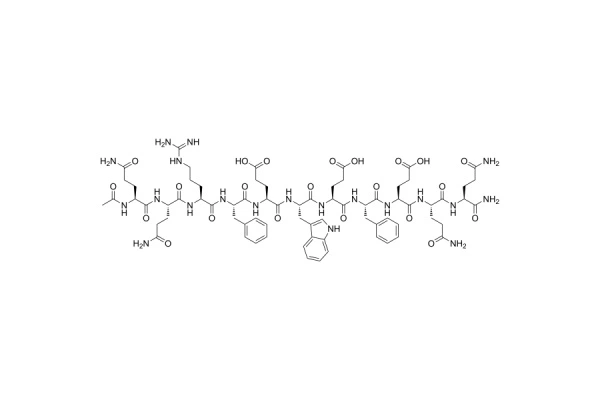
Many restorative ingredients lack this ability to selectively target damage; instead, they adhere uniformly across all tooth surfaces. Consequently, the majority of active ingredients are wasted on healthy teeth, leaving very little to reach the actual damaged "white spot" lesions, which significantly compromises restorative efficacy. Another challenge lies in the fact that, without a guiding template, calcium and phosphorus ions merely clump together haphazardly, forming loose, fragile deposits that are easily dissolved by acids and fail to create a hard, stable tooth structure. During natural tooth development, the body utilizes specific proteins as templates to guide the orderly growth of hard crystals. However, extracting these natural proteins is costly and yields unstable results, making them difficult to use for large-scale product development. In contrast, Oligopeptide P11-4 is synthetically produced and replicates the function of these natural templates.
It offers consistent performance across batches after large-scale production and purification, making it ideal for oral care research. It is also important to understand its limitations: this ingredient is effective only for early-stage white spot lesions. If significant cavities or extensive enamel damage have already developed, the condition falls outside the scope of this ingredient's capabilities, and professional dental filling is required. The oral environment is complex, characterized by fluctuating pH levels during eating and constant salivary flow; therefore, any structural scaffold formed must be robust enough to withstand being washed away. The dense network formed by the assembly of Oligopeptide P11-4 remains within the microscopic lesions for an extended period, continuously capturing calcium and phosphorus to facilitate the gradual growth of hard crystals—creating a structure far more durable than a simple mineral layer adhering to the surface.
Self-assembly into a three-dimensional scaffold, guiding the ordered mineralization of calcium and phosphate ions
Oligopeptide P11-4 is a synthetic short-peptide powder produced by assembling amino acids in a specific sequence, followed by purification and freeze-drying. In a neutral liquid environment, these short-peptide molecules remain dispersed and independent, exhibiting good fluidity and permeability without aggregating. Upon entering the micropores of tooth enamel—created by acid erosion—a shift in pH triggers a structural transformation in the peptides. They interconnect to weave a fine fibrous network within the micropores, forming a sophisticated scaffold; this self-assembly process is driven by the local environment of the damaged area and requires no additional additives. This mesh-like scaffold anchors firmly within the pores, with its surface acting like tiny magnets to attract and bind free calcium and phosphate ions from saliva.
Without this scaffold acting as a template, calcium and phosphate would merely accumulate haphazardly, forming loose, fragile particles that are easily dissolved by acid. However, facilitated by the Oligopeptide P11-4 scaffold, calcium and phosphate attach to the fibers and grow into ordered, hard crystals aligned with the scaffold's structure. These newly formed crystals closely resemble natural enamel in their arrangement, creating a robust structure that bonds tightly with the existing tooth tissue, preventing delamination or detachment. This process mimics natural tooth development; rather than simply coating the tooth surface with a film, it promotes the in situ growth of hard mineral structures within the enamel's internal pores. This filling process is gradual rather than instantaneous. The scaffold remains in the pores for an extended period, continuously capturing calcium and phosphate from saliva as crystals slowly grow to fill the voids. As the pores fill, enamel density is restored and surface white spots disappear; furthermore, the transmission of stimuli such as heat, cold, acidity, and sweetness is blocked, thereby alleviating tooth sensitivity. It is important to note that this process only fills existing micropores and does not spontaneously generate a thick layer of entirely new enamel.
While many mistakenly believe this ingredient can repair large cavities, it is actually suitable only for early-stage white spot lesions where no significant structural defect has yet occurred. The peptide scaffold formed by Oligopeptide P11-4 is gentle and non-irritating to oral tissues. Once the hard mineral crystals have fully formed, the scaffold is gradually broken down by oral proteases and does not remain permanently in the tooth. The degradation rate of the scaffold matches the rate of crystal maturation, resulting in a hard mineral deposit that is compositionally similar to natural enamel. In contrast, commonly used resin filling materials are foreign bodies; the interface between the resin and the existing enamel is prone to plaque accumulation, which can eventually lead to secondary caries. However, the mineral regenerated by Oligopeptide P11-4 integrates seamlessly with the original tooth structure, leaving no visible seams. Studies indicate that this method can reduce the risk of recurrent caries, a key reason why many scientists are focusing on this ingredient.
High-quality Oligopeptide P11-4 undergoes processing to remove impurities, heavy metals, and residual solvents from synthesis. To maintain its biological activity, it must be stored in a sealed container at low temperatures and protected from light. Exposure to high temperatures or prolonged light can damage the short-peptide structure, causing it to lose its ability to form scaffolds and guide mineral growth. In product formulation, researchers often combine Oligopeptide P11-4 with fluoride; fluoride can be incorporated into the newly formed crystals, thereby enhancing their acid resistance. This combination repairs internal voids while simultaneously strengthening surface protection. However, the formulation requires precise control of pH and ion concentrations; if these parameters are not optimized, the short peptides may aggregate prematurely upon contact with the tooth surface, hindering their infiltration into micropores and preventing effective repair. It is important to note that Oligopeptide P11-4 is a raw material for research purposes—not a finished toothpaste or oral care product—and should not be applied directly to the teeth. If visible cavities or persistent pain occur, professional dental treatment must be sought promptly.
Compared to traditional fluoride-based repair regimens, it offers unique biomimetic repair advantages
Most dental restorative products on the market rely on fluoride as their key active ingredient; while fluoride has a long history of use and offers some protection against acid erosion, its mechanism of action has distinct limitations. When fluoride contacts the tooth surface, it rapidly deposits a thin mineral layer but struggles to penetrate the micropores within the enamel. In the case of white spot lesions caused by early-stage demineralization, the pores lie beneath the surface enamel—beyond fluoride's reach. Consequently, fluoride merely protects the outer surface and slows further erosion without filling the internal voids. Frequent consumption of sweets or acidic beverages can cause these voids to enlarge, eventually leading to cavities. In short, fluoride acts primarily as a preventive measure against further damage, whereas Oligopeptide P11-4 penetrates damaged micropores to construct a scaffold and guide the growth of hard minerals within them—focusing on repairing existing micro-damage. Their fundamental mechanisms of action differ significantly.
Regarding the site of action, fluoride works only on the tooth surface, whereas Oligopeptide P11-4 penetrates the micropores beneath white spot lesions, establishes a network-like scaffold in the damaged area, and guides crystal growth within the voids. A tooth may feel smooth and intact to the touch while its deeper enamel is riddled with micropores—representing a form of hidden early-stage damage that conventional fluoride products cannot address. Thanks to its small-molecule structure, Oligopeptide P11-4 can traverse the surface layer to reach damaged areas within the enamel and initiate an assembly process inside the micropores of white spot lesions; by filling voids from within and increasing enamel density, it alleviates white spot symptoms and reduces tooth sensitivity. Such deep, internal restorative capability is difficult to achieve with fluoride alone.
Regarding the resulting mineral structure, minerals precipitated by fluoride are arranged haphazardly, forming a loose layer that is susceptible to acid erosion. In contrast, Oligopeptide P11-4 acts as a template, guiding the orderly growth of hard crystals along the scaffold; the resulting mineralized zone closely resembles natural enamel in terms of hardness and acid resistance. This ordered crystalline structure offers exceptional stability and acid resistance, ensuring longer-lasting restorative effects and reducing the risk of re-demineralization. In terms of application, fluoride is suitable for long-term daily use, aiming to protect healthy teeth and prevent acid erosion.
In contrast, Oligopeptide P11-4 is better suited for addressing early-stage issues—such as white spot lesions and microporous enamel damage—by acting as a restorative agent for existing micro-defects. However, the two are not mutually exclusive; developers often consider using them in combination. Oligopeptide P11-4 can fill internal micropores, while fluoride integrates into the crystal structure to enhance acid resistance. This combined mechanism—repairing internal damage while strengthening the tooth surface—holds great promise for the development of oral care products. Nevertheless, developing such combinations requires precise formulation; if parameters are not set correctly, Oligopeptide P11-4 molecules may aggregate prematurely and lose their ability to penetrate micropores, necessitating rigorous testing and validation. Furthermore, an objective view of this ingredient is essential; it is not a "panacea" for dental restoration. It is unsuitable for cases where caries have penetrated the dentin, resulting in visible cavities or extensive enamel loss, as the peptide scaffold cannot support large-scale hard tissue reconstruction.
Research Applications and Scope of Raw Material Use
Biomimetic restoration of hard tooth tissue is a hot spot in the research and development of biomaterials. Traditional dental fillings rely on mechanical filling of artificial materials; However, there is usually a microscopic gap between foreign bodies and natural enamel. Over time, dental plaque will accumulate in these gaps, leading to recurrent tooth decay. The industry has been looking for an active ingredient for a long time, which can directly grow hard minerals in the damaged parts and closely combine with the natural tooth structure. Because Oligopeptide P11-4 can self-assemble and construct scaffold in situ after contacting with acid, it has become a popular peptide candidate to solve early tooth decay and enamel demineralization. In the laboratory environment, researchers can create demineralized tooth samples to observe the whole process, including the penetration and assembly of Oligopeptide P11-4 and the subsequent guidance on the growth of mineral crystals. They can measure the changes of enamel hardness after restoration, evaluate the closure of micropores, evaluate how different concentrations and pH values affect the restoration effect, and clarify the potential mechanism of biomimetic mineralization, thus laying the foundation for developing new oral care products.

Regarding the product formula, Oligopeptide P11-4 powder has good water solubility, which makes it suitable for developing prototype formulas, such as oral gel, mouthwash and local dental coatings. However, because the assembly of peptide is only triggered by the weak acidic environment of damaged tooth tissue, the pH value and ion concentration of the preparation are the key factors in research and development. If the preparation is too acidic, short peptides may aggregate prematurely after contact with the tooth surface, preventing them from penetrating the internal micropores; On the contrary, if the pH value is too high, assembly cannot be triggered, fiber scaffolds cannot be formed, and mineral growth cannot be guided. In the process of formulation development, safety must also be given priority, especially by controlling the concentration of ingredients to minimize the irritation to oral soft tissues, which is a continuous challenge that must be solved in the whole product development process.
In addition to the main application of repairing early enamel leukoplakia, the scientific community is also exploring the potential of oligopeptide P11-4 in other hard tissue repair scenarios, such as sealing dentinal tubules and conducting bone-related biomimetic mineralization research. With its ability to form 3D fiber scaffolds and capture mineral ions, this short peptide can be used as a template to guide the growth of hard crystals in structural defects under appropriate conditions, thus expanding the potential application range of this material.
However, most of these extended applications are still in the initial exploration stage; Before turning it into a commercially viable product, a lot of further research and development are needed, so its application scope should not be exaggerated. The most mature application of Oligopeptide P11-4 is still the bionic repair of early enamel leukoplakia, which is supported by the most extensive research data. Consistent quality of raw materials is essential; The existence of defective short peptide impurities produced in the production process will destroy the formation of scaffold and significantly damage the mineral guidance. High-quality, high-purity raw materials have been strictly tested for purity, impurity level, heavy metals and residual solvents. Each batch of products has been tested by assembly activities to ensure that the maintenance performance of each batch of products is consistent and to prevent quality changes from affecting product development and experimental results.
It is very important to understand the limitations of Oligopeptide P11-4. It is a raw material for laboratory research, especially for mechanical research and the development of new oral care products, rather than a finished oral care product suitable for self-repairing teeth. If there are problems such as tooth decay, persistent pain or swelling and redness of gums, you must seek professional dental care in qualified institutions and follow the dentist's treatment plan; This research-grade material cannot be used to solve dental diseases.
conclusion
Oligopeptide P11-4 is a synthetic short peptide research material which can be self-assembled in acidic environment. Its key feature is that it can penetrate the micropores of early demineralized enamel in the form of small molecules. It constructs a fine mesh scaffold at the injured site, captures calcium and phosphorus from saliva, and guides hard crystals to grow slowly along this scaffold. This process realizes biomimetic mineralization in the pores, fills the micropores in the enamel, and relieves the problems of white spots and tooth sensitivity. Although the traditional fluoride component only forms a protective film on the tooth surface, but does not penetrate deep enough to repair the internal damage, Oligopeptide P11-4 simulates the natural tooth development process by establishing a template for hard mineral growth in situ. The newly formed structure is closely combined with natural enamel and has excellent acid resistance. High-quality oligopeptide P11-4 powder is produced through chemical synthesis and multiple purification steps to ensure controllable impurity level; When stored at a low temperature away from light, it still maintains its activity. It is of great value to the development of various oral restorative preparations and the study of early enamel damage. However, it is important to distinguish its function: oligopeptide P11-4 is a raw material-a short peptide for research-rather than a finished oral care product, and it is only used for laboratory research and new product development. It can't repair the formed tooth decay or structural tooth loss; Any dental disease must seek professional dental care immediately. With the continuous development of bionic peptide materials, these self-assembled repair peptide will promote the progress of hard tissue repair technology and open up a new way for mild intervention of early enamel damage.
Xi'an Faithful BioTech Co., Ltd. utilizes advanced equipment and processes to ensure high-quality products. Our Oligopeptide P11-4 meets international pharmaceutical standards. Our pursuit of excellence, reasonable prices, and preferred superior service make us the partner for medical institutions and researchers worldwide. If you require Oligopeptide P11-4 research or production,Please contact us Click email: allen@faithfulbio.com Or WhatsApp: +86 13137770562.
FAQ
Q: What is the key difference between Oligopeptide P11-4 and fluoride-based repair ingredients?
A: Fluoride-based ingredients merely deposit a protective mineral layer on the tooth surface; their primary function is protection, and they cannot penetrate the microscopic pores within the enamel. In contrast, Oligopeptide P11-4 can penetrate the micropores of early-stage demineralized enamel. It self-assembles into a mesh-like scaffold at the site of the lesion, capturing calcium and phosphate ions to grow hard crystals, thereby repairing early-stage white spot lesions from within the pores. Its applications are currently limited to scientific research, and neither substance is a direct treatment for established cavities.
Q: Can Oligopeptide P11-4 repair teeth that already have cavities?
A: No. Oligopeptide P11-4 is only effective for early-stage enamel white spot lesions where no visible cavity has yet formed. Once a cavity becomes visible to the naked eye, the enamel has already suffered extensive structural breakdown; this peptide cannot repair large defects, and such cases require professional dental filling.
Q: Can Oligopeptide P11-4 be applied directly to the teeth?
A: No. Oligopeptide P11-4 is a peptide raw material intended for laboratory research, not a finished commercial oral care product. Its formulation concentration and pH level require professional calibration; direct application could irritate the oral mucosa. It is suitable only for in vitro mineralization studies and the screening of new product formulations. If you have dental issues, you must consult a dentist for treatment.
References
- Kirkham J, et al. Self-assembling peptide scaffolds promote enamel remineralization[J]. Journal of Dental Research,2007,86(5):426-430.
- London R, et al. Randomized clinical trial investigating self-assembling peptide P11-4 for treatment of early occlusal caries[J]. Journal of Dental Research,2020,99(7):789-796.
- Marchesi J, et al. Biomimetic enamel regeneration using self-assembling peptide P11-4[J]. Frontiers in Dental Medicine,2024,5:1289741.
- Ruan Q, et al. Peptide-guided biomineralization for hard tissue repair[J]. Advanced Materials,2022,34(21):e2107892.
- Niu L, et al. Self-assembling peptides in dentistry: Enamel remineralization and dentin repair[J]. Journal of Hard Tissue Biology,2025,34(2):113-124.
- Alkilzy M, et al. P11-4 peptide for early caries lesions: mechanism and clinical perspective[J]. European Journal of Paediatric Dentistry,2023,24(3):201-208.
- Zhang L, Wang H. pH responsive self-assembling oligopeptide for biomimetic mineralization research[J]. Peptides,2024,179:172056.