

How does the Dynorphin A (1-13) peptide regulate pain perception in the body and stabilize the state of neuronal signaling?
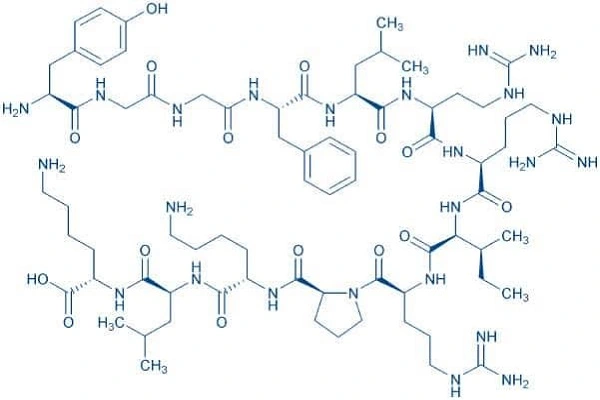
Dynorphin A (1-13) peptide is a synthetic bioactive short peptide used in scientific research. It is different from many substances that can only temporarily relieve pain. The human body has an internal pain sensing signal system; When the body is stimulated, nerves will send pain signals to remind us of potential harm. Under normal circumstances, this signaling system operates in a switching mechanism, which means that once the stimulus is removed, the pain signal will fade. However, if the nerve remains in a state of hypersensitivity, the pain signal may be triggered repeatedly, and even a slight stimulus will cause obvious discomfort. Many traditional analgesics only temporarily inhibit pain, but do not solve the potential nerve hypersensitivity. Dynorphin A (1-13) peptide regulates pain-related signal transmission by binding to specific neuronal signal transduction sites, thus reducing nerve hypersensitivity and stabilizing the balance of nerve signals; It is widely used in the research of neural signal regulation and the development of bioactive preparations.
Hypersensitive nerve signaling and repeatedly triggered pain signals create persistent discomfort
Many people mistakenly believe that pain is merely a fleeting sensation caused by injury; in reality, it is a warning signal transmitted between nerves. Under normal circumstances, nerves generate pain signals following tissue damage; as the wound heals, the signal intensity diminishes and the discomfort fades—much like a household smoke detector that sounds an alarm only when danger arises.
However, prolonged nerve stimulation can cause this "alarm" to become hypersensitive or even malfunction; even minor stimuli—or the complete absence of external injury—can trigger persistent pain signals. Once sensitized, the nerves develop a form of "memory," making signal transmission pathways highly prone to activation and leading to recurring discomfort. This stems from fundamental changes in signal transmission patterns within nerve cells: repeated stimulation lowers the activation threshold, increases transmission efficiency, and amplifies weak stimuli, causing the brain to perceive the resulting signal as intense pain. Many people experience recurring severe pain or discomfort at the injury site long after the wound has healed; the root cause lies in this phenomenon of nerve sensitization and memory formation.
Traditional analgesic ingredients merely block pain signals temporarily, providing short-term relief without addressing the underlying issue of nerve sensitization; consequently, the pain returns quickly once the medication wears off. This approach suppresses the sensation itself rather than regulating the balance of nerve signals. Long-term use often leads to drug tolerance, requiring higher doses to maintain efficacy—akin to a smoke detector that has been forcibly silenced: the alarm sound stops temporarily, but the device remains in a state of high sensitivity, ready to sound again the moment the obstruction is removed. Continued medication can also induce adaptive changes in the nervous system, reducing the drug's effectiveness at the same dosage and necessitating further increases—a significant limitation.
A state of persistent nerve hypersensitivity can also affect other nerves, impacting mood and sleep, thereby creating a vicious cycle. Constant discomfort interferes with the brain's self-repair processes; when nerves remain in a state of persistent hyperexcitability, it becomes difficult to achieve deep sleep, resulting in rest that is shallow and easily interrupted. A lack of rest further reduces the nervous system's tolerance, making nerves more easily triggered and exacerbating the discomfort. Furthermore, persistent pain signals trigger the body's stress response, leading to chronic tension and anxiety; this heightened emotional state amplifies the brain's perception of pain. The interplay of these factors makes the discomfort difficult to eliminate. Most pain-relief strategies focus solely on alleviating external symptoms rather than breaking the pain cycle itself. Effective pain management requires not only blocking pain transmission but also modulating signal intensity and reducing neuronal hyperexcitability.
Thanks to its compact molecular structure, the Dynorphin A (1-13) peptide can penetrate protective peripheral nerve barriers to reach the sites of pain signal transmission and modulate signaling at the source—a capability that distinguishes it from large-molecule active ingredients. Large-molecule compounds struggle to overcome these barriers and often remain on the tissue surface, resulting in limited regulatory efficacy. While this short peptide serves as a valuable new tool in neuroscience research—aiding in the investigation of the mechanisms behind neuronal sensitivity—its use is currently limited to laboratory settings; individuals suffering from chronic pain should seek professional medical treatment.
Modulating pain signal transmission intensity by binding to specific neural signaling sites
Dynorphin A (1-13) peptide is a synthetic short peptide produced as a high-purity powder through solid-phase synthesis, purification, and lyophilization. Its amino acid sequence mimics the corresponding naturally occurring active fragment found in the human body, enabling it to recognize specific receptor sites on the surface of neurons. Upon binding to these sites, Dynorphin A (1-13) peptide alters intracellular signal transduction dynamics, thereby attenuating the downstream transmission of pain signals. As the body naturally produces similar neuromodulatory peptides, this synthetic variant is structurally analogous to the endogenous fragment; it offers precise targeting capabilities while avoiding non-specific binding. The synthesis process involves precise amino acid assembly and multiple purification steps to eliminate truncated peptides and by-products; the final lyophilized powder features strictly controlled impurity levels, ensuring batch-to-batch consistency in activity and minimizing experimental interference.
This regulatory mechanism modulates signal intensity without damaging neurons or disrupting normal physiological signaling; it specifically targets neurons that are in a state of hyperexcitability and are continuously transmitting pain signals. Healthy neurons remain in a resting state in the absence of stimuli, transmitting signals only under appropriate triggering conditions. While preserving these normal physiological mechanisms, the peptide reduces the firing frequency of abnormally active neurons and decreases aberrant signal output. Unlike broad-spectrum neuroactive drugs—which often indiscriminately inhibit all neuronal activity, frequently resulting in numbness—Dynorphin A (1-13) peptide offers superior targeting precision.
By attenuating pain signal transmission, the peptide reduces pain signal output, gradually quiets neuronal hyperexcitability, and restores sensitivity thresholds to normal levels, thereby preventing pain from being easily triggered by minor stimuli. It also mitigates the stress cascades associated with neuronal hyperactivity, helping the nervous system regain homeostasis. This process is gradual rather than instantaneous; it modulates signal transduction patterns and reduces neuronal response intensity over time. As it is not an anesthetic, it does not completely eliminate sensation but rather suppresses excessively amplified pain signals, allowing the body to retain normal sensations such as touch and pressure. This mechanism is closely linked to the body's natural regulatory processes, making the peptide highly suitable for studying neuronal homeostasis.
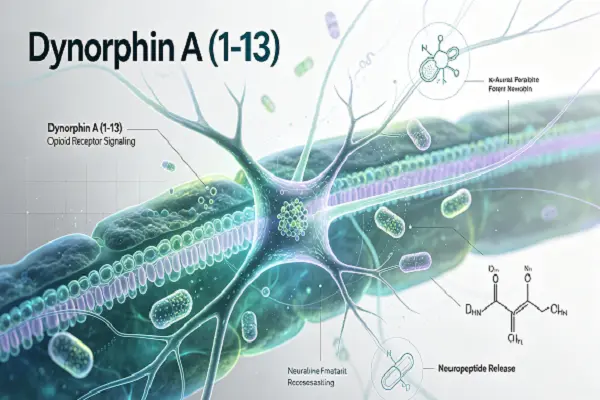
High-quality Dynorphin A (1-13) peptide is processed to remove truncated peptides, heavy metals, and residual solvents; the substance retains stable activity when stored under low-temperature, light-protected, and sealed conditions. As its peptide structure is susceptible to degradation by high temperatures, light, and moisture, proper storage is essential to maintain molecular activity and ensure the consistency of research results. During formulation development, this short peptide can be combined with ingredients that offer neuro-stress relief and antioxidant benefits; such synergistic multi-component action helps stabilize neuronal function and facilitates the exploration of high-quality formulations. It must be clearly understood that Dynorphin A (1-13) peptide is strictly a research-grade material; it cannot repair structural tissue damage nor serve as a substitute for analgesic drugs. Its application is limited to laboratory-based mechanistic studies and the development of candidate formulations; the product is not intended for direct human treatment and cannot replace clinical medical care.
Stabilizing the state of neuronal excitability to break the vicious cycle of recurring pain
Hypersensitivity in the nervous system not only triggers pain but also initiates a chain reaction: pain, poor sleep quality, and emotional tension exacerbate one another, creating a vicious cycle. Traditional painkillers offer only temporary relief and fail to break this cycle; symptoms often recur once the medication wears off. Nerves in a state of chronic hyperexcitability not only continuously transmit pain signals but also bombard the brain with stress signals, keeping it in a state of high alertness that hinders deep sleep. Conversely, sleep deprivation lowers the nervous system's tolerance threshold, causing even mild stimuli to trigger intense pain. Recurring discomfort induces anxiety, which in turn amplifies the perception of pain—an interconnected cycle that is difficult to break on one's own. Conventional painkillers merely mask pain without addressing underlying issues such as nerve hyperexcitability, insomnia, and chronic stress; once the drug is metabolized, the entire negative cycle returns.
The Dynorphin A (1-13) peptide regulates nerve signaling at the source, reduces nerve sensitivity, and addresses various issues associated with nerve hyperexcitability from multiple angles. Its most immediate effect is the reduction of pain signal output; by preventing nerves from being activated by mild stimuli, it minimizes recurring discomfort. In contrast, traditional analgesics only suppress the sensation of pain while the nerves remain highly sensitive; once the drug's effect fades, pain signals can surge again.
This short peptide focuses on calming hyperexcitable nerves and raising their activation threshold, thereby achieving long-term neural stability. Rather than merely eliminating immediate discomfort, it gradually alters nerve activation characteristics, reducing the release of abnormal pain signals. Unlike temporary signal blocking, the nerves remain stable even after the peptide's action ceases, resisting a rapid relapse into a hypersensitive state—making it an ideal candidate for research into long-term neural homeostasis.
Persistent nerve hyperexcitability disrupts sleep rhythms, as continuous signal stimulation prevents the brain from entering a resting state. The Dynorphin A (1-13) peptide calms abnormal neuronal firing and reduces the stimulatory signals transmitted to the brain, thereby helping to restore normal sleep. Adequate sleep is crucial for neural self-repair, which further lowers nerve sensitivity and fosters a virtuous cycle. Excessive neuronal activity amplifies the body's stress response, keeping the individual in a state of chronic tension.
This short peptide reduces abnormal neuronal firing, lowers overall excitability, alleviates tension, and helps the nervous system maintain homeostasis. Fundamentally, the core mechanism of action of the Dynorphin A (1-13) peptide lies in inhibiting amplified pain signals and calming hyperexcitable neurons, thereby breaking the vicious cycle of recurring pain—a feature that distinguishes it fundamentally from drugs that merely mask the sensation of pain.
Compared to traditional analgesic approaches, the regulation of neuronal homeostasis offers unique advantages
While numerous analgesic agents exist, most merely suppress pain temporarily without addressing the root cause of neuronal hyperexcitability. Conventional analgesics directly block pain signaling pathways—akin to forcibly silencing an alarm while the system itself remains hypersensitive; once the drug's effect wears off, the discomfort immediately returns. Long-term use often leads to drug tolerance, necessitating ever-increasing dosages; consequently, these drugs are suitable for short-term signal-blocking studies but ill-suited for correcting neuronal hyperexcitability. Furthermore, many analgesic molecules are too bulky to bind precisely to specific neuronal signaling sites, resulting in broad yet superficial inhibition and limited regulatory efficacy.

As a short peptide, Dynorphin A (1-13) peptide specifically binds to neuronal signaling sites, modulating only aberrantly amplified pain pathways without indiscriminately suppressing all neuronal signals, thereby avoiding interference with normal tactile perception. This allows researchers to independently investigate the dynamic changes in pain pathways, yielding more reliable experimental results.
Traditional analgesic methods rely on forcibly masking pain; the intervention's effect vanishes once the drug is metabolized. In contrast, Dynorphin A (1-13) peptide focuses on modulating intrinsic neuronal excitability; sustained use can improve neuronal sensitivity, resulting in more durable therapeutic effects that are less prone to rapid rebound. Unlike conventional painkillers—which act merely as external interventions, allowing neurons to revert to a hypersensitive state once the drug breaks down—this short peptide can gradually alter the excitability characteristics of neurons. The improved state of neuronal sensitivity persists even after treatment ceases, making it an ideal candidate for long-term studies on changes in neuronal status. Conventional analgesics are limited to temporary pain suppression and fail to address issues such as insomnia or stress caused by neuronal hyperexcitability.
Beyond modulating pain perception, Dynorphin A (1-13) also alleviates neuronal stress and sleep disturbances. It holds immense potential for pharmaceutical development, facilitating the creation of multi-target drug candidates designed to stabilize neuronal function. These advantages enable it to move beyond the outdated paradigm of merely providing temporary pain relief and to forge a new research path focused on restoring neuronal homeostasis and alleviating neuronal hypersensitivity.
Conclusion
Dynorphin A (1-13) peptide is a synthetic, bioactive short peptide designed specifically for scientific research. By binding to neuronal signaling sites, it downregulates pathologically amplified pain signals, inhibits neuronal hyperexcitability, and reduces hypersensitivity, thereby breaking the vicious cycle of recurrent pain. Unlike traditional analgesics—which often merely mask pain temporarily without addressing the root cause and frequently lead to symptom rebound or drug tolerance with long-term use—Dynorphin A (1-13) peptide neither numbs nerves nor impairs sensory function. Instead, it aims to recalibrate dysregulated neuronal signaling while alleviating stress responses and sleep disturbances triggered by neuronal hyperexcitability. This high-purity product undergoes multi-stage purification to remove impurities and is stored under sealed, low-temperature conditions to ensure the stability of its biological activity; compatible with various excipients, it holds immense value for research into neural pathway mechanisms and the development of formulations aimed at maintaining neuronal homeostasis. It must be emphasized that Dynorphin A (1-13) peptide is intended solely as a research-grade material rather than a marketed pharmaceutical product; it is not for the direct treatment of humans or painful conditions, and patients suffering from persistent pain should seek professional medical care. As research into neural perception advances, strategies focused on recalibrating neuronal signaling and stabilizing neuronal sensitivity will continue to drive innovation in the field of neuromodulatory bioactive drugs.
Xi'an Faithful BioTech Co., Ltd. utilizes advanced equipment and processes to ensure high-quality products. Our Dynorphin A (1-13) peptide meets international pharmaceutical standards. Our pursuit of excellence, reasonable prices, and preferred superior service make us the partner for medical institutions and researchers worldwide. If you require Dynorphin A (1-13) peptide research or production,Please contact us Click email: allen@faithfulbio.com Or WhatsApp: +86 13137770562.
FAQ:
Q: How does Dynorphin A (1-13) peptide differ from standard ingredients used for temporary pain relief?
A: Standard ingredients for temporary pain relief typically mask the sensation of pain only briefly; the nerves themselves remain in a state of hypersensitivity, making pain likely to recur once the drug's effect wears off. Dynorphin A (1-13) peptide is a research-grade short peptide; it functions primarily by modulating internal neuronal pain signal transmission and reducing nerve hypersensitivity, thereby stabilizing the nerve's state rather than merely masking the pain sensation. Both types of substances are intended solely for scientific research and cannot be used directly for human medical treatment.
Q: Can Dynorphin A (1-13) peptide completely eliminate all types of pain?
A: No. Dynorphin A (1-13) peptide only modulates pain signals caused by the excessive amplification of neuronal signaling. If the pain stems from organic damage—such as tissue injury or organ pathology—this ingredient is unlikely to address the root cause; it is suitable only for research involving relevant models and the screening of candidate formulations.
Q: Can Dynorphin A (1-13) peptide be used directly to relieve pain in humans?
A: No. Dynorphin A (1-13) peptide is a laboratory-grade research peptide, not a marketed pharmaceutical product, and cannot be administered directly to humans. It is intended exclusively for research activities such as *in vitro* mechanistic studies regarding neuronal signaling and pain perception, or for formulation screening. Individuals experiencing persistent pain should seek timely medical attention.
References
1. Goldstein A, Tachibana S, Brine G A. Dynorphin-(1-13), an extraordinarily potent opioid peptide[J]. Proceedings of the National Academy of Sciences,1979,76(12):6666‑6670.
2. Chavkin C, James I M, Goldstein A. Dynorphin is a specific endogenous ligand of the kappa opioid receptor[J]. Science,1982,215(4531):413‑415.
3. Vanderah T W. Dynorphin and pain modulation: from physiology to pathological pain states[J]. Pharmacological Reviews,2007,59(3):325‑349.
4. Przewlocki R. Dynorphin peptides and the regulation of neuronal excitability in the spinal cord and brain[J]. European Journal of Pharmacology,2004,500(1‑3):241‑253.
5. Hauser K F, Knapp P E. Dynorphin/kappa opioid receptor signaling in neural plasticity and neuroinflammation[J]. Frontiers in Pharmacology, 2018,9:1072.
6. Liu H, Zhang Y. Synthetic dynorphin A (1-13) peptide: binding characteristics and neuronal signal modulation[J]. Journal of Peptide Science, 2022, 28(5):e3367.
7. Torres M, Ruiz J. Neuron homeostasis modulation induced by opioid synthetic peptides in pain related research[J]. Peptides,2024,176:171242.