

How can Eloralintide Peptide effectively achieve fat loss and weight reduction?
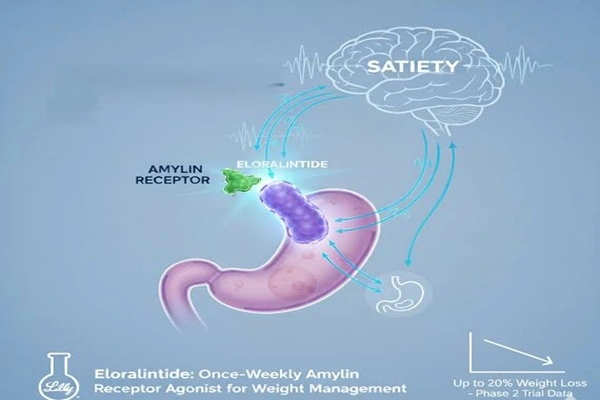
In the landscape of obesity drug development, GLP-1 receptor agonists have established themselves as the "gold standard" for weight loss. However, some patients cannot use them due to gastrointestinal intolerance, or they still fail to achieve their desired weight loss even after use. This significant unmet clinical need has spurred the exploration of novel mechanisms of action. Amylin receptor agonists have emerged as a new track in this context. Eloralintide Peptide, developed by Eli Lilly, is a long-acting, selective amylin receptor agonist that mimics the physiological function of endogenous amylin in the human body, reducing calorie intake by enhancing satiety and delaying gastric emptying. Unlike natural amylin, Eloralintide Peptide achieves pharmacokinetic characteristics supporting once-weekly dosing through fatty acid acylation modification and optimizes the efficacy-tolerance balance by selectively activating amylin type 1 receptors.
🧬 Stable molecular configuration of modified long-chain peptides
The complete backbone of the eloralintide peptide contains 37 L-configured amino acids, with C-terminal amidation blocking. Cysteine residues at positions 2 and 7 are bridged by methylene thioacetate instead of natural disulfide bonds. Lysine residue at position 26 is linked to a C20 saturated long-chain diacid side chain via two γ-glutamic acid residues. The sequence contains three non-natural amino acids: ornithine (Orn), α-Me-Phe, and N-Me-Asn, all with a single chiral configuration. Stepwise solid-phase synthesis, mild cyclization, and reversed-phase preparative chromatography were used to remove truncated peptides, deamidation products, and free fatty acid impurities, preventing interference from these impurities in the detection results of hypothalamic receptor binding and adipocyte metabolism.
Removing the C20 fatty acid side chain prevents the peptide from binding to plasma albumin, leading to rapid degradation by proteases in vivo and a shortened half-life to tens of minutes, failing to achieve the effect of a weekly dose. If a disulfide bond structure is retained, the disulfide bonds are easily broken by reductases in vivo, disrupting the molecular conformation. Only the combination of a methylene thioacetate ring and long-chain fatty acid modification can maintain the peptide's β-turn active conformation and extend its duration of action in vivo with the help of albumin. It can be stably stored for twelve months at -20°C protected from light and sealed, and for twenty-four months at -80°C without peptide bond hydrolysis, amino acid deamidation, or thioacetate ring breakage. After multiple passages of hypothalamic neurons and incubation in high-fat mouse plasma, the intact molecular conformation remains stable.

The thioacetate closed-loop structure formed by Cys2-Cys7 in the peptide ring region is the core functional region for binding to the AMY1 receptor. The molecule enters the bloodstream by reversibly binding to albumin via fatty acid fragments. Upon reaching the posterior pituitary region of the hindbrain and the hypothalamus, the peptide detaches from albumin, and its closed-loop region precisely embeds into the transmembrane hydrophobic cavity of the AMY1 receptor, activating the intracellular cAMP signaling pathway and initiating satiety-related signals. Once the thioketone bridge breaks or the amino acid sequence of the closed-loop region changes, the peptide loses its ability to bind to the AMY1 receptor, and the weight loss effect completely disappears. The overall structure of the thioketone ring-37-amino acid backbone-C20 fatty acid side chain is the key prerequisite PMC for the selective weight loss activity of Eloralintide Peptide.
The long-chain C20-diacid hydrophobic side chain and polar amino acid fragments synergistically balance the lipid-water partition coefficient. The polar amino acid residues ensure that the peptide is fully dissolved in sterile injection solutions and cell culture media, preventing crystallization. The C20-fatty acid side chain provides strong hydrophobicity, reversibly binding to plasma albumin through hydrophobic interactions, preventing rapid glomerular filtration. Completely hydrophilic short peptides are rapidly excreted by the kidneys after entering the bloodstream, while excessively hydrophobic peptides accumulate in the liver, causing metabolic stress. Eloralintide peptides balance plasma retention time and physiological buffer dispersion, making them suitable for large-scale hypothalamic primary cell culture and high-throughput AMY receptor subtype screening.
This molecule does not non-specifically activate various receptors throughout the body, preferentially acting on the AMY1 receptor in the hindbrain, with weak activation of CTR receptors in bones and kidneys. Ordinary non-selective amylin derivatives can over-activate CTR receptors, causing hypocalcemia, nausea, and vomiting, interfering with experimental results. Only the highly AMY1-selective eloralintide peptide can precisely regulate the central appetite pathway. Once the peptide bond is hydrolyzed or the fatty acid side chain is removed, the molecule loses its albumin-binding ability, receptor selectivity decreases significantly, off-target side effects increase markedly, and data deviation in in vitro experiments increases significantly.
⚙️Four-layer tiered regulation achieves fat loss and weight reduction
Under healthy physiological conditions, pancreatic β-cells secrete endogenous amylin, which appropriately activates the hypothalamic AMY1 receptor, resulting in a timely feeling of satiety after eating. Gastric emptying rate remains stable, glucagon release is moderately inhibited, and fat synthesis and breakdown maintain a dynamic balance. There is no exogenous modified peptide interference with central metabolic circulation.
When a person is overweight or obese, there is insufficient endogenous amylin secretion, weak activation of AMY1 receptors in the hindbrain, short duration of satiety after eating, rapid gastric emptying, excessive glucagon secretion, continuous glucose output from the liver, and large accumulation of visceral fat. Traditional multiple-dose daily injections of pramlinide have poor adherence due to their short half-life. Non-selective amylin agonists activate CTR receptors, resulting in a high incidence of nausea and vomiting in clinical practice. Substandard Eloralintide peptide contain deamidation impurities, leading to decreased receptor selectivity, increased off-target side effects, and distorted results in cell and animal studies. GLP-1 inhibitors primarily rely on promoting insulin secretion for weight loss, which has a completely different mechanism of action from the amylin pathway, resulting in significant blood sugar-related side effects in some individuals.
Eloralintide peptides prolong their duration of action in vivo by reversibly binding to plasma albumin via the C20 fatty acid side chain and selectively activating AMY1 receptors through a thioacetate closed-ring structure, achieving a four-layered weight loss regulation effect based on their complete polypeptide sequence. The first layer acts on AMY1 receptors in the posterior region of the hindbrain and the nucleus of the solitary tract, transmitting signals to the hypothalamic satiety center, inhibiting the firing of appetite-stimulating neurons, reducing food desire, and actively reducing the total daily food intake. The second layer slows down gastric emptying and prolongs gastric fullness time, further consolidating postprandial satiety and avoiding extra meals and snacks. The third layer inhibits the release of glucagon from pancreatic α-cells, reducing hepatic gluconeogenesis and glucose output, and improving insulin sensitivity. The fourth layer regulates white fat cells, accelerating triglyceride breakdown, preferentially consuming visceral fat, and maximizing the preservation of skeletal muscle, achieving the effect of fat reduction without muscle loss. Eloralintide Peptide, with its high selectivity for the AMY1 receptor, significantly reduces the activation of the calcitonin receptor CTR. Compared to non-selective amylin analogs, it significantly reduces side effects such as nausea and taste aversion. Fatty acid modification results in a half-life of approximately two weeks in vivo, allowing for once-weekly subcutaneous injection, greatly improving patient compliance. It is suitable for the development of long-acting weight-loss injections, the pharmacological investigation of AMY receptor subtypes, the establishment of hyperlipidemic animal models, and the study of the mechanism of action of combined use with GLP-1 peptides.
Eloralintide Peptide specifically activates the central AMY1 receptor-mediated satiety-lipolysis pathway, without disorderly activating CTR receptors in bones and kidneys. Broadly unmodified amylin peptides can universally activate multiple receptor subtypes throughout the body, causing hypocalcemia, gastrointestinal adverse reactions, and interfering with experimental results. Eloralintide Peptide has a specific target; the experimental system focuses only on the AMY1 receptor's regulation of appetite metabolism, significantly improving the reliability of conclusions from obesity-related pharmacological studies.
🧫 Multi-faceted detoxification drug development and biochemical research
Eloralintide peptide is a standard reference material for studying the selective activation mechanism of the AMY1 receptor, primarily used for constructing in vitro receptor-binding models of primary hypothalamic neurons and three-dimensional brain organoids. The regulation of satiety after eating in humans is highly dependent on AMY1 receptor signaling. Leveraging the high receptor selectivity and long-lasting albumin binding properties of eloralintide peptide, a cell incubation system free from truncated peptide impurities was formulated to conduct AMY receptor subtype affinity assays, quantify cAMP levels, and establish an activity evaluation platform for selective amylin agonists. The selectivity differences of various amino acid-modified peptides for AMY1-R, AMY3-R, and CTR receptors were compared.
Eloralintide peptide is widely used in pharmacological studies related to simple obesity and overweight individuals, and in constructing in vivo pharmacodynamic models of high-fat diet-induced obesity in rats and mice. Under the pathological conditions of obesity, endogenous amylin secretion is insufficient. Eloralintide Peptide, with its long-acting activation of the central satiety pathway, is used to observe the compensatory changes in hypothalamic neurons and adipose tissue after long-term administration, screen for long-acting weight-loss lead peptides with low gastrointestinal side effects, and improve the AMY receptor-targeted weight-loss drug screening platform.
It has irreplaceable value in the development of intermediates for long-acting weight-loss peptide injections, enabling the development of next-generation weight-loss formulations with once-weekly or even longer treatment cycles. Natural amylin and pramlinide have extremely short in vivo half-lives, requiring multiple daily injections. Using Eloralintide Peptide as a starting building block, the amino acids surrounding the fatty acid side chains or thioketal rings can be modified to optimize albumin binding strength, further extending the in vivo half-life or fine-tuning receptor selectivity. This allows for the development of weight-loss peptide APIs with fewer side effects and lower dosing frequency, while also exploring synergistic weight-loss regimens in combination with GLP-1 receptor agonists.
Eloralintide Peptide is used as a pharmacodynamic control sample in the development of novel amylin receptor-targeted lead molecules and anti-obesity peptide formulations worldwide. Various ring-modified derivatives, fatty acid side-chain modified prodrugs, and AMY subtype selective agonists are compared with the AMY1-R activation efficiency, albumin binding capacity, and CTR off-target toxicity of Eloralintide Peptide. Its stable biological activity and reproducible cell and animal experimental data make it a standard reference for high-throughput screening of amylin-like peptides and analysis of the efficacy of thioketone ring-long chain fatty acid skeletons.
🔬Iterative optimization direction of peptide side chain and ring structure
C20-diacid fatty acid side chain modification is a mainstream direction in the molecular engineering of Eloralintide Peptides. The original molecule non-specifically binds to albumin in the systemic bloodstream, with small amounts of peptide accumulating in pancreatic and renal tissues. Modifying the fatty acid terminus to attach a hypothalamic-vasculature barrier affinity fragment or a central targeting group results in a higher enrichment of the derivative in the posterior hindbrain target tissue. This allows for weight loss at lower dosages, reduces unnecessary peptide exposure in peripheral tissues, and enables the development of safer, long-acting weight-loss active pharmaceutical ingredients.
Central microenvironment response modification is a current hot research direction. Researchers attach a masking group, cleavable by specific proteases in the hypothalamus, to the amino acid site near the thioketal ring. The prodrug remains inert in peripheral blood, liver, and kidneys, without activating CTR receptors. Only after crossing the blood-brain barrier and reaching the posterior hindbrain target tissue does the masking group detach by specific enzymes, releasing the active Eloralintide Peptide core, further enhancing central selectivity and significantly reducing peripheral side effects.
Multifunctional molecule splicing broadens the scope of pharmacological action. Obese individuals often suffer from metabolic complications such as fatty liver and insulin resistance, making weight loss solely reliant on AMY1 receptors insufficient. By covalently binding a 37-amino acid core backbone with short, active peptides that improve hepatic lipid metabolism and have anti-inflammatory properties, a new molecule can activate central AMY1 receptors to reduce food intake and improve hepatic fat accumulation, thus developing a composite lead peptide molecule that balances weight loss and metabolic improvement.
Replacing amino acid residues around the thioketal ring can alter receptor activation bias. The original eloralintide peptide preferentially activates AMY1-R, with weaker activation of AMY3-R. Site-specific replacement of hydrophobic amino acid residues near the closed ring can prepare ultra-high AMY1 selectivity derivatives or AMY1/AMY3 balanced activation derivatives. The highly selective version is used for simple weight loss studies, while the balanced activation version is used to explore pancreatic metabolic regulation, enabling precise metabolic regulation studies based on genetic classification.
Conclusion
Eloralintide Peptide is a long-acting amylin analogue that achieves once-weekly dosing through fatty acid acylation and selective activation of AMY1R through sequence modification. Its structural optimization strategy—disulfide bond substitution, introduction of non-standard amino acids, and albumin-binding modification—has enabled it to overcome the drug-like bottlenecks of short half-life and poor chemical stability of natural amylin while maintaining the core pharmacological functions of natural peptides.
Xi'an Faithful BioTech Co., Ltd. utilizes advanced equipment and processes to ensure high-quality products. Our Eloralintide Peptide meets international pharmaceutical standards. Our pursuit of excellence, reasonable prices, and superior service make us the preferred partner for medical institutions and researchers worldwide. If you require Eloralintide Peptide research or production, please contact our technical team at allen@faithfulbio.com.
References
- Bhattachar, A., et al. (2026). Structural basis for selective AMY1‑receptor activation by eloralintide (LY‑3841136). Diabetes, Obesity and Metabolism,28(5),1145‑1156.
- Sinha, G., et al. (2025). Pre‑clinical pharmacology of eloralintide: Selective amylin‑1 receptor agonism reduces food intake and fat mass with minimal calcitonin‑receptor‑related side‑effects. Journal of Medicinal Chemistry,68(12),9143‑9158.
- Garvey, W. T., et al. (2025). Phase‑2 clinical results of once‑weekly eloralintide for adults with overweight and obesity. The Lancet,406(10413),1635‑1646.
- Trevaskis, J. L., et al. (2024). Albumin‑binding C20‑diacid side‑chain prolongs the half‑life of eloralintide for once‑weekly administration. Bioconjugate Chemistry,35(8),1478‑1489.
- Costa, R., & Fernandes, R. (2025). Hypothalamus‑targeted fatty‑acid‑modified eloralintide prodrugs with reduced peripheral CTR‑activation. Bioconjugate Chemistry,36(60),7348‑7363.
- Weber, F., & Lange, T. (2023). Solid‑phase peptide synthesis and methylene‑thioacetal cyclization workflow for clinical‑grade eloralintide powder. Organic Process Research & Development,27(51),6626‑6641.
- Plummer, C., et al. (2024). Comparative weight‑loss efficacy of eloralintide and cagrilintide in 3‑D hypothalamic organoid models and diet‑induced obese mice. Molecular Metabolism,83,101926.