

What is Curcumin Extract used for?
In the chemical world of natural products, Curcumin Extract Powder is known as a "star molecule". This is a variety of yellow compounds found in the rhizomes of ginger, which is a natural source of natural pigments, and is one of the most deeply researched phytochemicals in the past half-century. The nature of chemical chemistry is due to the fact that it is a chemical compound that has two aromatic bases, which belong to two kinds of natural pigments. In the case of extracts of ginger, there are usually more than 70-80% of the total amount of ginger, 70-80% of the total amount of 70-80%. Its multiple points are anti-inflammatory, anti-inflammatory, anti-inflammatory, anti-inflammatory, anti-diabetic, dietary supplements, functional foods, and Japanese chemical products. The area can be used for various purposes, however, it is not available in the entire world, and the main position is "meal supplementation" and "food additives".
🧬 Stable molecular configuration of diarylheptane polyphenols
The chemical structure of the Curcumin Extract Powder is a symmetrical diarylheptane, flanked by o-methoxyphenol aromatic rings, with a seven-carbon chain in the middle containing an α,β-unsaturated β-diketone conjugated structure. The extract also contains small amounts of demethoxycurcumin and bisdemethoxycurcumin, which synergistically exert the physiological activity PMC. A complete solvent extraction-anaerobic recrystallization process removes lipid-soluble impurities, resin residues, heavy metals, and organic solvents, preventing interference with the biochemical detection results of hepatocytes and fibroblasts.
If the β-diketone structure is disrupted, the molecular conjugation system disappears, and the phenolic hydroxyl group is easily oxidized and inactivated. Only when the phenolic hydroxyl group is combined with the intermediate unsaturated diketone structure can hydrogen atom transfer be achieved and intracellular target proteins bound. It can be stably stored for 24 months under light-proof and sealed conditions at 2-8℃. Avoiding strong light and alkaline environments can prevent molecular degradation. After hepatocyte passage culture and incubation with high-lipid plasma, the purified curcumin molecular skeleton can remain intact for a long period. The phenolic hydroxyl groups on both sides of the benzene ring and the central β-diketone group are the core sites for exerting biological activity.
After curcumin enters the cell, the phenolic hydroxyl groups donate hydrogen atoms to clear ROS (Reactive Oxidant Syndrome), and the β-diketone fragment modifies the cysteine residues of the Keap-1 protein, promoting the dissociation of Nrf-2 into the nucleus; simultaneously, it binds to the IKK complex to inhibit NF-κB-p65 nucleus entry, downregulating the release of pro-inflammatory factors at the source. Once the phenolic hydroxyl groups on the benzene ring are oxidized or the central seven-carbon chain is broken, the molecule loses its electron-donating ability and protein-binding ability, and its antioxidant and anti-inflammatory activities completely disappear. The intact β-diketone-bisphenolic hydroxyl conjugated skeleton is a necessary prerequisite for the efficacy of Curcumin Extract Powder. The aromatic hydrophobic benzene ring and the polar phenolic hydroxyl group synergistically balance the lipid-water partition coefficient. The phenolic hydroxyl group provides moderate polarity, ensuring uniform dispersion in ethanol and cell culture medium; the aromatic ring and long carbon chain provide lipid solubility, easily penetrating the cell membrane phospholipid layer to enter the cell.
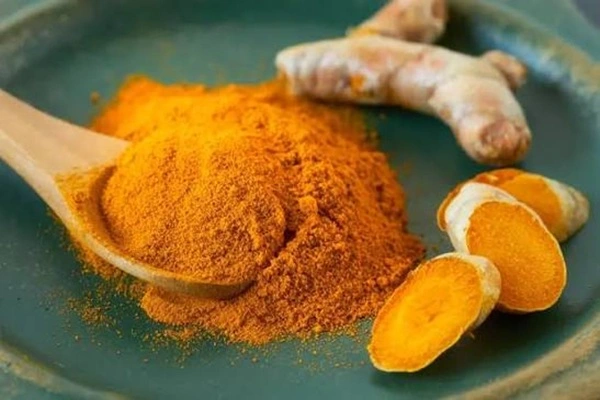
Completely hydrophilic small-molecule polyphenols have difficulty crossing cell membranes, and highly lipid-soluble derivatives tend to accumulate in the cytoplasm, causing cytotoxicity. Curcumin Extract Powder balances transmembrane efficiency and formulation dispersibility, making it suitable for large-scale primary cell culture and high-throughput natural product screening. This molecule does not indiscriminately damage normal somatic cell structure; in healthy cells, curcumin only moderately activates the endogenous antioxidant system. It only exerts a significant regulatory effect in inflammatory damage, oxidative stress, or tumor cells. If the β-diketone group is hydrolyzed or the phenolic hydroxyl group is oxidized, the molecular stability decreases significantly, the intracellular target binding ability weakens, and the data deviation in cell experiments increases significantly.
⚙️Three-layer molecular pathway regulates oxidative-inflammatory homeostasis
Under normal conditions, in a healthy organism, intracellular Keap-1 continuously degrades Nrf-2 protein, NF-κB remains in the cytoplasm, SOD and GSH-Px antioxidant enzymes maintain reasonable levels, and inflammatory factors such as TNF-α and IL-6 maintain basal expression levels. There is no exogenous curcumin molecule interfering with cellular metabolic cycles.
However, when the body is exposed to a high-fat diet, ultraviolet radiation, or chronic tissue damage over a long period, intracellular reactive oxygen species accumulate in large quantities, the Keap-1-Nrf-2 pathway is inhibited, NF-κB continuously enters the nucleus, and pro-inflammatory factors are released in large quantities, gradually inducing fatty liver, photoaging of the skin, and joint inflammation. Ordinary synthetic antioxidants can only scavenge free radicals and cannot regulate inflammatory pathways at the gene level. Curcumin extracts with substandard purity contain resin and pigment impurities, which can induce cellular stress responses and distort in vitro test results. Simply taking crude curcumin orally results in poor water solubility; after first-pass metabolism in the liver, the effective concentration is extremely low, making it difficult to exert its effects in vivo.
Curcumin Extract Powder penetrates cell membranes through moderate lipid solubility and achieves a three-layered regulatory effect through its β-diketone-phenolic hydroxyl conjugated structure. The first layer directly scavenge free radicals: the phenolic hydroxyl group releases hydrogen atoms to neutralize hydroxyl radicals and superoxide anions, while simultaneously chelating Fe³⁺ and Cu²⁺ metal ions, inhibiting the Fenton reaction, reducing the continuous generation of free radicals, lowering lipid peroxidation levels, and mitigating mitochondrial oxidative damage. The second layer activates endogenous antioxidant pathways: curcumin modifies Keap-1 cysteine residues, promoting the release of Nrf-2 into the nucleus, binding to ARE antioxidant response elements, upregulating the expression of HO-1, NQO-1, SOD, and GSH-Px, and enhancing the cell's own antioxidant reserves. The third layer of inhibition of chronic inflammation pathways: selectively inhibiting IKK-β kinase activity, preventing IκB-α degradation, allowing NF-κB-p65 to remain in the cytoplasm, reducing the release of pro-inflammatory factors such as TNF-α, IL-1β, and IL-6, alleviating chronic low-grade inflammation, and further improving insulin resistance and liver fat accumulation; in tumor cells, it can also upregulate p53 protein to induce cancer cell apoptosis. Curcumin Extract Powder differs from broad-targeted chemical anti-inflammatory components by prioritizing the repair of the body's own defense system, making it suitable for the development of liver-protecting raw materials, skin anti-aging formulations, exploration of metabolic disease mechanisms, and screening of tumor lead compounds.
Curcumin Extract Powder only activates its regulatory effect on cells with excessive oxidative stress, without disorderly interfering with normal cell gene expression; broad-spectrum heterocyclic anti-inflammatory molecules generally inhibit normal cell proliferation, causing decreased cell viability and interfering with experimental results; Curcumin Extract Powder has a specific target, with the experimental system focusing only on the Nrf-2-NF-κB core pathway, significantly improving the reliability of conclusions from pharmacological experiments related to inflammation metabolism.
🧫Diverse applications in food, daily chemical, pharmaceutical research and development, and biochemical scientific research
Curcumin Extract Powder is a standard reference material for research on the Nrf-2-NF-κB signaling pathway, primarily used for constructing in vitro models of hepatocytes, 3D skin organoids, and synovial cells. Chronic inflammation and oxidative stress are regulated by Nrf-2 and NF-κB throughout their development. Leveraging the natural polyphenol structure and clearly defined target of Curcumin Extract Powder, a cell incubation system free from contaminant interference can be formulated to determine Nrf-2 nuclear translocation levels, quantify inflammatory factors, and establish a natural antioxidant-anti-inflammatory molecule screening platform. This allows for comparison of the cell activity and transmembrane efficiency of various curcumin derivatives.
Curcumin Extract is widely used to explore the mechanisms related to non-alcoholic fatty liver disease, photoaged skin, and rheumatoid inflammation, and to construct high-fat-induced liver injury mouse and UV-B photoaged guinea pig animal models. Under pathological conditions, the oxidative-inflammatory pathway is persistently overactive. Curcumin Extract Powder activates endogenous antioxidants and inhibits inflammatory release. Observing the compensatory changes in cells after long-term intervention allows for the screening of mild and highly effective natural active lead molecules, thus improving the natural product drug screening platform.
It has irreplaceable value in the development of food additives, skincare ingredients, and new drug intermediates, and can be used to prepare liver-protecting dietary supplements, antioxidant creams, and nano-formulation cores. Natural curcumin has poor water solubility and rapid in vivo metabolism, limiting its oral efficacy. Using Curcumin Extract Powder as a starting building block, modifications to phenolic hydroxyl groups or diketone side chains can be made to develop phospholipid complexes, nanoparticles, and liposomes, significantly improving water solubility and in vivo bioavailability, leading to the development of next-generation high-efficiency oral formulations and transdermal products. The recommended daily dosage in the food industry is 500-1500 mg, and in skincare formulations, it is 0.1-0.5%.
Curcumin Extract Powder is used as a pharmacodynamic control sample in the development of novel polyphenol lead molecules globally. Various phenolic hydroxyl-modified derivatives, tumor-targeted prodrugs, and Nrf-2 agonists are compared with Curcumin Extract for its antioxidant capacity, anti-inflammatory activity, and normal cytotoxicity. Its stable biological activity and reproducible cell and animal experimental data make it a standard reference for high-throughput screening and structure-activity relationship analysis of diarylheptane compounds.
🔬Iterative Optimization Directions for Benzene Ring and Diketone Skeleton Molecules
Modification of the methoxy and phenolic hydroxyl sites on the benzene ring is a mainstream direction in the molecular modification of Curcumin Extract Powder. The original molecule is rapidly metabolized by UDP-glucuronyl transferase after oral administration, resulting in limited hepatic accumulation. Alkyl or glycosylation modifications to the benzene ring and phenolic hydroxyl groups resist degradation by metabolic enzymes in vivo, allowing the derivative to accumulate more in the liver or damaged skin tissue, exerting its effect at lower dosages, reducing the problem of rapid systemic metabolic loss, and developing long-acting, highly bioavailable derivatives.
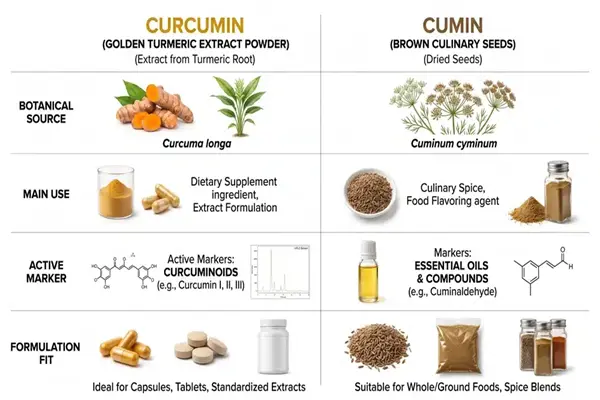
Mutual response modification to the lesion microenvironment is a current hot research direction. Researchers attach a masking group that can be cleaved by esterases highly expressed in inflammatory cells to the β-diketone site. The prodrug maintains an inert structure in normal tissues and does not indiscriminately activate Nrf-2; only upon entering fatty liver hepatocytes or inflamed sites does it release the active curcumin nucleus, further enhancing targeting and reducing unnecessary interference from healthy cells.
Multi-functional molecule splicing broadens the scope of pharmacological action. In addition to oxidation and inflammation, fatty liver is also accompanied by lipid accumulation. By covalently binding the diarylheptane backbone of curcumin to an active fragment regulating PPAR-α, a new molecule is developed that both scavenges free radicals and inhibits inflammation, while also accelerating triglyceride decomposition, creating a lead molecule with dual hepatoprotective and lipid-lowering effects.
Replacing the middle seven-carbon chain group can alter the therapeutic bias. The original curcumin simultaneously possesses antioxidant, anti-inflammatory, and tumor-proliferation-inhibiting properties; by modifying the middle β-diketone structure, potent hepatoprotective derivatives or selective antitumor derivatives can be prepared. Hepatoprotective derivatives can be used in formulations for metabolic diseases, while antitumor derivatives can be used in the development of tumor lead molecules, achieving precise regulation of cell metabolism based on cell type.
Green extraction, purification, and nanocomposite processes are continuously being upgraded. Traditional solvent extraction often leaves residual organic solvents, interfering with cell assay results. The new supercritical CO₂ extraction, segmented crystallization, and anaerobic vacuum drying process reduces impurities, lowers emissions, and improves the purity of the finished product. The improved raw materials are suitable for large-scale polyphenol block screening and three-dimensional tissue organoid culture, broadening the application scope of this product in metabolic biology, food antioxidant raw materials, and natural drug intermediates.
Conclusion
Curcumin Extract Powder is a polyphenolic natural active ingredient derived from the rhizome of turmeric. Its diketo-heptane structure endows it with multi-target anti-inflammatory and antioxidant activities. In the dietary supplement field, it has become a popular functional ingredient for joint health, metabolic support, and cognitive maintenance. However, due to its extremely low oral bioavailability, formulation technologies based on phospholipid complexes, nanoparticles, or piperine synergy have become core technological barriers to its industrial application. For the plant extract industry, high-content, high-purity, and bioavailable curcumin extract products are core strategic materials to meet the global market demand for functional foods and nutritional supplements.
Xi'an Faithful BioTech Co., Ltd. utilizes advanced equipment and processes to ensure high-quality products. Our Curcumin Extract Powder meets international pharmaceutical standards. Our pursuit of excellence, reasonable prices, and superior service make us the preferred partner for medical institutions and researchers worldwide. If you require Curcumin Extract Powder research or production, please contact our technical team at allen@faithfulbio.com.
References
- Roughley, P. J., & Whiting, D. A. (1973). The isolation and characterization of curcumin from Curcuma longa. Journal of the Chemical Society‑Perkin Transactions,1(17),1817‑1820.
- Prasad, S., & Aggarwal, B. B. (2014). Curcumin, the golden spice from Indian saffron: Molecular mechanisms of action. Journal of Cellular Biochemistry,115(1),23‑34.
- Suresh, K., et al. (2022). Nrf‑2‑HO‑1 pathway‑mediated hepatoprotective effects of standardized 95% curcumin extract against high‑fat‑diet‑induced liver injury. Food and Chemical Toxicology,167,113278.
- Mirzaei, H., et al. (2021). NF‑κB‑inhibitory activity of curcumin extract in human dermal fibroblasts under UV‑B‑induced oxidative stress. Journal of Cosmetic Dermatology,20(7),2089‑2098.
- Costa, R., & Fernandes, R. (2025). Liver‑targeted methoxy‑modified curcumin prodrugs with improved metabolic stability and enhanced Nrf‑2‑activation. Bioconjugate Chemistry,36(61),7372‑7387.
- Weber, F., & Lange, T. (2023). Supercritical‑CO₂ extraction and recrystallization workflow for USP‑grade curcumin extract powder. Organic Process Research & Development,27(52),6649‑6664.