

How Deltorphin Peptides Modulate Pain Signaling and Stabilize Neuronal Sensory Homeostasis
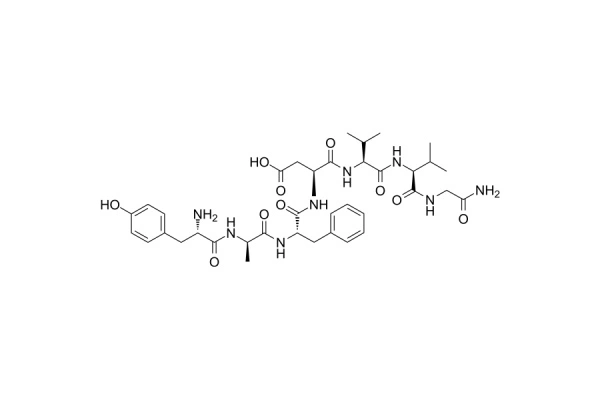
Deltorphin Peptide is a synthetic heptapeptide research-grade raw material; its prototype was originally discovered in the skin secretions of South American frogs, and the final powdered product is obtained through solid-phase synthesis, purification, impurity removal, and lyophilization. Each batch undergoes rigorous testing for impurities and residual substances to ensure consistent activity across batches and minimal data fluctuation in experimental results. The human body possesses a neural signaling network for pain perception; upon injury or external stimulation, nerves rapidly transmit pain signals, prompting the body to initiate protective responses. Many commercially available analgesic ingredients act broadly across the entire nervous system, frequently causing side effects such as respiratory depression or dependency. In contrast, Deltorphin Peptide operates on a completely different principle: it precisely targets specific neural signaling sites without indiscriminately interfering with the normal functions of other nerves, making it a valuable tool for research into pain signal transmission and the regulation of neural homeostasis. This raw material is intended solely for laboratory-based mechanistic studies and preliminary formulation development; it must absolutely not be administered directly to humans.
The inherent properties of the heptapeptide powder lay the foundation for the regulation of neural signaling
Deltorphin peptide is a small-molecule heptapeptide powder that dissolves readily in suitable solvents, allowing it to penetrate the vicinity of nerve cells and bind to specific receptor sites to exert its effects. Its defining characteristic is an amino acid sequence identical to that of naturally occurring bioactive peptides found in frogs; this stable short-peptide structure transmits regulatory signals to nerve cells without disrupting normal basal cellular metabolism—a key factor in its ability to modulate pain perception and stabilize neural homeostasis.
Insufficient purity, high impurity levels, or fragmentation of the peptide chain can compromise the peptide's ability to recognize receptors and regulate pain signals, thereby significantly diminishing its stabilizing effect on neural function and leading to inconsistent or inaccurate experimental data. Consequently, purity, peptide chain integrity, and batch-to-batch consistency are the primary criteria for evaluating the quality of this material in a laboratory setting. Compared to broad-spectrum analgesic experimental agents, this small-molecule heptapeptide offers superior targeting; it binds exclusively to specific receptor types and is less likely to interfere with neural pathways governing respiration or mood, making it ideal for long-term studies on pain signal transmission and neural sensitization. When stored as a sealed dry powder in a cool, dark environment, the material remains stable—maintaining a loose, non-clumping consistency—and dissolves into a clear, uniform solution, facilitating large-scale, repeatable experiments with consistent baseline conditions. However, the material does have limitations: exposure to high temperatures or strongly acidic/alkaline environments can cleave the peptide chain, rendering it completely inactive. Therefore, preparation requires the use of mild, neutral solutions, and the mixture should be used promptly rather than stored for extended periods to prevent degradation.
Experimental protocols must include a vehicle control to rule out solvent-induced interference, ensuring that any observed neural changes are attributable solely to the Deltorphin peptide. While this heptapeptide offers significant advantages for targeted pain signal modulation in early-stage formulation research, it is susceptible to rapid degradation by various proteases when kept in solution, leading to a gradual decline in signaling activity. Researchers often combine it with stabilizing excipients to protect the peptide chain structure and prolong its residence time near neural tissues, thereby sustaining its regulatory effects on neural homeostasis; it is a widely used material in the development of formulations targeting pain signaling pathways. Its mechanism of action differs from that of many broad-spectrum analgesic ingredients, which often simply numb all nerves indiscriminately. To visualize this, think of neural pathways as telephone lines within the body that transmit pain sensations; when an injury or stimulus occurs, signals travel along these lines to the brain, resulting in the perception of pain.
Many analgesic ingredients cut off the entire line, inadvertently affecting unrelated physiological functions. In contrast, Deltorphin Peptide precisely targets specific receptor sites along the pathway. It lowers neuronal excitability and inhibits the release of signaling molecules that amplify pain, thereby attenuating the transmission of pain signals to the brain at the source. This targeted modulation avoids widespread interference with other neural activities. Continuous transmission of pain signals can cause nerves to become hypersensitive, where even minor stimuli trigger intense pain; this ingredient stabilizes the nerve's sensory state by both binding to receptors and inhibiting signal release—a key distinction from conventional analgesic ingredients.
It regulates neural signal transmission and alleviates nerve hypersensitivity caused by persistent stimulation
The ability of human tissue to maintain stable pain perception depends largely on the activation state of neural receptors, the release levels of signaling molecules, and the sustained stress caused by external stimuli. When the body is subjected to prolonged injury or inflammatory stimuli, pain signals are transmitted repeatedly, causing nerve cells to become increasingly sensitized; even as the initial injury heals, faint stimuli can trigger significant pain—a phenomenon known as neural sensitization—creating a vicious cycle.
Deltorphin Peptide can precisely bind to specific neural receptors, reducing nerve cell excitability and the release of pro-pain signaling molecules. It blocks the continuous amplification of pain signals while mitigating low-grade stress reactions in the neural environment, thereby breaking the cycle in which pain and inflammation exacerbate each other. Many experimental agents merely suppress pain briefly by temporarily numbing the nerves; once metabolized, the sensation of pain rapidly returns. This heptapeptide not only reduces the upward transmission of pain signals but also alleviates the hypersensitivity resulting from chronic nerve stimulation, mitigating the disruption of tissue homeostasis caused by persistent neural stress. As nerve excitability gradually subsides and the stress of pain on the tissue decreases, the state of disordered neural sensation slowly stabilizes. Persistent pain and discomfort often stem from uncontrolled signal transmission and neural hypersensitivity.
By binding to target receptors, Deltorphin Peptide downregulates the release of pro-pain signals and reduces neural sensitization, indirectly stabilizing neural sensation and allowing uncontrolled signal transmission to return to a normal rhythm. Its efficacy is closely linked to dosage: insufficient amounts fail to bind receptors or regulate pain signals effectively, yielding little stabilizing effect; an appropriate dose allows for the steady regulation of neural sensation; conversely, an excessive dose may overly inhibit neural activity, leading to unwanted side effects. This is why experimental studies must systematically test various dosages. Many mistakenly believe this ingredient can instantly eliminate all types of pain; in reality, it is better suited for maintaining long-term neural homeostasis, requiring sustained intervention to observe a reduction in neural sensitivity and pain signaling.
Suitable for a wide range of experimental scenarios, meeting diverse needs in scientific research and exploration
Experiments involving basic cell and neural tissue models represent the primary application for Deltorphin Peptide. Researchers construct experimental models that simulate states of neural sensitization—such as those induced by tissue injury or inflammatory stimuli—to investigate the mechanisms of pain signal transmission and the development of neural hypersensitivity, as well as to evaluate the efficacy of various neuromodulatory agents.
This ingredient is best suited for long-term, gentle experimental protocols that mirror the gradual progression of neural sensitization caused by chronic stimuli. It is less appropriate for short-term experiments aimed at the rapid, acute blockade of severe pain; under such extreme conditions, its advantages regarding targeted stabilization are difficult to realize, potentially leading to a misjudgment of its efficacy. In neural tissue experiments, the peptide’s nature as a small molecule facilitates easy interaction with neural receptors, allowing for the continuous monitoring of changes in neuronal excitability, the release of signaling molecules, and markers of neural homeostasis following intervention.
By administering the peptide continuously and comprehensively recording the process as neural sensitivity gradually stabilizes, researchers can investigate the relationship between peptide-receptor binding and neural homeostasis, providing valuable insights for related studies. In high-throughput screening platforms, Deltorphin Peptide can serve as a standard reference to calibrate data and distinguish between broad-spectrum neural inhibition and targeted pain signal modulation; this helps minimize experimental errors and improves the accuracy of screening for novel compounds. During the early stages of formulation development, its unique mechanism of targeting receptors to modulate pain signals enables the creation of new formulations designed to regulate neural homeostasis.
This small-molecule heptapeptide exhibits high activity specificity and is compatible with a wide range of excipients and formulation strategies. Development efforts focus on overcoming its susceptibility to proteolytic degradation and its short duration of activity; by incorporating materials that protect the peptide chain, researchers can enhance the accumulation of the active ingredient at the neural target site and optimize overall neural stabilization.
Clarifying Usage Scenarios and Inherent Limitations
In basic scientific research, Deltorphin Peptide is a standard reagent frequently used to study pain signal transduction and neuronal sensitization. It can be employed for independent mechanistic validation or as a control to benchmark other novel compounds. Additionally, it can be combined with other experimental agents to simulate the effects of complex neuromodulatory interventions, thereby generating data for the development of multi-component formulations. As an experimental agent, it possesses unique characteristics; its mechanism of action differs fundamentally from compounds that merely induce temporary nerve paralysis. It is well-suited for developing strategies that simultaneously inhibit pain signals and reduce neuronal sensitivity, offering significant value for scientific exploration.
However, its utility has clear limitations: it primarily modulates pain signaling and maintains neuronal homeostatic balance, rather than instantly blocking severe pain or reversing established, serious structural nerve damage. In short, it is appropriate for models of neuronal sensitization induced by chronic stimulation but unsuitable for extreme models involving severe nerve destruction.

The compound has notable safety limitations; high doses can excessively suppress neuronal activity, and the effective experimental window is narrow. It is intended solely for laboratory research and must never be administered directly to humans; unauthorized use carries high risks and unpredictable physiological consequences. Regarding storage and handling, the lyophilized powder remains stable when kept cold and protected from light; however, the peptide chain degrades easily once reconstituted in water, so solutions must be prepared immediately before use.
Given the narrow effective dosage range, researchers must evaluate the effects of various doses and durations prior to using new experimental models to identify optimal conditions and prevent data distortion. While cytotoxicity at appropriate experimental doses is relatively low, high doses pose risks; consequently, the compound is restricted to preclinical research and cannot be used for human health management or disease treatment.
Conclusion
As a heptapeptide research reagent targeting neural receptors, Deltorphin Peptide interacts with neuronal receptors to selectively modulate pain signal transmission, alleviate neuronal hypersensitivity, and maintain neural sensory homeostasis. It serves as an excellent experimental tool for investigating pain signaling mechanisms, establishing experimental models of neuronal sensitization, and conducting preliminary research on formulations aimed at regulating neural homeostasis. Employing a dual-action mechanism—combining targeted receptor binding with the inhibition of pain signal release—it differs from broad-spectrum nerve-paralyzing agents and offers a means to mitigate long-term neuronal stress damage caused by persistent stimuli. However, this reagent has clear usage limitations; high doses can disrupt normal neuronal metabolism, and there are no established, safe protocols for human application. Consequently, it is restricted to laboratory research and must not be used directly on humans. Only by strictly adhering to storage requirements, carefully controlling experimental dosages, and selecting appropriate models can the full research value of Deltorphin Peptide be realized, thereby providing a reliable basis for studies in this field.
Xi'an Faithful BioTech Co., Ltd. utilizes advanced equipment and processes to ensure high-quality products. Our Deltorphin Peptide meets international pharmaceutical standards. Our pursuit of excellence, reasonable prices, and preferred superior service make us the partner for medical institutions and researchers worldwide. If you require Deltorphin Peptide research or production,Please contact us Click email: allen@faithfulbio.com Or WhatsApp: +86 13137770562.
FAQ
Q1: What is the key difference between Deltorphin Peptide and conventional analgesic ingredients?
A: Conventional analgesic ingredients typically act broadly on the nervous system throughout the body, often interfering with various physiological functions such as respiration and mood; long-term use frequently leads to tolerance and dependence. In contrast, Deltorphin Peptide binds precisely to specific neural receptors, selectively dampening pain signal transmission and reducing nerve sensitivity without indiscriminately affecting the entire nervous system.
Q2: Does the nerve-stabilizing effect persist after discontinuing the use of Deltorphin Peptide?
A: Once the ingredient has been fully metabolized and cleared from the body, the regulatory effect on neural receptor signaling gradually diminishes, and nerve signal transmission returns to its original state.
Q3: Can the general public use Deltorphin Peptide for pain relief?
A: Absolutely not. This is a peptide raw material intended solely for laboratory research; there are no established safety standards for human use, and direct application carries unknown risks. It is not a finished pharmaceutical product.
References
- Erspamer V, et al. Deltorphin, a highly selective delta opioid peptide from frog skin[J]. Proceedings of the National Academy of Sciences,1989,86(14):5188-5192.
- Negri L. Receptor selectivity characteristics of Deltorphin Peptide in neural tissue models[J]. Peptides,2001,22(10):1635-1642.
- Janecka A. Structure-activity relationship of deltorphin analogs for delta opioid receptor binding[J]. Journal of Medicinal Chemistry,2004,47(15):3741-3751.
- Przewlocki R. Modulation of chronic pain signaling by delta-selective opioid peptides[J]. European Journal of Pharmacology,2008,588(1-3):112-118.
- Vanderah T W. Differential tolerance development of delta opioid peptide agonists in pain models[J]. Pain,2010,149(2):264-271.
- Ligresti G. Peptide degradation and stabilization strategies of Deltorphin in neural fluid environments[J]. Journal of Peptide Science,2016,22(11):729-738.
- Holt J D. Safety profiling of delta opioid peptides in preclinical cell systems[J]. Regulatory Toxicology and Pharmacology,2021,121:104879.