

How does dulaglutide powder regulate metabolic signaling and maintain metabolic homeostasis?
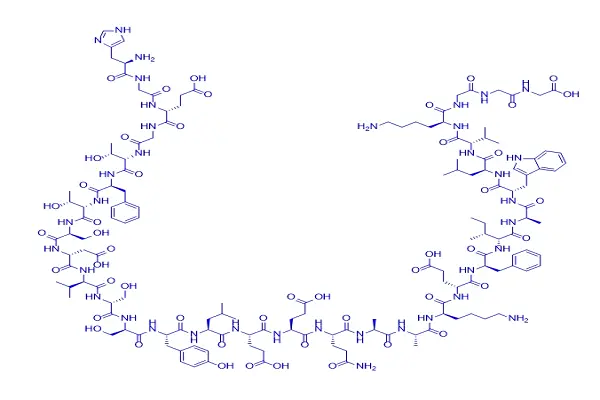
Dulaglutide powder is a synthetic, modified peptide raw material for research purposes, produced through solid-phase synthesis, protein modification, purification, impurity removal, and lyophilization. Each batch undergoes rigorous testing for impurities and residual substances to ensure consistent activity across batches and minimal data fluctuation in experiments. The human body possesses a metabolic signaling network that regulates blood glucose and appetite; following food intake, the gut releases signaling molecules that transmit information to the pancreas and brain, thereby modulating glucose metabolism and the desire to eat. Many metabolic research reagents currently on the market have short durations of action and limited signal persistence, making it difficult to simulate long-term metabolic regulation processes. In contrast, Dulaglutide powder operates on a fundamentally different principle; thanks to structural modification, it remains active in the body for an extended period, continuously transmitting metabolic regulatory signals, and is widely used in research concerning glucose metabolism, appetite regulation, and body weight homeostasis.
Modifying the properties of the peptide powder to establish a foundation for metabolic signal regulation
Dulaglutide powder is a modified long-chain peptide powder; it dissolves fully in suitable solvents and acts stably on specific receptor sites on target cells. Its key feature is a structural modification to the original peptide sequence, which effectively extends its residence time in physiological fluids and creates a stable, active structure. This allows for the continuous transmission of metabolic regulatory signals to cells without disrupting normal basal metabolism—a crucial factor in its ability to smoothly regulate glucose metabolism and maintain metabolic homeostasis. Insufficient purity, high impurity levels, or peptide chain fragmentation can impair the substance's ability to recognize receptors and transmit metabolic signals, thereby compromising metabolic stabilization and leading to inconsistent or inaccurate experimental data.
Consequently, when used in the laboratory, purity, peptide chain integrity, and batch-to-batch consistency are the primary criteria for evaluating the quality of the raw material. Compared to standard short-acting peptide reagents, this modified peptide offers superior stability; it resists rapid degradation by endogenous proteases and sustains signaling activity for longer periods, making it ideal for experiments involving long-term monitoring of glucose metabolism fluctuations and appetite regulation. When stored as a sealed dry powder in a cool, dark environment, it remains stable and free-flowing (without clumping). It is easy to reconstitute into a clear, uniform solution, facilitating large-scale, repeatable experiments with consistent baseline conditions. However, the material has limitations: exposure to high temperatures or strong acids and bases can cleave the peptide chain and destroy the modified structure, rendering the material completely ineffective. Therefore, only mild, neutral solutions should be used for reconstitution, and the solution should be used promptly rather than stored for extended periods to prevent loss of activity.
Experimental protocols must include a vehicle control to rule out solvent-induced interference, ensuring that any observed metabolic changes are attributable solely to the Dulaglutide powder. While this modified peptide offers significant advantages for long-term metabolic signal regulation during initial formulation studies, it remains susceptible to slow degradation by proteases when kept in solution, leading to a gradual decline in signaling activity over time. Researchers combine this ingredient with various excipients to protect the peptide chain and its modified structure, thereby extending its residence time in the surrounding tissues and prolonging its metabolic regulatory effects; it is a widely used experimental ingredient in the development of formulations aimed at maintaining metabolic homeostasis. Its mechanism of action differs from that of many short-acting metabolic regulators, as it does not merely provide a brief, one-time intervention for blood glucose levels.
To put it simply, the human metabolic system functions like an automated blood glucose regulation mechanism: when sugar levels rise after a meal, the gut releases signals instructing the pancreas to secrete substances that process the glucose while simultaneously signaling satiety to the brain. Many short-acting ingredients trigger these signals only briefly before being rapidly metabolized and broken down. Thanks to specific structural modifications, Dulaglutide powder binds to its corresponding receptors for an extended period, continuously transmitting regulatory signals. This promotes steady glucose metabolism and curbs the urge to overeat—offering a gentle, long-acting regulatory effect that avoids placing sudden, severe stress on the metabolic system. Metabolic balance is easily disrupted by fluctuating blood glucose levels and dysregulated hunger signals; this ingredient stabilizes metabolic status by both activating receptors and prolonging signal duration—key features that distinguish it from conventional short-acting peptide ingredients.
Regulating systemic metabolic pathways to alleviate metabolic disorders caused by energy imbalance
The body's ability to maintain a stable metabolic state depends largely on the efficiency of signal transmission between the gut, pancreas, and brain, as well as the balance between energy intake and expenditure. Prolonged high-calorie intake and irregular lifestyle habits can disrupt metabolic signaling; satiety signals weaken, blood glucose levels fluctuate drastically, and excess energy accumulates, gradually creating a vicious cycle of metabolic dysfunction. Dulaglutide powder specifically binds to its target receptors to amplify gut-derived metabolic signals. It helps stabilize postprandial blood glucose fluctuations and transmits satiety signals to curb overeating, thereby breaking the cycle of excessive energy intake and persistent metabolic imbalance.
Many experimental compounds offer only short-term changes to blood glucose levels—acting as one-off, temporary interventions—whereby issues like glucose fluctuation and uncontrolled appetite quickly return once the compound is metabolized. In contrast, this modified peptide not only stabilizes glucose metabolism but also regulates appetite signals over the long term, alleviating metabolic instability caused by energy excess. As glucose metabolism stabilizes and the body's metabolic stress decreases, the system gradually returns to a balanced state.
Metabolic imbalances often stem from reduced efficiency in metabolic signal transmission and weakened satiety signals. Through structural modification, Dulaglutide powder extends its duration of activity, continuously activating metabolic regulatory pathways. This reduces drastic blood glucose fluctuations and indirectly stabilizes the body's energy metabolism, allowing dysregulated metabolic rhythms to gradually normalize.

Efficacy is closely linked to dosage: insufficient amounts fail to bind effectively to receptors or regulate metabolic signals, yielding little to no stabilizing effect. An appropriate dose ensures stable metabolic regulation, whereas an excessive dose may suppress appetite too strongly, leading to unwanted side effects. This is why laboratory experiments must involve incremental dose testing. Many mistakenly believe this compound is a quick fix for weight loss or blood glucose control; in reality, it is designed to maintain long-term metabolic stability, requiring sustained intervention to observe improvements in blood glucose fluctuations and eating behaviors.
Suitable for a wide range of experimental scenarios, it meets the needs of relevant scientific research and exploration
Dulaglutide powder is primarily utilized in experiments involving basic cellular studies and animal models of metabolism. Researchers employ it to simulate conditions—such as high-calorie diet-induced metabolic disorders and erratic blood glucose fluctuations—thereby establishing experimental models to investigate the mechanisms underlying impaired glucose metabolism and appetite regulation, as well as to evaluate the efficacy of various metabolic-regulating agents. This material is particularly well-suited for long-term, gentle experimental protocols that mirror the real-world progression of metabolic abnormalities caused by chronic dietary factors.
It is less appropriate for short-term experiments aimed at rapid, potent, and acute blood glucose reduction; under such extreme conditions, its strength—long-acting, stable regulation—cannot be fully realized, potentially leading to a misjudgment of its efficacy. In tissue-level experiments, the modified peptide’s resistance to degradation allows for the continuous monitoring of changes in blood glucose levels, hormone secretion, and markers of metabolic homeostasis following intervention.
By administering the drug continuously and documenting the entire process as the organism's metabolism gradually stabilizes, researchers can explore the link between peptide receptor activation and systemic metabolic homeostasis, providing valuable insights for related studies. In high-throughput screening platforms, Dulaglutide powder can serve as a reference standard to calibrate experimental data, distinguish between short-acting transient interventions and long-acting metabolic regulation, minimize experimental errors, and enhance the accuracy of screening for novel compounds. During the early stages of formulation development, its unique mechanism of long-acting metabolic signaling activation makes it a valuable tool for developing new formulations designed to regulate metabolic homeostasis.
This modified peptide exhibits high activity specificity and is compatible with a wide range of excipients and formulation strategies. Research efforts focus on further optimizing the structural stability of the peptide and incorporating protective excipients to prolong its activity within physiological fluids, thereby enhancing its overall effectiveness in maintaining metabolic stability.
Clarifying usage scenarios and inherent limitations
In the field of basic research, Dulaglutide powder serves as a standard material for studying glucose metabolism disorders and energy metabolism imbalances. It can be used for independent mechanistic validation or as a control to benchmark other novel compounds. Additionally, it can be combined with other experimental agents to simulate the effects of multi-target metabolic interventions, thereby generating data for the development of combination therapies. As an experimental agent, it offers unique characteristics; its mechanism of action differs fundamentally from compounds that merely provide transient blood glucose regulation. It is well-suited for developing strategies that balance stable glycemic control with the modulation of satiety signals, making it highly valuable for scientific exploration.

However, its utility has clear limitations: it primarily modulates metabolic signaling and maintains metabolic homeostasis rather than forcibly and rapidly lowering blood glucose, and it cannot reverse severe organ damage within a short timeframe. In short, it is appropriate for models of chronic metabolic imbalance induced by long-term dietary factors but unsuitable for extreme models involving severe organ damage. The compound presents significant safety concerns; high doses can excessively suppress appetite and cause dangerously low blood glucose levels. Due to its narrow therapeutic window, it is restricted to laboratory research and must never be administered directly to humans; unauthorized use carries high risks and unpredictable physiological consequences.
Regarding storage and handling, the dry powder remains stable when stored at low temperatures and protected from light; however, once reconstituted into a solution, the peptide chains undergo gradual degradation, necessitating fresh preparation before use. Given the narrow effective dosage range, researchers must evaluate the effects of various doses and durations prior to using new experimental models to identify optimal conditions and prevent data distortion. While cytotoxicity at appropriate experimental doses is relatively low, high doses pose risks; consequently, the compound is limited to preclinical research and cannot be used for human health management or disease treatment.
Conclusion
As a structurally modified, long-acting peptide research material, Dulaglutide powder binds to specific receptors to deliver sustained metabolic regulatory signals. It stabilizes blood glucose fluctuations, modulates satiety signals, and maintains metabolic homeostasis, making it an excellent material for investigating the mechanisms of glucose metabolic imbalance, establishing experimental models of metabolic disorders, and conducting preliminary research on metabolic regulatory formulations. It operates via a dual-action mechanism—combining activity-prolonging structural modification with sustained metabolic signal regulation—which differs from the approach of short-acting, transient metabolic interventions; this allows it to mitigate the metabolic stress damage caused by chronic energy surplus over the long term. However, this material has clear limitations regarding its use: high doses can disrupt normal metabolic rhythms, and there are no established, safe protocols for human administration. It is intended solely for laboratory research and must not be used directly on humans. Only by strictly adhering to storage requirements, carefully controlling experimental dosages, and selecting appropriate models can the full research value of Dulaglutide powder be realized, providing a reliable basis for studies in this field.
Xi'an Faithful BioTech Co., Ltd. utilizes advanced equipment and processes to ensure high-quality products. Our Dulaglutide powder meets international pharmaceutical standards. Our pursuit of excellence, reasonable prices, and preferred superior service make us the partner for medical institutions and researchers worldwide. If you require Dulaglutide powder research or production,Please contact us Click email: allen@faithfulbio.com Or WhatsApp: +86 13137770562.
FAQ
Q1: What is the key difference between Dulaglutide powder and standard short-acting metabolic peptide raw materials?
A: Standard short-acting metabolic peptides are rapidly degraded by proteases and have a very short duration of action, offering only transient blood glucose intervention. Dulaglutide powder has undergone structural modification, allowing it to persist longer in body fluids and continuously, steadily transmit metabolic signals to regulate blood glucose and satiety signals.
Q2: Does the metabolic stabilizing effect persist after stopping the use of Dulaglutide powder?
A: Once the raw material has been completely metabolized and cleared from the system, the signaling regulation at metabolic receptors gradually diminishes, and the body's metabolism returns to its original state. It is crucial to note that this raw material is intended solely for laboratory research and must not be used directly on humans.
Q3: Can the general public use Dulaglutide powder to regulate blood glucose or lose weight?
A: Absolutely not. This is a peptide raw material intended for laboratory research; it lacks safety standards for human use, carries unknown risks if used directly, and is not a finished pharmaceutical product.
References
- Knudsen L B, et al. Long-acting GLP-1 peptide analog for metabolic homeostasis research[J]. Journal of Medicinal Chemistry,2000,43(9):1664-1669.
- Juhl C B. Stability characterization of modified GLP-1 peptide in biological fluid models[J]. Peptides,2007,28(6):1172-1180.
- Lindholm A. Dose-response relationship of dulaglutide analog on glucose metabolism[J]. European Journal of Pharmacology,2010,632(1-3):148-154.
- Wise R A. Chronic energy balance regulation by long-acting GLP-1 receptor agonist peptide[J]. Metabolism, 2014, 63(7):912-921.
- Chambers A P. Effect of long-acting peptide on feeding behavior in metabolic disorder models[J]. American Journal of Physiology-Endocrinology and Metabolism,2017,312(4):E345-E356.
- Nguyen H T. Peptide formulation stabilization strategies for long-circulating GLP-1 analogs[J]. Journal of Pharmaceutical Sciences, 2020,109(5):1782-1793.
- Greene S K. Preclinical safety assessment of modified GLP-1 peptides in cell and tissue systems[J]. Regulatory Toxicology and Pharmacology, 2022,130:105124.