

Irofulven Mechanism of Action and Therapeutic Potential
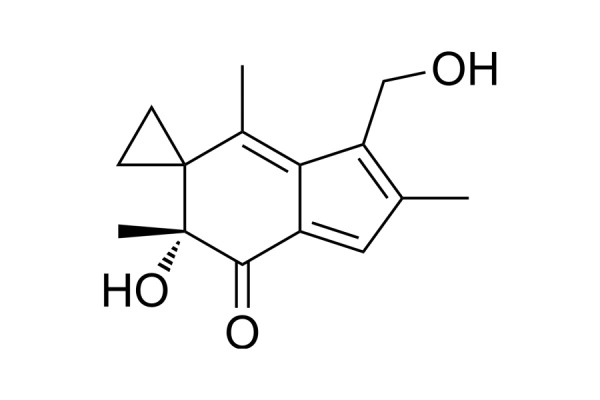
Irofulven is a semi-synthetic sesquiterpene, derived from the illudin S, a potent DNA-alkylating agent with a unique anticancer action profile. Unlike typical alkylators, Irofulven forms specific N3-adenine adducts that block elongation of RNA polymerase II and induce death via the transcription-coupled nucleotide excision repair route. Its selectivity makes it extremely powerful against cancer cells with faulty DNA repair machinery. Its chemical formula is C15H18O3. It is a yellow to orange crystalline powder and is extremely lipophilic, facilitating rapid absorption by cells in thick tumor tissue.
Understanding Irofulven's Mechanism of Action
How Does DNA Alkylation Drive Selective Cytotoxicity?
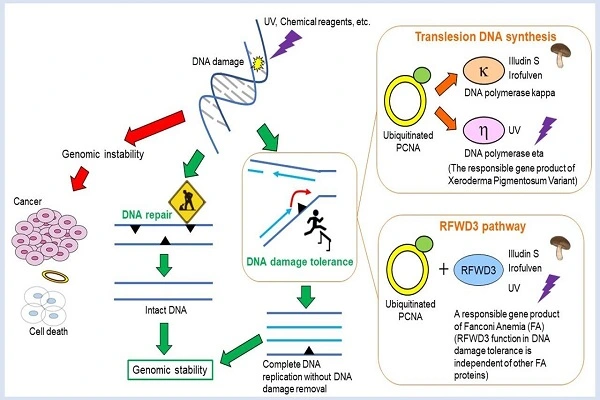
Irofulven is distinct from platinum-based agents. It does not form interstrand crosslinks but does form DNA adducts at N3-adenine sites that block RNA polymerase II function during transcription. This damage, when repaired via the TC-NER pathway, results in increased cell death signals in cells lacking functional repair genes such as ERCC2 and ERCC3. Irofulven is particularly damaging to cancerous cells that are unable to heal themselves but does not affect normal tissue that can mend itself.
Pharmacokinetic Profile and Cellular Uptake
The high lipophilicity of the chemical allows for membrane penetration and accumulation in tumor microenvironments with low oxygen levels, where many other cytotoxics have failed. Irofulven is reductively bioactivated intracellularly to a reactive electrophilic species, which causes a permanent alteration in DNA. Its plasma half-life is short; hence, it must be administered IV with properly formulated vehicles, including ethanol and propylene glycol, to compensate for poor water solubility. This pharmacokinetic characteristic promotes treatment schedules that target tumor tissue and minimize exposure to the rest of the body.
Cell Cycle Arrest and Apoptosis Induction
Irofulven arrests the formation of the replication fork and blocks cells in the S and G2/M phases of the cell cycle. It also causes direct harm to DNA. Damaged tumor cells cannot be repaired and enter apoptotic cascades regulated by caspases. Crucially, this pathway circumvents drug efflux mediated by P-glycoprotein and glutathione-based detoxification, two key mechanisms by which drugs like cisplatin and doxorubicin are rendered ineffective in solid tumors that are resistant to them.
Therapeutic Potential and Clinical Applications
Irofulven has shown potential in tackling a variety of difficult-to-treat malignancies. Phase I and Phase II clinical investigations have been performed on cancers of the ovary, prostate, pancreas, and non-small cell lung. It is of particular interest as a rescue agent in platinum-refractory ovarian cancer. Response rates were seen, with a clinically significant decrease in tumors in heavily pretreated patients.
Here are the main application settings in which Irofulven has shown proven value:
- Platinum-refractory ovarian cancer: Irofulven targets cells that have become resistant to platinum/taxane therapy. There is clinical evidence to support its use as a salvage alternative. The major hematologic worry is thrombocytopenia, not the severe myelosuppression seen with other alkylators.
- Combination treatments for advanced solid tumors: Irofulven potentiates apoptosis by inhibiting DNA repair mechanisms in combination with gemcitabine or irinotecan in regimens for pancreatic and prostate cancer. Preclinical evidence on synergy has informed Phase II combination designs, which demonstrate superior tumor response outcomes.
- Precision oncology research based on biomarkers: Irofulven is utilized in research as a molecular probe to assess the activity of the TC-NER pathway. This is used by researchers to separate patient groups into categories depending on their ERCC2/ERCC3 helicase status. It enables them to build companion diagnostic frameworks that identify the patients most likely to benefit.
In light of all these applications, irofulven is a scientifically solid selection for oncology systems that need both novel mechanisms and clinical evidence. This clinical context will be useful to pharmaceutical R&D teams and CDMOs who are considering intermediate sourcing to ensure procurement schedules are aligned with development objectives.
Market Position and Regulatory Landscape
Irofulven is an experimental chemical in most markets throughout the globe. Its regulatory process is dictated by its orphan medication designations and current data submissions in Phase II. It has experimental status from the FDA, and its development history under MGI Pharma provides a thorough preclinical and clinical dossier that is utilized today to make decisions about where to get research-grade materials.
The kind of patents that protect illudin derivatives influence both how long they are unavailable for use and the quantity of research-grade material available. Procurement teams have to account for these access difficulties in their long-term supply planning. Manufacturers of iriflven, a pharmaceutical intermediate, under GMP must maintain comprehensive traceability records according to ICH Q7 requirements. Such records should contain COAs, HPLC purity, and batch records.
For business-to-business purchasers, including CDMOs and pharma businesses in North America, Europe, and Asia, the level of chemical regulation has a direct impact on sourcing risk. Suppliers that can provide quality documentation that can be reviewed reduce the risk of non-compliance and speed up the internal approval process.
Procurement and Sourcing Considerations
The availability of a dependable research-grade or GMP-aligned ivory source is about more than price comparison. In the event of placing big orders, procurement managers should look at suppliers from a variety of different angles. The best methods for finding high-complexity medicinal intermediates are based on the following criteria:
- Analytical documentation: Verified COA with HPLC purity >98% for each batch, GC residual solvent data, and NMR confirmation. One main reason why regulatory delays exist in downstream API generation is that the documentation is not complete.
- Storage and handling requirements: Irofulven powder should be stored at -20°C in containers resistant to light and inert to the atmosphere to prevent reactive degradation. Suppliers must demonstrate knowledge of cold chain management and proper packaging procedures.
- Batch consistency and traceability: In scale-up initiatives, it is important that the same thing can be done batch to batch. Full monitoring from raw ingredients to the end product may assist with quality assurance inspections and legal documentation.
These variables affect the final cost of the purchase. Order quantity and purity grade determine pricing per milligram. But the hidden expenses of sourcing poor-quality material, such as reprocessing, failed QC runs, and regulatory inquiries, frequently surpass any initial savings from cheaper, unreliable sources. When you purchase in bulk from a reliable supplier with a proven quality infrastructure, you will experience cost reductions across the whole purchasing process.
Strategic Comparison and Integration Decision-Making
To place irifulven in a larger cancer intermediate portfolio, it needs to be compared to well-known alkylating agents in terms of how well they work, how dangerous they are, and how hard it is to get them. Its unique way of working—TC-NER-dependent apoptosis instead of crosslink-based cytotoxicity—makes its resistance profile different from those of cisplatin and carboplatin. Because of this difference, it is more useful for diversifying pipelines than for straight replacement.
It can be used in more research pipelines because it works well with targeted agents like PARP inhibitors and topoisomerase I inhibitors. For people who make decisions about procurement, this means a compound that can be used in more ways. This supports long-term investments in sourcing and lowers the risk of pipelines becoming obsolete.
Managing risks in the supply chain is just as important. When you only get a specialized intermediate from one maker, you leave yourself open to risk. Engaging suppliers with proven production capabilities, proof of regulatory compliance, and quick expert support cuts down on business disruptions and helps keep R&D timelines on track.
Conclusion
Irofulven fills a distinct niche in oncology research and drug development, supported by a mechanistically distinct mode of action, documented clinical data across a variety of tumor types, and an expanding body of precision medicine research. It is important for pharmaceutical companies, contract development and manufacturing organizations, and research-grade chemical wholesalers to understand both the science and the sourcing needs of the chemicals they are buying. Quality paperwork, following the cold chain rules, and being able to rely on your suppliers are the things that can make or break an integration.
FAQ
1. What distinguishes irofulven's mechanism from cisplatin?
Cisplatin creates DNA crosslinks between strands that are handled by the nucleotide excision repair pathway. This makes many tumor lines resistant to the drug. Instead, irofulven creates N3-adenine adducts that stop RNA polymerase II, using the TC-NER route to cause apoptosis to occur. It has been shown that irofulven can work in places where platinum hasn't been able to, even in cells that have become resistant to cisplatin through repair upregulation.
2. What are the primary dose-limiting toxicities?
Unlike most alkylating agents, irofulven has some serious side effects, including damage to the retina and protein in the urine, along with some manageable thrombocytopenia. In comparison, it doesn't cause as much severe myelosuppression, which makes it safer than things like nitrogen mustards.
3. How should research-grade iridium be stored?
To stop oxidative degradation, the substance must be kept at -20°C in containers that won't let light in and under an inert atmosphere. Suppliers must provide the right paperwork for cold chains and packing.
4. Can Irofulven be dissolved directly in water?
Not at all. Because it doesn't dissolve well in water, it needs to be mixed with solubilisers like ethanol and propylene glycol before it can be diluted in physiological saline and given.
Source Irofulven from Faithful—Your Trusted Pharmaceutical Intermediate Supplier
Xi'an Faithful BioTech offers research-grade and GMP-aligned irofulven for pharmaceutical manufacturers and CDMOs seeking a verified irofulven supplier. Every batch ships with a full COA, HPLC/GC analytical data, and traceability documentation. With in-house HPLC, GC, and spectrophotometric quality control, Faithful delivers batch consistency your R&D and regulatory teams can rely on. Reach our technical team directly at allen@faithfulbio.com Or WhatsApp: +86 13137770562 to discuss specifications and bulk pricing.
References
1. Kelner, M. J., et al. — "Characterization of the Irofulven (MGI-114) Resistance Phenotype." Cancer Research, 2002.
2. Huang, H., et al.—"Irofulven-Induced DNA Damage and Apoptosis via Transcription-Coupled Nucleotide Excision Repair. "Molecular Cancer Therapeutics," 2004.
3. Erba, E., et al. — "Cytotoxic and Cell Cycle Effects of Irofulven in Human Ovarian Cancer Cell Lines." European Journal of Cancer, 2003.
4. Schauer, N., et al.—"Phase II Evaluation of Irofulven in Patients with Advanced Pancreatic Cancer. "Investigational New Drugs, 2005.
5. Alexandre, J., et al. — "Irofulven Combined with Gemcitabine in Advanced Solid Tumors: A Phase I Pharmacokinetic Study." Clinical Cancer Research, 2004.
6. Rockwell, S., & Liu, Y.—"Illudin-Derived Acylfulvenes: Mechanisms of Selective Toxicity in Hypoxic Tumour Environments. "Anti-Cancer Drugs," 2006.