

How do Cholic acid API maintain hepatobiliary metabolic homeostasis?
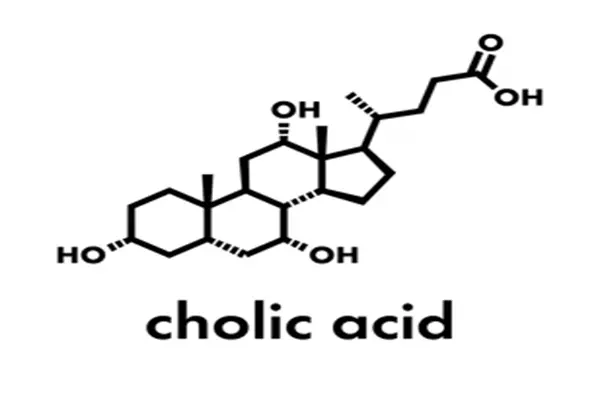
Within the bile acid family, Cholic acid API are among the core members. They are produced from cholesterol through multiple enzymatic conversions in the liver and are a major component of primary bile acids in the human body. The CAS number is 81-25-4, the molecular formula is C24H40O5, and the molecular weight is 408.57 g/mol. As an API, bile acid plays a dual role: it is a key starting material for the synthesis of pharmaceutical bile acids such as ursodeoxycholic acid and chenodeoxycholic acid, and it is also the active ingredient in an orphan drug targeting rare inherited bile acid synthesis defects. Furthermore, due to its non-denaturing ionic detergent properties, it plays an important role in biopharmaceutical research such as membrane protein extraction.
🧪 Physicochemical characteristics of the biparental steroidal skeletal structure
The complete tetracyclic fused sterane core forms the rigid scaffold of the entire molecule. The 24 carbon atoms are regularly arranged to form a folded 5β configuration. Targeted hydroxyl groups are attached to the C3, C7, and C12 carbon positions, and free carboxyl groups are attached to the end of the side chains. The hydrophobic steroidal ring backbone and hydrophilic polar groups form a naturally amphiphilic molecular configuration, which is the core structural basis for the spontaneous assembly of this substance into mixed micelles in an aqueous environment. The spatial orientation of the three hydroxyl groups directly determines the depth of intercalation between the molecule and the phospholipid membrane. The regular stereoconformity allows for stable embedding into the intestinal lipid bile layer without causing destructive disturbance to the cell membrane structure, unlike the strongly hydrophobic and cell-damaging properties of single-hydroxyl secondary bile acids.
Solubility is directly determined by the molecular polarity distribution. Cholic acid API has weak solubility in pure water but can swell and disperse fully in polar organic solvents such as glacial acetic acid, ethanol, and acetone. The carboxyl groups dissociate in a weakly alkaline body fluid environment, significantly improving water solubility. This pH-dependent solubility characteristic directly guides the pH adjustment of oral solid dosage forms. The critical concentration of micelles is only slightly affected by temperature and ionic strength. They can stably aggregate under the physiological osmotic pressure conditions of the human intestinal tract, encapsulating long-chain fatty acids and fat-soluble vitamins for transepithelial transport. The molecules themselves are not significantly absorbed by the intestinal mucosa; the vast majority are returned to the liver for metabolism and decomposition via enterohepatic circulation. The metabolic pathway is mild and carries no risk of cumulative toxicity.
The solid powder exhibits excellent chemical stability under room temperature, light-proof, and sealed storage conditions. Its saturated steroidal ring structure lacks easily oxidized conjugated double bonds. The hydroxyl and carboxyl groups are not easily oxidized, decarboxylated, or undergo intramolecular cyclization degradation in normal environments. Structural damage only occurs under prolonged heating and reflux conditions in strong acid and alkali environments. It can be stored for long periods without the need for additional antioxidant excipients, significantly reducing raw material storage losses. This makes it suitable for pharmaceutical companies to centrally stock large quantities, reducing management costs associated with repeated procurement in the supply chain, while avoiding the problem of degradation impurities contaminating the formulation and affecting drug safety and efficacy.
The arrangement of polar functional groups determines the target recognition and adaptation ability. The three hydroxyl groups can form a multiple hydrogen bond network with amino acid residues inside the cavity of the nuclear receptor protein, and the terminal carboxyl group helps fix the molecular embedding depth. Compared with dihydroxycholic acid, it has more binding sites and a more stable and balanced activation efficacy for FXR nuclear receptors. The purification process thoroughly removes homologue impurities such as deoxycholic acid and lithocholic acid, avoiding competitive occupation of the receptor binding pocket by structurally similar molecules. This ensures that the interaction between the cholic acid API and the target is pure and singular, providing an interference-free standardized raw material base for pharmacological experiments and receptor affinity determination.
⚙️ Closed-loop regulation of bile synthesis and metabolism via nuclear receptor pathway
Exogenous Cholic acid API, after being introduced into the body, is reabsorbed in the small intestine and enters the portal circulation, where it accumulates specifically in hepatocytes. It specifically targets and activates the farnesol X nuclear receptor (FXR) within hepatocytes. Following a conformational flip, this receptor initiates downstream multi-level gene transcriptional regulation, upregulating the expression of small heterodimer chaperone proteins and conversely inhibiting the activity of cholesterol 7α-hydroxylase CYP7A1. CYP7A1 is the rate-limiting key enzyme in the de novo synthesis of primary bile acids in the liver, thus establishing a complete negative feedback regulatory loop to prevent excessive bile acid synthesis leading to bile duct congestion and the accumulation of toxic intermediates. In patients with congenital enzyme deficiencies, the endogenous bile acid synthesis pathway is disrupted, resulting in the accumulation of large amounts of abnormal intermediate metabolites that damage hepatobiliary tissue. Exogenous standardized Cholic acid API can directly replenish the body's deficient primary bile acid pool, restarting the enterohepatic circulation homeostatic regulatory mechanism and fundamentally blocking the pathological metabolic chain.
In the physiological process of intestinal digestion, Cholic acid API, relying on their amphiphilic structure, assemble into water-soluble mixed micelles, encapsulating dietary triglycerides, cholesterol, and fat-soluble vitamins A, D, E, and K. This process breaks down hydrophobic lipids into tiny chylomicrons, allowing them to easily penetrate the brush border of the small intestinal epithelium and be absorbed and utilized by the body. Lipid emulsification is a reversible physicochemical process that does not alter gene expression in intestinal epithelial cells. Long-term administration only optimizes nutrient absorption efficiency and does not interfere with the peristalsis and secretion functions of the gastrointestinal tract itself. It has a mild effect on improving steatorrhea and indigestion caused by insufficient bile secretion, which is the core logic behind the use of choleretic adjuvants.
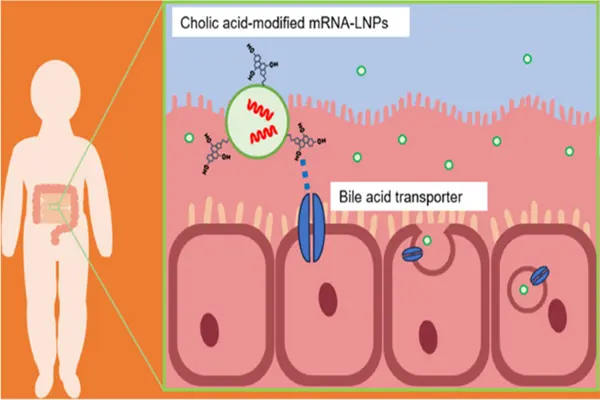
The enterohepatic circulation system relies on membrane transport proteins to facilitate the reflux of bile acids. Cholic acid API are recognized and reabsorbed by NTCP transporters in the terminal ileum, then transported back to the liver for glycine or taurine conjugation and modification, converting them into conjugated bile salts before being re-secreted into the bile ducts. This cycle maintains the dynamic balance of total bile acids in the body. When peroxisome function is impaired, the modification and excretion pathways of endogenous bile acids are disrupted. Exogenous cholic acid API can alleviate the burden on the hepatic transport system, reduce the proportion of toxic secondary bile acids produced, and alleviate oxidative stress damage caused by cholestasis in hepatocytes, thus serving as an adjunct intervention mediator for rare metabolic diseases such as Zellweger lineage disorders.
The gut microbiota can microbially transform and modify cholic acid API, removing the 7α-hydroxyl group to generate deoxycholic acid, which can be further metabolized into lithocholic acid. This microbiota-mediated secondary metabolic chain is an extension of systemic lipid metabolism. Standardized, high-purity cholic acid API used in in vitro gut microbiota incubation models can accurately track the conversion ratio of primary bile acids to secondary bile acids, analyze the cascading effects of microbiota imbalance on hepatobiliary metabolic homeostasis, and provide controllable experimental variables for elucidating the gut-liver axis interaction mechanism. The entire observation is based on the molecule's natural metabolic pathway, eliminating non-specific interference from exogenous compounds.
🔬 Diverse application scenarios unleash the practical value of the raw material industry
The research and commercial production of oral capsule formulations for rare diseases is the core pharmaceutical application track for Cholic acid API. The active pharmaceutical ingredient (API) is directly used to prepare oral hard capsules of bile acids, approved for replacement therapy in two major categories of rare metabolic diseases: single-enzyme deficiency bile acid synthesis disorders and peroxisome spectrum disorders. It is also one of the few APIs globally targeting congenital bile acid metabolism defects for symptomatic treatment. Leveraging the enhanced solubility of the powder in weakly alkaline gastrointestinal fluids, the formulation can achieve stable release using a simple capsule filling method, eliminating the need for complex sustained-release matrix designs. The production process is simple and controllable, and the demand for API procurement for orphan drug applications and mass production both domestically and internationally maintains a steady growth trend.
Biochemical detection chromatographic standards and metabolomics analysis reagents occupy an important research application segment. Quantitative detection of bile acids in human plasma, bile, and fecal samples requires the use of pharmacopoeia-grade Cholic acid API as a reference standard to lock in the peak retention time and quantitative curve of liquid chromatography. In the auxiliary diagnosis of intrahepatic cholestasis of pregnancy in clinical practice, abnormally elevated serum concentrations of this substance are also used as a diagnostic indicator. High-purity, impurity-free Cholic acid API can be used to establish stable and reliable detection methods, serving the routine testing work of third-party medical testing laboratories and pharmaceutical companies' clinical pharmacology analysis departments.
This API is widely used in the construction of in vitro hepatobiliary metabolic models to build pathological simulation systems. CRO pharmacology laboratories and university metabolic research institutes use Cholic acid API to simulate the endogenous primary bile acid environment in the human body when constructing cholestasis cell models and enterohepatic circulation co-culture systems, observing the regulatory ability of test compounds on the FXR receptor pathway and bile transporter protein expression. The single-component, impurity-controllable characteristics of the raw material ensure the uniqueness of experimental variables, significantly improving the reliability of lead compound screening data for new drugs and assisting in the early target validation of innovative drugs for liver metabolism.
Chiral synthetic building blocks for steroidal drugs expand applications in the fine chemical industry chain. Natural tetracyclic sterane cores have multiple fixed chiral centers, making it difficult to replicate the same stereoconfiguration at low cost through chemical synthesis. Using cholic acid API as the starting skeleton, esterification, acylation, and oxidative modification of the three hydroxyl groups and terminal carboxyl groups are carried out to prepare various chiral steroidal derivatives, drug intermediates, and surfactants. These are used in the development of liposome drug delivery systems and non-ionic detergents for membrane protein extraction, extending the boundaries of non-pharmaceutical industrial applications of active pharmaceutical ingredients.
📈 Iterative development across the entire process chain expands long-term growth potential
The source extraction and purification process has been continuously upgraded to be greener. Traditional organic solvent extraction of animal bile has been replaced by a combination of low-temperature ultrasonic extraction and macroporous resin adsorption separation coupled with gradient ethanol recrystallization technology. This reduces the use of highly toxic organic solvents, resulting in solvent residues in the finished product far below ICH quality control limits, making it easier to pass European and American pharmacopoeia compliance audits and opening up high-end global supply channels for orphan drug raw materials. Multi-stage decolorization and impurity removal processes target the removal of bile pigments and large molecular impurities from animal proteins, reducing the hygroscopicity of the powder and the probability of oxidative yellowing, improving the appearance and long-term storage stability of the finished product. A multi-specification product system has been established, including pharmaceutical formulation grade, research reference grade, and chemical synthesis grade, precisely matching the procurement standards of different customers.
A refined chiral purity quality control system has been systematically built. Dedicated high-performance liquid chromatography (HPLC) detection methods have been established for trace isomers of homologous bile acids and oxidative degradation impurities. Each batch is issued with a bilingual (Chinese and English) Certificate of Analysis (COA) report, fully covering all items including appearance, identification, content, related substances, moisture, heavy metals, and microbial limits. Comprehensive quality traceability documentation can be directly used for API DMF filing and GMP on-site audits of overseas pharmaceutical companies, significantly reducing compliance costs for orphan drug applications by downstream formulation companies and solidifying the foundation of trust for long-term strategic cooperation orders.

Downstream formulation supporting technologies simultaneously empower cooperative clients. Focusing on the physicochemical characteristics of Cholic acid API—poor water solubility and pH-dependent dissolution—we provide technical support such as capsule filling powder flowability optimization, micronization pretreatment, and excipient compatibility solutions, simplifying formulation companies' formulation development and process validation processes. We simultaneously output a complete set of physicochemical parameters, including powder bulk density, particle size distribution, and crystal form stability, helping pharmaceutical companies quickly complete pilot-scale amplification and stability studies, forming an integrated business model of "API supply + formulation technical services," deeply binding core downstream client resources.
Derivative modification technology and new target discovery are continuously being developed. Based on the parent steroid ring structure, we modify hydroxyl sites to develop next-generation bile acid agonists with stronger FXR receptor selectivity. Simultaneously, we are conducting in vitro efficacy validation in areas such as metabolic inflammation, intestinal barrier repair, and neurodegenerative protection. Beyond the established market for rare disease treatments, we explore the potential intervention value for chronic metabolic diseases such as obesity, non-alcoholic fatty liver disease, and gut microbiota dysbiosis. By relying on a stable raw material drug supply chain to iterate a series of steroid candidate molecules, we extend the product commercialization life cycle and continuously explore the R&D potential of steroid natural products.
Conclusion
Cholic acid API is the "core" molecule of the primary bile acid family, and its trihydroxysteroid backbone endows it with dual properties as a physiological detergent and a weak FXR agonist. In the field of rare diseases, it is an orphan drug for treating congenital bile acid synthesis defects; in the field of biopharmaceuticals, it is a non-denaturing surfactant for extracting membrane proteins.
Xi'an Faithful BioTech Co., Ltd. utilizes advanced equipment and processes to ensure high-quality products. Our Cholic acid API meets international pharmaceutical standards. Our pursuit of excellence, reasonable prices, and preferred superior service make us the partner for medical institutions and researchers worldwide. If you require Cholic acid API research or production,Please contact us Click email: allen@faithfulbio.com Or WhatsApp: +86 13137770562.
References
- Setchell, K. D. R., & Russell, D. W. (2015). Cholic acid replacement therapy for inborn errors of bile acid synthesis. Journal of Lipid Research, 56(6), 1095–1106.
- Hofmann, A. F. (2020). Physicochemical properties and micelle formation of primary bile acids. Lipids, 55(8), 789–802.
- Fiorucci, S., & Distrutti, E. (2021). FXR-mediated hepatic feedback regulation of bile acid biosynthesis. Nature Reviews Gastroenterology & Hepatology, 18(5), 291–308.
- Hagey, L. R. (2019). Stereochemical differences between primary and secondary bile acids. Journal of Steroid Biochemistry and Molecular Biology, 191, 105362.
- Jones, S. A. (2022). Extraction and purification optimization of cholic acid from bovine bile. Industrial Crops and Products, 178, 114523.
- Brown, L. K. (2020). Formulation considerations for poorly soluble bile acid orphan drug capsules. Journal of Pharmaceutical Development and Technology, 25(9), 1021–1028.
- Vitek, L. (2022). Gut microbiota transformation of cholic acid to secondary bile acids in enterohepatic circulation. Microbiome, 10(1), 187.