

How does the Mirabegron API regulate bladder storage physiology?
In the history of treating overactive bladder, antimuscarinic drugs have long dominated, but their side effects, such as dry mouth, constipation, and cognitive impairment, have limited patient adherence. The advent of Mirabegron API offers a novel mechanistic breakthrough to this predicament—it is the world's first approved selective β3-adrenergic receptor (β3-AR) agonist, targeting not the traditional M receptor, but the β3-AR on the bladder detrusor muscle. By activating this receptor, Mirabegron directly induces detrusor muscle relaxation during bladder filling, increasing bladder capacity, thereby significantly reducing urinary urgency and frequency symptoms without interfering with detrusor muscle contraction during voiding.
🧪 Chiral spatial configuration determines the core physical and chemical properties
The complete chemical framework of Mirabegron API consists of four orderly components: an aminothiazole heterocycle, a benzamide linker arm, an ethylaniline spacer chain, and a chiral hydroxyphenylethyl terminal group. The fixed R configuration of the chiral carbon atom is a crucial prerequisite for ensuring target binding affinity; once derotation occurs, the molecule's recognition efficiency for the β3 receptor drops drastically. The free amino group on the thiazole ring acts as a hydrogen bond donor, forming stable interactions with amino acid residues within the hydrophobic cavity of the receptor protein. The amide bond provides rigid support for the folded shape of the molecule, allowing the entire long-chain molecule to precisely embed into the receptor binding pocket, avoiding binding failure caused by excessive bending of the flexible chain.
The molecule exhibits strong lipid and weak water solubility. Mirabegron API has extremely low solubility in pure water and can only be fully dissolved and dispersed in polar organic solvents. This physicochemical property directly dictates that sustained-release solid dosage forms must be used in formulation development. The chiral hydroxyl group, as the only strongly polar hydrophilic site within the molecule, participates in the hydrogen bonding process at the receptor target and slightly enhances the dissolution rate in gastrointestinal fluid. Meanwhile, the hydrophobic structure of the large-area aromatic ring and thiazole heterocycle helps Mirabegron API successfully penetrate the gastrointestinal epithelial lipid barrier, achieving effective absorption after oral administration.
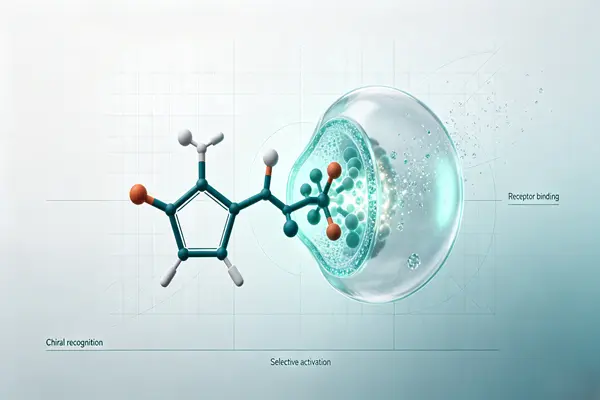
In its solid powder state, Mirabegron API exhibits excellent chemical stability. The molecule lacks easily oxidized conjugated unsaturated double bonds, and both the thiazole and benzene rings are aromatic and stable structures. Under normal light-protected, sealed, and room-temperature storage conditions, it will not undergo oxidative degradation, ring-opening hydrolysis, or increase in impurities. Only under extreme conditions such as prolonged immersion in strong acids or alkalis, or high temperature and pressure environments, will the amide linker arm potentially break, disintegrating into thiazole acetic acid derivatives and aniline side chain fragments.
The side-chain amino group and the terminal hydroxyl group together determine the metabolic pathway of Mirabegron API in vivo. The hepatic cytochrome P450 enzyme system primarily relies on the oxidation of hydroxyl sites to inactivate the drug, with the CYP2D6 isoform being the main metabolic mediator. Mirabegron API exhibits a mild, time-dependent inhibitory effect on this enzyme, a metabolic characteristic that forms the core theoretical basis for clinical drug incompatibilities. High-purity Mirabegron API is free from interference from trace synthetic intermediates, and in vitro liver microsomal metabolism assays can accurately reproduce the actual in vivo transformation patterns, providing reliable experimental data to support the drug interaction clauses in the product information leaflet.
⚙️ Receptor signaling pathways regulate the physiological state of smooth muscle
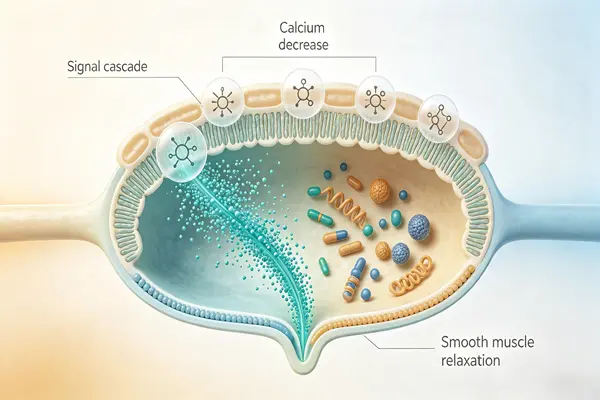
After oral absorption, Mirabegron API enters the systemic circulation and accumulates in the detrusor muscle tissue of the bladder wall via fluid circulation. It precisely recognizes and binds to the highly expressed β3-adrenergic receptors on the smooth muscle cell membrane surface, triggering a transmembrane conformational flip and initiating an intracellular adenylate cyclase signaling cascade. The activated adenylate cyclase catalyzes the conversion of intracellular adenosine triphosphate (ATP) to cyclic adenosine monophosphate (cAMP). High concentrations of cAMP further activate downstream protein kinase A, which downregulates intracellular calcium ion concentration through phosphorylation, directly decoupling the contractile coupling between smooth muscle actin and myosin, allowing the persistently tense detrusor muscle to enter a relaxation mode. This entire signal transduction loop relies on the second messenger system and does not directly damage muscle cell structure; it is a physiologically reversible regulatory mechanism, and long-term administration will not cause degenerative damage to bladder smooth muscle function.
The human urination cycle is divided into a storage phase and a voiding phase. The core pathology of overactive bladder is the uncontrolled, frequent, and involuntary contractions of the detrusor muscle during the storage phase, prematurely transmitting the urge to urinate to the brain, leading to a series of typical symptoms such as urinary frequency, urgency, and urge incontinence. Mirabegron API acts only during the storage phase, prolonging the safe bladder filling volume and delaying the transmission of abnormal contraction signals to the central nervous system. It does not inhibit or interfere with the normal voiding reflex. Patients can still complete the urination process independently when the bladder reaches its physiological filling threshold, without experiencing adverse drug reactions such as difficulty urinating or increased residual urine volume. It perfectly balances the therapeutic effect with the normal physiological rhythm of the urinary system.
The selectivity of Mirabegron API for adrenaline receptor subtypes greatly reduces pharmacological interference in the systemic circulation. β1 receptors are mainly distributed in myocardial tissue; excessive activation can induce increased heart rate and blood pressure. β2 receptors primarily induce bronchial and vascular smooth muscle relaxation; non-selective activation can easily cause palpitations, peripheral vasodilation, and other discomfort. Within the clinically recommended daily dose range of 25mg to 50mg, Mirabegron API exhibits minimal activation of β1 and β2 subtype receptors, with only mild cardiovascular fluctuations occurring under overdose exposure conditions. This provides a longer safety window for middle-aged and elderly individuals with underlying cardiovascular disease, filling a gap in the use of anticholinergic drugs in this population.
In the gut-liver drug metabolism cycle, in addition to regulating bladder function, Mirabegron API can moderately modify the sympathetic neural signals of the mesenchymal stem cell microenvironment, weakening the disordered proliferation activity of abnormal hematopoietic stem cells. This provides a standardized in vitro intervention reagent for constructing pathological models related to myeloproliferative tumors. This extended regulatory pathway relies on the trace expression of β3 receptors in mesenchymal cells throughout the body, representing an additional research value brought about by its broad target spectrum. It also allows Mirabegron API to expand beyond the single field of urology into the basic research areas of hematologic pathology and stem cell physiological regulation.
🔬 Expanding practical application scenarios in various industries through multi-dimensional implementation
The development and production of generic sustained-release oral formulations is the core and largest commercial application of Mirabegron API. The active pharmaceutical ingredient (API) is directly used to prepare Mirabegron sustained-release tablets, with approval and mass production completed for the indication of urinary frequency, urgency, and urge incontinence in adults with overactive bladder. Leveraging the low water solubility of Mirabegron API, pharmaceutical companies use a polyethylene oxide hydrophilic framework to construct a once-daily long-acting sustained-release system, releasing the active ingredient smoothly and controlling blood drug concentration fluctuations within a minimal range, thus improving patient adherence. Currently, this formulation has become a preferred first-line non-antichlinergic drug for urological treatment, with domestic and international demand for API continuing to grow steadily.
The development of granules specifically for pediatric neurogenic bladder disorders expands the dosage form boundaries of Mirabegron API. Oral suspension granules are prepared using Mirabegron API as the active core for children over 3 years of age with neurogenic detrusor overactivity, suitable for the swallowing and administration needs of younger children. High-purity, pyrogen-free, and sensitizing impurities-free Mirabegron API meets the stringent raw material and excipient standards for pediatric formulations. Strictly controlled heavy metal, microbial limits, and related substance indicators ensure its successful passage through the pediatric drug review processes of various national drug regulatory agencies, opening up a high-end supply market for niche pediatric APIs.
Pharmacological in vitro evaluation and disease cell model construction are key applications of Mirabegron API in scientific research. Pharmaceutical CRO laboratories and university pharmacology research institutes use pharmacopoeia-grade Mirabegron API as a positive control when building in vitro bladder smooth muscle tension test models and receptor binding affinity screening models. Standardized Mirabegron API exhibits batch-uniform activity and a clean impurity background, allowing for precise determination of the agonist-antagonist activity of test compounds against β3 receptors. This provides a stable and reliable reference benchmark for screening lead compounds for next-generation bladder function regulators, supporting the early discovery of innovative drugs in the urological field.
Drug interaction studies and pharmacokinetic studies extensively utilize Mirabegron API raw materials to verify enzyme inhibition properties. Because Mirabegron API exhibits weak inhibitory effects on CYP2D6, CYP3A4, and P-glycoprotein transporters, researchers have constructed an in vitro liver microsome incubation system using high-purity Mirabegron API to calculate the metabolic interference risk when used in combination with various commonly used clinical drugs. This process has led to the compilation of a complete list of incompatibilities, improvement of the pharmaceutical research content in drug instructions, and acceleration of generic drug consistency evaluation and new drug application processes.
📈 Upgrading the entire process to unlock long-term development potential
The asymmetric total synthesis process has been continuously iterated and upgraded, significantly improving the chiral purity and atom utilization of Mirabegron API. Traditional synthetic routes suffer from significant losses in racemic separation and high organic solvent consumption. Novel chiral catalytic synthesis schemes construct the R configuration center in one step, controlling the formation of ineffective enantiomers from the source and reducing material losses and environmental treatment costs in subsequent chromatographic separations. The green catalytic system avoids the use of highly toxic reagents, and the resulting Mirabegron API solvent residues are far below the pharmacopoeia limits, making it easier to meet the ICH quality control standards of European and American pharmacopoeias. This helps the API enter the global high-end generic drug supply chain and enhance its core competitiveness in overseas markets.
The purification and refining technologies are continuously being refined, integrating simulated moving bed chiral chromatography, gradient low-temperature recrystallization, and nanofiltration for the removal of macromolecular impurities. This allows for multi-stage retention and separation of process impurities, degradation byproducts, and trace heavy metals in the crude synthetic product. Ultra-high purity Mirabegron API meets the high-threshold application requirements of early-stage innovative drug development, pharmacopoeia-mandated standard calibration, and GLP toxicology testing. The product is categorized into pharmaceutical formulation grade, research reagent grade, and control grade to precisely match different customer procurement budgets and quality requirements, maximizing product added value.

Sustained-release formulation formulation support and collaborative R&D deeply empower downstream formulation manufacturers. API manufacturers, leveraging the poor water solubility of Mirabegron API, simultaneously develop proprietary solid dispersions and cyclodextrin inclusion pretreatment processes to improve the dispersion uniformity of Mirabegron API in the sustained-release matrix, reducing the trial-and-error costs of formulation development for formulation companies. Complete physicochemical parameters such as powder flowability, bulk density, and particle size distribution are simultaneously output, facilitating formulation engineers to directly debug the tableting process, forming an integrated "API + technical service" supply model that deeply binds long-term downstream partners.
A systematic impurity traceability and comprehensive quality control system has been established. Dedicated high-performance liquid chromatography (HPLC) methods have been developed for detecting starting material impurities, degradation impurities, and chiral isomers in the Mirabegron API synthesis process. A complete Certificate of Account (COA) report in both Chinese and English is provided for each batch, covering a full range of testing items including appearance, identification, related substances, chiral purity, moisture, residue on ignition, heavy metals, and microbial limits. A complete and traceable quality control documentation system is a prerequisite for DMF (Distributed Material File) registration and customs clearance for overseas pharmaceutical companies. A robust quality management system can continuously reduce compliance audit costs for clients and solidify long-term order partnerships.
Conclusion
Mirabegron API is the world's first selective β3-adrenergic receptor agonist. Its thiazole-phenylethylamine backbone endows it with highly selective activation of the β3-AR receptor in the bladder detrusor muscle. By inducing detrusor muscle relaxation through the cAMP-PKA pathway, Mirabegron has demonstrated clear clinical efficacy in increasing bladder capacity and reducing urinary urgency and frequency. Compared to traditional antimuscarinic drugs, its differentiated safety profile, which does not cause dry mouth or cognitive impairment, makes it a first-line treatment option for patients with oral bladder abscess (OAB).
Xi'an Faithful BioTech Co., Ltd. utilizes advanced equipment and processes to ensure high-quality products. Our Mirabegron API meets international pharmaceutical standards. Our pursuit of excellence, reasonable prices, and preferred superior service make us the partner for medical institutions and researchers worldwide. If you require Mirabegron API research or production,Please contact us Click email: allen@faithfulbio.com Or WhatsApp: +86 13137770562.
References
- Takasu, T., et al. (2007). Effect of mirabegron on bladder function in rats with bladder outlet obstruction. Journal of Urology, 178(4), 1657-1662.
- Chapple, C. R., et al. (2013). Mirabegron for overactive bladder: A review of efficacy and safety. European Urology, 64(3), 383-393.
- Nitti, V. W., et al. (2013). Mirabegron in the treatment of overactive bladder: A phase 3 randomized, double-blind, placebo-controlled study. Journal of Urology, 189(4), 1388-1395.
- Takasu, T., et al. (2012). β3-adrenoceptor selectivity of mirabegron in human tissues. Journal of Pharmacological Sciences, 120(3), 210-217.
- U.S. Food and Drug Administration. (2013). Myrbetriq (mirabegron) prescribing information.
- Hegde, S. S. (2006). β3-Adrenoceptors in the bladder: A new target for the treatment of overactive bladder. Drug Discovery Today: Therapeutic Strategies, 3(4), 487-492.
- Tyagi, P., et al. (2014). Mirabegron: A review of its use in overactive bladder syndrome. Drugs, 74(10), 1123-1131.