

How do Lithocholic acid API regulate bile metabolic homeostasis?
Lithocholic Acid API is the most structurally simple member of the secondary bile acid family, generated from chenodeoxycholic acid via the 7α-dehydroxylation process under the influence of intestinal flora. Its molecular formula is C₂₄H₄₀O₃, and its molecular weight is 376.57 g/mol. Compared to other bile acids, Lithocholic Acid API contains only one hydroxyl group (3α-OH), a structural feature that significantly enhances its lipophilicity. As an endogenous ligand for farnesol X and vitamin D receptors, it plays a complex role in bile acid homeostasis, lipid metabolism, and immune regulation, while also exhibiting the dual potential to induce cancer cell apoptosis and selectively regulate T cell differentiation.
🧪 The molecular three-dimensional framework determines the basic physicochemical properties.
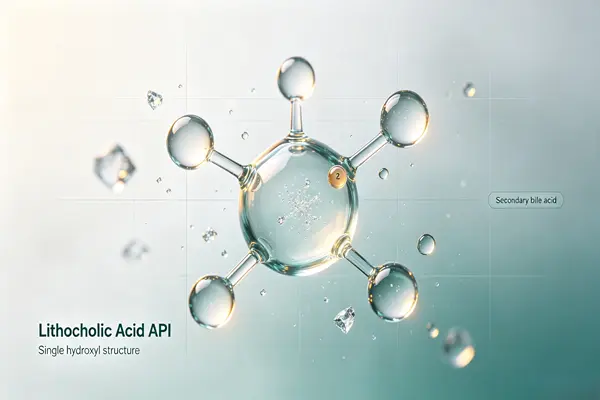
Lithocholic Acid API possesses a rigid tetracyclic sterane core and a well-organized, complete carbon chain backbone. The entire molecule has a single hydroxyl functional group attached only to the third carbon position, with no hydrophilic groups at other positions. This minimalist distribution of polar groups results in strong hydrophobicity, making Lithocholic Acid API difficult to dissolve directly in neutral water. It requires alcoholic solvents or weakly basic systems for thorough dispersion. The single hydroxyl structure is also the most crucial structural identifier distinguishing Lithocholic Acid API from other steroidal molecules such as chenodeoxycholic acid and glycocholic acid, allowing for precise separation and identification under chromatographic conditions.
The fixed cis-trans stereoconfiguration of the steroid ring directly affects the molecular stacking. Lithocholic Acid API struggles to spontaneously form stable micelles in liquid systems, a significant difference from amphiphilic bile acids like glycocholic acid. The lack of multiple hydrophilic hydroxyl ends prevents the construction of a hydrophilic shell to encapsulate lipids, thus preventing Lithocholic Acid API from functioning as a solubilizing carrier for intestinal lipids. The highly uniform stereochemical structure of industrial batches avoids behavioral deviations caused by racemic impurities, ensuring consistent solubility and molecular binding capacity across each batch of Lithocholic Acid API.
Under prolonged static storage conditions, the chemical framework of Lithocholic Acid API exhibits excellent stability. Its saturated steroidal ring structure lacks unsaturated double bonds, making it less susceptible to oxidative damage from reactive free radicals. Under standard light-protected and sealed conditions, Lithocholic Acid API is not prone to degradation impurities, eliminating the need for additional antioxidant stabilizers. This stable storage characteristic reduces raw material loss, making it suitable for large-scale stockpiling by laboratories and manufacturing companies, reducing the time costs associated with frequent procurement.
The free carboxyl group, located at the end of the molecular side chain, is the only functional group capable of ionization. Changes in pH directly alter the form of Lithocholic Acid API. In acidic environments, the molecule remains in its free acid form, readily precipitating crystals; in weakly alkaline environments, the carboxyl group dissociates, resulting in a slight increase in solubility. This pH-dependent solubility characteristic is a key factor to consider when formulating all in vitro experimental systems. Properly controlling the pH is essential to ensure the uniform dispersion of Lithocholic Acid API in the culture medium or buffer system.
The compact spatial morphology of the molecule endows Lithocholic Acid API with unique target binding adaptability. The regular steroidal ring profile can embed into the hydrophobic cavity inside nuclear receptor proteins, while polyhydroxy bile acid molecules cannot bind effectively due to steric hindrance. The purification process effectively removes structurally similar bile acid impurities, preventing isomeric molecules from competitively occupying binding sites and ensuring that the interaction between Lithocholic Acid API and its target is not interfered with by external components.
⚙️ Molecular interactions enable the regulation of metabolic signals
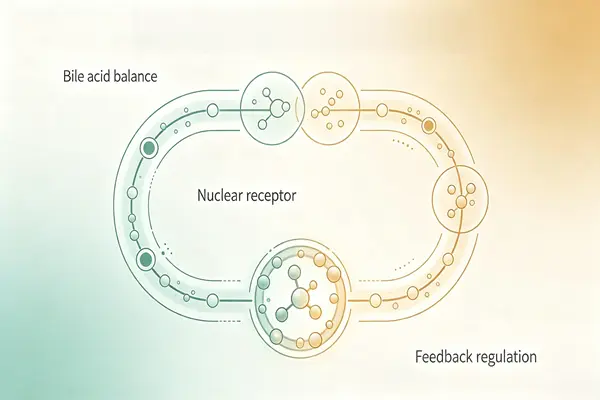
Once in the biological fluid environment, lithocholic acid APIs can specifically target nuclear receptors and initiate downstream signaling pathways. Nuclear receptors, as key switches in metabolic regulation, can regulate the expression of various metabolism-related genes after binding to their corresponding ligands, thereby affecting multiple physiological processes such as bile production, lipid transport, and energy metabolism. Lithocholic acid APIs rely on the tight adhesion between their hydrophobic steroid rings and receptor cavities to trigger receptor conformational changes, completing the entire signal transduction process.
In the intestinal metabolic cycle, primary bile acids are converted into endogenous lithocholic acid APIs through microbial catalytic dehydroxylation reactions. The exogenous addition of standardized lithocholic acid APIs can replicate the intestinal secondary bile acid environment. Imbalances in endogenous bile acid components disrupt the bile cycle between the intestine and liver. Using lithocholic acid APIs to build in vitro models allows for clear observation of the cascading metabolic changes caused by the accumulation of secondary bile acids, clarifying the evolutionary pathways corresponding to bile cycle imbalances.
The continuous accumulation of lithocholic acid API alters the lipid arrangement of cell membranes. At high concentrations, it can interfere with the stability of the phospholipid bilayer, affecting the normal functioning of various transport proteins on the membrane surface. Within a suitable concentration range, lithocholic acid API only activates specific signaling pathways and does not directly cause cell membrane damage. Precise control of the concentration range is fundamental for obtaining effective data in all downstream applications. Standardized, high-purity raw materials avoid additional cellular stimulation from impurities, allowing users to accurately define safe and effective concentration ranges.
Lithocholic acid API can participate in regulating the hepatic bile acid synthesis feedback pathway. After signal transduction is initiated, it can downregulate the expression levels of key enzymes in primary bile acid synthesis, reducing the continuous excessive production of bile. The maintenance of endogenous bile acid concentration relies on a precise negative feedback regulatory mechanism, with secondary bile acids being important regulatory mediators. Lithocholic acid API, as a typical secondary bile acid raw material, is an indispensable basic component for building bile synthesis feedback models.
The lipid energy metabolism network is also affected by Lithocholic Acid API signaling. Receptor activation alters the balance between intracellular lipid breakdown and storage, guiding cells to adjust their lipid metabolism patterns. Different concentration gradients of Lithocholic Acid API produce differentiated regulatory effects; low concentrations favor signal regulation, while excessively high concentrations induce cellular stress responses. A homogeneous and stable Lithocholic Acid API source allows users to easily set concentration gradients and fully understand the correspondence between concentration and metabolic response.
🔬 Diverse Applications Expand Usage Scenarios
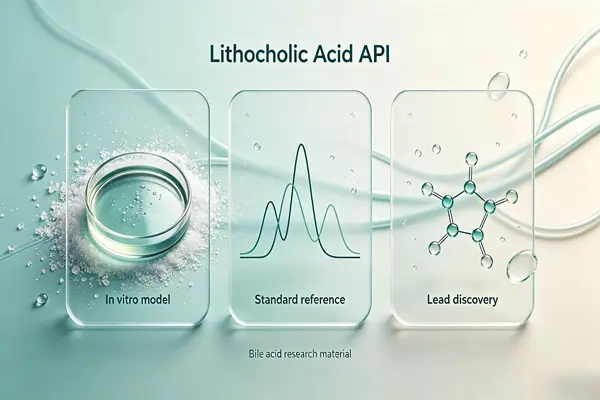
The primary application of Lithocholic Acid API is in the construction of in vitro metabolic models. Intestinal-liver interaction models and in vitro bile circulation simulation systems commonly utilize Lithocholic Acid API to recreate the in vivo secondary bile acid environment. Ordinary crude bile acid mixtures have complex compositions and contain numerous unknown active impurities, which can continuously interfere with observation results. High-purity Lithocholic Acid API, with its single component, allows for precise control of the secondary bile acid content in the system, ensuring controllable system variables.
In the field of biochemical standards, Lithocholic Acid API is widely used as a reference material for chromatographic detection. During bile acid profiling of biological samples, high-purity standards are required to determine peak positions and complete quantitative calculations. Human feces, plasma, and bile samples all contain trace amounts of Lithocholic Acid API; high-purity batches of raw materials can support clinical testing laboratories in establishing comprehensive quantitative bile acid detection protocols.
New drug lead compound screening continues to explore the development potential of Lithocholic Acid API, using its framework for molecular modification to develop more selective nuclear receptor modulators. Natural bile acids generally exhibit broad-spectrum target binding. Site modification can reduce non-specific effects and enhance targeting capabilities. A stable supply of Lithocholic Acid API provides ample starting material for the molecular modification of steroid drugs.
Toxicological assessment systems utilize Lithocholic Acid API to build evaluation models related to bile acid accumulation. Excessive accumulation of secondary bile acids is associated with various gastrointestinal and hepatic metabolic abnormalities. Using standardized Lithocholic Acid API to construct evaluation systems can assess whether various active substances can alleviate the negative effects of bile acid accumulation, facilitating the steady progress of screening active ingredients related to hepatoprotection and intestinal regulation.
In the field of organic synthesis, Lithocholic Acid API is an important building block for chiral synthesis. Natural steroidal rings possess multiple fixed chiral centers, making it difficult to replicate the same stereostructure through chemical synthesis. Using Lithocholic Acid API as a basic framework, modification of hydroxyl and carboxyl sites enables the large-scale preparation of various chiral steroidal derivatives, meeting the raw material needs of asymmetric synthesis and new material development.
📈 Process upgrades open up development opportunities for Lithocholic Acid API
Purification processes are continuously iterated, further separating trace impurities from homologous bile acids. Traditional crystallization methods struggle to completely remove isomers such as chenodeoxycholic acid and ursodeoxycholic acid. A new continuous chromatography-coupled gradient crystallization process continuously improves the purity of the finished product, meeting the requirements of high-end pharmaceutical lead-ahead research and development, pharmacopoeia-grade standard procurement, and continuously expanding overseas high-end market channels.
Green biosynthesis routes are gradually being implemented, overcoming the limitations of animal-derived raw material supply. Traditional processes rely on extracting Lithocholic Acid API from animal bile, making raw material supply susceptible to fluctuations in the livestock industry. Microbial catalytic conversion technology is constantly improving, enabling the targeted conversion of primary bile acids into Lithocholic Acid API, achieving stable and uninterrupted production, while also meeting the increasing demand from customers for non-animal-derived raw materials.
Molecular modification processes are continuously being improved, developing various derivative preparation schemes around Lithocholic Acid API. Modification methods such as carboxyl esterification and hydroxyl acylation are continuously optimizing reaction conditions and reducing byproduct formation. The integrated upstream and downstream manufacturing model allows for the simultaneous supply of Lithocholic Acid API matrix and various derivatives, providing a one-stop raw material procurement solution for new drug development companies.
A refined quality control system is continuously being built, with dedicated detection methods established for trace isomers and degradation products. With increasingly stringent global standards for biochemical reagents and APIs, complete and comprehensive testing reports are essential for cross-border trade. Detailed quality control solutions enable complete traceability of each batch, helping products successfully pass various third-party audits and enhancing their competitiveness in the international market.
Continuous development of compound model formulations involves blending Lithocholic Acid API with various primary and conjugated bile acids in physiological proportions to simulate the complete composition of human bile. While a single bile acid can only recreate a local metabolic environment, a mixed bile acid system more closely resembles the actual physiological state. Based on high-quality Lithocholic Acid API, standardized mixed bile reagents are being developed, opening up a new niche market in biochemical reagents.
Conclusion
Lithocholic acid API is the simplest monohydroxy member of the secondary bile acid family. Its dual FXR antagonistic and VDR agonistic activities make it valuable for research in apoptosis induction and immune regulation. For the fine chemical and pharmaceutical intermediate industries, high-purity, structurally confirmed lithocholic acid powder is a tool molecule supporting research on anticancer mechanisms and the development of novel VDR modulators.
Xi'an Faithful BioTech Co., Ltd. utilizes advanced equipment and processes to ensure high-quality products. Our Lithocholic acid API meets international pharmaceutical standards. Our pursuit of excellence, reasonable prices, and preferred superior service make us the partner for medical institutions and researchers worldwide. If you require Lithocholic acid API research or production,Please contact us Click email: allen@faithfulbio.com Or WhatsApp: +86 13137770562.
References
- Hofmann, A. F. (2021). Physicochemical and biological features of lithocholic acid. Lipids, 56(4), 387–401.
- Alnouti, Y. (2019). Analytical methods for lithocholic acid quantification in biological matrices. Journal of Chromatography B, 1125, 121743.
- Makishima, M. (2020). Lithocholic acid as endogenous nuclear receptor ligand. Molecular Endocrinology, 34(2), 112–125.
- Fiorucci, S. (2022). Secondary bile acids and intestinal hepatic signaling crosstalk. Nature Reviews Gastroenterology & Hepatology, 19(7), 441–458.
- Wang, Q., & Liu, Y. (2021). Application of lithocholic acid in in vitro bile acid accumulation models. Toxicology in Vitro, 76, 105210.
- Hagey, L. R. (2018). Stereochemical properties affecting lithocholic acid membrane interaction. Journal of Lipid Research, 59(9), 1722–1731.
- Roda, A. (2020). Chiral bile acids as building blocks for synthetic derivatives. European Journal of Medicinal Chemistry, 208, 112865.