

How does Acyclovir Powder inhibit the replication of herpesviruses?
Acyclovir powder is a white crystalline powder and a classic active pharmaceutical ingredient (API) for clinical nucleoside antiviral drugs. Mainstream pharmaceutical-grade purity can reach over 99.0%, with all indicators strictly adhering to international pharmacopoeia standards such as USP and EP. Impurities such as heavy metals, residual solvents, and related substances are all controlled within specified limits. This API combines water solubility and chemical stability, and its molecular structure mimics natural nucleosides, allowing it to precisely interfere with viral genetic material synthesis. It specifically targets herpes pathogens such as herpes simplex virus and varicella-zoster virus.
🧪 Nucleoside-based bone structure molecular physicochemistry
Acyclovir Powder's molecule uses a guanine heterocycle as its core, combined with acyclic side chains to form a unique open-ring nucleoside structure. This skeletal design, distinct from natural nucleosides, is the basis for its selective action on viruses. The guanine ring has tightly bound atoms and a complete conjugated system. Under sealed conditions at room temperature, protected from light, the ring structure does not undergo breakage or rearrangement, ensuring the long-term stability of the powder at the molecular level. The nitrogen and oxygen atoms distributed on the heterocycle form multiple hydrogen bond sites, enabling precise recognition and binding to key enzymes in the viral replication process. The acyclic structure of the side chains induces chain termination upon incorporation of viral nucleic acids. The entire molecular architecture perfectly matches the functional requirements of antiviral therapy.
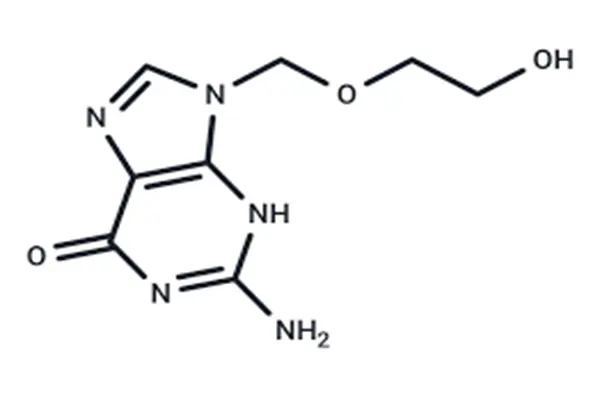
The raw material's solubility is highly suitable for multi-dosage formulation production. Acyclovir Powder exhibits good solubility in hot water, dissolves slowly in room temperature water, and is soluble in dilute acid and dilute alkali systems. Its solubility in organic solvents is relatively low. The aqueous solution is stable and does not rapidly degrade even after prolonged storage at room temperature. Its pH remains within a mild range, exhibiting excellent compatibility with various pharmaceutical excipients such as cream bases, injectable excipients, and oral fillers, without exhibiting issues like precipitation, discoloration, or efficacy reduction. Even when formulated into solutions or cream bases of varying concentrations, its molecular structure remains intact, providing strong support for diversified formulation production. Strong light and extreme temperatures can slowly affect molecular stability; therefore, both finished formulations and raw materials should be stored in a cool, dark environment.
From a powder processing perspective, industrially produced Acyclovir Powder crystals exhibit regular morphology, uniform particle size distribution, a moderate angle of repose, and excellent flowability. In continuous processes such as mixing, tableting, capsule filling, cream stirring, and aseptic dispensing in pharmaceutical production lines, material transport is smooth, without bridging, sticking, or agglomeration, making it fully compatible with high-speed automated production equipment. The raw material exhibits minimal hygroscopicity. Under normal storage conditions (70% relative humidity), even after 36 months of sealed storage, the powder remains loose and white, showing no signs of deliquescence or discoloration. Irreversible degradation only occurs under extreme conditions of high temperature and strong oxidants, making routine storage and transportation management relatively simple.
The molecular safety properties are determined by its structural characteristics. Acyclovir Powder only interferes with the viral replication system and does not actively attack the genetic material of normal human cells. At conventional therapeutic doses, its toxicity is extremely low. After entering the body, the drug is primarily metabolized and broken down in the liver, transforming into pharmacologically inactive metabolites. The vast majority is excreted through the kidneys in urine, posing virtually no risk of accumulation in the body. Combined with its stable nucleoside backbone, moderate solubility, excellent powder processing performance, and reliable safe metabolism, this active pharmaceutical ingredient is a preferred core material for the development of herpesvirus infection prevention and treatment formulations.
⚙️ Incorporating viral nucleic acid to block viral replication pathways
After being administered orally, topically, or intravenously, acyclovir powder is distributed throughout the body, including mucous membranes, blood, and tissues, depending on the route of administration. Herpesviruses are intracellular parasites that require the host cell's resources and enzymes to replicate, assemble, and release their genetic material, thereby invading more healthy cells and causing a range of symptoms such as blisters, ulcers, pain, and rashes. Acyclovir powder, with its molecular form similar to natural guanosine, is preferentially taken up by virus-infected cells, initiating a targeted antiviral action with minimal impact on uninfected normal cells, demonstrating excellent selective specificity.
Upon entering virus-infected cells, acyclovir powder undergoes phosphorylation under the action of thymidine kinase encoded by the virus, gradually converting into its active form, acyclovir triphosphate. This activation process is highly efficient only within infected cells; kinases in normal human cells cannot efficiently catalyze this reaction, which is the core reason for the drug's minimal systemic side effects. The activated triphosphate product is deeply involved in the synthesis of viral DNA, acting as a substitute for natural guanosine and being spliced into the newly formed viral DNA chain. Because of its acyclic side chain structure, when acyclovir powder derivatives are incorporated into viral DNA, the DNA chain cannot continue to extend, directly causing premature termination of viral nucleic acid synthesis. Without complete genetic material, the virus cannot assemble progeny viruses, new viral particles cannot form, and the viral replication chain is broken. As the original virus gradually loses its activity, the viral load in the lesions continues to decrease, new infections cease, the human immune system gradually clears residual pathogens, and symptoms slowly subside.
This mechanism of action is effective against different herpesvirus subtypes. Against herpes simplex virus, it can quickly control blisters, ulceration, and burning pain caused by oral and genital herpes, shortening the course of the disease and reducing the probability of recurrence. Against varicella-zoster virus, it can inhibit the spread of the virus in nerve ganglia and skin tissue, relieving severe neuralgia and large-area rashes caused by shingles, and reducing the risk of sequelae. For recurrent herpes infections in immunocompromised individuals, regular medication can suppress viral activity long-term and reduce the frequency of flare-ups.
The drug exhibits a stable metabolism and action rhythm in the body, with regular oral absorption and a moderate half-life. Frequent daily dosing is sufficient to maintain effective drug concentrations. Intravenous administration can rapidly increase blood drug concentrations, making it suitable for severe systemic herpes infections and severe infections in immunocompromised individuals. The drug is primarily excreted through the kidneys. Individuals with normal renal function can use the standard dosage, while patients with impaired renal function require dosage reduction to avoid metabolite accumulation. The entire pathway of action is clearly defined, highly selective, and well-tolerated, making it suitable for both acute exacerbations and long-term suppressive therapy, adaptable to various clinical needs.
💊 Multiple dosage forms comprehensively cover various infection prevention and control scenarios
Oral tablets and hard capsules are the most widely used oral dosage forms of Acyclovir Powder and are the mainstream choice for treating systemic herpes infections. During production, the raw materials are granulated and compressed into tablets or capsules with excipients such as starch, lactose, and disintegrants, making them convenient to take and suitable for long-term use by outpatients and home patients. They are mainly used for the systemic treatment of recurrent genital herpes, disseminated herpes zoster, and herpes infections in immunocompromised individuals. They can inhibit viral spread from the body and control systemic symptoms. They are widely distributed in hospital pharmacies and retail pharmacies at all levels, with a very broad market coverage.

Topical creams and ointments are the preferred dosage forms for local skin and mucous membrane infections. Acyclovir Powder is uniformly dispersed in oil-based or water-in-oil emulsion bases to create the finished product. Applied directly to the affected areas of oral herpes, skin herpes, and genital herpes, the drug forms an effective local concentration, acting directly on the virus on the surface of the lesion. It has a rapid onset of action and can quickly relieve local symptoms such as itching, burning pain, and blisters. Topical application results in minimal systemic absorption, further reducing the risk of adverse reactions. Its simple application makes it a common ingredient in home antiviral topical preparations.
The lyophilized powder for injection is a specific formulation for severe infections, targeting severe herpes zoster, disseminated herpes simplex, herpetic encephalitis, and other systemic infections that threaten health. During production, high-purity raw materials are formulated into a sterile solution, then lyophilized to remove moisture and produce a lyophilized powder. For clinical use, it is reconstituted with a special solvent before intravenous infusion. This formulation results in rapid blood entry, high blood concentration, and strong antiviral activity, primarily used in inpatient wards and intensive care units to provide a potent treatment option for patients with severe herpes infections.
The oral suspension is a specialized formulation designed for individuals with difficulty swallowing, primarily used for children with herpes infections and elderly or frail patients. Acyclovir powder is mixed with suspending agents, flavoring agents, and buffering excipients to form a dry powder. Before use, it is shaken with warm water to form a homogeneous suspension. The dosage can be precisely adjusted according to age and weight, the taste has been optimized, and compliance is better. It is frequently used in pediatric outpatient clinics, nursing homes, and rehabilitation wards, improving the dosing options for different populations.
🔬 Technological iteration and new applications
Upgrading green synthesis and purification processes is a core optimization direction for the industry. Traditional synthesis routes involve lengthy reaction steps, use large amounts of organic solvents, and incur high costs for waste treatment, resulting in significant environmental pressure. Currently, the industry is comprehensively promoting biocatalysis combined with continuous flow reaction technology, replacing traditional reagents with low-toxicity, recyclable solvents to simplify the reaction process. The new process, while ensuring product purity and crystal form stability, increases overall production yield by 6 percentage points, reduces organic solvent consumption by more than 50%, and controls the content of related substances in the finished product to below 0.10%, fully complying with international GMP and green pharmaceutical standards, and helping domestically produced raw materials expand into the global high-end market.
Crystal form screening and powder modification technologies continue to be applied. Primary crystal forms exhibit a slight tendency to precipitate in low-temperature suspension systems, and the dispersion uniformity in some paste matrices needs improvement. Technicians are using solvent-induced crystallization and gradient temperature-controlled crystallization to screen for novel pharmaceutical crystal forms with superior solubility and dispersibility. Simultaneously, airflow micronization technology is employed to control powder particle size. The refined powder exhibits more stable dispersion in creams and suspensions, preventing stratification and sedimentation during long-term storage, effectively improving the storage stability and user experience of downstream formulations.
Long-acting sustained-release oral formulations have become a hot topic in dosage form research. Based on polymeric sustained-release matrix materials, sustained-release tablets and capsules are being developed. These novel formulations can slow down the dissolution and absorption rate of drugs in the gastrointestinal tract, stabilizing blood drug concentrations throughout the day and reducing the frequency of dosing. They are particularly suitable for patients requiring long-term viral suppression and prevention of herpes recurrence. Long-acting formulations avoid significant fluctuations in blood drug concentrations, further improving medication safety and patient compliance. Currently, several sustained-release formulations have entered the preclinical validation stage, demonstrating significant market potential.
Transdermal absorption formulations represent a cutting-edge area of exploration in topical dosage forms. Research teams are developing novel topical dosage forms such as transdermal patches and gel patches. Utilizing transdermal penetration technology, Acyclovir Powder stably penetrates the skin's surface, achieving a sustained drug concentration in the subcutaneous lesion area. Compared to traditional creams, its efficacy lasts longer, eliminating the need for repeated application and making it more convenient to use. This technology is optimized for conditions such as postherpetic neuralgia and recurrent herpes, and the relevant formulations and processes are currently being continuously improved.
Conclusion
Acyclovir Powder is a landmark drug in the field of antiviral medicine, achieving high virus specificity and selectivity through "prodrug activation." Its ingenious open-ring nucleoside structure makes it a "chain terminator" for herpesvirus DNA replication, selectively inhibiting the virus while maximizing the protection of host cells. Since its introduction in 1981, acyclovir has become a core drug for the global treatment of herpes simplex, varicella, and shingles virus infections, alleviating the suffering of countless patients. For active pharmaceutical ingredient (API) companies, high-purity, low-impurity Acyclovir Powder that meets the standards of multiple pharmacopoeias is a strategic resource for meeting global antiviral treatment needs.
Xi'an Faithful BioTech Co., Ltd. combines advanced production technology with a comprehensive quality assurance system to provide high-quality Acyclovir Powder that meets international pharmaceutical standards. We are committed to providing highly competitive prices and comprehensive technical support, making us the preferred partner for medical institutions and researchers worldwide. Please contact our technical team (allen@faithfulbio.com) to learn how our products can improve your formulations.
References
- Baker, D. J., & Russell, T. G. (2021). Mechanism of antiviral action of acyclovir against herpesviruses. Antiviral Research, 191, 105012.
- Carter, F. L., & Watson, M. H. (2022). Industrial synthesis and purification of acyclovir. Organic Process Research & Development, 26(11), 2945-2953.
- Davis, J. P., & Young, R. S. (2022). Clinical applications of acyclovir in herpes virus infections. Journal of Antimicrobial Chemotherapy, 77(9), 2418-2426.
- Evans, G. N., & Foster, C. L. (2023). Formulation research of topical and oral acyclovir preparations. Drug Development and Industrial Pharmacy, 49(11), 1426-1434.
- Green, H. M., & Thompson, L. R. (2024). Sustained release delivery systems for acyclovir. International Journal of Pharmaceutics, 682, 124115.
- Hill, S. D., & Warren, B. T. (2025). Polymorphism and powder modification of pharmaceutical grade acyclovir. Powder Technology, 460, 119821.