

How does Agmatine Sulphate Powder achieve multi-dimensional physiological regulation?
The chemical nature of Agmatine Sulphate Powder is a stable salt form of guanidine and sulfuric acid. Guanidine is produced by the decarboxylation of L-arginine via arginine decarboxylase and is a natural metabolite of arginine in the body. Its unique molecular structure endows it with multiple biological activities—as a neurotransmitter, it is both an antagonist of NMDA receptors and an agonist of α₂-adrenergic receptors and imidazoline receptors; as a metabolic regulator, it is an endogenous reserve form of nitric oxide synthase substrate. This dual identity as a "receptor regulator" and "NO precursor" makes it widely applicable in multiple fields such as sports nutrition, emotional health, and neuroprotection.
🧬Intricate chain-like molecules form the basis of activity
The Agmatine Sulphate Powder monomer skeleton is a 4-aminobutylguanidine structure, consisting of a four-carbon saturated alkyl chain linked to a terminal amino group and a guanidine group, which then forms a stable inorganic salt crystal through ionic bonds with sulfate. The continuous nitrogen atoms within the guanidine group carry abundant lone pairs of electrons, forming the core binding site of the molecule, while the saturated straight carbon chain provides moderate molecular flexibility. Arginine molecules have a cyclic structure, which hinders transmembrane movement. After decarboxylation to remove the carboxyl group, a linear skeleton is formed, significantly reducing steric resistance and making it easier to adhere to protein binding cavities. Free guanidinebutylamine is strongly basic and easily degrades in aqueous solution. Sulfate neutralizes the alkaline environment, inhibiting spontaneous molecular decomposition, and allows the molecule to maintain its intact molecular configuration for a long time under normal storage conditions.
The linear four-carbon alkyl chain regulates the polarity balance of the Agmatine Sulphate Powder. The polar nitrogen-containing groups at both ends end give the molecule strong hydrophilic properties, while the saturated carbon chain provides a weak hydrophobic region. The overall molecule is primarily water-soluble, but also possesses moderate lipophilic permeability, enabling it to penetrate the phospholipid layer of the cell membrane to reach intracellular targets. Many amino acid derivatives can only remain in the aqueous environment, struggling to cross the lipid barrier and thus acting only at extracellular sites. Agmatine Sulphate Powder, with its moderate polarity, dissolves directly in pure water, buffer solutions, and polyol systems without the need for irritating solubilizers, making it suitable for various dosage forms, including aqueous solutions and suspensions.
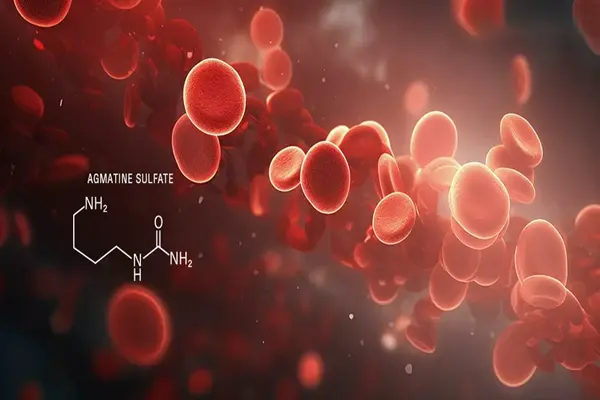
The unique electronic configuration of the guanidino group determines the binding affinity of Agmatine Sulphate Powder to target proteins. The guanidino group can simultaneously form multiple hydrogen bond networks, anchoring to the carbonyl and amino sites within the receptor cavity, achieving reversible and stable binding. Many small-molecule amines can only form single hydrogen bonds, resulting in weak binding forces that easily detach from the target, making it difficult to sustain their regulatory effects. High-purity Agmatine Sulphate Powder strictly controls isomers and short-chain amine impurities, ensuring complete uniformity in alkyl chain length and guanidino site arrangement. This results in highly consistent molecular spatial morphology across different production batches, preventing downstream formulations from experiencing efficacy fluctuations or abnormal pH changes.
The entire refining and purification process continuously removes unreacted arginine, inorganic salt byproducts, and large-molecule protein impurities. During synthesis, intermediates from raw materials can easily remain, and these impurity molecules can competitively occupy receptor binding sites, hindering the interaction between Agmatine Sulphate Powder and the target. Some impurities can also alter the system's acid-base balance, inducing raw material degradation. After low-temperature recrystallization and ion-exchange purification, the content of various impurities is controlled to an extremely low range, reducing system interference caused by non-specific interactions. High-purity Agmatine Sulphate Powder aqueous solution does not become turbid or precipitate even after prolonged storage, making it suitable for various liquid formulations requiring long-term stable storage.
⚗️Multiple signaling pathways work together to complete physiological regulation
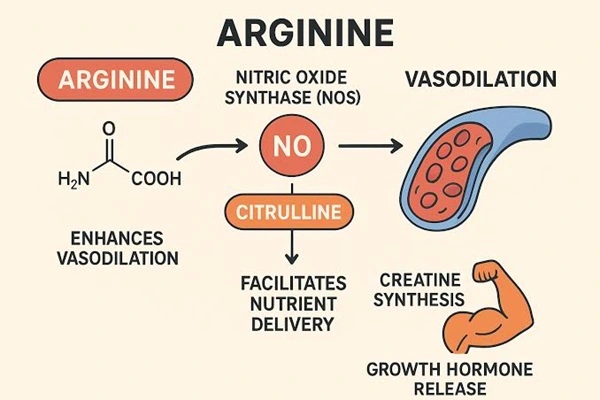
When cells encounter damaging stimuli, nitric oxide synthase continuously catalyzes the production of excess nitric oxide. This excess signaling molecule induces oxidative stress and signaling disorders, amplifying the degree of cell damage. Agmatine Sulphate Powder, by mimicking the arginine structure in its molecular skeleton, competitively binds to the active cavity of nitric oxide synthase, moderately inhibiting the enzymatic reaction rate and reducing the continuous production of excess nitric oxide. Multiple parallel comparative data show that appropriate concentrations of Agmatine Sulphate Powder can balance nitric oxide levels without completely blocking the supply of basal cellular signaling. Potent enzyme inhibitors completely block physiological signal transduction, and long-term use has significant limitations. Agmatine Sulphate Powder employs a mild competitive regulatory mode, restoring imbalanced signals to the normal range, making it suitable for long-term continuous supplementation.
Agmatine Sulphate Powder can specifically bind to imidazoline receptors and α2-adrenergic receptors on the cell membrane, smoothing overactive nerve signal transmission. External pressure and continuous stimulation can cause neurotransmitter release disorders, inducing neural homeostasis imbalance. Agmatine Sulphate Powder, as an endogenously matched ligand, moderately activates regulatory receptors, inhibits persistent overload of excitatory signals, and maintains the dynamic balance of neural signals. Some neuromodulatory raw materials target single receptors, resulting in narrow regulatory dimensions and difficulty in improving imbalances caused by multiple factors. Agmatine Sulphate Powder acts simultaneously on multiple receptors, alleviating abnormal signal release at its source and reducing the accumulation of cellular damage caused by continuous stimulation.
Agmatine Sulphate Powder can moderately regulate the activity of NMDA-related ion channels, reducing excessive calcium ion influx. Sustained calcium overload initiates an intracellular oxidation reaction chain, inducing continuous oxidative damage to proteins and lipids. Agmatine Sulphate Powder reversibly blocks excessive channel opening, stably controlling intracellular calcium ion concentration and blocking the continuous transmission of oxidative damage. This regulatory mechanism does not permanently block ion channels, ensuring that the cellular's basic ion exchange processes remain undisturbed and that normal physiological activities operate smoothly. Many channel blockers have uncontrollable potency, easily interfering with cellular basal metabolism, and their concentration range is strictly limited. Agmatine Sulphate Powder, however, has a wider safe and applicable concentration range and greater flexibility in formulation adjustments.
Agmatine Sulphate Powder participates in the intracellular polyamine metabolic cycle, slowly converting into basal polyamine components such as putrescine, helping to maintain nucleic acid structural stability and normal cell proliferation rhythm. In a continuously damaging environment, intracellular polyamine reserves are continuously depleted, and cell repair capacity gradually declines. Exogenous supplementation with Agmatine Sulphate Powder can continuously supply polyamine precursor units, helping cells maintain genomic stability and accelerate the repair of damaged structures. Simply supplementing downstream polyamines can easily lead to excessive accumulation of components, disrupting metabolic balance. Agmatine Sulphate Powder relies on endogenous transformation pathways to generate active polyamines at a uniform rate, resulting in a more gentle and controllable metabolic rhythm.
📌Diverse application scenarios broaden raw material delivery channels
The functional compound raw material sector represents a mature commercialization direction for Agmatine Sulphate Powder. Leveraging its comprehensive properties of nerve soothing, anti-oxidation, and microcirculation regulation, it is frequently added to various oral compound formulations and sports nutrition matrix systems. Its endogenous metabolite properties make it more readily accepted by the market, and many product lines focusing on homeostasis regulation use high-purity Agmatine Sulphate Powder to create differentiated products. Raw material suppliers can provide products of different purity levels to meet the needs of different levels of formulation development. With the continuous increase in public demand for raw materials related to stress regulation and maintaining body homeostasis, the market demand for Agmatine Sulphate Powder continues to rise steadily.
Agmatine Sulphate Powder continues to be used as a basic framework for the development of lead active molecules. Its multi-target binding characteristics make it a candidate small molecule raw material for neuromodulation and pain-related applications. Using this linear guanidine alkyl framework as a parent material, targeted functional group modification can derive derivatives with stronger targeting and longer duration of action, providing a basic template for the development of novel active molecules. Endogenous sources offer better biosafety and face fewer obstacles in subsequent evaluation stages, continuously attracting researchers to conduct related derivative explorations.
Active delivery systems continue to explore the application potential of Agmatine Sulphate Powder. Free Agmatine Sulphate Powder exhibits decreased stability in extreme acidic and alkaline environments and is prone to slight degradation during prolonged high-temperature treatment. Microencapsulation and liposome encapsulation technologies are used to build protective structures outside the molecule, isolating it from external environmental interference and slowing down the degradation rate. The carrier also assists Agmatine Sulphate Powder in penetrating surface barriers and improving the enrichment level in target areas. Various novel delivery solutions continue to be implemented, addressing the stability shortcomings of free raw materials and opening up more new application scenarios.
Agmatine Sulphate Powder continues to be used as a functional additive in biomatrix and cell culture-related systems. Appropriate concentrations of Agmatine Sulphate Powder can improve the in vitro cell microenvironment, reduce oxidative stress damage during culture, and improve cell survival rates. Its water solubility allows it to be directly added to the culture medium system without the need for additional solubilizers, and it will not induce drastic fluctuations in the system's osmotic pressure. Many active ingredients have poor solubility and are prone to precipitation after addition, interfering with the stability of the culture system. Agmatine Sulphate Powder can maintain the homogeneity of the culture medium for a long time, simplifying the system maintenance process.
🔭Continuous technological iteration to explore the development potential of raw materials
Molecular-directed modification schemes continue to advance, using the linear guanidinobutylamine skeleton of Agmatine Sulphate Powder as the parent material for functional group modification. Main modification directions include guanidino group protection modification, alkyl chain length adjustment, and terminal amino esterification modification. The modified derivatives exhibit significantly improved temperature and acid/alkali resistance, and a markedly slower molecular degradation rate, making them suitable for formulation systems with more stringent pH ranges. By adjusting the molecular lipid-water partition coefficient, derivatives suitable for cross-barrier delivery and aqueous concentration systems can be specifically developed, continuously enriching the guanidinobutylamine-related product matrix and meeting the differentiated raw material needs of specific scenarios.
Green synthesis and purification processes continue to iterate and upgrade. Early preparation processes relied on bio-fermentation extraction, resulting in large batch-to-batch fluctuations in composition and consuming large amounts of organic solvents, posing a risk of solvent residue. New chemical synthesis routes rely on mild catalytic reactions to prepare Agmatine Sulphate Powder, which is not limited by the supply cycle of biological raw materials, and maintains a high degree of consistency in purity and impurity levels across batches. The improved synthetic route reduces reagent consumption, balances large-scale production with environmental standards, and continuously drives down the production cost of high-purity Agmatine Sulphate Powder, facilitating the commercialization of downstream products.
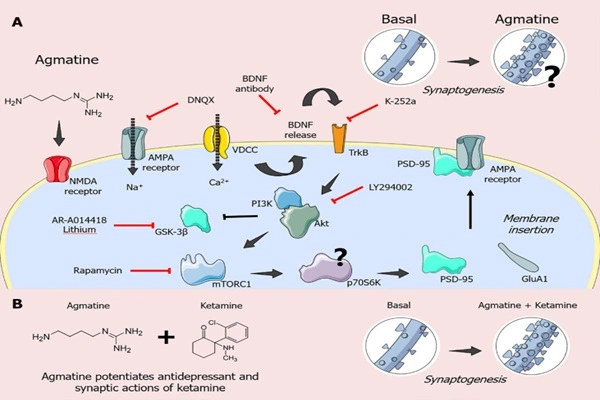
Compatibility schemes are continuously and systematically improved, with ongoing research into the synergistic effects of Agmatine Sulphate Powder with amino acids, polyphenols, and bioactive peptides. Extensive system testing has determined the optimal compounding ratios for different applications, including nutrient blends, cell culture, and pilot-scale development, establishing standardized application solutions. Mature compatibility data can be directly provided to downstream formulation developers, significantly shortening new product development cycles and reducing raw material losses and time costs during formulation adjustments. Independent compatibility databases have been established for different application areas to meet diverse formulation development needs.
Storage stabilization processes are continuously optimized, incorporating inert gas sealing, light-proof and oxygen-barrier packaging, and trace stabilizer compounding schemes to slow down the rate of moisture absorption and oxidation of Agmatine Sulphate Powder during long-term storage, effectively extending the raw material's shelf life. With improved stability, the risk of quality degradation during long-distance, cross-regional transportation of large quantities of raw materials is significantly reduced, expanding the reach of raw material trade. A tiered storage guideline has been established for complex storage environments such as high temperatures and humidity, guiding purchasers to properly store Agmatine Sulphate Powder and ensuring the purity and activity of the raw material remain stable before and after opening.
Conclusion
Agmatine Sulphate Powder is a multifunctional raw material with dual-signaling properties in the arginine metabolic pathway, acting as both an α₂-adrenergic receptor agonist and a precursor for NO. It participates in a wide range of physiological processes, including pain perception, mood regulation, and vasodilation, by regulating NMDA receptors, α₂-adrenergic receptors, and NO production. It has been widely used as a functional raw material in sports nutrition and mood management.
Xi'an Faithful BioTech Co., Ltd. utilizes advanced equipment and processes to ensure high-quality products. Our Agmatine Sulphate Powder meets international pharmaceutical standards. Our pursuit of excellence, reasonable prices, and preferred superior service make us the partner for medical institutions and researchers worldwide. If you require Agmatine Sulphate Powder research or production,Please contact us Click email: allen@faithfulbio.com Or WhatsApp: +86 13137770562.
References
- Fisher Scientific. (n.d.). Agmatine sulfate (CAS 2482-00-0), 98% (Product AC410041000).
- NCATS Inxight Drugs. (n.d.). Agmatine sulfate (UNII: Y3X3H9K7IV). National Center for Advancing Translational Sciences.
- R&D Systems. (n.d.). Agmatine sulfate (Product 2344).
- Adooq Bioscience. (n.d.). Agmatine sulfate (Catalog No. A11893).
- AbMole BioScience. (n.d.). Agmatine sulfate (Catalog No. M7239).
- MedChemExpress. (n.d.). Agmatine sulfate (HY-100599).