

How does Paradol Powder achieve multiple physiological regulation?
Among the pungent chemical components of ginger, gingerol has long been recognized by both the public and the scientific community as a core substance for warming the body, dispelling cold, and promoting metabolism. However, in fresh ginger, gingerol exists in the form of gingerol; when ginger undergoes drying or heat treatment, the side chain of gingerol loses water and transforms into shogaol. Paradol Powder is a product of further hydrogenation reduction of shogaol. It is considered an upgraded version of the "thermal metabolism activation" ability in the gingerol family—its chemical structure is more stable, and it retains the core ability to activate the transient receptor potential vanillic acid subtype 1 channel, exhibiting unique biological activity in the fields of weight management, anti-inflammation, and metabolic health.
🧬Unique molecular framework lays the foundation for activity
Paradol Powder, chemically named 1-(4-hydroxy-3-methoxyphenyl)-3-decanone, belongs to the vanillyl derivative family. Its molecule comprises a regular structure consisting of a phenolic aromatic ring, a methoxy group, a phenolic hydroxyl group, and a long-chain alkyl ketone side chain. The free phenolic hydroxyl group on the aromatic ring is the core active site, capable of interacting with various free radicals. The continuous extension of the long-chain hydrophobic alkyl segment balances the molecular polarity. Unlike its contemporaries 6-gingerol and 6-shogaol, which contain unsaturated double bonds and are highly susceptible to oxidation during storage, Paradol Powder's side chains are all saturated carbon chains, lacking easily broken unsaturated structures. Under normal storage conditions, its oxidation decay rate is significantly slowed, allowing it to maintain a stable molecular configuration even after long-term storage.
The aromatic ring side chain connects to a ten-carbon saturated alkyl ketone segment, giving Paradol Powder a balanced hydrophilic and hydrophobic character. The hydroxyl and methoxy groups on the aromatic ring provide polar hydrophilic sites, while the linear alkyl carbon chain possesses strong hydrophobic properties. This structure allows Paradol Powder to successfully penetrate the lipid phase region of phospholipid cell membranes. Many water-soluble active molecules cannot cross the lipid barrier and can only remain on the cell surface to exert a temporary effect, while molecules with excessive lipid solubility tend to aggregate and precipitate in aqueous systems. Paradol Powder has a moderate polarity ratio, allowing for uniform dispersion in oil and polyol formulations. It does not require high doses of irritating solubilizers, making it suitable for a wider range of dosage form development needs.
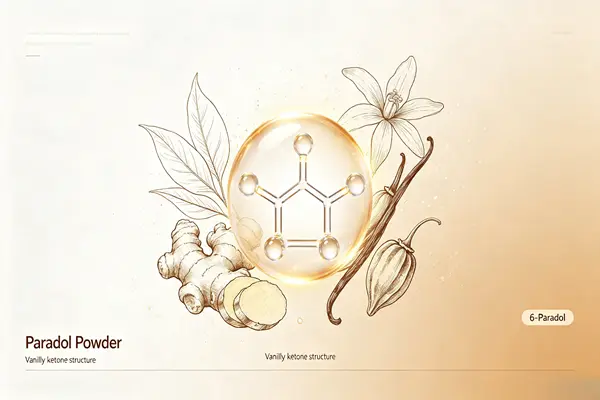
The arrangement of groups surrounding the phenolic hydroxyl group directly determines the molecule's ability to bind to its target. The methoxy group, located ortho-to the phenolic hydroxyl group, forms a spatially protective structure, ensuring that the phenolic hydroxyl group can capture reactive free radicals while preventing rapid self-oxidation and inactivation of the molecule. Many simple monophenolic substances, although also containing hydroxyl groups, lack the protection of ortho-groups and rapidly oxidize and discolor upon contact with air, easily leading to yellowing and reduced efficacy in the final product. High-purity Paradol Powder undergoes rigorous control of isomer impurities, ensuring uniformity of aromatic ring substitution sites and highly consistent molecular spatial arrangement across batches. This prevents downstream formulations from exhibiting color fluctuations or unstable efficacy.
The entire purification and refining process continuously removes plant-derived polysaccharides, proteins, and trace amounts of irritating creosote. Crude extracts of natural plants contain numerous impurities that competitively occupy cell membrane binding sites, hindering the interaction between Paradol Powder and its target. Some impurities can even induce non-specific sensitive reactions. After chromatographic separation and low-temperature crystallization purification, the impurity content of Paradol Powder is controlled at extremely low levels, avoiding system interference from excess components. Paradol Powder produced using this synthetic route can completely remove endogenous plant impurities, achieving a purity of over 98%, making it suitable for high-end precision formulations.
⚗️Multiple pathways work together to achieve physiological regulation
External environmental stimuli and metabolic imbalances continuously generate a large number of reactive free radicals, which relentlessly attack cell membrane lipids and intracellular proteins, initiating a chain reaction of lipid peroxidation. The phenolic hydroxyl groups on the aromatic ring of Paradol Powder can rapidly capture free radicals, converting highly reactive groups into stable forms and interrupting the continuous diffusion of oxidative damage. Multiple parallel comparative data show that, under the same molar concentration, Paradol Powder's ability to scavenge lipid-soluble free radicals is superior to many common plant phenolic raw materials. Its lipid-soluble structure allows it to penetrate deep into the lipid layer of the cell membrane, protecting phospholipid structures from oxidative damage. Many water-soluble antioxidants cannot enter the lipid phase region and are unable to protect against oxidative damage to the cell membrane.
Paradox Powder can gently regulate inflammation-related signaling pathways, moderating excessive signal transduction levels. External stimuli cause cells to continuously release signaling mediators, triggering various imbalances such as redness, sensitivity, and discomfort. Paradol Powder can bind to the active site of cyclooxygenase, moderately inhibiting the continuous generation of stimulating mediators without completely blocking the basic physiological signaling of cells. Potent inhibitory ingredients can easily disrupt normal cellular metabolic processes, and long-term use has significant limitations. Paradol Powder, with its gentle, bidirectional regulatory mechanism, restores disordered signal levels to normal ranges, making it suitable for various formulation systems requiring long-term, continuous application.
Paradol Powder acts on temperature-sensitive ion channels, gently initiating cellular energy metabolism. Its long-chain alkylphenol structure recognizes TRP channels in the cell membrane, moderately activating signal transduction, prompting cells to accelerate energy consumption, and optimizing energy circulation within adipocytes. Compared to capsaicin, Paradol Powder has significantly reduced irritation, avoiding intense burning or stinging sensations, balancing metabolic regulation with user comfort. Many active molecules with similar regulatory potential are highly irritating, and their dosage in formulations is strictly limited. Paradol Powder offers a wider safe concentration range and greater flexibility in formulation adjustments.
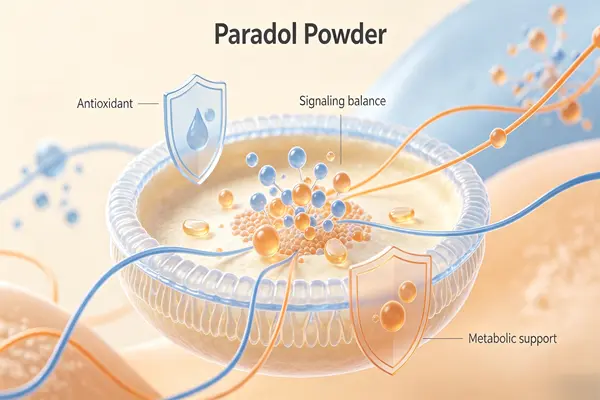
Paradol Powder continuously maintains the homeostasis of cellular matrix components, helping to maintain the integrity of the cell barrier. Continuous oxidative stress and external stimuli accelerate the breakdown of matrix proteins, causing damage to the barrier structure and a continuous decline in protective capabilities. At appropriate concentrations, Paradol Powder can reduce abnormal degradation of matrix proteins, maintain the stability of the intercellular matrix structure, and reduce the damage cycle caused by continuous invasion of external stimuli. Most single repair ingredients only provide surface protection and are difficult to improve intracellular oxidative damage. Paradol Powder takes into account both surface barrier protection and intracellular antioxidant protection, forming a dual-layer protection system.
📌Diversified scenarios broaden the scope for raw material application
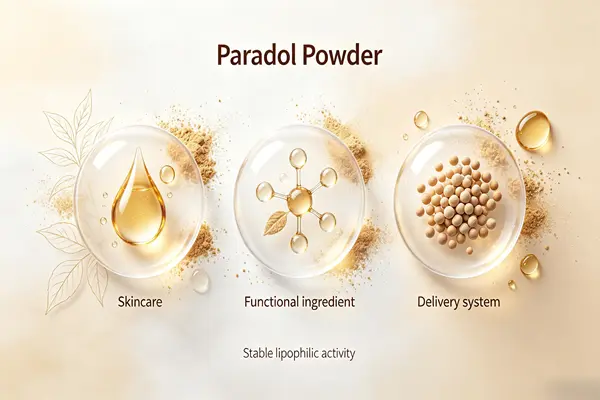
The functional skincare ingredient sector represents the most mature commercial application of Paradol Powder. Leveraging its comprehensive properties of anti-oxidation, soothing and stabilizing, and protection against external stimuli, it is frequently added to anti-oxidant serums, repair lotions, and scalp care formulas. Naturally derived phenolic active ingredients are more readily accepted by the market, and high-end anti-aging and soothing repair product lines often utilize high-purity Paradol Powder to create differentiated formulations. Raw material suppliers can provide products of varying purity levels, suitable for both affordable skincare formulas and high-end functional product lines. With consumers' continued increasing demand for anti-oxidant and gentle repair ingredients, the market demand for Paradol Powder in the skincare field continues to rise steadily.
Functional nutritional compounding systems continue to explore the development potential of Paradol Powder. Relying on its gentle energy metabolism-regulating properties, researchers are continuously exploring scientific compounding schemes for Paradol Powder with plant extracts, amino acids, and vitamins. By leveraging the synergistic effects of these components, the metabolic regulation value is amplified, reducing the dosage of individual ingredients and optimizing the overall performance of the finished product. The natural ginger family origin of the raw material ensures its high acceptability. Supported by comprehensive safety assessment data, its application boundaries in the functional dietary ingredient sector continue to expand, leading to the development of new compound formulations.
Targeted active delivery systems continue to expand the application boundaries of Paradol Powder. In its free state, Paradol Powder experiences decreased stability of its phenolic hydroxyl groups upon contact with strong acidic or alkaline environments, making it prone to oxidative inactivation. Liposome encapsulation and microencapsulation technologies are used to build protective structures on the molecule's exterior, isolating it from external environmental interference and slowing down oxidation. The carrier also assists Paradol Powder in penetrating surface barriers to reach deeper regions and exert its effects. Various novel delivery solutions continue to be implemented, constantly addressing the stability shortcomings of free Paradol Powder and opening up more new application scenarios.
Biopharmaceutical-related systems continue to select Paradol Powder for lead compound development. Its stable cyclooxygenase regulation capabilities and low-irritation properties make Paradol Powder a promising candidate for lead small molecule raw materials. Leveraging the advantages of natural frameworks, molecular modifications can be performed using these as a parent material to derive derivatives with stronger targeting and better stability, providing a basic template for the development of novel bioactive molecules. Naturally derived lead molecules have a better foundation of biosafety, facing fewer obstacles in safety assessments during subsequent development stages, thus continuously attracting researchers to conduct related explorations.
🔭Continuous technological iteration to explore the development potential of raw materials
Molecular-directed modification schemes continue to advance, using the vanillinone skeleton of Paradol Powder as the parent material for functional group modification. The most common modification directions include phenolic hydroxyl esterification modification and alkyl chain lengthening or shortening adjustments. The modified derivatives exhibit significantly improved acid and alkali resistance and oxidation resistance, with a markedly slower molecular degradation rate, making them suitable for formulations with more stringent pH ranges. By adjusting the molecular lipid-water partition coefficient, derivatives tailored to water-based or oil-based formulations can be specifically created, continuously enriching the Paradol-related product matrix and meeting the differentiated raw material needs of specific scenarios.
Green purification and synthesis processes continue to iterate and upgrade. Traditional plant extraction processes are limited by raw material sources, resulting in large batch-to-batch fluctuations in composition, and require large amounts of organic solvents, posing a risk of solvent residue. New total synthesis routes rely on mild catalytic reactions to prepare Paradol Powder, unaffected by the harvesting season of plant raw materials, ensuring highly consistent purity and impurity levels across batches. The improved synthesis route reduces reagent consumption, balancing large-scale production with environmental standards, and continuously drives down the production cost of high-purity Paradol Powder, enabling more midstream and downstream manufacturers to use high-purity raw materials and eliminate crude raw materials with high impurities.
The formulation schemes are continuously being systematically improved, with ongoing research into the synergistic effects of Paradol Powder with polyphenols, fat-soluble vitamins, and active peptides. Extensive system testing has determined the optimal compounding ratios for different sectors such as skincare and functional nutrition, establishing standardized application solutions. Mature formulation data can be directly provided to downstream formulation developers, significantly shortening new product development cycles and reducing raw material losses and time costs during formulation debugging. Independent formulation databases have been established for different application areas to meet diverse formulation development needs.
Storage stability is continuously optimized through processes such as inert gas sealing, light-proof and oxygen-barrier packaging, and the use of trace antioxidants in the formulation, slowing down the oxidation and discoloration of Paradol Powder during long-term storage and effectively extending the raw material's shelf life. With improved stability, the risk of activity degradation during long-distance, cross-regional transportation of large quantities of raw materials is significantly reduced, expanding the reach of raw material trade. A tiered storage guideline has been established for complex storage environments such as high temperatures and humidity, guiding purchasers to properly store Paradol Powder and ensuring the stability of color and activity before and after opening.
Conclusion
Paradol Powder is a phenolic metabolite from the gingerol family, converted through drying and heating. Its ten-carbon alkyl side chain endows it with potent agonistic activity of the TRPV1 channel. By activating TRPV1 to promote thermogenesis and energy expenditure, and simultaneously regulating fat metabolism through the AMPK pathway, Paradol exhibits uniquely positioned bioactivity in weight management and metabolic health. As a functional molecule extracted from traditional spices, it has found a new role in modern metabolic regulation products.
Xi'an Faithful BioTech Co., Ltd. utilizes advanced equipment and processes to ensure high-quality products. Our Paradol Powder meets international pharmaceutical standards. Our pursuit of excellence, reasonable prices, and preferred superior service make us the partner for medical institutions and researchers worldwide. If you require Paradol Powder research or production,Please contact us Click email: allen@faithfulbio.com Or WhatsApp: +86 13137770562.
References
- Chung, W. Y., Jung, Y. J., Surh, Y. J., Lee, S. S., & Park, K. K. (2001). Antioxidative and antitumor promoting effects of [6]-paradol and its homologs. Mutation Research, 496(1–2), 199–206.
- Gaire, B. P., Park, H. Y., & Choi, J. W. (2015). Neuroprotective effect of 6-paradol in focal cerebral ischemia involves the attenuation of neuroinflammatory responses in activated microglia. PLOS ONE, 10(3), e0120203.
- Jiang, X., Wang, J., Chen, P., & He, Z. (2021). [6]-Paradol suppresses proliferation and metastases of pancreatic cancer by decreasing EGFR and inactivating PI3K/AKT signaling. Cancer Cell International, 21(1), 424.
- Keum, Y. S., Kim, J., & Surh, Y. J. (2002). Induction of apoptosis and caspase-3 activation by chemopreventive [6]-paradol in KB cells. Cancer Letters, 177(1), 41–47.
- Setoguchi, S., Watase, D., Nagata-Akaho, N., Haratake, A., Matsunaga, K., & Takata, J. (2016). Pharmacokinetics of paradol analogues orally administered to rats. Journal of Agricultural and Food Chemistry, 64(9), 1932–1937.
- van Breemen, R. B., Tao, Y., & Li, Y. (2011). Cyclooxygenase-2 inhibitors in ginger (Zingiber officinale). Fitoterapia, 82(1), 38–43.