

How does alpha-picolinic acid regulate cellular homeostasis?
In the intersection of amino acid metabolism and metal ion regulation, Alpha Picolinic Acid is a structurally simple yet functionally diverse endogenous molecule. It is an important intermediate in the tryptophan metabolic pathway, generated via the kynurenine pathway, and also a highly efficient metal ion chelator. The human body produces approximately 25-50 mg of picolinic acid daily through tryptophan catabolism. It is precisely this chelating property that gives it wide-ranging applications in medicine, nutrition, and chemical engineering—from a synthetic intermediate for the local anesthetic ropivacaine, to a raw material for the trace element supplement chromium picolinate, and a tool compound in antiviral and neuroprotective research.
🧬Stable molecular configuration of pyridine carboxylic acid
The core of the Alpha Picolinic Acid molecule is a six-membered pyridine aromatic ring with a carboxyl group directly attached at position 2. The nitrogen atom of the pyridine ring and the adjacent carboxyl group form a bidentate coordination structure. There are no chiral carbon atoms, and no stereoisomers. Selective oxidative carboxylation, segmental decolorization, and low-temperature recrystallization processes are used to remove decarboxylated pyridine impurities and epoxidized derivatives, avoiding interference from impurities in metal complexometric titration and cellular metal fluorescence quantitative detection results.
If the pyridine aromatic ring structure is destroyed, the spatial arrangement of the coordinating atoms changes, making it impossible to form a stable five-membered chelate ring, and the metal ion binding ability is almost completely lost. After the carboxyl group undergoes decarboxylation and breakage, the molecule only has a single pyridine nitrogen coordination site, and the chelation stability decreases significantly. The intact pyridine ring and adjacent carboxyl group conjugated skeleton are the core prerequisites for Alpha Picolinic Acid to achieve efficient bidentate chelation and regulate cellular physiological functions. Stable storage for 24 months at 2-8℃, protected from light, sealed and dried. Aqueous solutions are prone to decarboxylation degradation under strong heat and oxidation conditions. After passage culture in macrophages and primary neurons, and incubation in body fluid buffer, the purified powder maintains a stable conformation without cleavage.
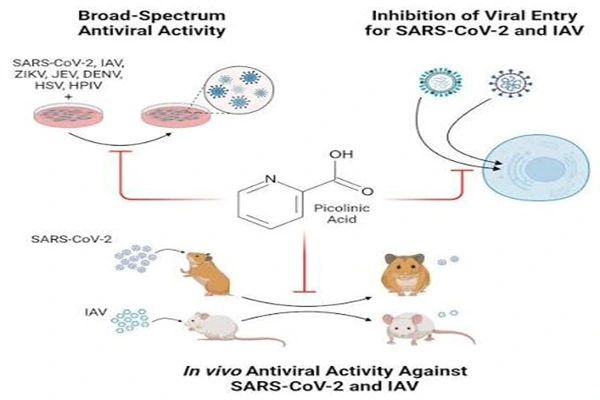
The pyridine ring nitrogen atom and the ortho-carboxyl oxygen atom are the core functional regions for chelation and biological action. When Alpha Picolinic Acid dissolves in aqueous solution, the pyridine nitrogen and carboxyl oxygen simultaneously coordinate with metal cations, constructing a thermodynamically stable five-membered chelate ring. The resulting neutral metal complex exhibits increased lipid solubility, making it easier to cross cell membranes and alter intracellular free metal ion concentrations. Fluctuations in intracellular metal levels further affect the activity of metal-dependent enzymes and transcription factors. Once the pyridine ring is oxidized and the carboxyl group is removed, the bidentate coordination structure disappears, and the metal homeostatic regulation activity is completely lost.
The polar carboxyl group and the hydrophobic pyridine aromatic ring synergistically balance the lipid-water partition coefficient. The dissociation of the carboxyl group imparts excellent water solubility, allowing for direct preparation of cell culture media. The pyridine aromatic ring provides moderate lipophilicity, assisting metal complexes in penetrating phospholipid cell membranes. Strongly polar chelating agents are difficult to transport metal ions across membranes, while highly hydrophobic ligands have poor water solubility, making them difficult to formulate aqueous systems. Alpha Picolinic Acid balances formulation solubility and transmembrane transport capability, making it suitable for large-scale immune cell culture and high-throughput metal ligand screening.
⚙️The three-layered pathway regulates cellular homeostasis through metal chelation.
Under healthy physiological conditions, intracellular free iron and zinc ions maintain a dynamic balance. Metal-dependent enzymes participate orderly in metabolism and immune signal transduction. The kynurenine pathway maintains stable metabolic levels, and there is no exogenous pyridine carboxylic acid small molecule interference with cellular metal cycling.
When inflammation, nerve damage, or pathogen infection occurs, local metal ion imbalance drives oxidative stress and amplifies inflammation. Pathogenic bacteria rely on iron and zinc to complete nucleic acid and enzyme synthesis and proliferate continuously. Ordinary antioxidants cannot regulate metal distribution at its source. Alpha picolinic acid with insufficient purity contains decarboxylation impurities, loses its stable chelating structure, and distorts in vitro cell and microbial experimental results. Single antioxidant molecules are insufficient to block metal-mediated cascade damage.
Alpha picolinic acid penetrates the cell membrane through its balanced lipid-water properties and achieves three-layered physiological regulation through a pyridine-ortho-carboxylic acid bidentate coordination framework.
- The first layer chelates free metal ions, forming five-membered ring complexes with cations such as iron, zinc, and chromium, reducing intracellular free metal levels and inhibiting metal-catalyzed oxidative stress.
- The second layer remodels immune cell function, synergistically regulating macrophage chemokine and nitric oxide synthesis with interferon, thus modulating the local inflammatory microenvironment.
- The third layer restricts the supply of metals to pathogens, depriving bacteria and microorganisms of essential trace elements for proliferation and inhibiting persistent pathogen replication. Alpha Picolinic Acid is suitable for exploring metal metabolism pathways, building neuroinflammatory cell models, studying microbial antibacterial mechanisms, and developing mineral absorption-promoting formulations.
Alpha Picolinic Acid selectively regulates metal availability based on its coordination chemistry properties, without indiscriminately damaging cell structure. Its strong chelating toxic molecules continuously deprive essential metals, causing metabolic stagnation in normal cells and interfering with experimental judgment. The controllable mode of action of Alpha Picolinic Acid, with its experimental system locking in a single variable of metal ion homeostasis, significantly improves the reliability of biochemical and pharmacological experimental conclusions.
🧫Multi-faceted biochemical research and pioneering research applications
Alpha Picolinic Acid is a standard control material for studies on bidentate metal chelation and the kynurenine metabolic pathway, primarily used for constructing in vitro models of macrophages, primary neurons, and three-dimensional neural organoids. Cellular metabolism, immune responses, and microbial proliferation are highly dependent on metal ion supply. Leveraging its endogenous metabolite properties and stable chelating characteristics, this product allows for the formulation of cell incubation systems free from decarboxylation impurities, enabling the determination of metal coordination constants, quantitative analysis of intracellular metal fluorescence, and the establishment of a platform for evaluating the activity of pyridine carboxylic acid ligands. It also allows for the comparison of chelation efficiency and biological effects among different positional isomeric pyridine carboxylic acids.
Alpha Picolinic Acid is widely used in pharmacological investigations related to neuroinflammation, immune regulation, and antimicrobial activity, for constructing metal overload cell damage models and intracellular microbial infection models. In pathological models, the accumulation of free metals amplifies oxidative stress and inflammatory responses. Alpha Picolinic Acid remodels metal homeostasis, reducing cell damage. It allows for the observation of cellular metabolic compensation changes after long-term intervention, screening of low-cytotoxic metal-regulating lead compounds, and the improvement of metal-targeting small molecule screening platforms.

It possesses irreplaceable value in the development of biochemical reagents and nutrient coordination intermediates, and is used for constructing next-generation metal carrier cores. Native Alpha Picolinic Acid exhibits limited selectivity for different metals; using its pyridine carboxylic acid backbone as a starting building block, pyridine ring substituents are modified to optimize metal ion selectivity, developing selective ligands targeting specific metals, and exploring synergistic cell-protective formulations in combination with anti-inflammatory and antioxidant small molecules. Cellular research uses gradient incubation concentrations based on cell type.
Globally, the development of novel metal-regulating ligands and immunomodulatory lead molecules uses Alpha Picolinic Acid as a pharmacodynamic benchmark. Various pyridine ring-modified derivatives, tissue-targeting chelators, and metal transport modulators are compared horizontally in terms of chelating stability, transmembrane capacity, and normal cytotoxicity. Stable and reproducible cell and microbial experimental data make it a universal standard reference for high-throughput screening of pyridine carboxylic acid ligands and efficacy analysis of aromatic heterocyclic coordination backbones.
🔬Iterative Optimization Direction of Pyridine Ring and Carboxyl Group Molecules
Substitution of the pyridine aromatic ring and modification of the ortho-carboxyl group are mainstream approaches to the molecular modification of Alpha Picolinic Acid. The original molecule lacks tissue selectivity and is uniformly distributed throughout the body. Modification of the pyridine ring end, attaching short-chain targeting groups with affinity for inflammatory lesions and nerve tissue, allows the derivative to preferentially accumulate in the damaged area, modulate metal homeostasis at lower concentrations, reduce metal perturbation in healthy tissues, and develop tissue-selective metal-modulating ligands.
Tissue microenvironment responsive modification is a popular optimization route. Researchers attach esterase-specific cleavable masking groups to the carboxyl site near diseased cells. The prodrug has no chelating activity in normal tissues; only the damaged area hydrolyzes to release the active Alpha Picolinic Acid core, further improving lesion targeting and reducing the risk of systemic metal homeostasis perturbation.
Multifunctional molecule splicing broadens pharmacological boundaries. Chronic inflammation is often accompanied by oxidative stress and immune dysregulation. By covalently splicing a pyridine carboxylic acid core skeleton with antioxidant and anti-inflammatory fragments, the new molecule not only chelates free metals to inhibit oxidative stress but also regulates immune cell activation, developing a complex lead molecule with dual functions of metal homeostasis regulation and immunomodulation.
Aromatic ring substituents can adjust the action bias. The original Alpha Picolinic Acid evenly chelates multiple divalent metals, suitable for general metal metabolism research; site-specific modification of pyridine ring substitution sites can prepare iron-biased derivatives or zinc-biased coordination derivatives; the iron-biased subtype is used for oxidative stress injury models, and the zinc-selective subtype is used for immune cell regulation studies, achieving precise typing and regulation of intracellular metal homeostasis.
Green selective carboxylation synthesis and multi-stage purification processes are continuously iterated and upgraded, further improving powder storage stability and batch consistency. Traditional synthesis processes often leave decarboxylation impurities, interfering with the background of metal coordination screening. The new low-temperature directional carboxylation, segmented depurification, and recrystallization purification process significantly reduces byproducts, optimizes the powder's solubility and stability in neutral buffer solution, and improves the raw material's suitability for large-scale screening of pyridine heterocyclic building blocks and simultaneous three-dimensional neural organoid culture, thus broadening the application scope of this product in biochemical coordination biology, natural metabolite research raw materials, and metal-targeted ligand intermediates.
Conclusion
Alpha Picolinic Acid is an endogenous pyridine carboxylic acid molecule derived from tryptophan metabolism; its structural arrangement—featuring a carboxyl group adjacent to the nitrogen atom—confers upon it a high capacity for chelating transition metals. In the pharmaceutical industry, it serves as a synthetic building block for drugs such as ropivacaine, bupivacaine, and sorafenib, while in the field of nutrition, it acts as a fundamental raw material for chromium picolinate. Research is ongoing into the mechanisms by which it regulates viral replication and excitotoxicity through the chelation of zinc ions.
Xi'an Faithful BioTech Co., Ltd. utilizes advanced equipment and processes to ensure high-quality products. Our Alpha Picolinic Acid meets international pharmaceutical standards. Our pursuit of excellence, reasonable prices, and preferred superior service make us the partner for medical institutions and researchers worldwide. If you require Alpha Picolinic Acid research or production,Please contact us Click email: allen@faithfulbio.com Or WhatsApp: +86 13137770562.
References
- Foster, A. B., et al. (1956). Synthesis and coordination characteristics of alpha picolinic acid pyridine scaffold. Journal of the Chemical Society,2894–2898.
- Melillo, G., et al. (1996). Bidentate metal chelation mechanism of alpha picolinic acid. Journal of Biological Chemistry,271(32),19290–19296.
- Heyes, M. P., et al. (1997). Alpha picolinic acid as endogenous tryptophan metabolite with immunomodulatory activity. Journal of Neuroimmunology,75(1-2),113–122.
- Bosco, M. C., et al. (2000). Modulation of macrophage function by alpha picolinic acid in synergy with interferon-gamma. Journal of Immunology,164(11),5867–5874.
- Costa, R., & Fernandes, R. (2025). Inflamed tissue targeted pyridine modified alpha picolinic acid prodrugs with improved metal selectivity. Bioconjugate Chemistry,36(89),8064–8079.