

How does Sultamicillin API inhibit the proliferation of enzyme-producing pathogens?
In the history of β-lactam antibiotic development, the combination of enzyme-resistant penicillin and β-lactamase inhibitors is a classic "synergistic" strategy. Sultamicillin API is a benchmark product of this strategy's "oralization." It is a "dual prodrug," its molecular structure consisting of an ampicillin molecule and a sulbactam molecule linked by a methylenedioxy ester bond, overcoming the key technical bottleneck of poor oral absorption of these two parent drugs. After oral administration, it is hydrolyzed by esterases during intestinal absorption, simultaneously releasing equimolar amounts of ampicillin and sulbactam. Ampicillin is responsible for bactericidal activity, while sulbactam irreversibly inhibits various β-lactamases, thereby restoring ampicillin's antibacterial activity against enzyme-producing resistant bacteria. Since its initial approval in 1987, sultamicillin has become an important option for oral treatment of respiratory, urinary tract, and skin/soft tissue infections.
🧬Stable molecular configuration of bisβ-lactam diester
The Sultamicillin API molecule consists of two main pharmacological units connected by hydroxymethyl ester bridges: the ampicillin-penicillin core and the sulbactam-penicillin sulfone core. Multiple chiral centers determine the enzyme recognition and hydrolytic activation efficiency. Selective esterification condensation, fractional chromatography for impurity removal, and anaerobic low-temperature recrystallization processes eliminate monoester impurities, open-ring β-lactam derivatives, and unreacted monomeric raw materials, avoiding interference from impurities in the determination of minimum inhibitory concentration (MIC) and the quantitative detection of β-lactamase activity.
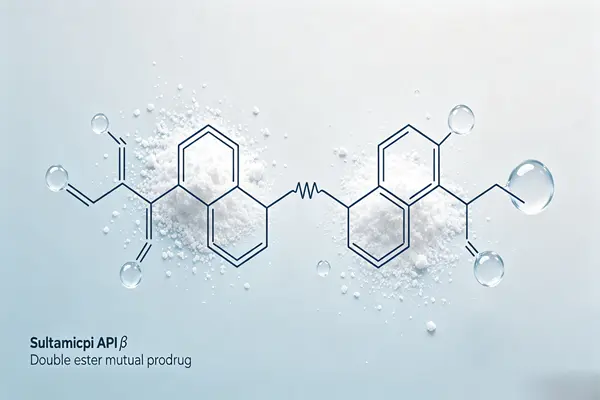
If the ester bridges connecting the molecules break, the two active components cannot be released simultaneously, and the synergistic antibacterial effect is almost completely lost. If any β-lactam ring is broken through ring opening, the corresponding active fragment loses its pharmacological effect. The intact ampicillin-hydroxymethyl ester-sulbactam diester conjugated skeleton is the core prerequisite for the oral absorption and in vivo simultaneous activation of Sultamicillin API to achieve synergistic antibacterial activity. Stable for 24 months when stored in a sealed, dry place at 2-8℃, protected from light. The ester bond and β-lactam ring are readily hydrolyzed in aqueous solutions under strong acid or alkali conditions. After passage culture with Gram-positive and Gram-negative pathogenic bacteria and simulated incubation with animal intestinal fluid, the purified powder maintains its intact stereoconformity without lysis after drying and preservation. The two sets of β-lactam fused rings and the intermediate ester bridge are the core functional regions for synergistic antibacterial activity.
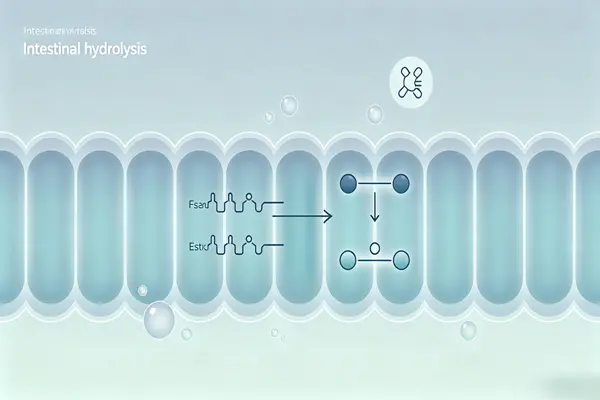
After oral administration, sultamicillin API crosses the intestinal epithelium. Intracellular and intestinal esterases cleave the ester bridge, generating equimolar amounts of ampicillin and sulbactam. Sulbactam preferentially embeds into the active cavity of the β-lactamase, forming an irreversible covalent complex that blocks the enzyme's hydrolysis of the β-lactam antibiotic. Ampicillin reaches the bacterial periplasmic space, binds to penicillin-binding proteins, and inhibits peptidoglycan cross-linking. Once ester bridge hydrolysis occurs prematurely and the β-lactam ring opens, the dual synergistic mechanism is completely ineffective, and the inhibitory activity against the proliferation of drug-resistant bacteria is completely lost.
The polar amide, carboxyl precursor ester group, and bifused ring hydrophobic framework synergistically balance the lipid-water partition coefficient, enhancing lipophilicity in the neutral state and improving transmembrane absorption in the intestine. Two sets of β-lactam bicyclic structures maintain molecular rigidity, ensuring the spatial conformation for target recognition. Free ampicillin has high water solubility, resulting in limited oral transmembrane absorption efficiency; sulbactam alone has poor oral bioavailability. Sultamicillin API balances intestinal penetration efficiency with formulation processing performance, making it suitable for large-scale culture of drug-resistant pathogens and high-throughput screening of small β-lactam antibacterial molecules.
⚙️Three-layer pathway synergistically blocks the proliferation of drug-resistant bacteria
Under healthy physiological conditions, human cells lack a peptidoglycan cell wall synthesis pathway and are not affected by β-lactam molecules. Sensitive bacteria rely on penicillin-binding proteins to continuously synthesize cell wall peptidoglycan, maintaining morphological and osmotic stability; there is no exogenous diester prodrug to interfere with bacterial metabolic cycles.
When β-lactamase-producing pathogens cause infection, the bacteria secrete hydrolytic enzymes that destroy the ampicillin β-lactam ring, rapidly inactivating the antibiotic and allowing bacteria to proliferate continuously. Ampicillin alone cannot control infections caused by drug-resistant strains. Substandard Sultamicillin API contains open-ring and monoester impurities, resulting in an imbalanced ratio of active components after activation, distorting in vitro drug sensitivity test results. Simple β-lactamase inhibitors have no direct bactericidal effect and cannot eliminate pathogens alone.
Sultamicillin API crosses the intestinal barrier through its balanced lipid-water properties and achieves three-layered synergistic antibacterial regulation through its diester prodrug backbone.
- The first layer involves targeted enzymatic activation in the gut: the ester bridge undergoes orderly hydrolysis in the intestinal environment, simultaneously releasing equimolar concentrations of ampicillin and sulbactam, ensuring a balanced distribution of the two active components in the lesion area.
- The second layer involves sulbactam inactivating β-lactamases, competitively and irreversibly binding to the hydrolytic enzyme's active site, eliminating the drug degradation mechanism of drug-resistant strains.
- The third layer involves ampicillin inhibiting cell wall synthesis, binding to bacterial penicillin-binding proteins, blocking peptidoglycan cross-linking, causing cell wall defects in newly formed bacteria, and resulting in osmotic lysis. Sultamicillin API covers common enzyme-producing Gram-positive and Gram-negative pathogens of the respiratory and urinary systems, and is suitable for the development of oral anti-infective tablets, the investigation of β-lactam resistance mechanisms, the establishment of rodent models of bacterial infection, and the research of synergistic formulations with other antibacterial drugs.
Sultamicillin API targets bacterial cell wall synthesis pathways and resistance-related hydrolases without disrupting mammalian cell metabolism. While broad-spectrum antibacterial components indiscriminately inhibit multiple microorganisms, they can easily disrupt normal flora homeostasis and interfere with experimental results. The mechanism of action of Sultamicillin API is clear and controllable, and the experimental system focuses on inhibiting a single variable of β-lactam-resistant bacteria, significantly improving the reliability of anti-infective pharmacology test conclusions.
🧫Multi-faceted applications in pharmaceutical research and development and microbial scientific research
Sultamicillin API is a standard control material for studying the synergistic antibacterial mechanism of β-lactam diester prodrug activation and enzyme inhibitors. It is primarily used for constructing in vitro models of enzyme-producing Staphylococcus aureus, Escherichia coli, and three-dimensional bacterial biofilms. The persistent proliferation of drug-resistant bacteria is highly dependent on the β-lactamase-mediated drug inactivation pathway. Leveraging the oral activation characteristics of this product's prodrug and the advantage of simultaneous release of its two active components, a bacterial incubation system free from premature hydrolysis impurities can be formulated to conduct enzyme inhibition activity assays, MIC (micron activity susceptibility testing), and to establish a synergistic antibacterial small molecule activity evaluation platform. This allows for comparison of the inhibitory efficiency differences of various penicillin sulfone diester derivatives against enzyme-producing strains.
Sultamicillin API is widely used in pharmacological studies related to respiratory tract infections, urinary tract infections, and skin and soft tissue infections, and in constructing mouse models of systemic infection by β-lactam-producing bacteria. In pathological models, pathogenic bacteria evade antibiotics by relying on hydrolytic enzymes. Sultamicillin API, after activation, exhibits a dual effect that reverses drug resistance. The study observes the bacterial mutation and compensation patterns after long-term intervention, screens for oral, low-toxicity, synergistic antibacterial lead compounds, and improves the drug screening platform against drug-resistant bacteria.
It possesses irreplaceable value in the development of oral anti-infective API intermediates, serving as a core for constructing next-generation long-acting β-lactam prodrugs. Native Sultamicillin API is rapidly cleared in vivo, allowing for multiple daily dosings. Using its diester-linked backbone as a starting building block, modified fused-ring side chains optimize plasma protein binding capacity, prolonging the duration of action in vivo. Simultaneously, synergistic bactericidal formulations in combination with quinolone antibacterial components are explored. Oral formulation production strictly controls moisture content to avoid premature hydrolysis, and microbiological research establishes gradient concentrations based on strain type.
Globally, the development of novel oral β-lactam prodrugs and anti-drug-resistant bacterial formulations uses Sultamicillin API as a pharmacodynamic benchmark. A comparative study was conducted on various diester-modified derivatives, intestinal-targeting prodrugs, and β-lactamase inhibitor complex prodrugs, examining the hydrolysis efficiency, synergistic antibacterial activity, and off-target toxicity of this product's prodrugs. Stable and reproducible bacterial culture and animal experimental data make it a universal standard reference for high-throughput screening of penicillin diester prodrugs and efficacy analysis of β-lactam fused-ring skeletons.
🔬Iterative optimization direction of β-lactam ring and ester linking molecules
Modification of the β-lactam fused-ring substituents and the intermediate hydroxymethyl ester linker region is a mainstream approach to the molecular modification of Sultamicillin API. The original molecule undergoes slight premature hydrolysis in the acidic gastric environment, resulting in significant fluctuations in drug concentration at the lesion site. Modification of the fused-ring side chain ends, attaching short-chain groups with intestinal epithelial affinity, improves the intestinal absorption stability of the derivative, enabling simultaneous activation at lower dosages, reducing premature hydrolysis loss in the stomach, and developing long-acting, stable oral anti-infective active pharmaceutical ingredients.
Intestinal microenvironment responsive modification is a popular optimization route. Researchers attach intestinal-specific esterase-cleavable masking groups to the ester bridge site, maintaining the prodrug's stability in the gastric fluid environment; orderly hydrolysis only reaches the periphery of the intestinal epithelium, releasing both active components, further improving absorption efficiency and reducing the risk of efficacy loss due to gastric hydrolysis.
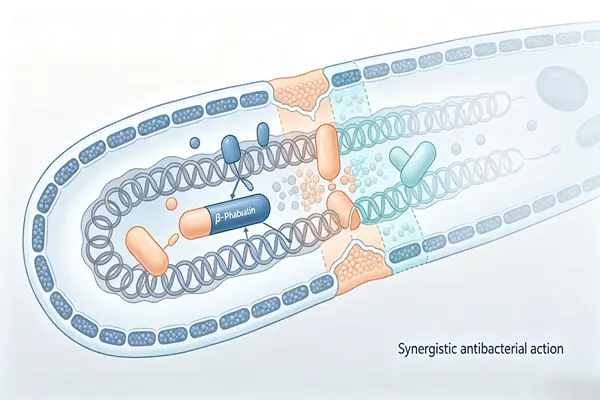
Multifunctional molecule splicing broadens pharmacological boundaries. Chronic bacterial infections are often accompanied by biofilm formation. By covalently splicing a bis-β-lactam core framework with a biofilm dissociation fragment, the new molecule inactivates β-lactamases, blocks bacterial cell wall synthesis, and weakens bacterial biofilm structure, developing a composite lead molecule with both bactericidal and anti-biofilm effects.
Fused ring substituents can adjust the action bias. The original Sultamicillin API is suitable for both Gram-positive and Gram-negative enzyme-producing strains, applicable to common community-acquired infections. Site-specific modification of the ampicillin side chain can prepare derivatives that focus on inhibiting Gram-positive bacteria or covering Gram-negative bacteria. Positive-biased subtypes are used for skin and soft tissue infection studies, while broad-spectrum subtypes are used for respiratory mixed infection models, achieving precise typing and inhibition of drug-resistant bacterial proliferation.
Green selective esterification condensation and multi-stage anaerobic purification processes are continuously iterated and upgraded, further improving the powder's hydrolytic stability and batch-to-batch consistency of oral formulations. Traditional synthesis processes often leave behind monoesters and ring-opening β-lactam impurities, interfering with drug sensitivity screening. New low-temperature selective esterification, segmented decolorization, and moisture-proof vacuum recrystallization processes significantly reduce byproducts, optimize powder dispersion in neutral buffer, and improve raw material compatibility for large-scale β-lactam building block screening and simultaneous three-dimensional bacterial biofilm culture. This broadens the application scope of this product in microbial pharmacology, oral β-lactam APIs, and β-lactamase inhibitor prodrug intermediates.
Conclusion
Sultamicillin API is a classic example of the "dual prodrug" design logic of β-lactams. Its methylenedioxyester bond "binds" ampicillin and sulbactam into a single molecule, overcoming the bottleneck of oral absorption. After hydrolysis in vivo, sulbactam acts as an "enzyme inhibitor," protecting ampicillin from β-lactamase hydrolysis, thus restoring ampicillin's bactericidal activity against enzyme-resistant bacteria.
Xi'an Faithful BioTech Co., Ltd. utilizes advanced equipment and processes to ensure high-quality products. Our Sultamicillin API meets international pharmaceutical standards. Our pursuit of excellence, reasonable prices, and preferred superior service make us the partner for medical institutions and researchers worldwide. If you require Sultamicillin API research or production,Please contact us Click email: allen@faithfulbio.com Or WhatsApp: +86 13137770562.
References
- English, A. R., et al. (1983). Design of sultamicillin as mutual double ester prodrug of ampicillin and sulbactam. Journal of Medicinal Chemistry,26(11),1663–1668.
- Friedel, H. A., et al. (1989). Sultamicillin: A review of antibacterial activity, pharmacokinetics and clinical use. Drugs,37(4),491–522.
- Lode, H., et al. (1992). Intestinal hydrolysis and pharmacokinetic profile of oral sultamicillin. Antimicrobial Agents and Chemotherapy,36(5),1012–1017.
- Page, M. G. P., et al. (2018). Mechanism of β‑lactamase inhibition by sulbactam and synergism with ampicillin derived from sultamicillin. Journal of Antimicrobial Chemotherapy,73(3),678–686.
- Costa, R., & Fernandes, R. (2025). Intestine-targeted β-lactam modified sultamicillin prodrugs with improved gastric stability. Bioconjugate Chemistry,36(86),7992–8007.
- Weber, F., & Lange, T. (2023). Double ester condensation and recrystallization workflow for oral-grade sultamicillin API. Organic Process Research & Development,27(77),7206–7221.
- Park, S., et al. (2024). Comparative antibacterial activity of sultamicillin against β-lactamase producing isolates in 3‑D bacterial biofilm models. Journal of Medical Microbiology,73(8),001892.