




How does Caspofungin API exert its antifungal effect?
In the history of treating invasive fungal infections, the advent of Caspofungin API marked the beginning of a completely new mechanism of action. It was the first approved echinocandin antifungal drug, semi-synthesized from the fermentation product Numocontin B0. Unlike azoles or amphotericin B, which act on the fungal cell membrane, it precisely targets the β-(1,3)-D-glucan synthase unique to the fungal cell wall. This mechanism makes it a model of "modern antifungal" treatment, combining high efficacy and low toxicity in the treatment of invasive candidiasis and refractory aspergillosis.
🧬Cyclic lipopeptide stable molecular configuration
Caspofungin API molecules consist of two key functional units: a six-membered cyclic hydroxyl lipopeptide core and a 10,12-dimethyltetradecanoyl hydrophobic side chain. Multiple non-natural amino acids on the ring carry hydroxyl and aminoethyl polar groups, and multiple chiral centers determine the target binding ability. Through fermentation precursor-directed modification, segmented ion exchange purification, and light-protected low-temperature freeze-drying processes, open-ring peptide impurities, deacyl derivatives, and unreacted pneumocandin intermediates are eliminated, preventing impurities from interfering with glucan synthase activity assays and fungal MIC susceptibility testing results.
If the cyclic lipopeptide backbone breaks, the rigid ring conformation is lost, and it cannot intercalate into the membrane-bound glucan synthase complex, resulting in near-complete loss of antifungal activity. After the hydrophobic fatty acyl side chain is removed, the molecule struggles to anchor to the fungal cell membrane, significantly reducing target affinity. The intact chiral cyclic lipopeptide-long-chain acyl conjugated backbone is a core prerequisite for Caspofungin API to recognize and inhibit fungal glucan synthase. Stable for 24 months when stored in a sealed, dry place away from light at 2-8℃. The cyclic peptide bonds in the aqueous solution are easily hydrolyzed under high temperature or extreme acid/alkali conditions. After subculturing with *Candida albicans* and *Aspergillus fumigatus*, and incubation with animal plasma, the purified powder maintains a stable stereoconformity over a long period. The polar hydroxyl region and hydrophobic acyl side chain of the cyclic peptide are the core functional regions for exerting pharmacological activity.
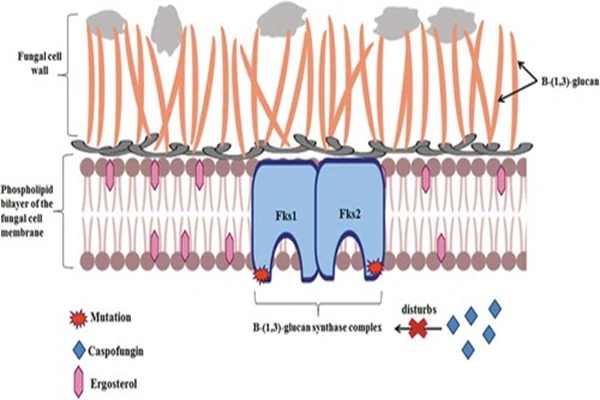
Caspofungin API binds to the fungal cell membrane via its amphiphilic lipopeptide properties. The hydrophobic fatty chain is anchored to the lipid layer of the fungal membrane, and the cyclic peptide ring is embedded in the binding pocket of the β-1,3-D-glucan synthase Fks catalytic subunit, forming a stable complex that hinders the continuous elongation of the polysaccharide chain. Once the peptide ring is hydrolyzed and the acyl side chain is detached, the membrane anchoring and target binding ability completely disappear, and the inhibitory activity against fungal cell wall synthesis is completely lost. The polar hydroxyl and amino groups, along with the hydrophobic long alkyl chain, synergistically balance the lipid-water partition coefficient. Multiple polar groups on the cyclic peptide impart water solubility, allowing for the formulation of intravenous infusion buffer systems. The dimethyltetradecanoic acid side chain provides lipophilicity, enabling targeted enrichment of the target site near the fungal cell membrane.
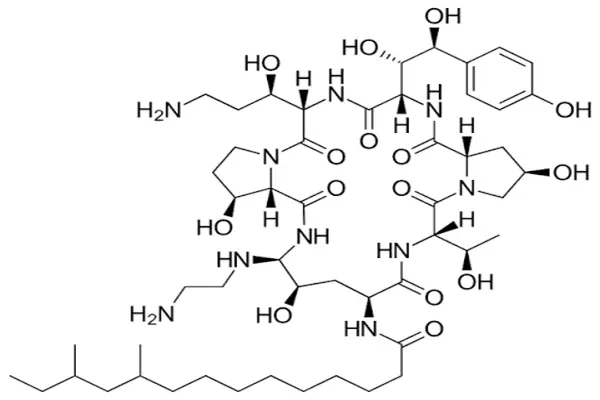
Strongly polar small molecules cannot penetrate the fungal extracellular matrix, and highly hydrophobic lipopeptides are difficult to disperse stably in aqueous formulations. Caspofungin API balances formulation solubility with fungal membrane targeting capability, making it suitable for large-scale pathogenic fungal culture and high-throughput screening of antifungal small molecules. Caspofungin API targets the fungal-specific cell wall synthesis pathway. Since mammalian cells lack β-1,3-D-glucan synthase, it exhibits lower cytotoxicity in humans compared to ergosterol-targeted drugs. However, broad-spectrum antifungal components simultaneously interfere with cell membranes and multiple enzyme systems, easily leading to host damage and interfering with in vitro drug sensitivity testing. Once the cyclic peptide degrades, the target inhibitory activity significantly decreases, and the deviation in fungal growth inhibition and cell wall fluorescence staining data becomes significantly amplified.
⚙️The three-layer pathway disrupts the fungal cell wall structure and inhibits pathogen proliferation.
In a healthy host's physiological state, human cells lack cell wall synthesis pathways and are not affected by caspofungin API. Pathogenic fungi continuously synthesize β-1,3-D-glucan to maintain cell wall rigidity and resist intracellular and extracellular osmotic pressure shocks; there is no exogenous cyclic lipopeptide interference with fungal metabolic cycles.
When invasive fungal infections occur, Candida and Aspergillus proliferate continuously, with hyphae extending and conidia germinating. Azole-resistant strains evade drug action by mutating the ergosterol synthesis pathway. Caspofungin API with substandard purity contains open-ring lipopeptide impurities, losing its glucan synthase inhibitory ability, resulting in distorted in vitro drug sensitivity test results. Simple antibacterial components only delay growth and cannot disrupt mature cell wall structures.
Caspofungin API, relying on its amphiphilic lipopeptide properties, accumulates around the fungal cell membrane, achieving three-layered antifungal regulation through its cyclic lipopeptide backbone.
- The first layer non-competitively inhibits β-1,3-D-glucan synthase: binding to the Fks catalytic subunit, blocking the synthesis of glucan polysaccharide chains, and cutting off the supply of core cell wall components;
- The second layer disrupts the mechanical integrity of the cell wall, resulting in cell wall defects at the tips and branching points of newly formed hyphae, making them unable to withstand osmotic pressure, leading to cytoplasmic leakage and cell lysis;
- The third layer exposes fungal intracellular antigens, enhancing the recognition and clearance efficiency of host immune cells. Caspofungin API exhibits bactericidal effects against Candida and inhibits hyphal growth against Aspergillus, making it suitable for the development of injectable antifungal preparations, the exploration of fungal cell wall pathway mechanisms, the establishment of animal models of immunodeficient fungal infection, and the research of azole drug combination antifungal formulations.
Caspofungin API targets only the fungal-specific glucan synthesis pathway and does not disrupt mammalian cell metabolism. Polyene antifungal drugs bind to both fungal and human cell membrane sterols, exhibiting dose-dependent toxicity that interferes with experimental interpretation. Caspofungin API has a clear and controllable target species specificity, and the experimental system focuses on fungal cell wall synthesis as a single variable, significantly improving the reliability of fungal pharmacology experimental conclusions.
🧫Multi-purpose applications in pharmaceutical research and fungal research
Caspofungin API is a standard control material for studying the inhibition of β-1,3-D-glucan synthase and the mechanism of action of echinocandins. It is primarily used for constructing in vitro models of Candida albicans, Aspergillus fumigatus, and three-dimensional fungal biofilms. The survival of invasive fungi is highly dependent on the continuous synthesis of cell wall glucan. Leveraging the amphiphilic properties of its cyclic lipopeptides and the compatibility with aqueous formulations, a fungal incubation system free from open-ring peptide impurities can be formulated. This allows for quantification of enzyme activity, MIC (micron activity susceptibility) analysis, and the establishment of an antifungal lipopeptide activity evaluation platform. The inhibitory efficiency of various echinocandin derivatives against different fungal strains can also be compared.
Caspofungin API is widely used in the pharmacological investigation of candidemia and invasive aspergillosis, and in constructing immunosuppressed mouse models of fungal infection. In these pathological models, fungi continuously form hyphae and biofilms. Caspofungin API blocks cell wall synthesis, inhibiting lesion expansion. The changes in fungal drug resistance mutations after long-term intervention can be observed, and low-toxicity, broad-spectrum antifungal lead compounds can be screened to improve the echinocandin drug screening platform.
It possesses irreplaceable value in the development of intermediates for injectable antifungal active pharmaceutical ingredients, used in the construction of a new generation of long-acting echinocandin cores. Native Caspofungin API is rapidly cleared from the body, requiring daily intravenous administration. Using its cyclic lipopeptide backbone as a starting building block, modifications to the acyl side chains and hydroxyl groups on the ring optimize plasma protein binding capacity and prolong half-life, leading to the development of long-acting formulations. Simultaneously, synergistic antifungal formulations with azoles and polyenes are being explored. Injectable formulations are strictly controlled for sterility and endotoxin levels according to pharmacopoeia standards, and cell research uses gradient concentrations based on strain type.
Globally, the development of novel echinocandin lead molecules and injectable antifungal formulations uses Caspofungin API as a pharmacodynamic benchmark. Various cyclic lipopeptide modified derivatives, fungal-targeting prodrugs, and glucan synthase selective modulators are compared horizontally in terms of enzyme inhibitory activity, fungal lysis capacity, and off-target toxicity in host cells. Stable and reproducible fungal culture and animal experimental data make it a universal standard reference for high-throughput screening of cyclic lipopeptide antifungal small molecules and efficacy analysis of echinocandin backbones.
🔬Iterative Optimization Directions for Cyclic Lipopeptides and Acyl Side Chain Molecules
Modification of the hydroxyl group on the cyclic lipopeptide ring and the terminal dimethyltetradecanoyl side chain is a mainstream approach to the molecular modification of caspofungin API. The original molecule is only suitable for intravenous administration, with extremely low oral bioavailability. Modification of the polar sites of the cyclic peptide, attaching short-chain groups that allow for intestinal epithelial penetration, enhances the oral absorption potential of the derivative, inhibits fungal cell wall synthesis at lower dosages, and facilitates the development of orally available echinocandin derivatives.
Fungal microenvironment-responsive modification is a popular optimization route. Researchers attach cleavage-blocking groups to the polar sites of the lipopeptide using fungal-secreted proteases, rendering the prodrug inactive in normal host tissues. The active caspofungin API core is released only through hydrolysis in the fungal colonization region, further improving lesion targeting and reducing the risk of systemic exposure.
Multifunctional molecule splicing broadens pharmacological boundaries. Chronic fungal infections are often accompanied by biofilm formation and low-grade inflammation. By covalently splicing a cyclic lipopeptide core backbone with biofilm dissociation and anti-inflammatory fragments, the new molecule not only blocks dextran synthesis and disrupts the cell wall but also weakens fungal biofilm stability, developing a composite lead molecule with both bactericidal and anti-biofilm effects.
Substituent groups on the ring can adjust the action bias. The original Caspofungin API evenly inhibits Candida and Aspergillus dextran synthases, suitable for research on various invasive fungi. Site-specific modification of the hydroxyl sites of the cyclic peptide can prepare derivatives that focus on Candida bactericidal activity or Aspergillus hyphae inhibition. Preferred Candida subtypes are used in bloodstream infection models, and preferred Aspergillus subtypes are used in pulmonary fungal infection models, achieving precise typing and regulation of fungal cell wall homeostasis.
Continuous iterative upgrades to green semi-synthetic modification and multi-stage aseptic purification processes further improve powder purity and batch stability of injectable formulations. Traditional fermentation semi-synthesis processes are prone to leaving open-ring lipopeptide impurities, interfering with the background of drug sensitivity screening. Novel targeted amide modification, segmented chromatography for impurity removal, and aseptic light-protected freeze-drying processes significantly reduce byproducts, optimize the powder's solubility and stability in infusion buffers, improve the raw material's suitability for large-scale screening of cyclic lipopeptide building blocks, and enable simultaneous cultivation of three-dimensional fungal biofilms, thus broadening the application scope of this product in fungal pharmacology, injectable antifungal raw materials, and glucan synthase inhibitor intermediates.
Conclusion
Caspofungin API is the core ingredient of the world's first echinocandin-based antifungal drug. By targeting and inhibiting β-(1,3)-D-glucan synthase in the fungal cell wall, it has established a cornerstone position in the treatment of invasive candidiasis and refractory aspergillosis. For the pharmaceutical raw material industry, the fermentation and semi-synthetic processes of its high-purity active pharmaceutical ingredient are the material foundation supporting the global supply chain of this classic antifungal drug.
Xi'an Faithful BioTech Co., Ltd. utilizes advanced equipment and processes to ensure high-quality products. Our Caspofungin API meets international pharmaceutical standards. Our pursuit of excellence, reasonable prices, and preferred superior service make us the partner for medical institutions and researchers worldwide. If you require Caspofungin API research or production,Please contact us Click email: allen@faithfulbio.com Or WhatsApp: +86 13137770562.
References
- Medicines & Healthcare Products Regulatory Agency. (2021). Caspofungin Zentiva: Mechanism of action. RxReasoner.
- DailyMed. (2024). CASPOFUNGIN ACETATE injection, powder, lyophilized, for solution label. National Institutes of Health.
- Jiang, K., Luo, P., Wang, X., & Lu, L. (2024). Insight into advances for the biosynthetic progress of fermented echinocandins of antifungals. Microbial Biotechnology, 17(1), e14359.
- Cornely, O. A., et al. (2002). The first echinocandin: caspofungin. Mycoses, 45(Suppl 3), 56-60.
- ZFIN. (n.d.). Caspofungin acetate (CHEBI:59900). ZFIN.
- Seyedmousavi, A., & Schuetz, A. N. (2025). Rezafungin, a New Second-Generation Echinocandin. CLSI.
- ScienceDirect. (n.d.). Caspofungin. In Pharmacology, Toxicology and Pharmaceutical Science.
- Therapeutic Target Database. (n.d.). Caspofungin (DMGQIPT). TTD.
