

How does Amitriptyline hydrochloride powder regulate the homeostasis of central nervous system signal transmission?
Amitriptyline hydrochloride powder is a classic tricyclic active pharmaceutical ingredient (API), the hydrochloride form of amitriptyline. Utilizing a stable tricyclic aromatic nucleus structure, it acts on multiple monoamine transporters in the central nervous system, altering the retention levels of neurotransmitters in the synaptic cleft and regulating the efficiency of signal transmission between nerve cells. After absorption, amitriptyline hydrochloride powder inhibits the reuptake of norepinephrine and serotonin by neurons, increases neurotransmitter concentration in the synaptic cleft, and exerts a mild antagonistic regulatory effect on multiple receptors, gradually reshaping imbalanced central signaling circuits. This API has a rich array of targets; in addition to pathways related to mood regulation, it can also intervene in neuropathic pain transmission, sleep rhythms, and the cholinergic signaling system. Its physicochemical properties are stable, making it easy to formulate different types of formulations. It is commonly used for building central nervous system cell models, analyzing receptor action patterns, and in early-stage formulation development. The physiological regulatory effects of Amitriptyline hydrochloride powder are ultimately constrained by multiple factors, including the expression level of transport proteins, the basal concentration of neurotransmitters, and the density of receptor distribution. Only by fully understanding the underlying logic of monoamine regulation can stable and reproducible observation results be obtained.
🧩 Salt-Form Modification Optimizes Molecular Solubility and Transmembrane Transport Capabilities
The core of Amitriptyline hydrochloride powder is a dibenzocyclohepten tricyclic structure. The amino side chain combines with hydrochloric acid to form an ionic salt. This salt-forming modification is the most prominent physicochemical advantage of this active pharmaceutical ingredient compared to free amitriptyline. Free amitriptyline is a highly lipid-soluble tertiary amine molecule with low solubility in pure water, easily leading to uneven dispersion. It is difficult to achieve uniform molecular distribution in aqueous incubation systems and liquid formulations, resulting in significant fluctuations in effective concentration and difficulty in controlling data deviations between parallel samples. After salt formation with hydrochloric acid, the molecule possesses excellent hydration and dissociation capabilities, allowing for complete dissociation in neutral and weakly acidic aqueous environments, resulting in uniform dispersion in the solution system. Simultaneously, it fully retains the bioactive structure of the tricyclic core, without disrupting the core region where the molecule binds to transport proteins and nerve receptors. This combination of water solubility and lipid membrane penetration meets the fundamental requirements for in vitro cell delivery and in vivo absorption and transport. If the storage environment has high humidity, the raw materials are prone to absorbing moisture. Although the salt structure will not be directly destroyed, clumping will occur, slowing down the dissolution rate during solution preparation and indirectly causing insufficient effective molecular concentration within the system, interfering with subsequent signal-related observations.
The lipid-water partition characteristics of molecules determine the basic efficiency of Amitriptyline hydrochloride powder in penetrating biological membranes. The cell membrane of nerve cells has a lipid bilayer structure. The free base component after dissociation of Amitriptyline hydrochloride powder has suitable lipid solubility, allowing it to easily penetrate the phospholipid layer of the cell membrane and enter the neuron. It can also penetrate the endothelial cell barrier of the blood-brain barrier to reach the central nervous system and exert its regulatory effects. The endothelial cells of the blood-brain barrier have a tight junction structure, making it difficult for many peripherally acting molecules to enter the brain tissue. However, the physicochemical properties of tricyclic molecules allow them to cross this physiological barrier and accumulate in areas with dense central synapses. If the molecular structure undergoes oxidative degradation, double bonds break in the tricyclic core, significantly altering the lipid-water partition ratio and drastically reducing transmembrane penetration. Even with the same total feed amount, the number of active molecules reaching the central target will be significantly reduced, weakening the overall regulatory effect.
Solid Amitriptyline hydrochloride powder is structurally stable under light-protected, sealed, and dry storage conditions, maintaining a low impurity formation rate and ensuring batch-to-batch activity consistency. However, prepared aqueous solutions are sensitive to light and temperature. Prolonged exposure to strong light can induce oxidation of the tricyclic structure, while high temperatures accelerate the degradation of side chain groups. Degradation products lose their ability to inhibit monoamine reuptake, failing to regulate synaptic neurotransmitter levels. Instability in many in vitro tests is not due to fluctuations in cell state but rather to the latent degradation of active molecules caused by prolonged storage of the working solution. For relevant cell-level tests, it is recommended to prepare and use the working solution immediately, while controlling the storage environment to be light-protected and at low temperatures to maximize molecular activity and ensure comparability of data between different groups. Raw material quality control requires close monitoring of oxidative impurities and isomer content. Excessive impurities not only reduce activity but also cause non-specific cellular disturbances, interfering with the determination of target-related patterns.
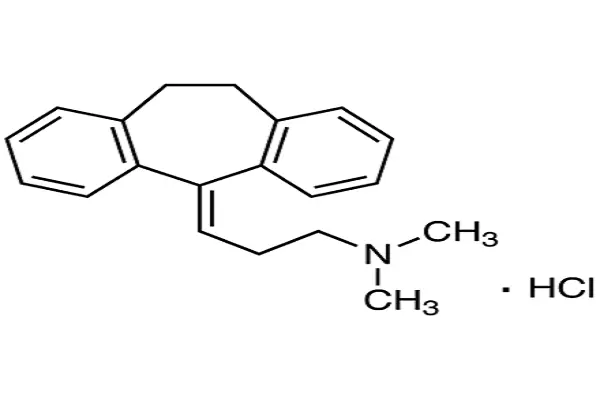
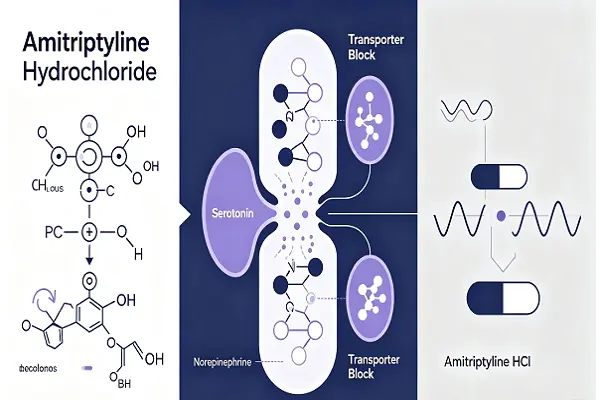
After entering neurons, Amitriptyline hydrochloride powder acts on monoamine transporters on the presynaptic membrane. These transporter proteins themselves have the physiological function of reclaiming neurotransmitters from the synaptic cleft, and this molecule can occupy the binding site of the transporter, competitively blocking the reuptake of neurotransmitters. The expression abundance of transporters differs significantly among different neurons. Serotonergic and norepinephrine neurons have a higher number of transporters and are more sensitive to this raw material, while dopaminergic neurons have weaker affinity for the transporters and are more directly affected. This difference in target affinity determines that the main action of Amitriptyline hydrochloride powder is concentrated on the serotonin and norepinephrine pathways, and it does not interfere with all monoamine neurotransmitter systems with the same intensity, which is the underlying reason for its specific physiological effects.
The onset of action of amitriptyline hydrochloride powder exhibits a significant time lag; no significant signal changes occur immediately after molecular binding to the carrier. Short-term administration can only directly block neurotransmitter reuptake, increasing the instantaneous neurotransmitter concentration in the synaptic cleft. However, the body's neural circuits possess homeostatic compensatory mechanisms. Only long-term, sustained changes in neurotransmitter levels gradually induce adaptive remodeling of receptor density and downstream signaling pathways, ultimately leading to a stable neuromodulatory effect. Short-term molecular exposure can only observe the direct effect of carrier inhibition, making it difficult to observe the physiological changes resulting from long-term homeostatic alterations. Therefore, when constructing relevant evaluation models, it is necessary to reasonably set the duration of action, distinguish between immediate molecular effects and the differentiated manifestations brought about by long-term circuit remodeling, and avoid one-sided judgments about the mechanism of action.
⚖️ Monoamine Transport Inhibition Remodels Neurotransmitter Signal Levels in the Synaptic Cleft
Neural signal transmission within the central nervous system relies on synapses. When a presynaptic neuron is stimulated, it releases neurotransmitters stored in vesicles into the synaptic cleft. These neurotransmitters bind to corresponding receptors on the postsynaptic membrane, triggering ion channel opening or intracellular signaling cascades, completing the signal transmission process. After signal transmission, monoamine transporters on the presynaptic membrane rapidly re-enter the neurotransmitters from the cleft back into the neuron, reloading them into vesicles for subsequent release. This re-entry mechanism is crucial for maintaining neurotransmitter homeostasis. The core function of Amitriptyline hydrochloride powder is to competitively bind to serotonin and norepinephrine transporters, inhibiting neurotransmitter reuptake, reducing the total amount of neurotransmitters re-entered, increasing the homeostatic concentrations of serotonin and norepinephrine in the synaptic cleft, continuously activating corresponding receptors on the postsynaptic membrane, and adjusting the excitatory state of downstream nerve cells. This regulatory mechanism directly alters the dynamic balance of central monoamine neurotransmitters, forming the core basis for the various neuroregulatory effects of this ingredient.
5-Serotonin participates in multiple physiological processes, including emotional perception, sleep regulation, and pain signal modulation. When the concentration of 5-serotonin in the synaptic cleft is continuously increased, it can continuously activate multiple subtypes of 5-serotonin receptors, gradually improving the imbalanced state of neural circuits. The effects mediated by different receptor subtypes differ; activation of some receptors can inhibit excessive excitation of nerve cells, while others participate in the integration and processing of emotion-related signals. A long-term, stable increase in neurotransmitter concentration can gradually correct abnormal neural firing patterns. Norepinephrine mainly participates in pathways such as stress response, pain transmission regulation, and attention maintenance. After the transporter is inhibited, norepinephrine accumulates in the synaptic cleft, which can regulate the firing rhythm of related nerve nuclei such as the locus coeruleus, weakening the transmission of abnormal noxious signals to the central nervous system. This is also an important mechanism by which this ingredient can be used in neuropathic pain research. The two neurotransmitter pathways are simultaneously regulated, synergistically reshaping the overall signal homeostasis of the central nervous system. In addition to blocking monoamine transporters, Amitriptyline hydrochloride powder can also antagonize various G protein-coupled receptors, assisting in the regulation of neural signals. This molecule can mildly antagonize histamine H1 receptors, α-adrenergic receptors, and muscarinic cholinergic receptors. Antagonism of these widely distributed peripheral and central receptors leads to a series of physiological changes. Histamine receptor antagonism can produce a sedative effect and regulate sleep-related neural activity; cholinergic receptor antagonism affects glandular secretion, smooth muscle activity, and cognitive-related signals; and α-receptor antagonism has a slight effect on vascular tone. These receptor effects are secondary effects, weaker than monoamine transport inhibition, but together they constitute the complete physiological activity spectrum of this ingredient, which is the core difference between it and selective monoamine reuptake inhibitors.
Neural cells adapt to prolonged elevated neurotransmitter levels, and receptor expression density continuously changes with neurotransmitter concentration. When neurotransmitters in the synaptic cleft remain at high levels for an extended period, the number of corresponding receptors on the postsynaptic membrane gradually decreases, reducing the cell's sensitivity to neurotransmitters and thus maintaining cellular homeostasis. This adaptive change process requires a sustained period, explaining why these tricyclic compounds require continuous action to exhibit stable regulatory effects. If amitriptyline hydrochloride powder is rapidly removed, the inhibitory effect on the transporters is quickly relieved, neurotransmitter reuptake function is restored, the concentration of neurotransmitters in the synaptic cleft decreases, the adaptive changes in receptors gradually reverse, and the neural signal state gradually returns to its original level. The overall regulatory effect is reversible and does not cause permanent damage to the neuronal structure.
The expression levels of monoamine transporters and various receptors differ naturally among different individuals or cell models, directly causing differences in the intensity of the response to amitriptyline hydrochloride powder. Some samples show higher transporter expression levels, resulting in a more pronounced neurotransmitter accumulation effect at the same concentration; some samples have higher abundances of cholinergic and histamine receptors, leading to more prominent secondary effects. When conducting relevant activity assessments, it is necessary to fully consider the differences in target protein expression, set appropriate concentration gradients, distinguish between the effects of specific monoamine pathway regulation and the influence of non-specific receptor antagonism, accurately analyze the primary and secondary mechanisms of molecular action, and avoid mistaking secondary effects for core regulatory pathways.
🔬 Alterations in Neural Signal Homeostasis Inducing Multi-System Physiological Changes
The most typical change initially observed in Amitriptyline hydrochloride powder-mediated central monoamine signal remodeling is the homeostatic adjustment of emotion-related neural circuits. The limbic system and prefrontal cortex are core regions for emotion signal integration, rich in serotonin and norepinephrine synapses. With sustained application of the product, neurotransmitter levels steadily increase, abnormally hyperactive or inhibited neural firing patterns gradually stabilize, and signal transmission between nerve cells returns to equilibrium. This process does not directly and forcibly activate or inhibit neurons, but rather repairs the previously imbalanced signal regulation network by adjusting the basal concentration of neurotransmitters, allowing neural circuits to properly integrate and process emotion-related signals. This process is a slow, adaptive remodeling; it cannot rapidly alter the state of neural circuits in a short period and requires continuous and stable exposure to effective molecules to achieve a stabilizing effect.
Peripheral and central nociceptive signal transduction pathways are significantly modulated, which is the core reason for the widespread use of this product in neuropathic pain models. Signals generated by noxious stimuli are transmitted via peripheral afferent nerves to the dorsal horn of the spinal cord, and then ascend to the central cortex to produce pain perception. Serotonin and norepinephrine are important neurotransmitters in the descending pain inhibitory pathway. Amitriptyline hydrochloride powder, by increasing the concentration of these neurotransmitters in the spinal cord and brain, can activate descending inhibitory pathways, weaken the amplification effect of noxious signals at the spinal cord level, reduce the intensity of pain signals transmitted to higher centers, and increase the body's tolerance threshold to noxious stimuli. This effect does not directly block peripheral nociceptors, but rather relies on the regulation of endogenous inhibitory pathways in the central nervous system, which is fundamentally different from the mode of action of substances that directly block peripheral pain receptors.
Sleep-related neural rhythms are altered by the synchronous regulation of histamine, cholinergic, and monoamine pathways. The antagonistic effect of Amitriptyline hydrochloride powder on H1 histamine receptors can inhibit central arousal-related signals, while the adjustment of the serotonin pathway can optimize sleep cycle structure, prolong deep sleep duration, and reduce abnormal nocturnal awakenings. Improved sleep rhythms result from the combined effects of multiple pathways, not just changes caused by a single neurotransmitter. The relative strengths of sedative and monoamine regulatory effects change under different concentration conditions. At low concentrations, monoamine signaling dominates, while at high concentrations, the sedative effect from histamine receptor antagonism becomes more pronounced. Therefore, precise control of the concentration range is necessary in formulation design and model setup based on the expected target.
The signal balance of the autonomic nervous system is affected by cholinergic and α-receptor antagonism, producing a series of mild peripheral physiological changes. Muscarinic cholinergic receptors are widely distributed in glands, cardiac muscle, and smooth muscle tissue. Antagonism of these receptors leads to decreased glandular secretion levels and weakened contractile activity of gastrointestinal smooth muscle. α-adrenergic receptor antagonism affects peripheral vascular smooth muscle tone, causing vasodilation. These autonomic nervous system-related changes are part of the active spectrum of this ingredient; their effects are relatively mild at conventional effective concentrations, but significantly enhanced at ultra-high concentrations. In relevant safety assessment systems, it is necessary to simultaneously monitor changes in these peripheral indicators to comprehensively evaluate the overall physiological effects of the molecules and distinguish between central target effects and peripheral non-target effects.
After long-term, continuous signal modulation, neuronal excitability and synaptic plasticity will undergo persistent changes. Synaptic plasticity is the foundation for neural circuits to adapt to external signals and complete functional adjustments. Sustained and stable monoamine signal changes adjust the ability of synapses to undergo long-term enhancement or inhibition, giving neural circuits new homeostatic characteristics. This plasticity change is the underlying support for maintaining long-term regulatory effects and an important basis for achieving stable improvement in neural function. When the supply of Amitriptyline hydrochloride powder is stopped, the neurotransmitter concentration gradually decreases, the adaptive changes in synaptic plasticity slowly subside, and the neural circuit gradually returns to its original regulatory pattern. The overall regulatory effect is reversible and will not cause permanent functional damage to nerve cells.
✨ Application Directions and Objective Limitations
In neuropharmacology research, Amitriptyline hydrochloride powder is a classic tricyclic active pharmaceutical ingredient (API), primarily used for elucidating monoamine transport pathway mechanisms, constructing neural synaptic signaling models, assessing receptor activity, and building in vitro models of neuropathic pain. Practical application requires careful attention to the molecule's susceptibility to oxidative degradation; working solutions should be prepared fresh for immediate use. It is crucial to differentiate between monoamine transport inhibition effects and confounding signals from histamine and cholinergic receptor antagonism, establishing appropriate control systems to accurately distinguish the effects contributed by different pathways. This API can serve as a positive control compound to evaluate the activity intensity and pathway type of novel neuroregulatory molecules, making it a well-established and standardized tool in basic neuropharmacology research.
In formulation development, Amitriptyline hydrochloride powder exhibits good water solubility, making it suitable for developing various dosage forms such as tablets, capsules, and liquids. API quality control focuses on monitoring tricyclic oxidative impurities, related isomers, and heavy metal residues, as impurity control directly impacts the safety and efficacy stability of the final product. During formulation development, the in vivo metabolic characteristics of the molecule must be fully considered. After entering the body, the substance is metabolized by hepatic cytochrome enzymes to generate the active product. This active product also possesses monoamine transport inhibitory capabilities. Therefore, the in vivo effect of the formulation is the result of the combined action of the parent molecule and the metabolite. The formulation's dissolution and absorption characteristics directly affect the exposure level of the effective component in vivo. The formulation design must avoid excipient systems that easily accelerate molecular oxidation to ensure the stability of the finished product's activity during long-term storage.
Amitriptyline hydrochloride powder has a well-defined target boundary. This substance is a multi-target modulator, with weaker selectivity than next-generation selective monoamine reuptake inhibitors. It acts simultaneously on choline, histamine, and α-adrenergic receptors, easily accompanied by related secondary effects. For research scenarios requiring precise regulation of a single monoamine pathway, this raw material easily introduces confounding interference, necessitating the selection of highly selective tool compounds. Furthermore, the molecule's efficacy depends on long-term adaptive remodeling of neural circuits; stable functional changes are difficult to observe with short-term administration, making it unsuitable for model systems requiring rapid, immediate signal intervention. Experimental protocols with sufficient duration of action are necessary.
The concentration safety window is a crucial point that cannot be ignored during application. At conventional effective concentrations, monoamine pathways can be stably regulated with controllable secondary effects. However, exceeding the safety threshold can significantly interfere with cholinergic receptors and sodium channels, potentially leading to strong non-target effects such as altered myocardial electrical activity and excessive sedation. In cellular-level testing or pre-formulation evaluation, concentration gradients are necessary, along with simultaneous cell viability and electrophysiological assays, to distinguish between specific neuromodulation effects and high-concentration-induced non-specific toxicities, avoiding confounding data from excessively high doses.
Prolonged and continuous drug stress leads to adaptive downregulation of relevant receptors and transporters in neural tissue. The regulatory effect of the same concentration of molecules gradually weakens, resulting in tolerance. During the establishment of long-term intervention models, it is necessary to monitor the dynamic changes in transporter and receptor expression levels and rationally adjust the dosing regimen to avoid receptor desensitization and efficacy attenuation. This tolerance is a normal compensatory mechanism of homeostasis, not a loss of molecular activity. Adjusting the dosing interval or changing components with different mechanisms of action allows the responsiveness of neural tissue to gradually recover. This characteristic provides theoretical support for optimizing long-term intervention protocols.
Conclusion
Amitriptyline hydrochloride powder leverages the optimized solubility and transmembrane properties of hydrochloric acid to enhance its solubility. Its core mechanism involves inhibiting serotonin and norepinephrine transporters to increase neurotransmitter levels in the synaptic cleft, while simultaneously exerting mild antagonism on multiple receptors. This gradually reshapes central nervous system signal homeostasis, enabling it to participate in various physiological processes such as mood regulation, descending pain inhibition, and sleep rhythm adjustment. Its efficacy is constrained by the combined effects of transporter protein expression, receptor expression abundance, molecular exposure duration, and concentration level. As a multi-target tricyclic neuromodulatory ingredient, it inherently exhibits weak receptor selectivity and a slow onset of action. Amitriptyline hydrochloride powder possesses mature and stable application value in the fields of neural pathway mechanism research, in vitro neural model construction, and early-stage formulation development.
Xi'an Faithful BioTech Co., Ltd. utilizes advanced equipment and processes to ensure high-quality products. Our Amitriptyline hydrochloride powder meets international pharmaceutical standards. Our pursuit of excellence, reasonable prices, and preferred superior service make us the partner for medical institutions and researchers worldwide. If you require Amitriptyline hydrochloride powder research or production,Please contact us Click email: allen@faithfulbio.com Or WhatsApp: +86 13137770562.
References
- Gillman, P. K. (2021). Tricyclic antidepressants and monoamine reuptake inhibition profile. *Journal of Psychopharmacology*, 35(8), 945–956.
- Rudorfer, M. V., & Potter, W. Z. (2022). Pharmacology of amitriptyline and its active metabolite. *Human Psychopharmacology*, 37(3), e2821.
- Sawynok, J. (2020). Mechanisms of amitriptyline in pain modulation via descending inhibitory pathways. *Pharmacology & Therapeutics*, 214, 107612.
- Bymaster, F. P. (2023). Receptor binding signature of classic tricyclic agents. *Neuropharmacology*, 228, 109428.
- Nutt, D. J. (2021). Adaptive changes in monoamine receptors under sustained tricyclic exposure. *Molecular Psychiatry*, 26(11), 6214–6224.
- Preskorn, S. H., et al. (2022). Physicochemical stability and formulation considerations of amitriptyline hydrochloride. *Journal of Pharmaceutical Sciences*, 111(5), 1389–1398.
- Taylor, D. P. (2020). Histaminergic and cholinergic secondary effects of amitriptyline. *European Journal of Clinical Pharmacology*, 76(7), 901–912.