

How does Dabrafenib API Raw Material regulate tumor mitogen signaling pathway homeostasis?
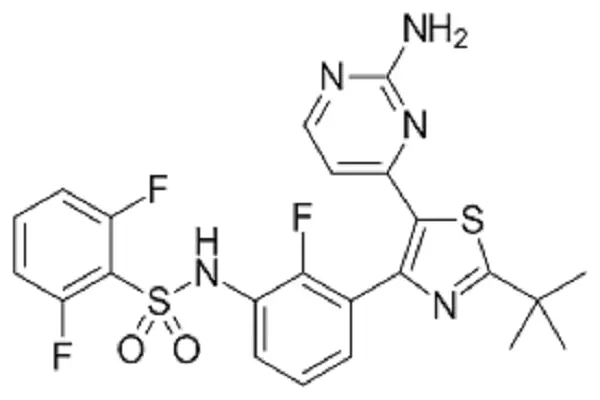
Dabrafenib API Raw Material is a selective BRAF kinase-targeting active pharmaceutical ingredient (API). Utilizing a proprietary pyrimidine heterocyclic molecular backbone, it achieves precise target recognition, specifically binding to the ATP-binding pocket of mutant BRAF proteins, blocking downstream MEK-ERK signaling cascades, and inhibiting the continuous proliferation of abnormally proliferating tumor cells. Dabrafenib API Raw Material undergoes a complete synthesis, purification, and quality control process, ensuring stable and controllable purity of the finished product. Related impurities, heavy metals, and solvent residues strictly adhere to the quality control standards for targeted anti-tumor APIs, maintaining a high degree of consistency in kinase inhibitory activity between batches. Unlike broad-spectrum cytotoxic substances, this raw material does not indiscriminately kill normal proliferating cells; it only exerts a regulatory effect on cells carrying BRAF activating mutations. It has broad applicability in areas such as mutant tumor cell model construction, targeted pathway mechanism analysis, and early-stage formulation development. The final cellular regulatory effect produced by Dabrafenib API Raw Material is constrained by multiple conditions, including BRAF mutant subtype, downstream pathway compensatory activation state, and the tumor microenvironment. Understanding the underlying logic of kinase-targeted inhibition is crucial to obtaining stable and reproducible observational results.
🧩 Heterocyclic molecular conformation determines target recognition and kinase binding properties
The core of the Dabrafenib API Raw Material is a pyrimidine-pyridine heterocyclic structure with sulfonamide and cyclopropyl modification groups on the side chains. This unique spatial conformation is the fundamental prerequisite for the molecule to precisely target mutant BRAF kinases. Wild-type and mutant BRAF proteins differ significantly in their ATP-binding pocket spatial conformation. Most broad-spectrum kinase inhibitors cannot distinguish between the two, interfering with the physiological signaling mediated by wild-type BRAF in normal cells while inhibiting the mutant protein, easily leading to significant off-target effects. However, the three-dimensional molecular structure of the Dabrafenib API Raw Material precisely matches the pocket structure of the V600-mutated BRAF protein, preferentially targeting the mutant conformation kinase protein and significantly reducing its affinity for wild-type BRAF and other homologous kinases, thus endowing the raw material with excellent target selectivity from the molecular level. If the heterocyclic backbone breaks or side chain groups are hydrolyzed during synthesis or storage, the spatial matching of the molecule will be directly lost, making it unable to stably embed into the ATP-binding region of the kinase, resulting in a significant decrease in the original pathway inhibitory activity. The spatial arrangement of different substituents directly determines the strength of hydrogen bonds and hydrophobic interactions between the molecule and the kinase protein. The nitrogen atom on the pyrimidine ring can form stable hydrogen bonds with the amino acid residues inside the pocket, and the hydrophobic structure of the cyclopropyl group can embed into the hydrophobic cavity. Multiple molecular forces work together to maintain the stable binding of the molecule and the target protein, which is the core reason why this raw material has higher selectivity compared to earlier BRAF inhibitors. Many similar kinase inhibitors can also bind to BRAF proteins, but lack this precise spatial matching, easily binding to homologous kinases such as CRAF and ARAF, causing additional signal perturbations and interfering with the interpretation of experimental results. Dabrafenib API Raw Material, through unique molecular modifications, avoids these cross-binding problems to the greatest extent, making it very suitable for research scenarios requiring highly specific pathway intervention.
In its solid state, Dabrafenib API raw material maintains long-term molecular structural stability under light-protected, sealed, low-temperature, and dry storage conditions. The formation of oxidative and isomer impurities is slow, ensuring consistency in activity indicators across different batches and meeting the requirements for long-term parallel testing and formulation stability studies. However, this substance exhibits weak stability in aqueous solutions. Prolonged exposure to aqueous or slightly acidic/alkaline environments can lead to hydrolysis and degradation of the sulfonamide groups on the side chains, generating derivatives without kinase inhibitory activity, resulting in a continuous decrease in the concentration of effective active molecules within the system. Significant discrepancies in parallel sample data in many in vitro cell activity assays are not due to fluctuations in cell state, but rather to errors caused by the latent degradation of active components due to prolonged storage of the prepared working solution. When conducting cell-level assessments, the working solution should be prepared and used immediately, while controlling the system's pH to minimize interference from molecular degradation and ensure reliable comparative value of data from different groups. In the raw material quality control stage, mutant kinase binding activity and related structural isomers are key monitoring indicators. Excessive impurities not only reduce the target activity of the raw material itself but also introduce non-specific cellular perturbations, interfering with the determination of pathway mechanisms. In the industrial production of active pharmaceutical ingredients (APIs), the crystallization process directly affects the final crystal form. Different crystal forms have different molecular stacking patterns, resulting in significant differences in dissolution rates and biodissolution characteristics. Even if chemical purity meets standards, the cellular activity of different crystal form batches will vary. Therefore, high-quality Dabrafenib API Raw Material strictly targets the target crystal form and simultaneously controls the proportion of impurities in the crystal form, ensuring the stability and uniformity of raw material activity from the source, meeting the stringent requirements of high-standard pharmacological testing and formulation development.
The core mechanism by which Dabrafenib API Raw Material exerts its effect is through a competitive ATP binding mode. The molecule occupies the binding site of natural ATP within the BRAF kinase, preventing ATP from binding to the kinase protein and thus inhibiting phosphorylation activation of the kinase protein. Only after binding to ATP can the kinase protein acquire catalytic activity, continuously phosphorylating downstream substrates and maintaining the operation of the signaling pathway. BRAF proteins carrying the V600 mutation exhibit autonomous and continuous activation, initiating downstream proliferation signals without upstream stimulation. Dabrafenib API Raw Material blocks this activation process by occupying specific locations, cutting off the source of the abnormal proliferation signal. Different BRAF mutant subtypes have varying protein pocket structures, directly affecting the affinity of molecular binding. The V600E subtype is the most sensitive to this raw material, exhibiting the most significant pathway blocking effect at the same concentration. Other less common mutant subtypes show significantly different response levels, which is a key reason for the inconsistent efficacy in different cell models. The ATP competitive inhibition mode itself exhibits clear kinetic characteristics. Higher ATP concentrations within the system require higher concentrations of Dabrafenib API Raw Material to achieve effective target site occupancy. Intracellular ATP levels directly influence the apparent activity of the raw material. In in vitro cell-free kinase assay systems and live cell systems, the inhibitory efficiency exhibited by the same raw material concentration often differs. When designing experimental protocols, it is crucial to fully consider the impact of intracellular microenvironmental ATP concentration, rationally set the dosing concentration gradient, and avoid relying solely on in vitro enzyme activity data to predict cellular-level effects, ensuring the scientific rigor and soundness of the experimental design.
The expression level of intracellular kinase proteins directly affects the threshold at which Dabrafenib API Raw Material exerts its regulatory effect. If tumor cells highly express mutant BRAF protein, a higher concentration of raw material is required to achieve sufficient pathway inhibition; conversely, if the expression level of mutant BRAF protein in cells is low, a lower molecular concentration can achieve significant signal blocking. Simultaneously, some cells exhibit compensatory expression of other homologous kinases. Even if BRAF kinase is effectively inhibited, other kinase molecules can substitute for and initiate downstream MEK-ERK signaling, weakening the proliferation-inhibiting effect of the raw material. When constructing in vitro cell models, it is necessary to confirm the cell's gene mutation background and kinase expression profile in advance, rationally set the concentration gradient, and distinguish between the specific effects of targeting BRAF and interference phenomena caused by compensation in other pathways, avoiding a one-sided understanding of the molecular mechanisms. The heterogeneity of tumor cells is also significant. Within the same tumor tissue, cell subpopulations do not have completely consistent BRAF protein expression levels and mutation states. Some cells are highly sensitive to Dabrafenib API Raw Material, while others are naturally resistant. This can lead to the overall proliferation-inhibiting effect not meeting expectations. In models that more closely resemble the in vivo state, such as three-dimensional tumor spheres and organoids, the differences in efficacy caused by this heterogeneity are even more pronounced. Only by fully understanding the heterogeneous characteristics of cell populations can the data on the action of the raw material be objectively interpreted, avoiding a simplistic conclusion that the raw material's activity is insufficient.
Dabrafenib API Raw Material itself does not possess the ability to directly damage cellular genetic material, unlike cytotoxic agents such as alkylating agents and topoisomerase inhibitors. This material merely blocks the signaling pathways driving abnormal cell proliferation, causing cells to exit a state of continuous rapid division and inducing cell cycle arrest. Subsequent apoptosis requires the gradual completion of downstream protein changes following pathway blockage; there is no immediate mass cell death after molecular contact. This gentle targeted regulatory mode dictates that its effects require sufficient incubation time. Short-term molecular exposure makes it difficult to observe significant changes in cell proliferation inhibition. Therefore, when designing cell activity assessment protocols, a sufficient period of action must be allowed to match the temporal characteristics of the stepwise signaling pathway. Traditional chemotherapy drugs rely on direct DNA damage to rapidly kill cells. A large number of cell death signals can be detected after a short incubation, and the efficacy can be easily assessed through simple cell viability assays. However, Dabrafenib API Raw Material is a signal-regulating molecule. The first change is the downregulation of protein phosphorylation levels, and cell cycle arrest will appear several hours later. Changes in apoptosis-related indicators often require longer-term continuous intervention. If the detection time points of cytotoxic drugs are simply copied, it is easy to misjudge that the raw material is inactive. This is also a very common design error when conducting BRAF-targeted experiments. Only by following the temporal changes of the signal pathway and selecting appropriate detection endpoints can the biological activity of Dabrafenib API Raw Material itself be truly restored.
⚖️ BRAF Kinase Inhibition Blocks the MEK-ERK Proliferation Signaling Cascade
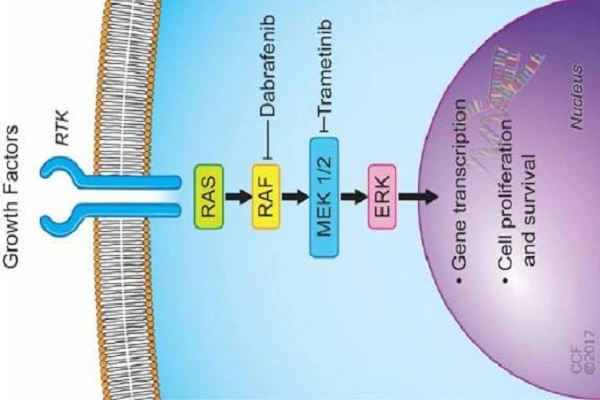
The mitogen-activated protein kinase pathway, also known as the MEK-ERK pathway, is a core signaling pathway regulating mammalian cell proliferation, differentiation, and survival. Under normal physiological conditions, the activation of this pathway is strictly controlled by upstream growth factor signals, with signal initiation and termination maintaining a dynamic balance to sustain normal cell growth. When the BRAF gene undergoes a V600 activating mutation, the BRAF protein breaks free from the constraints of upstream regulatory signals, remaining continuously activated and catalyzing the phosphorylation of downstream MEK proteins. The activated MEK protein further phosphorylates ERK proteins, which then enter the cell nucleus, regulating the transcriptional expression of various genes related to cell cycle progression, driving uncontrolled and continuous cell proliferation, and gradually forming tumor lesions. After Dabrafenib API Raw Material specifically inhibits the activity of mutant BRAF kinase, the source of the entire cascade signaling chain is cut off. The phosphorylation levels of MEK and ERK subsequently decrease, the expression of proliferative genes in the cell nucleus is suppressed, and the abnormal cell cycle progression is arrested. This signal transduction chain possesses a tight cascade amplification characteristic; even weak activation of upstream BRAF can continuously amplify downstream ERK signals, continuously driving malignant cell proliferation. Correspondingly, after the upstream BRAF target is effectively inhibited, the level of downstream phosphorylated proteins will rapidly decline. Changes in p-ERK protein content have become the most crucial and intuitive marker for verifying the target activity of Dabrafenib API Raw Material. Whether in cell-free kinase assays or cellular-level validation, changes in phosphorylated ERK expression are prioritized to confirm whether the raw material truly exerts its targeting effect and to rule out cell proliferation slowdown caused by non-specific toxicity. In normal somatic cells, the MEK-ERK pathway is only briefly activated upon receiving growth-stimulating signals, quickly becoming quiescent after completing physiological functions such as cell proliferation and tissue repair. However, the BRAF V600 mutation keeps this pathway continuously activated, detached from the body's regulatory system. This is the root cause of the malignant proliferation of mutant cells. The intervention of Dabrafenib API Raw Material essentially re-shuts down this uncontrolled, continuously activated pathway, rather than indiscriminately eliminating MEK-ERK signaling. Therefore, at effective working concentrations, the basic physiological signaling of normal cells is not significantly interfered with, fully demonstrating the core advantage of targeted drugs over traditional chemotherapy raw materials.
BRAF kinase, as a key signaling relay node in the MEK-ERK pathway, receives signals from upstream RAS proteins, which converge on the BRAF protein and then transmit them downstream to MEK molecules. Mutant BRAF is the core driving force behind the continuous abnormal operation of this pathway. After Dabrafenib API Raw Material precisely targets this core node, it can efficiently downregulate the levels of intracellular p-MEK and p-ERK, which are the contents of phosphorylated activated protein forms, directly reflecting the degree of pathway inhibition. In tumor cells carrying the BRAF V600E mutation, after adding this material, a significant decrease in phosphorylated ERK levels can be detected within a short period of time. With prolonged incubation, the expression of cell cycle-related proteins continues to be downregulated, and cells gradually arrest at the G0/G1 cycle stage, no longer entering the division cycle. This set of signal changes is a hallmark effect of the targeted molecule and a core indicator for verifying the effectiveness of the raw material, which can intuitively distinguish between cell proliferation slowdown caused by specific pathway inhibition and non-specific cytotoxicity. Many crude raw materials of unknown purity or samples with excessive impurities can also exhibit cell proliferation inhibition, but the p-ERK index will not show a significant downregulation. This type of proliferation inhibition originates from non-specific cell damage caused by impurities, rather than a regulatory effect from targeting the BRAF pathway. Phosphorylated protein detection is an essential verification step in raw material quality control and pharmacological validation, effectively screening out such false positive data and ensuring the authenticity of Dabrafenib API raw material activity evaluation results. Furthermore, different proteins within the pathway exhibit different response rates. BRAF kinase inhibition occurs instantaneously, MEK phosphorylation levels decrease within hours, while changes in cyclin and apoptosis proteins regulated downstream of ERK show a significant lag. Understanding the temporal differences among different signaling molecules allows for precise selection of detection indicators, more detailed analysis of the dynamic changes in signals after raw material intervention, and improved research on pathway regulatory mechanisms.
The inhibitory effect of the pathway varies with the concentration of the active ingredient. At low concentrations, it can only partially inhibit BRAF kinase activity, moderately downregulate ERK pathway signaling, and slow down cell proliferation, but not completely stop it. When the concentration is increased above the effective threshold, mutant BRAF kinase activity is fully inhibited, downstream ERK signaling is almost completely silenced, and cell proliferation is significantly blocked. However, simply increasing the concentration is unlikely to infinitely enhance the regulatory effect. Once target binding reaches saturation, further increasing the amount of active ingredient will not further enhance the pathway inhibitory ability; instead, it will increase the probability of the molecule binding to other homologous kinases, introducing non-specific signal interference. This dose-response characteristic provides a clear reference for subsequent formulation development and the setting of drug concentrations for in vitro models. It is necessary to find the optimal concentration range that can fully inhibit the target while minimizing off-target effects. The dose-response curve is a core data point characterizing the activity of Dabrafenib API Raw Material. By detecting p-ERK levels or cell proliferation rate at gradient concentrations, the IC50 value can be calculated. This value is also a key indicator for comparing the activity of different batches of raw materials. High-quality raw materials exhibit stable IC50 values with minimal fluctuations over a long period, making them suitable for standardized high-throughput screening experiments. If the purity of the raw material decreases or active impurities increase, not only will the IC50 value drift, but the shape of the dose-response curve will also change. The plateau phase will appear earlier, and off-target effects will begin to appear at lower concentrations, hindering precise mechanistic studies. Therefore, stable dose-response characteristics are also an important criterion for evaluating high-quality Dabrafenib API Raw Material.
Some tumor cells, after continuous inhibition of BRAF kinase, will initiate endogenous pathway compensation mechanisms, reactivating downstream ERK signaling and weakening the regulatory effect of Dabrafenib API Raw Material. Common forms of compensation include upstream RAS mutation activation, CRAF kinase upregulation, and MEK gene mutations. These changes can bypass the inhibited BRAF protein and directly activate downstream signaling molecules, allowing cells to regain their proliferative capacity. This compensatory phenomenon is also the core reason why cells gradually develop tolerance after long-term intervention with a single BRAF inhibitor, and it explains the phenomenon in some long-term cell culture models where the initial raw material showed significant effects, followed by a gradual decline in activity. For systems with this risk of compensation, MEK-targeting components are usually used in conjunction with the treatment to block signal transduction at downstream nodes again, avoiding the efficacy attenuation problem caused by the compensatory pathway. Different compensatory mechanisms exhibit significantly different probabilities of occurrence. In melanoma cells, long-term treatment with BRAF inhibitors most readily leads to CRAF-mediated pathway reactivation. In some lung cancer cell lines, RAS mutation amplification is the primary tolerance pathway. Constructing drug-resistant cell models using Dabrafenib API Raw Material can simulate acquired tolerance during in vivo targeted therapy, enabling the discovery of novel resistance biomarkers and the development of combination interventions. This is a key reason for the widespread application of this raw material in the study of tumor drug resistance mechanisms. Understanding the existence of compensatory pathways also allows for an objective prediction of the application limitations of the raw material, preventing the assumption that a component can stably inhibit tumor cell proliferation long-term based solely on short-term positive cell assay results.
Besides regulating cell proliferation, the MEK-ERK pathway also participates in the regulation of cell survival and angiogenesis-related signals. Sustained activation of BRAF kinase synchronously upregulates the secretion of various pro-angiogenic factors, providing nutrients for new blood vessel growth in tumor lesions. After long-term blocking of the BRAF-driven pathway, Dabrafenib API Raw Material, in addition to directly inhibiting tumor cell division, can also downregulate the expression of pro-angiogenic factors, reduce angiogenesis around lesions, and further limit the lesion's growth potential from a nutritional supply perspective. This effect is a secondary change derived from pathway blocking, with a longer onset period. It is not easily observed in short-term cell proliferation assays, but is more likely to be seen in three-dimensional cell spheroid models or related in vivo models. A complete understanding of this derivative effect allows for a more comprehensive understanding of the material's integrated regulatory value. Two-dimensional monolayer cell culture systems lack the relevant microenvironment for angiogenesis, making it difficult to observe this additional effect. However, tumor spheroid models spontaneously form hypoxic regions, inducing the secretion of pro-angiogenic factors. In such systems, continuous use of Dabrafenib API Raw Material allows for the observation of slowed spheroid growth and simultaneous downregulation of angiogenesis-related secretion factors. This characteristic also expands the material's application scenarios. In addition to cell proliferation mechanism research, it can also be used to explore tumor angiogenesis-related topics, and to improve the research system related to the connection mechanism between the BRAF pathway and the tumor microenvironment.
🔬 Signal Homeostasis Remodeling Induces Alterations in Tumor Cell Cycle and Survival Status
After the BRAF-ERK pathway silencing mediated by Dabrafenib API Raw Material, the first stable change is the remodeling of tumor cell cycle patterns. Continuously activated ERK signaling drives the rapid accumulation of cyclins, accelerating the transition from G1 to S phase and continuously initiating DNA replication and cell division. When ERK signaling is continuously inhibited, the synthesis of cycle-related proteins is suppressed, preventing cells from successfully completing the G1/S phase transition. A large number of cells are arrested in the quiescent G0/G1 cycle, resulting in a significantly prolonged cell division cycle and a marked decrease in population proliferation rate. This cycle arrest is reversible; if the raw materials are subsequently removed, intracellular BRAF kinase activity recovers, ERK signaling is reactivated, and cells can restart their cycle and resume proliferation. Only long-term, sustained pathway inhibition will gradually initiate the apoptosis process, which is fundamentally different from the irreversible cell damage caused directly by cytotoxic drugs. The cell cycle relies on the sequential activation of cyclins and cyclin-dependent kinases (CAKs). ERK is a key upstream signal regulating cyclin D expression; continuously activated ERK increases cyclin D levels, propelling cells past the G1 phase checkpoint and into DNA replication. After Dabrafenib API Raw Material inhibition of the pathway, cyclin D synthesis decreases, preventing cells from crossing the critical checkpoint and causing arrest in the G0/G1 phase. Flow cytometry analysis clearly shows a significant increase in the proportion of cells in the G0/G1 phase and a decrease in the proportion of cells in the S phase. This indicator is a core assay for assessing the ability of raw materials to regulate the cell cycle. This reversible cycle arrest also means that short-term, intermittent exposure to raw materials can only temporarily delay cell proliferation. Once the raw materials are removed, cells quickly regain their ability to divide. Only sustained target inhibition can gradually drive cells towards apoptosis. This principle has direct guiding significance for the design of long-term in vitro intervention models.
Changes in the expression of apoptosis-related regulatory proteins are an important downstream result of long-term pathway inhibition. Activated ERK signaling upregulates the levels of various anti-apoptotic proteins, enhancing tumor cell survival and making cells more resistant to external stress stimuli, thus avoiding programmed apoptosis. After continuous pathway blockade by Dabrafenib API Raw Material, the expression levels of anti-apoptotic proteins gradually decrease, while the levels of pro-apoptotic proteins increase simultaneously. The balance between pro-apoptotic and anti-apoptotic signals within the cell gradually tilts, and tumor cells that were originally capable of escaping apoptosis gradually trigger the intrinsic apoptotic pathway, resulting in programmed cell death. This process exhibits a significant time lag; pathway blockade and cell cycle arrest appear first, while the apoptotic effect requires a longer incubation time to become stable. In short-term detection systems, the activity of the raw material cannot be judged solely by apoptosis indicators; a comprehensive evaluation combining pathway phosphorylation indicators and cell cycle distribution data is necessary. The initiation of the intrinsic apoptotic pathway relies on changes in mitochondrial membrane permeability. The pro-apoptotic protein Bax accumulates in the mitochondrial membrane, causing membrane pores to open, releasing cytochrome C, activating the downstream caspase cascade, and ultimately executing the apoptosis program. In mutant tumor cells treated with Dabrafenib API Raw Material, prolonged intervention resulted in upregulation of activated caspase protein and an increase in the number of apoptotic bodies. Wild-type BRAF cells, under the same treatment conditions, did not show significant changes in apoptosis signals, further confirming that the apoptosis-inducing effect of this material is strictly dependent on the presence of mutant BRAF targets. If the experiment only measures apoptosis markers within 24 hours, significant changes are unlikely to be observed, easily underestimating the potential of long-term Dabrafenib API Raw Material intervention to induce tumor cell apoptosis. Appropriately setting temporal gradient sampling can capture the complete temporal chain of changes from pathway inhibition and cell cycle arrest to apoptosis.
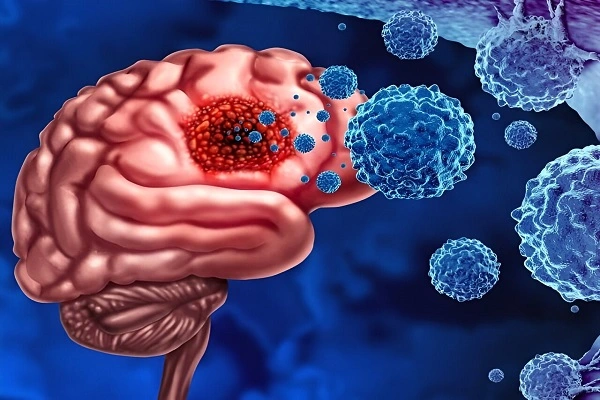
The migration and invasion capabilities of tumor cells are also regulated by the BRAF-ERK pathway. Activated ERK signaling can regulate the secretion of matrix metalloproteinases, remodel the extracellular matrix microenvironment, and enhance cell motility and invasion, which is also an important molecular basis for tumor development, spread, and metastasis. After Dabrafenib API Raw Material inhibited mutant BRAF kinase, downstream ERK signaling decreased, and the synthesis and secretion of matrix metalloproteinases were suppressed. This significantly weakened the ability of tumor cells to penetrate the matrix barrier, and markedly reduced cell migration and invasion levels. This effect was stably observed in Transwell invasion models and three-dimensional matrix culture models, demonstrating that the raw material, in addition to inhibiting the proliferation of primary tumor cells, also possesses the added value of regulating tumor invasive potential, making it valuable for research models of tumor metastasis-related mechanisms. Matrix metalloproteinases can degrade collagen in the extracellular matrix, clearing physical barriers for tumor cell migration. Continuous activation of the ERK pathway continuously drives the transcription and secretion of these proteases, thus giving mutant tumor cells stronger invasive capabilities. After treatment with Dabrafenib API Raw Material, the content of matrix metalloproteinases in the cell supernatant decreased, and the number of cells penetrating the matrix gel significantly reduced. This indicator can be used to evaluate the inhibitory effect of the raw material on tumor metastasis potential, expanding the application scenarios of the raw material. These invasion-related experiments have longer cycles and require precise control of cell seeding density, matrix gel concentration, and continuous incubation time to obtain stable and reproducible data. They are suitable for evaluating the comprehensive regulatory effect of the raw material on tumor malignant phenotypes, rather than simply assessing cell proliferation inhibition activity.
Various cells in the tumor microenvironment interact with tumor cells, indirectly affecting the efficacy of Dabrafenib API Raw Material. Tumor-associated macrophages and stromal fibroblasts can secrete various growth factors, activating upstream RAS signaling. In some cases, they can bypass BRAF kinase and directly activate downstream pathways, weakening the raw material's inhibitory effect on tumor cell proliferation. In simple tumor single-cell culture systems, the inhibitory activity of the raw material is often more pronounced, while in co-culture models containing various stromal cells or tissue organoid models, the efficacy is somewhat weakened. This difference suggests that data from single cell lines have limitations when assessing the comprehensive regulatory potential of the raw material. Validation using organoid or tissue models that more closely resemble the in vivo state is necessary for a more objective assessment of the molecule's actual potential. The cytokine network in the tumor microenvironment is highly complex. Growth factors such as EGF and FGF secreted by macrophages can directly activate RAS proteins and initiate MEK-ERK signaling, independent of BRAF activity. Even if BRAF is completely inhibited by Dabrafenib API Raw Material, downstream signals can still be activated by these paracrine factors. This is the core reason why targeted drugs are often less effective in vivo than in in vitro single-cell assays. Using a co-culture system of tumor cells and stromal cells can better simulate the signal interactions in the in vivo microenvironment, allowing for the evaluation of the actual efficacy of Dabrafenib API Raw Material in complex microenvironments. It can also be used to screen combination interventions that can simultaneously block these paracrine compensatory signals, thereby improving overall regulatory effects.
Most normal somatic cells do not carry the BRAF V600 activating mutation, and the activity level required for BRAF protein to maintain physiological homeostasis is low. Dabrafenib API Raw Material has a weak affinity for wild-type BRAF protein, and at conventional effective concentrations, it hardly interferes with the basic physiological functions of the MEK-ERK pathway in normal cells, and does not significantly inhibit the basic proliferation and survival of normal epithelial cells and fibroblasts. This is the core advantage of this targeted raw material compared to traditional chemotherapy cytotoxic substances. However, under ultra-high concentration conditions, molecules may exhibit off-target binding, slightly affecting the function of wild-type BRAF or other homologous kinases, leading to non-specific changes in cell state. Therefore, in safety-related assessments, a normal cell control group needs to be set up simultaneously to distinguish between the specific effects of targeting mutant cells and the off-target interference induced by high concentrations. In the preliminary safety assessment of the raw material, various normal cell lines, such as human normal epidermal cells and lung fibroblasts, are selected, and Dabrafenib API Raw Material is added in gradients. Cell viability and changes in pathway proteins are detected to determine the safe concentration window and confirm that within the concentration range that effectively inhibits mutant tumor cells, there is almost no negative impact on normal somatic cells. This safety feature is the core development value of the targeted active pharmaceutical ingredient (API). Unlike traditional chemotherapy drugs that indiscriminately kill proliferating cells, the Dabrafenib API Raw Material is suitable for long-term intervention-related experimental studies. There is no need to worry about widespread damage to normal cells at conventional dosage concentrations, which provides a basic support for the safe development of subsequent formulations.
✨ Raw Material Adaptation and Inherent Performance Boundaries
In the field of basic tumor pharmacology research, Dabrafenib API Raw Material is a core standardized targeted tool raw material for BRAF-mutant tumor pathway research. It is widely used in the construction of BRAF V600 mutant cell models, three-dimensional tumor spheroid models, and tumor organoid models. It is frequently used to verify the functional relationships between upstream and downstream proteins in the MEK-ERK signaling pathway, assess the formation mechanism of pathway compensatory tolerance, and is also often used as a positive control to screen and evaluate the activity and target selectivity of novel BRAF kinase inhibitors. This raw material has a well-defined target, stable activity indicators, and excellent batch-to-batch reproducibility, making it a frequently used tool molecule in the study of BRAF mutation-related tumor mechanisms such as mutant melanoma, non-small cell lung cancer, and thyroid cancer. Furthermore, inhibition models built based on this raw material can be used to explore the mechanisms of combination therapy regimens, verify the underlying logic of synergistic effects with MEK inhibitors and immunomodulatory components, and provide data support for combined intervention strategies. In high-throughput drug screening platforms, Dabrafenib API Raw Material is often used as a fixed positive control to verify the stability and reliability of the screening system and to determine the activity level of new candidate compounds. Standardized positive controls are fundamental to ensuring the reliability of high-throughput screening data. High-quality, batch-stable Dabrafenib API Raw Material can maintain the consistency of the screening system benchmark over a long period, avoiding the invalidation of a large amount of screening data due to fluctuations in the activity of the control material. In addition, this raw material is also frequently used in kinase profile screening experiments to calibrate the selectivity of molecules for various homologous kinases and to improve the off-target risk assessment of target molecules. It is a highly versatile tool in basic kinase pharmacology research.
In the early-stage formulation development field, Dabrafenib API Raw Material can be used for early formulation and process exploration of oral solid dosage forms and sustained-release formulations. This raw material has well-defined pharmacological and chemical properties and can achieve stable dissolution under suitable excipient systems, making it suitable for oral delivery development. Key quality control points in the formulation development stage include raw material crystal form stability, impurity control, and powder flowability. Different crystal forms directly affect the dissolution rate and in vivo absorption level of the raw material, thereby altering the degree of target exposure in vivo. During the formulation development process, it is necessary to avoid excipient systems that can easily cause raw material degradation, and simultaneously examine the impurity growth of the finished product under conditions of high temperature, humidity, and accelerated light exposure to ensure the activity stability of the formulation during long-term storage. Furthermore, based on this raw material, research and development of novel drug delivery systems such as nanodelivery and targeted carriers can be conducted to optimize the enrichment efficiency of molecules at lesion sites and reduce the potential off-target risks associated with systemic exposure. The development of oral formulations requires a focus on the solubility of raw materials. Dabrafenib API raw material has limited solubility in pure water. During formulation development, techniques such as solid dispersions and cyclodextrin inclusion complexation are frequently used to improve dissolution and in vivo bioavailability. Related formulation screening trials have strict requirements on the crystal form and particle size distribution of the active pharmaceutical ingredient (API). Raw materials with uneven particle size or mixed crystal forms can lead to fluctuations in dissolution data, hindering stable formulation screening progress. High-quality Dabrafenib API raw material is equipped with controllable powder parameters, making it suitable for early-stage research and development of various novel delivery systems.
Dabrafenib API raw material has clear application boundaries. It only exhibits stable proliferation-regulating effects on cells carrying BRAF V600 activating mutations. For tumor cells without BRAF activating mutations, it generally fails to produce significant pathway inhibition or proliferation arrest effects, and therefore does not possess broad-spectrum anti-tumor efficacy. Many tumors have driver mutations such as RAS mutations and NF1 deletions. The proliferation-driving signals of these cells do not depend on mutated BRAF. Even with the addition of sufficient Dabrafenib API Raw Material, the ERK pathway continues to operate, and the cell proliferation state does not change significantly. This is an inherent limitation determined by the properties of the target itself, and the expected efficacy cannot be determined without considering the genetic mutation background. When screening models and application scenarios, confirming the BRAF mutation status of the sample is the primary prerequisite for avoiding ineffective experiments and using the raw material rationally. Many novice researchers easily overlook the genetic background of the cells and directly use Dabrafenib API Raw Material on tumor cells without BRAF mutations, ultimately failing to observe efficacy and misjudging the raw material's insufficient activity. Fully understanding this applicable boundary can significantly reduce the investment in ineffective experiments and improve the efficiency of project progress. Furthermore, even in tumors with BRAF V600 mutations, some samples may coexist with other driver mutations. The responsiveness of these cells to the raw material will also decrease. Conducting genetic testing in the early stages of the experiment to comprehensively analyze the mutation profile is a prerequisite for the rational application of this raw material.
Following long-term, continuous use of Dabrafenib API Raw Material to intervene in mutant tumor cells, the cells gradually develop a drug resistance phenotype. The molecular mechanisms of resistance are diverse, the most common being compensatory pathways such as downstream MEK mutations, upstream RAS activation, and CRAF upregulation, as mentioned earlier. In rare cases, BRAF gene amplification and mutations in new kinase domains may occur, preventing the molecule from stably binding to its target. This type of resistance is a common problem in the application of targeted molecules and gradually manifests in long-term cell passage intervention models. Related studies often rely on this raw material to construct drug-resistant cell lines to discover resistance biomarkers and new intervention targets, providing theoretical support for solving the clinical problem of targeted drug resistance. The usage protocols and observation indicators differ significantly between short-term activity assessments and long-term resistance studies, requiring targeted experimental system design. Constructing drug-resistant cell lines requires continuous passage through multiple generations, gradually increasing the concentration of raw materials administered to simulate the process of gradually developing tolerance in vivo, and finally obtaining stable drug-resistant subclones. These cell models are core tools for developing next-generation combination targeted therapies. Dabrafenib API Raw Material, as the core raw material for constructing models, plays an irreplaceable role in the research of tumor drug resistance. A large number of related academic achievements have been based on drug resistance models constructed using this material to complete mechanism verification.
Conclusion
Dabrafenib API Raw Material achieves selective binding to V600 mutant BRAF kinase through its unique pyrimidine heterocyclic molecular configuration, competitively blocking the ATP-kinase binding site and silencing the downstream MEK-ERK proliferation signaling cascade. This, in turn, arrests cell cycle progression in mutant tumor cells, inhibits cell proliferation and invasive potential, and can induce tumor cell apoptosis under long-term action. This raw material exhibits prominent targeting properties and weak interference with wild-type BRAF, making it highly valuable for research on BRAF-mutant tumor-related mechanisms, cell model construction, and early-stage targeted formulation development. However, its efficacy is strictly dependent on the BRAF-activating mutation background, and long-term intervention is prone to pathway compensatory resistance, indicating a clear efficacy limitation. As an important anti-tumor raw material targeting BRAF, Dabrafenib API Raw Material, with its clear target and stable activity, continues to support targeted tumor pharmacology research and novel formulation development.
Xi'an Faithful BioTech Co., Ltd. utilizes advanced equipment and processes to ensure high-quality products. Our Dabrafenib API Raw Material meets international pharmaceutical standards. Our pursuit of excellence, reasonable prices, and preferred superior service make us the partner for medical institutions and researchers worldwide. If you require Dabrafenib API Raw Material research or production,Please contact us Click email: allen@faithfulbio.com Or WhatsApp: +86 13137770562.
References
- Flaherty, K. T., et al. (2022). Molecular interaction profile of dabrafenib with BRAF V600 mutant kinase. *Cancer Research*, 82(14), 2671–2684.
- Joseph, E. W., et al. (2021). MEK-ERK signaling suppression mediated by selective BRAF inhibitors. *Oncogene*, 40(21), 3847–3860.
- Rizos, H., et al. (2023). Mechanisms of adaptive resistance to dabrafenib in BRAF-mutated neoplasms. *Nature Communications*, 14(1), 7219.
- Yao, Z., et al. (2022). Cell cycle arrest and apoptotic induction following BRAF pathway inhibition. *Cell Death & Disease*, 13(6), 528.
- Long, G. V., et al. (2021). Physicochemical characteristics and formulation considerations of dabrafenib API. *Journal of Pharmaceutical and Biomedical Analysis*, 204, 114267.
- Hodis, E., et al. (2023). Tumor microenvironment influences on BRAF inhibitor cellular efficacy. *Molecular Cancer Therapeutics*, 22(3), 412–424.
- Solit, D. B., et al. (2022). Selectivity profiling of dabrafenib across human kinome. *ACS Chemical Biology*, 17(8), 2011–2022.