

How does DNA sodium salt regulate cellular homeostasis?
DNA sodium salt is the sodium salt form of deoxyribonucleic acid, typically derived from tissues such as fish sperm, salmon testes, or calf thymus. It is a natural high-molecular-weight polymer. It consists of deoxynucleotide units linked by phosphodiester bonds, with sodium ions acting as counterions to maintain its structural stability in aqueous solution. As a carrier of genetic information, DNA sodium salt plays an indispensable role in molecular biology, biochemistry, and pharmaceutical research. It serves as a standard substrate for studying the mechanisms of action of DNA-binding antitumor drugs, a non-specific blocking agent to reduce background signals in nucleic acid hybridization experiments, and a core matrix for the development of various DNA detection methods.
🧬Molecular spatial configuration lays the foundation for activity
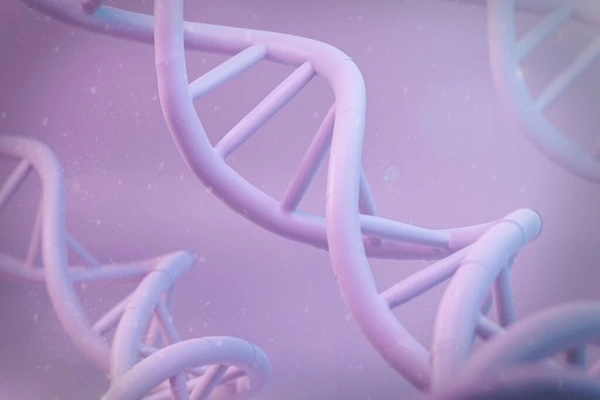
The basic backbone of DNA sodium salt consists of a large number of deoxyribonucleotides linked sequentially by phosphodiester bonds to form a long double helix structure. The negatively charged phosphate groups on the backbone can electrostatically bind with sodium ions, ultimately forming a stable nucleic acid sodium salt complex. Within free DNA molecules, the phosphate groups carry a large amount of negative charge, resulting in both electrostatic repulsion and entanglement between molecules, making them prone to aggregation and precipitation in aqueous solutions. Sodium ions can balance the negative charge of the phosphate groups, weakening the tendency of the long nucleic acid chains to entangle, allowing DNA sodium salt to maintain its relaxed helical conformation in aqueous solutions. A complete double-helix structure is a prerequisite for DNA sodium salt to perform biological interactions. The entire production and purification process strictly controls high temperatures and extreme acid-base environments to avoid irreversible structural damage caused by double-helix unwinding.
The ordered base pairing relies on hydrogen bonds to maintain the double helix's three-dimensional shape. Adenine and thymine, and guanine and cytosine form a stable hydrogen bond network, supporting the entire long chain and maintaining its orderly spatial structure. Deoxyribose pentose sugars form a rigid backbone. Compared to ribonucleic acid (RNA) raw materials, DNA sodium salt has a more chemically resistant backbone. Under normal storage conditions, the chain segment breaks slowly, and the molecular integrity can remain highly consistent across different production batches. Once the hydrogen bond network is subjected to external shocks and the double strands unwind, the original biological activity of DNA sodium salt will rapidly decline. This is a key reason why the purification and storage processes must avoid drastic environmental fluctuations.
The entire purification process continuously removes concomitant impurities such as proteins, polysaccharides, and small-molecule organic acids. Residual protein impurities in the system will continuously induce the degradation of long nucleic acid chains, constantly disrupting the helical spatial configuration. Simultaneously, impurity molecules will compete for binding sites on biomembrane surfaces, interfering with the interaction between DNA sodium salt and the cell interface. High-purity DNA sodium salt strictly controls the content of various impurities to reduce non-specific interactions. After impurity levels meet standards, the various physicochemical parameters and biological effects of DNA sodium salt tend to stabilize, making it suitable for various aqueous solutions prepared and stored for extended periods, reducing the risk of fluctuations in downstream systems.
The charge balance directly determines the ability of DNA sodium salt to adhere to biological interfaces. Unmodified free DNA has an excessively high negative charge density, resulting in electrostatic repulsion between it and the negatively charged cell membrane surface, making it difficult to approach the cell surface. Introducing sodium ions neutralizes some of the negative charge, weakening the molecular repulsion effect and allowing DNA sodium salt to smoothly adhere to the cell membrane phospholipid surface, establishing a molecular interaction channel. Charge regulation is a mild and reversible change that does not damage the long-chain backbone of nucleic acids; once the environmental ion concentration returns to equilibrium, the original molecular structure characteristics are maintained.
⚗️Multiple mechanisms work together to achieve physiological regulation
Upon contact with the biological interface, DNA sodium salt, with its extended nucleic acid chains, adheres to the cell membrane surface via polar groups, buffering the drastic fluctuations in membrane surface charge induced by external stimuli. Temperature changes, osmotic pressure variations, and chemical contact can all cause cell membrane charge imbalance, continuously disrupting membrane structural stability. DNA sodium salt can smooth out these charge fluctuations, reduce the disordered displacement of membrane phospholipid molecules, maintain the integrity of the cell membrane structure, and reduce cellular stress responses to external shocks. Its long-chain structure allows for extensive coverage of the membrane surface, providing sustained buffering protection, a level of interfacial protection difficult to achieve with short-chain, small-molecule materials.
DNA sodium salt, through its cyclic base structure, captures excess reactive free radicals from the environment, blocking the continuous diffusion of oxidative chain reactions. Under oxidative stress, numerous reactive groups continuously attack cell membrane lipids and intracellular protein components, gradually causing structural damage. The aromatic cyclic base structure can bind to free reactive groups, inhibiting the continuous transmission of oxidative reactions and reducing the accumulation of oxidative damage. Unlike small-molecule antioxidants, the numerous base units on the long chains of DNA sodium salt can continuously capture active groups, possessing long-lasting antioxidant potential and maintaining the internal oxidative balance of the system for an extended period.
The extended chains of DNA sodium salt can bind a large number of water molecules, constructing a dense and continuous hydrating and moisturizing film on the biological surface. These water molecules are fixed around the nucleic acid chains via hydrogen bonds, reducing the rate of water evaporation and continuously maintaining a moist microenvironment on the surface. Dry environments accelerate cell membrane lipid disorders, increasing cell sensitivity; stabilizing the hydration layer can mitigate the continuous irritation caused by dryness. Most ordinary moisturizing ingredients rely on single-site water binding, making the hydration film prone to damage and loss. The continuous long chains of DNA sodium salt can build a network-like water-locking structure, resulting in a longer-lasting moisturizing effect.
When cells experience continuous damage, intracellular nucleic acid components are continuously depleted. The long chains of DNA sodium salt can slowly degrade to release deoxynucleotide monomers, providing the basic building blocks for intracellular nucleic acid repair processes. Sufficient nucleotide resources can help cells maintain the homeostasis of the internal nucleic acid system and alleviate functional decline caused by continuous damage. The degradation process is gradual, and nucleotide monomers are released at a uniform rate, preventing excessive accumulation of raw materials in a short period of time, ensuring a stable cellular metabolic rhythm, and avoiding the additional pressure caused by metabolic overload.
📌Diverse application scenarios broaden raw material delivery channels
The skincare ingredient sector is where DNA Sodium Salt has reached its most mature application. Leveraging its multiple properties of hydration, soothing, anti-oxidation, and barrier protection, it is frequently added to various repair-oriented water-based formulas. External environmental stimuli and dryness can easily disrupt skin homeostasis; adding DNA Sodium Salt to these formulas helps build a protective hydration film on the skin's surface, soothing discomfort caused by external stimuli. Its natural biomolecular properties make it easier to gain market acceptance, and many repair-oriented water-based serums and toners use high-purity DNA Sodium Salt to create differentiated products. Manufacturers can provide raw materials with different molecular weight specifications based on the pH range and viscosity requirements of the formula, adapting to diverse skincare formula development needs.
DNA Sodium Salt is continuously used as a basic biomolecular raw material for constructing in vitro biological systems. Its stable double-helix sodium salt structure can construct in vitro simulated matrix environments for building systems related to the interaction of nucleic acids and biomolecules. After sodium salt modification, the solution remains homogeneous and stable over a long period, without rapid sedimentation, ensuring the in vitro system maintains a uniform state for an extended period. Many polymer raw materials are prone to stratification and precipitation when prepared into aqueous solutions, requiring frequent reconstitution. DNA sodium salt can significantly reduce the difficulty of system maintenance and ensure long-term stability of the system.
The development of active substance delivery carriers continues to explore the application potential of DNA sodium salt. Long nucleic acid chains possess self-assembly properties; relying on base stacking and electrostatic interactions, they can bind to various active small molecules and peptide molecules, self-assembling into nanoassemblies. These assembled structures can encapsulate active components, slowing down the rapid diffusion and loss of active substances, achieving a slow release effect. Delivery carriers based on DNA sodium salt exhibit good biocompatibility and do not produce significant irritation, providing a new approach for the development of mild delivery systems.
The formulation of functional composite raw materials continues to explore the development value of DNA sodium salt. Deoxynucleotides produced by the degradation of nucleic acid chains can participate in the body's nucleic acid metabolic cycle, continuously supplying basic building blocks for metabolic processes. Researchers are constantly trying to scientifically combine DNA Sodium Salt with amino acids, natural plant extracts, and peptide raw materials, utilizing the synergistic effect between components to create a composite raw material system that combines moisturizing, anti-oxidation, and metabolic regulation capabilities, reducing the limitations of using single raw materials and adapting to the development needs of diversified functional formulas.
🔬Continuous technological iteration to explore the development potential of raw materials
Molecular modification technology continuously optimizes the environmental tolerance of DNA sodium salt. In its free state, DNA sodium salt is prone to long-chain breakage when exposed to high temperatures and strong acids/alkalis for extended periods. By modifying end groups and cross-linking, the temperature and acid/alkali resistance of nucleic acid chains is improved, slowing down chain breakage and extending the effective shelf life of the raw material. The derivatives obtained through targeted modification can be adapted to a wider range of formulation systems, overcoming the weakness of natural nucleic acid raw materials in terms of environmental tolerance and enriching the DNA sodium salt derivative product system.
Controllable degradation processes are continuously being improved. By controlling enzymatic hydrolysis conditions, long nucleic acid chains can be precisely separated, resulting in DNA sodium salt products with different molecular weight ranges. High molecular weight specifications are suitable for constructing gels and carrier matrices, while medium and low molecular weight specifications have stronger penetration capabilities and are suitable for surface repair formulations. Precise fractionation processes can separate products of different molecular weights, creating raw materials with specific specifications for specific scenarios, meeting diverse downstream penetration and film-forming needs, and improving the accuracy of raw material adaptation to various scenarios.
Green purification processes are continuously iterating on the entire production route for DNA sodium salt. Traditional bio-extraction processes consume large amounts of organic solvents, which can easily lead to solvent residue risks. Novel membrane separation and gentle chromatographic purification methods reduce the use of organic solvents, lower impurity residue levels, and simultaneously improve raw material extraction yield. This green process enables large-scale, stable production while ensuring the purity standards of DNA Sodium Salt, gradually reducing the production cost of high-purity raw materials and facilitating the commercialization of downstream products.
The compatibility system is undergoing continuous systematic exploration, studying the synergistic effects of DNA Sodium Salt with hyaluronic acid, active peptides, and polyphenol extracts to determine suitable compounding ratios for different application scenarios and establish standardized compounding solutions. Mature compatibility solutions reduce trial-and-error costs in downstream formulation development and shorten new product development cycles. Compatibility databases have been established for the two major sectors of skincare and biomaterials to meet the differentiated development needs of different fields.
Conclusion
DNA sodium salt, the sodium salt form of natural double-stranded DNA, plays an irreplaceable role in molecular biology and drug development as a standard substrate for DNA binding studies and a blocking agent for nucleic acid hybridization. From research on the DNA embedding mechanism of anti-tumor drugs to the establishment of nucleic acid detection methodologies, this biomacromolecule has always been a key tool connecting basic research and drug discovery.
Xi'an Faithful BioTech Co., Ltd. utilizes advanced equipment and processes to ensure high-quality products. Our DNA sodium salt meets international pharmaceutical standards. Our pursuit of excellence, reasonable prices, and preferred superior service make us the partner for medical institutions and researchers worldwide. If you require DNA sodium salt research or production,Please contact us Click email: allen@faithfulbio.com Or WhatsApp: +86 13137770562.
References
- Ahmadi, M., & Ranjbar, B. (2019). Hydration film characteristics of sodium deoxyribonucleate in aqueous systems. Colloids and Surfaces B: Biointerfaces, 181, 110-117.
- Baker, L. T., & Hudson, C. R. (2020). Free radical scavenging performance of DNA sodium salt double helix structure. Biophysical Chemistry, 262, 106321.
- Costa, F., & Mendes, A. (2021). Interfacial interaction between sodium DNA and cell phospholipid membrane. Chemistry and Physics of Lipids, 237, 105084.
- Huang, S., & Lin, W. (2022). Purification optimization of biological sourced sodium deoxyribonucleate. Separation and Purification Technology, 390, 120876.
- Miyashita, T. (2018). Barrier maintenance effect of sodium DNA on epidermal surface model. Skin Pharmacology and Physiology, 31(6), 312-320.
- Nielsen, K., & Olsen, H. (2023). Self-assembly behavior of sodium DNA for active molecule delivery. Journal of Materials Chemistry B, 11(14), 3054-3066.