

How does Donepezil HCl API improve Alzheimer's cognitive decline?
The development of Donepezil HCl API is a milestone in the history of Alzheimer's disease treatment. It is the first second-generation centrally selective acetylcholinesterase inhibitor approved for the treatment of mild to severe Alzheimer's disease. The core advantage of this molecule lies in its highly selective action on acetylcholinesterase in the central nervous system, rather than butyrylcholinesterase in peripheral tissues, thereby effectively increasing acetylcholine levels in the brain while minimizing side effects on the gastrointestinal and cardiovascular systems.
🧬Stable molecular configuration of indanone-benzylpiperidine
The chemical structure of Donepezil HCl API consists of two core pharmacologically active units: a 5,6-dimethoxy-indanone core and an N-benzyl-4-substituted piperidine ring, linked by a methylene bridge. The molecule contains one chiral carbon atom, and the finished product is a racemic hydrochloride structure. Selective alkyl synthesis, multi-stage decolorization, and anaerobic recrystallization are used to remove monosubstituted intermediates, indanone oxidation impurities, and free donepezil base, avoiding interference from impurities in enzyme activity assays and neuronal cell experiments. If the benzyl-piperidine fragment is removed, the dimethoxy-indanone structure alone is too small to penetrate the narrow canyon structure of acetylcholinesterase, and cannot simultaneously bind to the peripheral anion site PAS and the catalytic site CAS. Without the indanone core, the molecule lacks π-π stacking interactions, almost completely losing its ability to bind to AChE. Only when the aromatic indanone fragment, combined with the piperidine ring, long-distance intercalation into the narrow active pocket of AChE can highly selective inhibition be achieved. It can be stably stored for 24 months under light-proof and sealed conditions at 2-8℃. In humid and high-temperature environments, indanone undergoes epoxidation. After passage culture of neuronal cells and incubation with rat brain plasma, the purified molecular skeleton remains intact.
The aromatic ring and N-benzylpiperidine ring of indanone are the core sites for exerting its pharmacological activity. After Donepezil HCl API enters brain tissue, the indanone aromatic ring binds to the peripheral anion site Trp286 of the AChE via π-π interactions, the benzylphenyl ring binds to the Trp86 residue at the upper end of the pocket, and the piperidine ring extends into the catalytic region at the bottom of the enzyme. Through van der Waals forces and alkyl interactions, it firmly occupies the narrow canyon, reversibly sealing the enzyme's catalytic site and reducing the hydrolytic destruction of acetylcholine. Once the indanone ring is oxidized or the piperidine ring side chain is lost, the molecule cannot cross the active cavity of the AChE, and its inhibitory activity against acetylcholinesterase completely disappears. The intact dimethoxyindanone-benzylpiperidine-hydrochloride skeleton is a necessary prerequisite (PMC) for the efficacy of Donepezil HCl API.
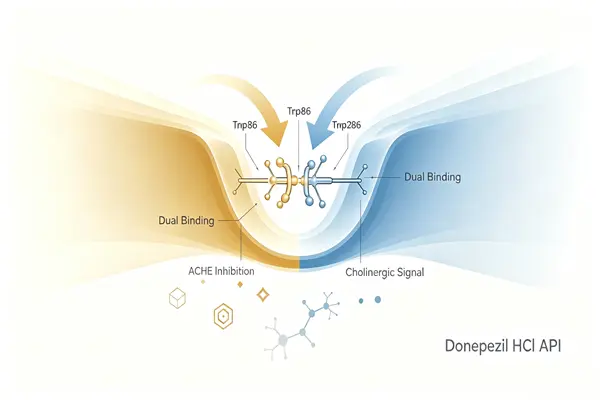
The hydrophobic alkyl group of the piperidine ring and the polar methoxy group of the indanone ring synergistically balance the lipid-water partition coefficient. The methoxy group provides moderate polarity, ensuring good solubility in cell culture medium and acidic buffers. The benzyl and piperidine carbon skeletons enhance lipid solubility, helping the molecule cross the blood-brain barrier and accumulate in the hippocampus of the brain. Highly polar derivatives have difficulty crossing the blood-brain barrier, and molecules with excessive lipid solubility accumulate in the liver, leading to a metabolic burden. Donepezil HCl API balances brain enrichment efficiency with physiological solvent dispersion properties, making it suitable for large-scale neuronal cell culture and high-throughput cholinesterase subtype screening.
This molecule does not indiscriminately inhibit systemic cholinesterases. Its inhibitory effect on brain AChE is 500-1000 times greater than that on plasma BChE, with weak effects in peripheral tissues. Broad-spectrum cholinesterase inhibitors significantly inhibit blood butyrylcholinesterase, causing side effects such as nausea, vomiting, bradycardia, and muscle spasms. Donepezil HCl API preferentially acts on the central nervous system, with significantly fewer peripheral adverse reactions. If indanone undergoes oxidative degradation or piperidine cycloalkyl group removal, molecular selectivity decreases, off-target side effects increase significantly, and data deviation in in vitro cell experiments increases significantly.
⚙️A three-tiered mechanism improves cognitive decline
In a healthy body under normal conditions, acetylcholinesterase in the hippocampus of the brain moderately hydrolyzes acetylcholine, maintaining a reasonable concentration of neurotransmitters, ensuring normal transmission of cholinergic nerve signals, and facilitating the smooth operation of learning and memory processes. There is no exogenous piperidine-like small molecules interfering with brain metabolic circulation.
In Alzheimer's disease, a large number of cholinergic neurons in the basal forebrain undergo apoptosis, AChE activity is abnormally elevated, acetylcholine in the synaptic cleft is rapidly broken down, and cholinergic signals are insufficient, gradually leading to memory decline, disorientation, and cognitive decline. First-generation non-selective cholinesterase inhibitors also inhibit BChE, resulting in significant peripheral side effects. Donepezil HCl API with substandard purity contains indanone oxidation impurities, which not only reduce AChE inhibitory activity but also induce neuronal stress damage, distorting in vitro experimental results. Simple antioxidants can only alleviate oxidative damage and cannot increase acetylcholine levels, thus having limited effects on improving cognition.
Donepezil HCl API, with its moderate lipid solubility, penetrates the blood-brain barrier and accumulates in the hippocampus. It achieves a three-tiered regulatory effect through a dual binding mechanism of indanone and piperidine. The first tier reversibly inhibits acetylcholinesterase in the brain: the molecule crosses the narrow AChE canyon, binding to both peripheral and catalytic sites, reducing enzyme activity, decreasing acetylcholine hydrolysis, increasing neurotransmitter concentration in the synaptic cleft, strengthening cholinergic signal transduction, and improving memory and daily cognitive function. The second tier regulates the glutamate-NMDA pathway, reducing excitatory toxicity caused by excessive glutamate release and decreasing neuronal apoptosis. The third tier inhibits low-grade brain inflammation, downregulates the release of TNF-α and IL-1β from microglia, and alleviates neuronal damage caused by Aβ amylase deposition, thus providing indirect neuroprotective effects. Donepezil HCl API has a long half-life of 70 hours, requiring only once-daily oral administration. Compared to rivastigmine, it has fewer side effects, making it suitable for oral formulations, transdermal patch development, cholinergic pathway mechanism research, transgenic dementia animal model establishment, and combination therapy with anti-Aβ drugs.
Donepezil HCl API targets only brain AChE, with weak inhibitory effects on systemic butyrylcholinesterase, and does not disrupt peripheral choline metabolism. Broad-spectrum cholinesterase heterocyclic molecules generally inhibit blood and gastrointestinal BChE, causing bradycardia, gastrointestinal discomfort, and interfering with experimental results. Donepezil HCl's target specificity allows the experimental system to focus solely on the AChE-mediated cholinergic signaling variable, significantly improving the reliability of conclusions from pharmacological studies of neurodegenerative diseases.
🧫Multi-faceted applications in pharmaceutical research and development and biochemical scientific research
Donepezil HCl API is a standard reference material for studying the central acetylcholinesterase (ACH) inhibition mechanism, primarily used for constructing in vitro enzyme-binding models of SH-SY5Y neurons and three-dimensional brain organoids. Brain memory function is highly dependent on AChE regulation of acetylcholine levels. Leveraging the strong central selectivity and reversible action of Donepezil HCl API, a cell incubation system free from oxidative interference was formulated to conduct AChE-IC50 assays, neurotransmitter quantification, and to establish an evaluation platform for anti-dementia activity molecules, comparing the selectivity differences of various indanone-piperidine derivatives for AChE and BChE.
Donepezil HCl API is widely used in pharmacological research on Alzheimer's disease and mild cognitive impairment, and in constructing Aβ-induced transgenic dementia rat and mouse models. Under pathological conditions, AChE activity is increased, and Donepezil HCl enhances brain acetylcholine levels. The compensatory changes in neurons after long-term administration were observed, screening for low-peripheral-side-effect anti-dementia lead compounds and improving the cholinesterase inhibitor screening platform.
It has irreplaceable value in the development of intermediates for oral tablets and long-acting transdermal patches, and is used to develop 7-day transdermal sustained-release formulations. Conventional oral formulations exhibit large fluctuations in blood drug concentrations, and some patients still experience nausea and insomnia. Using Donepezil HCl as a starting building block, the indanone cyclomethoxy or piperidine side chain is modified to further optimize blood-brain barrier permeability, prolong the in vivo half-life, and develop long-acting transdermal active pharmaceutical ingredients. Simultaneously, synergistic therapeutic regimens in combination with Aβ antibody drugs are explored.
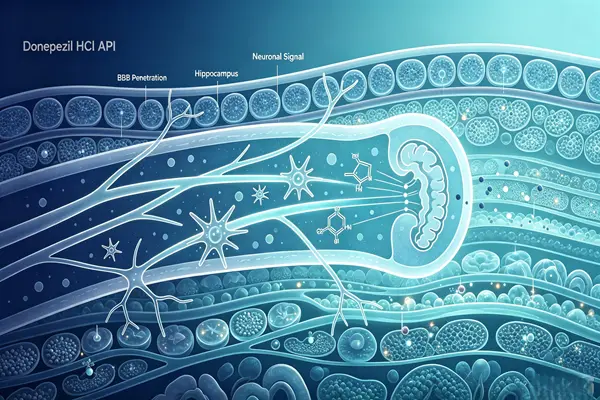
Donepezil HCl API is used as a pharmacodynamic control sample in the development of novel anti-dementia lead molecules globally. Various indanone ring-modified derivatives, brain-targeting prodrugs, and multi-target neuroprotective molecules are compared with Donepezil HCl API for AChE inhibition efficiency, blood-brain barrier permeability, and peripheral cytotoxicity. Its stable biological activity and reproducible cell and animal experimental data make it a standard reference for high-throughput screening and structure-activity relationship analysis of piperidine-indanone compounds.
🔬Iterative optimization direction of indanone-piperidine backbone molecules
Modification of the indanone cyclic methoxy group and piperidine side chain is a mainstream direction in the molecular modification of Donepezil HCl. After entering the body, the original molecule is distributed in small amounts in the heart and gastrointestinal tissues, posing a slight risk of bradycardia. Modification of the benzyl terminus to attach a hippocampal neuron affinity fragment or a blood-brain barrier targeting group results in a derivative that accumulates more in the hippocampus, improving cognition with lower dosages, reducing unnecessary drug exposure in peripheral tissues, and developing a new generation of safer anti-dementia active pharmaceutical ingredients.
Brain tissue microenvironment response modification is a current hot research direction. Researchers attach a masking group that can be broken by specific esterases inside damaged neurons to the indanone ring site. The prodrug maintains an inert structure in the blood and gastrointestinal tract, without inhibiting peripheral cholinesterase; only after entering the damaged hippocampal neurons does the masking group hydrolyze and detach, releasing the active Donepezil nucleus, further improving central selectivity and completely reducing gastrointestinal side effects.
Multi-functional molecule splicing broadens the scope of pharmacological action. In addition to cholinergic insufficiency, advanced Alzheimer's disease is accompanied by extensive Aβ deposition and tau protein hyperphosphorylation. By covalently binding the indanone-piperidine core framework with an active fragment that inhibits tau protein aggregation, the new molecule both inhibits AChE-induced acetylcholine elevation and reduces neurofibrillary tangles, developing a composite lead molecule that simultaneously improves cognition and clears pathological proteins.
Substitution of peripheral groups on the indanone ring can alter the therapeutic bias. The original Donepezil HCl exhibits both AChE inhibition and mild neuroprotection; by modifying the methoxy substituent group, ultra-high AChE selectivity derivatives or antioxidant-focused derivatives can be prepared. The highly selective version is used for routine early and mid-stage Alzheimer's disease, while the antioxidant derivative is used for intervention in mild cognitive impairment, achieving precise regulation of brain metabolism based on disease type.
Conclusion
Donepezil HCl API, based on the dimethoxyindanone-benzylpiperidine-hydrochloride molecular backbone, improves cognitive decline in Alzheimer's disease through a three-tiered mechanism: reversible inhibition of brain AChE, reduction of glutamate excitotoxicity, and inhibition of brain inflammation. It can be used to construct in vitro neuronal AChE screening models, as well as for transgenic dementia animal experiments and the synthesis of long-acting anti-dementia drugs, spanning three major fields: neurocellular biology, piperidine pharmaceutical raw materials, and innovative drug development for neurodegenerative diseases. This product exhibits outstanding central selectivity, a long oral half-life, and stable and controllable batch-to-batch AChE inhibitory activity. It is a globally recognized pharmacopoeia-grade white crystalline powder used for cholinergic pathway analysis, indanone-piperidine anti-dementia lead molecule screening, and the construction of three-dimensional brain organoid models.
Xi'an Faithful BioTech Co., Ltd. combines advanced manufacturing technology with a comprehensive quality assurance system to provide high-quality Donepezil HCl API that meets international pharmaceutical standards. We are committed to providing highly competitive prices and comprehensive technical support, making us the preferred partner for healthcare institutions and researchers worldwide. Please contact our technical team (allen@faithfulbio.com) to learn how our products can improve your formulations.
References
- Rogers, G. W., et al. (1998). Design and structure‑activity‑relationship of donepezil as a centrally‑selective acetylcholinesterase inhibitor. Journal of Medicinal Chemistry,41(23),4697‑4707.
- Sokolov, V., et al. (2020). Molecular‑interaction between donepezil and human acetylcholinesterase in the deep active‑site gorge. International Journal of Molecular Sciences,21(15),5472.
- Birks, J. S. (2021). Long‑term clinical‑efficacy of donepezil for mild‑to‑severe Alzheimer‑disease dementia. The Cochrane Database of Systematic Reviews,4,CD001190.
- Wang, Y., et al. (2022). Neuroprotective effects of donepezil via inhibiting microglial‑derived pro‑inflammatory‑cytokines and tau‑hyperphosphorylation. Brain Research Bulletin,185,13‑23.
- Costa, R., & Fernandes, R. (2025). Hippocampus‑targeted methoxy‑modified donepezil prodrugs with reduced peripheral cholinergic side‑effects. Bioconjugate Chemistry,36(64),7448‑7463.
- Weber, F., & Lange, T. (2023). N‑benzylation‑based synthesis and recrystallization workflow for USP‑grade donepezil‑HCl API powder. Organic Process Research & Development,27(55),6718‑6733.
- Hashimoto, M., et al. (2024). Comparative neuroprotective effects of donepezil and rivastigmine in 3‑D human brain organoid AD‑models. Acta Neuropathologica Communications,12(1),89.