

How does GS‑441524 Powder block viral nucleic acid replication?
GS-441524 powder is a highly selective, broad-spectrum small-molecule active pharmaceutical ingredient (API) targeting RNA viruses. It is the core active nucleoside released after intracellular dephosphorylation activation of remdesivir, and a key monomeric structure that truly mediates viral RNA chain termination and exerts its antiviral pharmacological effect. Unlike remdesivir prodrugs, GS-441524 does not require a complex phosphorylation step. After entering the cell, it rapidly undergoes stepwise phosphorylation solely through the host cell's endogenous nucleoside kinase system, converting into the highly efficient chain-terminating active form, GS-441524 triphosphate. This molecule highly mimics the heterocyclic base structure of natural adenosine, allowing it to be mistakenly recognized, captured, and integrated into the nascent viral RNA chain by various RNA-dependent RNA polymerases (RdRp) encoded by RNA viruses. It utilizes the unique steric hindrance of the cyano group in the ribose ring to block nucleic acid chain elongation, ultimately inhibiting viral genome replication. GS-441524 powder exhibits broad-spectrum inhibitory activity against various highly pathogenic RNA viruses, such as coronaviruses, filamentous viruses, and paramyxoviruses. Its excellent physicochemical stability, strong lipid-water compatibility, and low in vitro cytotoxicity make it one of the most widely used nucleoside-based tool materials in antiviral mechanism research, resistance model construction, combination therapy validation, and antiviral drug development. Its ultimate antiviral inhibitory efficiency strictly depends on host cell kinase activity, intracellular natural nucleoside substrate competitive concentration, viral RNA-dependent RNA polymerase (RdRp) binding preference, and viral exonuclease correction capacity. Multiple intracellular microenvironmental conditions collectively determine its antiviral window and upper limit of efficacy.
🧩 The unique carbon-nucleotide backbone determines molecular recognition and intracellular activation properties
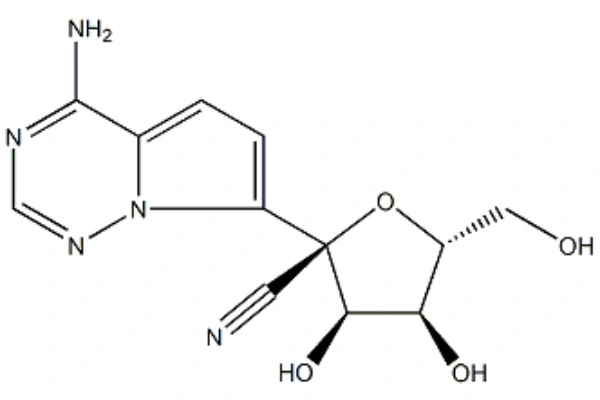
The GS-441524 Powder possesses a carbon-linked nucleoside backbone, distinct from traditional nucleoside drugs. This unique structure forms the core structural basis for its ability to evade viral correction systems and achieve broad-spectrum antiviral effects. Traditional nucleoside molecules, such as adenosine and ribavirin, use oxyglycosidic bonds to connect the base and ribose, resulting in weak structural stability and easy degradation by cellular glycosidases, leading to short intracellular half-lives and low utilization rates. In contrast, GS-441524 uses carbon-carbon covalent bonds connecting the pyrrolotriazine heterocycle and the modified ribose ring. This results in higher bond energies and significantly stronger resistance to hydrolysis. It maintains its intact molecular configuration for extended periods in the complex enzymatic environment of the cytoplasm, preventing rapid degradation by endogenous hydrolysis systems and greatly increasing intracellular accumulation and duration of action. Furthermore, its heterocyclic hydrogen bond arrangement, planar hydrophobic structure, and base spatial dimensions are highly similar to those of natural adenosine, making it impossible for viral RdRp to distinguish between true and false substrates during rapid catalytic replication cycles, thus providing a structural foundation for subsequent erroneous incorporation and chain termination. Once the carbon skeleton breaks, a base is lost, or the ribose epoxidizes, the molecule completely loses its polymerase recognition ability and its antiviral activity.
The unique 2'-cyano modification of the ribose ring in GS-441524 powder is its exclusive key site for delayed chain termination and evasion of viral exonuclease correction. Common nucleoside chain terminators are mostly 3'-deoxy structures; the absence of a hydroxyl group directly terminates chain elongation, making them highly susceptible to rapid recognition and cleavage repair by the coronavirus nsp14 exonuclease, leading to drug resistance and reduced efficacy. GS-441524, however, retains an intact 3'-hydroxyl group, allowing the nucleic acid chain to extend for 2–5 bases temporarily without immediately triggering the viral error correction mechanism, significantly evading viral correction system monitoring. Once the short chain extension is complete, the steric hindrance of the 2'-cyano group completely blocks the polymerase conformational change, preventing all subsequent substrate access and causing irreversible replication arrest. This "delayed chain termination mechanism" is the fundamental reason why GS-441524 exhibits stronger antiviral activity and better resistance to drug resistance compared to other nucleoside inhibitors, and it is also its unique advantage in efficiently inhibiting highly corrected coronaviruses.
The balanced arrangement of polar groups and the hydrophobic backbone endows GS-441524 with unique transmembrane permeation and solubility physicochemical properties. The overall molecule belongs to a moderately polar nucleoside structure, with hydrophobic heterocyclic regions and hydrophilic ribose polyhydroxy regions, distinguishing it from both completely water-soluble small molecules and strongly hydrophobic lipids. Its solubility in pure water is limited, and direct water dissolution easily leads to local aggregation and uneven dispersion, making it impossible to achieve precise molar concentrations. However, it has extremely high solubility in organic co-solvents such as DMSO, ethanol, and methanol, allowing for the stable preparation of high-purity sterile stock solutions suitable for all in vitro cell drug delivery systems. Its moderate lipid-water partition coefficient allows the molecule to efficiently penetrate the cell membrane lipid bilayer, rapidly internalizing into the cytoplasm via nucleoside transport proteins, providing sufficient intracellular drug concentration for subsequent phosphorylation activation. Improper storage can lead to cyano oxidation, hydroxyl dehydration, and skeletal isomerization, completely disrupting molecular polarity balance, significantly reducing transmembrane efficiency, and resulting in insufficient intracellular effective accumulation concentration, directly causing a significant decrease in antiviral efficacy.
The solid form GS-441524 Powder possesses excellent room-temperature solid-state stability. Low-temperature, light-protected, and sealed storage can maintain a zero-degradation, low-impurity state for extended periods, making it suitable for long-term raw material storage. However, its molecular tolerance is significantly narrowed under liquid-phase working conditions. Extremely acidic or alkaline environments can rapidly destroy the ribocyclic hydroxyl structure, high temperatures can induce cyano hydrolysis, and strong light irradiation can cause heterocyclic free radical oxidation and damage. Degraded molecules completely lose their RdRp substrate mimicry ability, cannot be recognized by viral polymerases and incorporated into the RNA chain, and completely lose their antiviral function. Therefore, in vitro experimental working solutions must be prepared strictly using a neutral buffer system, operated at low temperatures and protected from light, and used immediately after preparation to prevent efficacy fluctuations caused by prolonged degradation of the working solution. Many in vitro experiments exhibit poor reproducibility and fluctuating inhibition rates. The core reason is not differences in cell state, but rather the latent decrease in effective drug concentration caused by the liquid-phase degradation of GS-441524.
GS-441524 itself is an inactive nucleoside precursor, requiring a three-step phosphorylation process by the host cell's nucleoside kinase system to be converted into the active triphosphate GS-441524-TP to exert its antiviral effect. The intracellular activation process consists of three stages: monophosphorylation, diphosphorylation, and terminal triphosphorylation. The first step, monophosphorylation, is the rate-limiting step, directly determining the overall activation efficiency. The expression abundance of adenosine kinase and deoxynucleoside kinase varies greatly among different cells. Some epithelial cells and immune cells have high kinase activity, rapidly accumulating sufficient amounts of the active triphosphate product, resulting in extremely strong antiviral effects. Conversely, some tumor cells and low-metabolic cells have poor kinase expression, leading to extremely low drug activation efficiency and significantly weakened inhibitory effects at the same drug concentration. This intracellular activation threshold is the core mechanism behind the significant differences in EC50 values of GS-441524 across different cell models, and it is also the fundamental reason why concentration gradient pre-experiments are necessary in in vitro experiments.
The intracellular natural nucleoside substrate competition effect is a key dynamic factor regulating the efficacy window of GS-441524. Viral RdRp binding sites simultaneously compete to capture intracellular natural ATP and the drug GS-441524-TP. When cell metabolism is high and endogenous adenosine concentration is high, the natural substrate occupies the vast majority of polymerase active sites, significantly reducing the probability of drug incorporation and weakening the antiviral effect. When cells are in a low-metabolic state with low nucleoside baseline, the competitive advantage of the drug substrate increases, and chain termination efficiency is greatly enhanced. Therefore, serum concentration in the culture medium, cell nutrient status, and cell proliferation rate directly alter the optimal effective concentration of GS-441524; there is no universal fixed dosage, and adjustments must be made dynamically based on the system environment.
⚖️ The spurious substrate incorporation mechanism completely blocks viral RNA genome replication
The replication of all RNA viruses relies entirely on a continuous genome replication process mediated by RdRp. After invading a host cell, the virus releases its own RNA genome and, utilizing the host cell's cytoplasmic resources and energy system, continuously recruits nucleoside triphosphate substrates to synthesize the full-length RNA chain of progeny viruses, ultimately completing genome replication, protein translation, viral assembly, and progeny release. In this cycle, RdRp lacks base proofreading capabilities; it can only recognize the overall nucleoside backbone of the substrate and cannot precisely distinguish between natural adenosine and the GS-441524-modified nucleosides. This inherent limitation of viral replication becomes the core breakthrough for GS-441524 to exert its broad-spectrum antiviral effect. After intracellular phosphorylation activation, GS-441524 accumulates in large quantities in the cytoplasm as pseudoadenosine triphosphate, actively participating in the viral nucleic acid synthesis cycle and intervening in the most crucial replication stage of viral life activities from the source.
When GS-441524-TP is randomly incorporated into the 3' end of the nascent RNA strand by RdRp, the unique steric hindrance of the 2'-cyano group completely alters the conformation of the nucleic acid terminal, blocking the conformational inversion of polymerase and subsequent base concatenation. Unlike traditional nucleoside analogs that terminate chain elongation instantly, GS-441524 does not terminate chain elongation instantly. Instead, it allows a brief concatenation of 2–5 natural bases at the strand end, forming a small normal fragment before completely locking the elongation process. This delayed termination characteristic prevents the viral nsp14 exonuclease from recognizing the abnormal site and initiating the splicing repair mechanism, perfectly circumventing the drug resistance escape mechanisms of coronaviruses and other high-density viruses. The locked, incomplete RNA strand cannot continue to elongate, cannot complete the synthesis of the full-length genome, and cannot translate and express viral structural and functional proteins, completely losing the ability to assemble mature progeny viruses.
GS-441524 specifically intervenes in viral RNA replication, with almost no interference to normal host cell DNA transcription and mRNA synthesis, exhibiting extremely high viral targeting specificity. The host cell's own DNA polymerase and RNA polymerase possess a strict substrate selection mechanism, precisely recognizing GS-441524 powder modified nucleosides and refusing to incorporate them into the host nucleic acid chain. Therefore, normal cell gene transcription, genome replication, and cell division and proliferation are not significantly inhibited, resulting in extremely low cytotoxicity. This mechanism distinguishes GS-441524 from broad-spectrum chemotherapeutic nucleoside drugs, as it does not cause cell proliferation inhibition, gene damage, or toxic stress. It is an ideal tool for in vitro long-acting viral intervention models and low-toxicity antiviral evaluation systems, with a safety profile far superior to traditional nucleoside drugs such as ribavirin and acyclovir.
Viral replication pressure and replication rate directly affect the inhibitory efficiency of GS-441524. Under conditions of high viral replication and amplification, the RdRp catalytic cycle is extremely rapid, resulting in high substrate uptake and a significantly increased probability of pseudonucleoside incorporation, leading to a highly pronounced drug blocking effect. However, when the virus is in a low-replication, latent state with low genomic transcriptional activity, nucleoside substrate consumption is low, the probability of drug incorporation decreases, and the inhibitory effect weakens to some extent. Therefore, GS-441524 exhibits the strongest blocking effect against viruses in the active replication phase, but against latent viruses, it only inhibits activation and suppresses amplification; it cannot completely eliminate integrated, latent viral genomes. This is an inherent characteristic of nucleoside chain termination drugs.
Under continuous drug intervention, viruses can develop low-level drug resistance adaptations through mutations at the RdRp site, which is a dynamic mechanism that needs to be considered in the GS-441524 system. Mutations at key amino acid sites in the viral RdRp can slightly alter the spatial configuration of the substrate-binding pocket, reducing the binding affinity of GS-441524-TP, preferentially screening for natural adenosine substrates, reducing the probability of pseudonucleoside incorporation, and gradually escaping drug inhibition. However, because the GS-441524 backbone is highly homologous to natural adenosine, significant mutations in the RdRp of the virus can severely impair its replication activity. Therefore, its resistance mutation is extremely costly and has a very slow mutation rate. Compared with other antiviral small molecules, GS-441524 has the outstanding advantage of extremely low resistance risk, making it suitable for constructing long-term viral intervention and drug resistance evolution research models.
🔬 Replication blocking triggers multiple physiological changes in the virus and the host
GS-441524-mediated RNA chain termination directly causes viral genome synthesis failure, leading to a complete halt in viral gene expression. Unable to synthesize full-length genomic RNA, the virus cannot translate key structural and functional proteins such as spike proteins, nucleocapsid proteins, and polymerase proteins, thus disrupting the entire viral life cycle from replication, transcription, translation, assembly to release. Intracellular viral RNA copy number drops sharply, the number of progeny viral particles assembled is significantly reduced, and the infectious viral titer in the cell supernatant is significantly lowered, ultimately achieving complete suppression of viral replication. Compared to small molecule drugs that only inhibit viral adsorption, invasion, and release, GS-441524 directly targets the core viral genome replication stage, offering deeper inhibition, a broader antiviral spectrum, and a more thorough level of action.
After viral replication is inhibited, the host cell's metabolic system, previously hijacked by the virus, gradually returns to normal, and cellular stress damage and inflammatory responses are significantly alleviated. After RNA viruses invade, they deplete the host's nucleoside, energy, and ribosome resources, causing cellular metabolic disorders, increased oxidative stress, activation of inflammatory pathways, and abnormally increased apoptosis. After GS-441524 effectively blocks viral amplification, cellular resources are no longer continuously consumed by the virus, mitochondrial energy metabolism returns to homeostasis, ROS oxidative stress decreases, NF-κB inflammatory pathway activity declines, and the secretion of inflammatory factors and chemokines is significantly reduced, effectively improving cell damage and microenvironmental disturbances caused by viral infection. This secondary cytoprotective effect is a key reason why GS-441524 possesses both antiviral and cytoprotective effects.
The accumulation of incompletely terminated short defective RNA fragments further triggers viral replication interference, enhancing the overall antiviral effect. Although some short RNAs interrupted by GS-441524 are not completely degraded, they cannot continue to replicate or assemble viral particles. Instead, they competitively occupy core resources such as viral RdRp, ribosomes, and packaging proteins, creating a defective virus interference effect. This further crowds out normal viral replication resources and inhibits wild-type viral amplification. The superposition of multiple inhibitory mechanisms makes the actual antiviral effect of GS-441524 powder far superior to single-chain termination drugs, forming a triple antiviral system of "direct termination + resource competition + escape inhibition."
The host cell's antiviral innate immune pathways dynamically revert to normal as viral load decreases. During massive viral proliferation, patterns recognition receptors such as RIG-I and MDA5 are activated, inducing a strong interferon response and an immune inflammatory storm. After GS-441524 effectively suppresses viral replication, intracellular viral nucleic acid antigens are significantly reduced, the over-activation of the innate immune system gradually subsides, and the release of interferon and pro-inflammatory factors returns to baseline levels, preventing excessive immune damage in the later stages of infection. This characteristic allows GS-441524 to not only inhibit the virus but also alleviate immune dysregulation caused by viral infection, making it a high-quality tool for studying viral immune imbalance and cytokine storm regulation.
Long-term, low-concentration GS-441524 intervention can significantly suppress the viral replication baseline, greatly reducing the risk of viral reactivation and spread. High-concentration drugs can rapidly kill active viruses and suppress acute infections; continuous low-concentration intervention can sustainably incorporate into the nascent viral replication chain, continuously accumulating defective genomes, suppressing the overall viral load baseline, and inhibiting viral latent activation and secondary amplification. This differential effect corresponding to gradient dosage makes GS-441524 suitable for various research models, including acute antiviral therapy, long-term suppression, drug resistance evolution, and latent infection regulation, with extremely rich application scenarios.
✨ Application Scenarios and Objective Boundary Conditions of Drug Action
In in vitro antiviral pharmacology studies, GS-441524 Powder is a core tool for constructing RNA virus replication inhibition models, widely used in mechanistic studies of coronaviruses, Ebola viruses, Newcastle disease viruses, and respiratory RNA viruses. Proper dissolution procedures are crucial for ensuring data stability in experiments. This raw material must be pre-dissolved in organic solvents, serially diluted, and the final concentration of the co-solvent must be strictly controlled to prevent uneven dissolution and molecular aggregation that could lead to efficacy deviations. Simultaneously, concentration gradient screening must be performed based on different cellular kinase activities and baseline nucleoside levels to determine the optimal antiviral window for the model, avoiding insufficient concentration leading to inhibition failure or excessive concentration causing non-specific stress.
In the field of antiviral formulation development, GS-441524, with its advantages of high stability, low toxicity, broad-spectrum activity, and low drug resistance, has become a core lead monomer for the development of novel anti-RNA virus drugs. Its carbon-nucleoside backbone exhibits strong stability and a clearly defined cyano modification function, making it suitable as a parent structure for structural optimization, derivative synthesis, liposome encapsulation, and nanoparticle-based drug delivery, addressing the shortcomings of traditional antiviral drugs such as poor solubility, high toxicity, easy drug resistance, and narrow spectrum. Raw material quality control focuses on degradation impurities, oxidation products, and chiral purity; excessive impurities directly reduce the efficiency of active incorporation, weakening the antiviral efficacy of the finished product.
GS-441524 exhibits a clear cell activation-dependent boundary; phosphorylation activation cannot be completed in cell systems lacking kinase activity, resulting in no antiviral effect when administered alone. In certain special cell types, primary cells, and low-metabolic cells, kinase activity is weak, leading to low activation efficiency. Effective inhibition requires the use of kinase-regulated conditions or appropriately increased drug concentrations. Furthermore, this drug only acts on viruses in the replication phase; it has no direct inactivation ability against assembled mature viral particles or extracellular free viruses, and cannot directly eliminate static viruses, only blocking the generation of newly formed viruses. This is a mechanistic boundary that nucleoside chain terminators cannot overcome.
Competition from natural nucleoside substrates is a significant objective factor limiting the upper limit of the efficacy of GS-441524 powder. When cells are well-nourished, the culture medium is rich in nucleosides, and cell proliferation is vigorous, the concentration of endogenous ATP increases dramatically, competitively suppressing drug incorporation efficiency and resulting in a significant decline in efficacy. Conversely, the drug's advantages are maximized in low-nutrient, low-proliferation, and high-viral-replication systems. Therefore, in vitro experiments must maintain consistent culture conditions, serum concentrations, and cell densities; otherwise, data discrepancies between groups are unavoidable.
GS-441524 does not possess broad-spectrum antibacterial or anti-DNA virus capabilities; it specifically targets the RdRp replication system of RNA viruses only. It has no inhibitory effect on DNA viruses, bacteria, or fungi, making its application highly specific. Furthermore, highly mutant viral strains and strains with high exonuclease activity can slightly weaken the drug's effect. Although they cannot completely escape detection, they can slightly increase the drug's concentration threshold. Therefore, during research modeling, it is necessary to adjust the dosing parameters appropriately based on the strain's correction capabilities.
Conclusion
GS-441524 Powder, with its unique carbon-nucleoside backbone and cyano delayed chain termination mechanism, precisely mimics the natural adenosine substrate, tricking viral RdRp into incorporating into the nascent RNA chain, thus blocking the complete replication of the viral genome and achieving broad-spectrum, highly effective, low-drug-resistance, and low-toxicity anti-RNA virus effects. Its efficacy is strictly dependent on intracellular kinase activation, substrate competition balance, viral replication status, and strain correction ability, while also possessing clearly defined boundaries of action and application limitations. As the nucleoside antiviral tool material with the clearest mechanism and best stability currently available, GS-441524 powder consistently possesses irreplaceable core scientific research value and application prospects in the fields of viral mechanism research, drug resistance model construction, and the development of novel antiviral agents.
Xi'an Faithful BioTech Co., Ltd. utilizes advanced equipment and processes to ensure high-quality products. Our GS-441524 Powder meets international pharmaceutical standards. Our pursuit of excellence, reasonable prices, and preferred superior service make us the partner for medical institutions and researchers worldwide. If you require GS-441524 powder research or production,Please contact us Click email: allen@faithfulbio.com Or WhatsApp: +86 13137770562.
References
- Wang, Y., et al. (2020). Mechanism of action of GS‑441524 as a delayed chain terminator against coronaviruses. Cell Research, 30(11), 965–974.
- Gordon, C. J., et al. (2021). The molecular basis of SARS‑CoV‑2 inhibition by GS‑441524. Nature Structural & Molecular Biology, 28(4), 329–336.
- Tchesnokov, E. P., et al. (2020). Delayed chain termination enables GS‑441524 to evade viral exonuclease proofreading. Journal of Virology, 94(18), e01134‑20.
- Sheahan, T. P., et al. (2020). Broad-spectrum antiviral activity of GS‑441524 against emerging RNA viruses. Science Translational Medicine, 12(556), eabc1932.
- Eastman, R. T., et al. (221). Cellular metabolism and activation determinants of GS‑441524 antiviral potency. Antiviral Research, 191, 105087.