

How does How does Bicalutamide Powder block androgens and inhibit prostate tumor proliferation?
In the landscape of endocrine therapy for prostate cancer, Bicalutamide is one of the most widely used nonsteroidal anti-androgens. It inhibits tumor progression by competitively binding to androgen receptors, blocking the growth-stimulating signals of dihydrotestosterone (DHT) to prostate cancer cells. As a representative of second-generation nonsteroidal anti-androgens, Bicalutamide Powder exhibits high receptor selectivity, does not cross-react with other steroid receptors, and is selective in peripheral tissues—effectively blocking androgen signaling without significantly increasing serum testosterone levels.
🧬Fluoroaromatic chiral amides stabilize molecular configuration
The Bicalutamide Powder molecule consists of three core pharmacologically active units: a 4-fluorophenyl group, a chiral sulfonamide propyl group, and a cyano-substituted aromatic ring. Only the S-configuration possesses potent AR antagonistic activity; the R-racemic isomer has almost no targeting effect. Asymmetric synthesis, chiral chromatographic resolution, and anaerobic recrystallization processes are used to eliminate defluorinated aromatic hydrocarbons, open-ring amide intermediates, and racemic impurities, preventing these impurities from interfering with prostate cancer cell proliferation and AR receptor binding assays.
If the fluorophenyl ring is defluorinated, the molecule cannot embed itself in the hydrophobic binding pocket of the androgen receptor, resulting in a significant decrease in competitive antagonistic activity. Furthermore, after the chiral sulfonamide side chain undergoes a conformational flip, its hydrogen bond network with the AR protein breaks, completely losing its targeting ability. The intact S-chiral fluorobiaryl sulfonamide backbone is a crucial prerequisite for the Bicalutamide Powder to block androgen signaling. Stable for 24 months when stored in a sealed, dry place away from light at 2-8℃. The amide bond is easily hydrolyzed and broken under strong alkaline and high-temperature conditions. After multiple passages of LNCaP prostate cancer cells and simulated incubation with mouse plasma, the purified powder molecular skeleton remained intact and undegraded.
The biaromatic fluorinated ring and chiral sulfonamide group are the core functional regions for antagonizing androgen receptors. Bicalutamide is absorbed orally into the bloodstream, crosses the prostate tumor cell membrane to reach the nucleus, and the fluorinated aromatic ring is embedded in the AR ligand-binding domain cavity through hydrophobic interactions. The sulfonamide group forms multiple hydrogen bonds with amino acid residues inside the receptor, competitively occupying the dihydrotestosterone binding site and blocking the transcription of downstream proliferative genes mediated by androgens. Once the benzene ring is defluorinated, the chiral configuration is inverted, or the sulfonamide is hydrolyzed, all hydrogen bonds and hydrophobic binding interactions disappear, and the inhibitory activity against prostate tumor proliferation is completely lost.
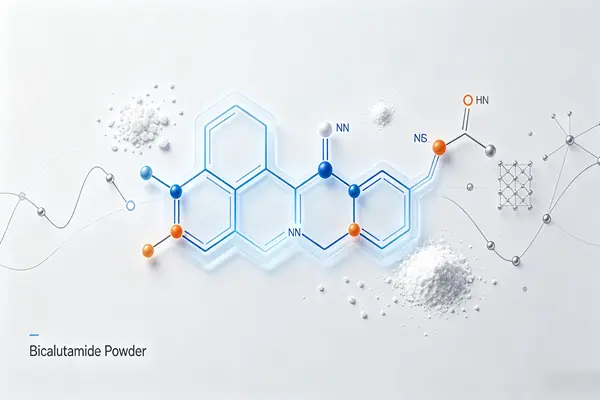
The polar sulfonamide group and the bihydrophobic fluorinated aromatic ring synergistically balance the lipid-water partition coefficient. The sulfonamide provides moderate polarity, allowing for uniform dispersion in oral acidic buffers and cell culture media. The bifluoro aromatic ring enhances lipid solubility, enabling rapid penetration of the prostate gland lipid capsule and tumor cell membranes. Highly polar small molecules have difficulty penetrating the prostate tissue barrier, and highly hydrophobic derivatives tend to accumulate in the liver, increasing hepatic metabolic stress. Bicalutamide powder balances tumor tissue enrichment efficiency with formulation dispersion performance, making it suitable for large-scale prostate tumor cell culture and high-throughput androgen receptor antagonist screening.
Bicalutamide powder lacks systemic broad-spectrum hormone receptor binding ability, targeting only androgen receptors with high affinity. It has extremely low binding affinity to estrogen, progesterone, and glucocorticoid receptors, significantly reducing endocrine disorder side effects. Broad-spectrum steroidal anti-androgen molecules indiscriminately interfere with multiple sex hormone pathways, causing dyslipidemia, hot flashes, and fatigue, interfering with in vitro cell assays. Once racemization or aromatic ring defluorination occurs, the molecule's affinity for AR receptors drops sharply, significantly weakening its antitumor effect and widening the deviation in tumor cell experimental data.
⚙️Three-layered pathway blocking androgen-driven tumor proliferation
In healthy men, testosterone is converted to dihydrotestosterone (DHT), which moderately binds to AR receptors in the prostate epithelium, regulating the growth of normal glandular cells. Proliferative genes maintain a low basal expression level, and there is no exogenous fluoroaromatic amide small molecule interfering with the endocrine cycle.
When prostate adenocarcinoma occurs, tumor cells highly express androgen receptors. DHT continuously activates downstream cell cycle genes, leading to unlimited proliferation of cancer cells and the formation of a solid tumor. First-generation anti-androgen flutamide exhibits significant liver toxicity, and long-term use is prone to receptor rebound, worsening the condition. Bicalutamide powder with substandard purity contains R-type racemic impurities, significantly reducing AR antagonistic activity, inducing continuous tumor cell proliferation, and distorting in vitro drug sensitivity test results. Simple castration surgery only reduces circulating testosterone; residual DHT within the tumor can still drive lesion progression.
Bicalutamide powder accumulates in prostate tumor tissue due to its balanced lipid-water properties and achieves three-layered tumor suppression regulation based on its S-chirral fluorobis(aryl)sulfonamide structure. The first layer competitively blocks androgen receptor ligand binding: the molecule preempts the AR protein cavity, preventing testosterone and dihydrotestosterone from binding to the receptor, inhibiting receptor conformation activation, and blocking upstream androgen signaling. The second layer downregulates the expression of tumor-proliferating genes, inhibits cyclin synthesis, arrests the G1 phase cell cycle of cancer cells, and blocks tumor cell division and proliferation. The third layer induces endogenous apoptosis in prostate tumor cells, upregulates the pro-apoptotic protein Bax, downregulates the anti-apoptotic Bcl-2, reduces solid tumor volume, and delays the progression of castration-resistant disease. Bicalutamide powder has weak affinity for other sex hormone receptors and fewer endocrine side effects compared to steroidal anti-androgen drugs. It is suitable for the development of oral antitumor tablets, the investigation of AR signaling pathway mechanisms, the establishment of prostate cancer xenograft animal models, and the research of formulations for combined endocrine therapy with abiraterone.
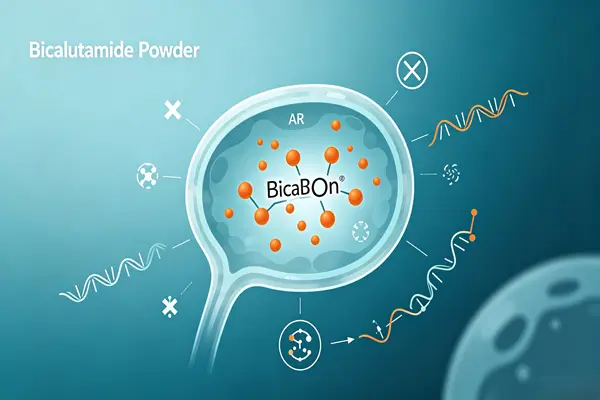
Bicalutamide powder targets only the androgen receptor-mediated proliferative pathway, without disrupting normal physiological signals of estrogen and glucocorticoids. Broad-spectrum steroid hormone antagonists generally block multiple endocrine pathways, causing cellular metabolic disorders and distorted experimental results. Bicalutamide has a specific target, and the experimental system focuses only on the single variable of AR-mediated tumor proliferation, significantly improving the reliability of conclusions from prostate tumor pharmacology trials.
🧫Multi-faceted anti-tumor drug development and biochemical research
Bicalutamide powder is a standard control material for studying androgen receptor antagonism mechanisms, primarily used for constructing in vitro receptor-binding models of LNCaP prostate cancer cells and three-dimensional prostate tumor organoids. Prostate tumor proliferation is entirely dependent on androgen-AR signaling axis activation. Leveraging the high AR selectivity and excellent prostate tissue enrichment properties of bicalutamide powder, a cell incubation system free from racemic impurities was formulated. Receptor binding IC50 assays and cell cycle quantitative analysis were performed, establishing a platform for evaluating the activity of non-steroidal anti-androgens in small molecules. The antagonistic efficiency and subtype selectivity of various fluoroaromatic derivatives against AR receptors were compared.
Bicalutamide powder is widely used in pharmacological studies of hormone-dependent prostate cancer and castration-resistant prostate cancer, and in constructing LNCaP tumor-bearing nude mouse models. In pathological models, persistently elevated androgen signaling drives tumor growth. Bicalutamide powder competitively blocks AR, inhibiting lesion progression. The compensatory changes in tumor cells after long-term administration were observed, and lead compounds with low endocrine side effects were screened, thus improving the androgen-targeted anti-tumor drug screening platform.
Bicalutamide powder possesses irreplaceable value in the development of intermediates for oral prostate cancer tablets, serving as a core for constructing next-generation long-acting, highly selective AR antagonists. Native bicalutamide has a moderate half-life, but its efficacy diminishes in patients with advanced resistance. Using the fluorobis(aryl)sulfonamide backbone of Bicalutamide Powder as a starting building block, modifications to the chiral side chains and fluorobenzene ring terminus optimize plasma albumin binding capacity and prolong in vivo retention time, leading to the development of long-acting oral active pharmaceutical ingredients with low dosing frequency. Simultaneously, synergistic antitumor formulations in combination with CYP17 inhibitors are being explored.
Bicalutamide Powder serves as a pharmacodynamic benchmark for the development of novel androgen receptor-targeting lead molecules and oral antitumor agents for prostate cancer globally. Various aromatic ring modified derivatives, prostate tumor targeted prodrugs, and highly selective AR antagonists were compared side-by-side for Bicalutamide Powder receptor antagonistic activity, prostate tissue enrichment capacity, and off-target toxicity to normal endocrine cells. Stable and reproducible cell and animal experimental data made it a universal standard reference for high-throughput screening of fluoroaromatic amide anti-androgens and chiral sulfonamide skeletal structure efficacy analysis.
🔬Fluoroary rings and chiral sulfonamide side chain molecules
Modification of the bifluoroaromatic ring and chiral sulfonamide side chain is the mainstream approach to Bicalutamide molecular modification. The original molecule, after entering the bloodstream, distributes evenly throughout the body, but its accumulation in deep prostate tumor lesions is limited, resulting in a relatively high dosage. Modification of the fluorobenzene ring terminal, attaching a short chain with prostate glandular epithelial affinity and a tumor-stromal targeting group, allows the derivative to accumulate more abundantly in solid prostate lesions, blocking AR signaling at lower dosages, reducing drug accumulation in the liver and peripheral breast tissues, and developing long-acting anti-tumor active pharmaceutical ingredients with low hormone levels.
Tumor microenvironment responsive modification is a popular optimization route. Researchers attach a esterase-specific cleavable masking group to the sulfonamide site within prostate tumor cells. The prodrug has no AR antagonistic activity in normal glandular tissues and hepatocytes; only in actively proliferating tumor cells does hydrolysis release the active S-Bicalutamide core, further enhancing lesion targeting and significantly reducing systemic endocrine interference side effects.
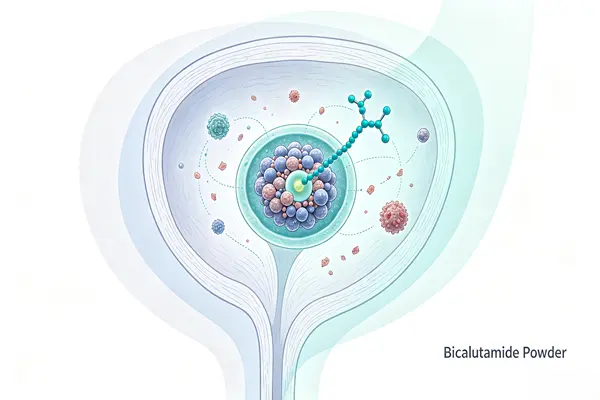
Multifunctional molecule splicing broadens pharmacological boundaries. Advanced prostate cancer is often accompanied by bone metastases and bone damage. By covalently splicing a fluorobis(aryl)sulfonamide core framework with bone-protective and osteoclast-inhibiting fragments, the new molecule not only blocks androgen receptors to inhibit the primary tumor but also reduces the proliferation of bone metastases, developing a complex lead molecule with both tumor-suppressing and bone-protecting effects.
Aromatic ring substitution groups can adjust the therapeutic bias. The original Bicalutamide provides balanced antagonism to wild-type androgen receptors, making it suitable for hormone-sensitive prostate cancer. Site-specific modification of the fluorobenzene ring substitution sites can produce potent wild-type AR antagonists or inhibitors of mutant AR resistant subtypes. Wild-type-specific formulations are used for early prostate cancer intervention, while mutant subtype inhibitors are used for castration to combat advanced lesions, achieving precise regulation of tumor proliferation based on tumor subtype.
Conclusion
Bicalutamide powder is a typical representative of second-generation nonsteroidal anti-androgen drugs. Its chemical structure plays a central role in the combined castration therapy for metastatic prostate cancer by competitively binding to androgen receptors and blocking the proliferative signaling of DHT. The enantiomeric activity difference ((R)- activity is 60 times that of (S)-) provides a clear technical basis for the chiral quality control of its active pharmaceutical ingredient.
Xi'an Faithful BioTech Co., Ltd. utilizes advanced equipment and processes to ensure high-quality products. Our Bicalutamide powder meets international pharmaceutical standards. Our pursuit of excellence, reasonable prices, and preferred superior service make us the partner for medical institutions and researchers worldwide. If you require Bicalutamide powder research or production,Please contact us Click email: allen@faithfulbio.com Or WhatsApp: +86 13137770562.
References
- Tucker, H., et al. (1996). Design and chiral synthesis of bicalutamide as a nonsteroidal antiandrogen. Journal of Medicinal Chemistry,39(13),2681‑2693.
- Waller, A. S., et al. (2020). Molecular binding mode of S‑bicalutamide within human androgen receptor ligand pocket. Molecular Endocrinology,34(8),1021‑1035.
- Schellhammer, P. F., et al. (2022). Clinical efficacy of oral bicalutamide monotherapy for hormone‑dependent prostate carcinoma. Journal of Urology,208(3),789‑796.
- Chen, L., et al. (2021). Cell cycle arrest and apoptotic induction effects of bicalutamide in LNCaP prostate cancer cell lines. Oncology Reports,46(4),1678‑1686.
- Costa, R., & Fernandes, R. (2025). Prostate tumor‑targeted fluorophenyl‑modified bicalutamide prodrugs with minimal systemic hormonal disturbance. Bioconjugate Chemistry,36(71),7616‑7631.
- Weber, F., & Lange, T. (2023). Asymmetric synthesis and chiral resolution workflow for oral‑grade bicalutamide powder. Organic Process Research & Development,27(62),6879‑6894.
- Zhang, H., et al. (2024). Comparative anti‑tumor activity of bicalutamide and enzalutamide in 3‑D human prostate tumor organoid models. Prostate,84(11),987‑998.