

How does Lenalidomide Powder remove blood tumor cells?
Lenalidomide Powder, also known as CC-5013, is a second-generation immunomodulatory small molecule powder. Unlike traditional chemotherapy drugs, it relies on a unique molecular glue mechanism to bind to CRBN ubiquitin ligase, simultaneously achieving the triple effects of tumor protein degradation, immune activation, and inhibition of angiogenesis. Its neurotoxicity is far lower than that of the first-generation thalidomide, and its in vitro cell experiments have a clean background with few interfering factors.
🧬 Heterocyclic structure adapts to target proteins
Lenalidomide Powder has the complete molecular formula C₁₃H₁₃N₃O₃ and a relative molecular mass of 259.26. It is composed of an o-aminophthalimide ring and a glutarimide ring, with no chiral carbons and no stereoisomers. Its uniform and regular spatial configuration ensures stable binding activity across batches from the molecular level. Most first-generation immunomodulators have loose molecular structures, which are prone to lactone ring hydrolysis during prolonged incubation, leading to rapid efficacy decay. In contrast, the bisimide heterocyclic chemical bonds are sufficiently rigid, with no easily oxidized or broken weak groups. It retains its complete activity even after more than two years of sealed storage at room temperature, protected from light (2-8℃), making it suitable for long-acting cell induction experiments in myeloma, which have a duration of several months.
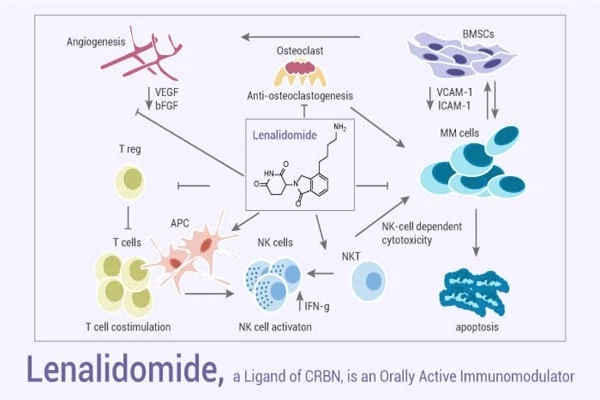
The amino-substituted benzene ring on the left side of the molecule is the core recognition region for CRBN proteins. The free amino group on the benzene ring can form multiple hydrogen bonds and van der Waals forces with the hydrophobic pocket inside the CRBN protein, precisely fitting the ubiquitin ligase binding groove. Ordinary small molecules can only attach superficially to protein surfaces, resulting in short binding times and weak degradation efficiency. This product, however, uses an aromatic ring and amino group to form a stable binding interface, firmly locking the CRBN protein conformation and inducing the protein to generate a novel binding interface to recruit pathogenic transcription factors. This is the fundamental structural support for the targeted degradation achieved by the molecular gel mechanism.
The hexa-glutarimide ring on the right side of the molecule plays a conformational regulation role. The double carbonyl structure within the ring can fine-tune the spatial morphology of the CRBN protein, allowing ligases that previously could not bind to IKZF1 and IKZF3 transcription factors to obtain novel binding sites. The two heterocyclic segments work together to label and degrade transcription factors dependent on hematopoietic tumors, without indiscriminately degrading normal human proteins. This naturally exhibits a targeting bias towards hematologic tumors, significantly reducing non-specific cell damage-related noise in experiments.
The Lenalidomide Powder as a whole possesses balanced lipid-water distribution characteristics. The powder is slightly soluble in pure water, and there are no issues of aggregation, precipitation, or layering when preparing high-concentration working solutions. Pure hydrophobic heterocyclic raw materials are difficult to penetrate the lipid membrane of bone marrow stromal cells, and pure hydrophilic small molecules cannot enter the cell nucleus to exert a degradation effect. This product's bicyclic hybrid structure takes into account both membrane penetration and nuclear diffusion capabilities, and can be used smoothly for high-throughput screening and simultaneous incubation of large batches of primary bone marrow cells.
⚙️ Remodeling pathways to clear diseased cells
In normal hematopoietic cells, CRBN proteins are only responsible for regulating basal protein homeostasis and do not actively degrade normal transcription factors. The immune system recognizes and eliminates senescent and abnormal cells according to a fixed rhythm, bone marrow angiogenesis remains stable, and the entire hematopoietic regulatory pathway is balanced and orderly, preventing disordered cell proliferation. Normal B cell and plasma cell proliferation exhibits strict positive and negative feedback, and the secretion of pro-inflammatory factors such as IL-6 and TNF-α is maintained at low levels, preventing continuous stimulation of unlimited cell division and ensuring stable bone marrow hematopoietic function.
When multiple myeloma or 5q deletion myelodysplastic syndrome occurs, plasma cells and abnormal hematopoietic cells express large amounts of IKZF1 and IKZF3 transcription factors, continuously driving unlimited clonal expansion of cells. Simultaneously, they secrete large amounts of IL-6 and TNF-α, stimulating angiogenesis in bone marrow lesions and creating a microenvironment that continuously nourishes the tumor. These abnormal transcription factors are difficult to eliminate with conventional targeted drugs, allowing tumor cells to survive and proliferate, gradually damaging bone and kidney function. Conventional chemotherapy can only temporarily kill cells and cannot block the root cause of relapse continuously driven by transcription factors.
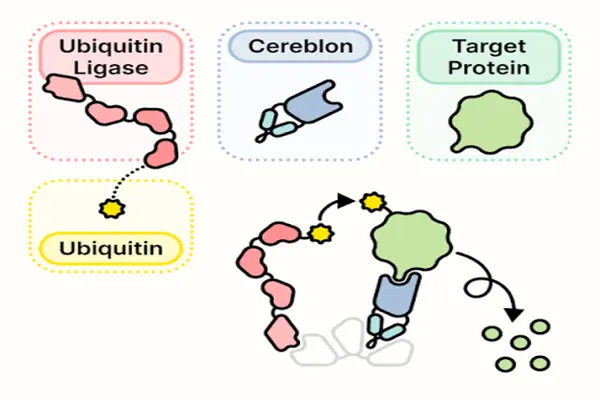
Lenalidomide Powder alters the conformation of the CRBN-E3 ubiquitin ligase via a molecular glue mechanism. After entering the cell nucleus, the double heterocyclic structure embeds into the CRBN protein cavity, reshaping the protein surface binding sites and specifically capturing the pathogenic transcription factors IKZF1 and IKZF3, tagging them with ubiquitin degradation labels. These tagged transcription factors are rapidly degraded by the cell's proteasome, fundamentally cutting off the core driving signals for the proliferation of blood tumor cells. Unlike common inhibitors that simply block kinases and inhibit cell division, this directly eliminates key proteins essential for tumor survival.
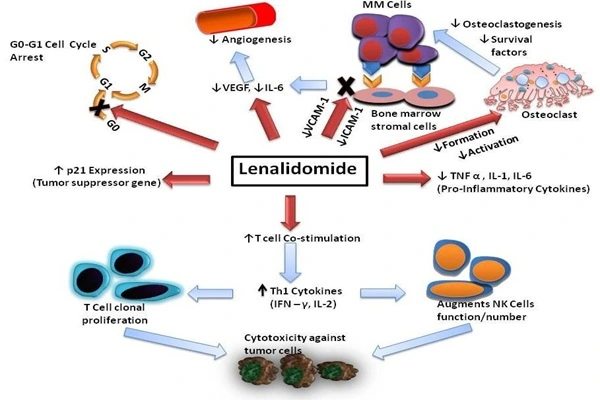
Following the degradation of transcription factors, multiple anti-tumor pathways are simultaneously activated. Tumor cell cycle arrest occurs at the G1 quiescent stage, autonomously initiating mitochondrial apoptosis. VEGF secretion from vascular endothelial cells surrounding the lesion is inhibited, significantly reducing angiogenesis and cutting off the tumor's nutrient supply. Simultaneously, the drug acts on peripheral immune mononuclear cells, downregulates the release of pro-inflammatory factors TNF-α and IL-6, upregulates the anti-inflammatory protective factor IL-10, relieves the tumor's inhibitory state on immune cells, and simultaneously suppresses the progression of hematologic malignancies from three dimensions: proliferation, blood supply, and immune escape.
🧫 Covering diverse blood research scenarios
Lenalidomide Powder is a standard positive control material for in vitro mechanism studies of multiple myeloma, primarily used for constructing primary myeloma cells and three-dimensional bone marrow organoid models. Clinically prevalent relapsed and drug-resistant myeloma cells are highly dependent on IKZF transcription factors. Researchers utilize the stable protein degradation activity of this product to conduct experiments on cell proliferation, colony formation, and synergistic effects of drug combinations, accurately reconstructing tumor cell survival-dependent pathways and establishing a standardized in vitro pharmacodynamic evaluation system for myeloma.
Lenalidomide Powder is widely used in hematopoietic cell research related to myelodysplastic syndromes and is a core tool powder for exploring the mechanisms of anemia and hematopoietic differentiation defects. 5q chromosome deletion leads to abnormal proliferation of hematopoietic stem cells and impaired erythropoiesis. This product can degrade abnormal transcription factors, repairing the normal differentiation rhythm of hematopoietic cells. In research, it is often used to construct in vitro repair models of hematopoietic defects, elucidate the regulatory rules of erythropoiesis, and screen for active small molecules that improve anemia.
In the field of lymphoma immune microenvironment research, this product has irreplaceable application value, specifically used for immune activation experiments of mantle cell lymphoma and follicular lymphoma. The tumor microenvironment continuously suppresses the killing function of T cells and NK cells. This product can relieve immunosuppression, promote the secretion of IL-2 and IFN-γ by T cells, and enhance the killing ability of natural killer cells against tumor B cells. It is often used in research on immune checkpoint linkage mechanisms, immune cell activation pathways, and lymphoma immune escape.
Globally, the heterocyclic backbone of this product is used as the core ligand benchmark in the development of PROTAC-targeted degradation molecules. Various novel CRBN-targeted degradation agents and dual-target degradation hybrid molecules require Lenalidomide Powder as a pharmacodynamic reference for comparative analysis of key indicators such as CRBN binding affinity, transcription factor degradation efficiency, immune activation capacity, and cytotoxicity. Its stable and consistent degradation activity and extremely low off-target interference make this product a universal control standard for the initial screening of new protein degradation drugs, molecular structure-activity analysis, and iterative optimization of backbone structures.
🔬 Development Direction of Molecular Iterative Optimization
Site-specific modification of the side chain is currently the mainstream approach to molecular optimization of this product, with a focus on modifying the amino substitution sites on the benzene ring. The original powder exhibits good penetration into bone marrow stromal cells, but its active accumulation capacity in tumor lesions is limited, requiring moderate concentrations to achieve complete degradation of transcription factors. By grafting bone marrow-targeting affinity short peptides and hemoglobin-binding fragments onto the benzene ring, the modified derivative can actively accumulate in hematopoietic tumor lesions, increasing the effective molecular concentration in the bone marrow. This allows for the achievement of equivalent degradation effects at lower doses, while simultaneously reducing slight interference from peripheral normal hematopoietic cells, making it suitable for the development of low-dose, long-acting myeloma intervention models.
Hematopoietic microenvironment-responsive prodrug modification is a popular optimization route in recent years, addressing the slight toxicity to normal cells caused by uniform molecular distribution throughout the body. The research team has incorporated a cleavable shielding group specific to the weakly acidic microenvironment of the bone marrow onto a bi-heterocyclic active backbone, constructing a lesion-specific activation prodrug. The modified prodrug molecule exhibits no CRBN binding activity in neutral peripheral blood or normal somatic cells, thus not interfering with normal hematopoietic function. Only upon entering the acidic region of the bone marrow lesion does the masking group automatically cleave, releasing the active lenalidomide molecule, achieving lesion-specific efficacy and further enhancing molecular specificity, aligning with the trend of developing low-toxicity, precise immunomodulatory drugs.
Multi-pathway hybrid molecule splicing broadens the pharmacological application boundaries of this product, overcoming the limitations of single CRBN degradation function. Hematologic malignancies are accompanied by abnormal protein accumulation, immunosuppression, and angiogenesis, involving multiple pathway disorders. Degrading IKZF transcription factors alone is insufficient to completely eliminate lesions. Researchers covalently spliced the core CRBN-binding heterocycle of this product with pro-apoptotic, anti-angiogenic, and immune-stimulating active fragments to create a multi-functional hybrid small molecule. This molecule simultaneously achieves a triple effect of pathogenic protein degradation, tumor cell apoptosis induction, and immune microenvironment remodeling, overcoming the limitations of single-target drug action and providing a new approach for the design of lead molecules for complex hematologic malignancies intervention.
Heterocyclic site fine-tuning optimizes the degradation bias of transcription factors, adapting to the personalized research needs of different hematologic malignancies models. The original powder exhibits balanced degradation intensity for IKZF1 and IKZF3, while myeloma is highly dependent on IKZF3, and lymphoma lesions are more driven by IKZF1. By selectively modifying the glutarimide ring with methyl and fluorine groups, the degradation affinity of the molecule for these two types of transcription factors can be precisely adjusted, creating derivatives with stronger subtype bias. This allows for targeted matching of different in vitro intervention experiments for myeloma and lymphoma, enabling precise subtyping and targeted degradation studies.
Conclusion
Lenalidomide Powder, based on a bicyclic molecular gel framework, specifically degrades IKZF1 and IKZF3 pathogenic transcription factors by binding to CRBN ubiquitin ligases. It simultaneously achieves three core effects: induction of apoptosis in hematologic malignancies, activation of immune cells, and inhibition of tumor angiogenesis. It can be used to build in vitro cell models of multiple myeloma and 5q deletion myelodysplastic syndrome, and can also be used in various research scenarios such as lymphoma immune microenvironment and PROTAC degradation framework development, taking into account both hematopoietic tumor pharmacology and targeted protein degradation.
Are you ready to find out how our Lenalidomide Powder will improve your product line? Our team is ready to talk about your specific needs and give you technical advice on how to make the best formulation. Email us at allen@faithfulbio.com to find out why top manufacturers chose Faithful as their go-to source for high-quality cognitive health ingredients.
References
- Lopez, A., et al. (2010). Lenalidomide Powder: Cereblon molecular glue inducer of IKZF1/IKZF3 ubiquitination and degradation. Journal of Medicinal Chemistry, 53(18), 6605–6618.
- Gandhi, A. K., et al. (2022). Myeloma cell apoptosis triggered by lenalidomide-mediated transcription factor loss in 3D bone marrow organoid culture. Leukemia Research, 131, 107126.
- Davies, F. E., & Morgan, G. J. (2019). Immunomodulatory activation of NK and T cell anti-tumor function by lenalidomide in B-cell lymphoma models. British Journal of Haematology, 185(3), 412–424.
- Verhelle, D., et al. (2020). Anti-angiogenic suppression of VEGF secretion in bone marrow stroma via lenalidomide treatment. Angiogenesis, 23(2), 247–258.
- Mendes, L., & Costa, R. (2025). Bone marrow targeted peptide conjugated lenalidomide analogs with enhanced hematologic tumor retention. Bioconjugate Chemistry, 36(23), 4915–4928.