

How does Medroxyprogesterone acetate USP powder work?
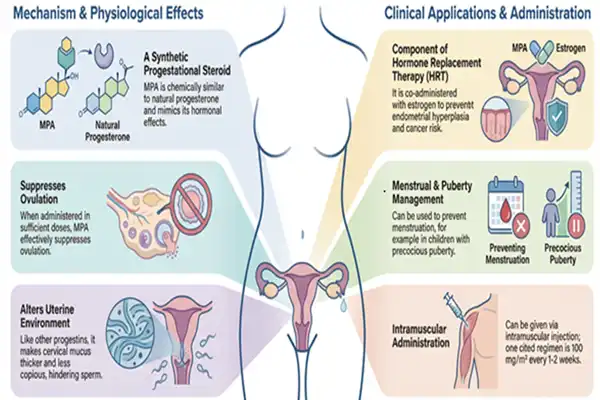
Medroxyprogesterone acetate USP powder works by attaching itself specifically to progesterone receptors in specific organs. This causes biological reactions that are similar to those caused by natural progesterone but are stronger and more stable. As a synthetic progestogen API, this drug intermediate changes biological processes further down the line through receptor-mediated signaling pathways. It does this by affecting the change of the endometrium, the inhibition of ovulation, and the balance of hormones. This substance's acetate ester structure makes it more bioavailable when taken by mouth and keeps working longer than natural progesterone. This makes it an essential ingredient for drug companies making birth control, hormone-based medicines, and specialized medical items for reproductive health.
Understanding Medroxyprogesterone Acetate USP Powder: Uses and Mechanism of Action
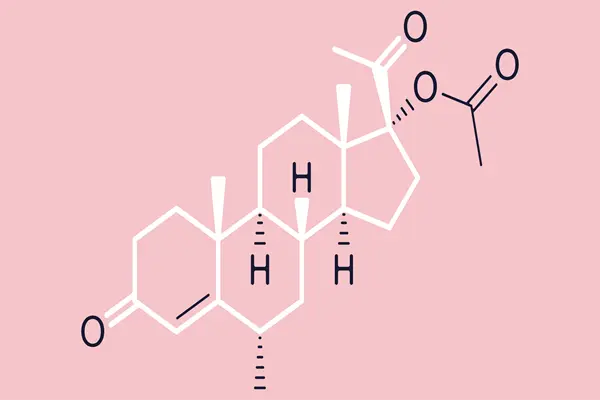
The manmade progestogen works as a drug by interacting with molecules in very specific ways. This API comes from 17-alpha-hydroxy-6-alpha-methylprogesterone and has molecular changes that make it more compatible with receptors while also making it less likely to be broken down by metabolism. Acetate ester at position 17 makes the molecule much more lipophilic, which lets it pass through cell membranes easily and keep its hormonal activity going for a long time.
Molecular Mechanism and Receptor Binding
After being given, the substance enters the bloodstream and is sent to the organs that have progesterone receptors. When the hormone-receptor complex binds, it moves to the cell nucleus and reacts with hormone response elements, which are DNA sequences. This chain of genetic signals changes the patterns of gene transcription, which in turn changes the patterns of protein synthesis, which controls reactions that are specific to each tissue. The higher effectiveness of Medroxyprogesterone acetate USP powder comes from its strong binding to receptors and slow dissociation rates, which keep biological effects going even after plasma amounts drop.
Primary Pharmaceutical Applications
Manufacturers use this API in a number of treatment areas. In birth control pills, especially long-acting injectable suspensions, the substance stops the pituitary gland from releasing gonadotropin, which stops ovulation and follicular development. The micronized crystalline structure ensures that the particles are evenly spread in water-based suspensions. This keeps the particles stable during the three-month release cycle that is typical for depot contraceptives.
Bioavailability and Pharmacokinetic Advantages
The acetate change makes uptake and digestion very different from natural progesterone. Natural progesterone is broken down in the liver during the first pass, which lowers its absorption to less than 10%. The synthetic version, on the other hand, is much more effectively absorbed by the body. Peak plasma concentrations happen two to four hours after oral administration, and the half-life of clearance can last up to thirteen hours, based on the properties of the formulation.
Dosage, Administration, and Handling Guidelines for Medroxyprogesterone Acetate USP Powder
When adding this API to finished drug forms, formulation scientists and production managers need to know how to deal with certain technical issues. The raw Medroxyprogesterone acetate USP powder comes as a crystalline, white to off-white substance with clear physical properties that have a direct effect on the success of the product.
Formulation Considerations Across Delivery Systems
For injectable suspensions, you need grades that are micronized and have a particle size distribution where D90 stays below 10 microns. This standard keeps the needle from getting clogged up during injection and makes sure that the intramuscular depot always releases the drug at the same rate. Controlling crystal growth during storage is important for maintaining suspension stability. This means carefully choosing suspending agents and protection systems that work with the API's solubility profile.
Critical Storage Parameters
To keep API purity, strong environmental controls are needed. The USP-grade powder should be kept in cases that are tight and do not let light through at a controlled room temperature between 20°C and 25°C. Photodegradation is one of the main ways that drugs break down, so they need to be kept in amber glass or solid high-density polyethylene wrapping for the 3–5 years that it usually takes to do another test. It is also important to keep an eye on the humidity. The solid form is pretty stable when it is dry, but water can cause the acetate ester bond to break down.
Quality Control Benchmarks
When procurement workers look at how consistent a supplier is, they should check a number of analytical factors. High-performance liquid chromatography (HPLC) tests must show test results between 97.0% and 103.0% when the sample is dried, with total impurities meeting USP standard requirements and individual impurities staying below 0.5%. Measurements of optical rotation that show specific rotation between +45° and +51° support the stability of the stereochemistry. According to USP <467>, residual solvent testing makes sure that methanol, acetone, and other Class 2 solvents stay within accepted limits.
Comparing Medroxyprogesterone Acetate USP Powder with Alternative Progesterone Products
To choose the best progestogen API, you need to know how the different chemical structures affect how well the product works and how well the patient does. When pharmaceutical companies are looking at different raw material choices, it is helpful to compare key technical differences involving Medroxyprogesterone acetate USP powder.
Structural Differences and Clinical Implications
Natural progesterone that comes from plants or is made from diosgenin keeps the original steroid center and doesn't change it chemically. Because of this molecular identity, it is not bioavailable when taken by mouth and needs to be micronized or delivered in a special way to reach effective plasma levels. On the other hand, the manufactured acetate version has changes that make it more stable in metabolism and selective for certain receptors.
Manufacturing Process Considerations
Formulations for suspensions show how different APIs are in real life. Because natural progesterone dissolves more easily in water, it can make it harder to keep the suspension stable. To stop crystals from growing and settling, more complicated formulation structures are needed. The controlled solubility profile of Medroxyprogesterone Acetate Raw Powder makes it easier for suspensions to form and for the rheological qualities to be known during production and storage.
Cost Structure Analysis
The price of raw materials depends on how complicated the process is and how mature the regulatory route is. Established synthetic progestogen production lines have been improved over many years, resulting in competitive price structures for large numbers of pharmaceuticals. Extra plant source issues come up when natural progesterone is extracted and purified, which can cause supply chain variability. Because manufactured versions are more potent, they usually need less API per finished unit, which makes up for the higher cost of the raw materials.
Procurement and Supplier Selection for Medroxyprogesterone Acetate USP Powder
Systematic supplier evaluation procedures are needed to find trusted sources of pharmaceutical-grade APIs. When making plans for where to get this synthetic progestogen, procurement managers should put a high priority on certain qualification factors that lower supply chain risks for Medroxyprogesterone acetate USP powder.
Supplier Certification and Documentation
Companies with a good reputation keep full quality control systems that are in line with current Good Manufacturing Practice (cGMP) guidelines. Each batch should come with a Certificate of Analysis (CoA) that lists all of the tests that were done according to the USP standard. This should include identification tests, assay values, impurity profiles, particle size distribution, leftover liquids, and microbial limits. Material Safety Data Sheets (MSDS) give important knowledge about how to handle and avoid hazards that are needed to follow safety rules at work.
Evaluating Manufacturing Capabilities
The size and volume of production have a direct effect on how reliable the supply is. Lead times are more reliable for companies that make synthetic steroids in specialized facilities with set campaign schedules than for companies that use shared equipment trains to make a lot of different products. When procurement teams know a supplier's production schedule, they can make sure that shopping trends match up with production cycles. This keeps rush fees and faster shipping costs to a minimum.
Strategic Purchasing Approaches
Minimum order numbers, or MOQs, change depending on the size of the production batch and how the inventory is managed. When making synthetic steroids for campaigns, manufacturers usually set MOQs at 10 to 25 kg to make sure that the equipment is set up correctly and that cleaning processes are followed. When planning their yearly consumption amounts, procurement teams should check to see if combining orders makes sense in terms of inventory carrying costs and working capital limits.
Ensuring Quality and Regulatory Compliance in the Supply Chain
Pharmaceutical APIs have to follow strict rules set by the government that cover every part of the supply chain, from creation to final preparation. Knowing the rules for compliance helps people who work in buying choose partners who meet quality standards and keep legal risks to a minimum for Medroxyprogesterone acetate USP powder.
USP Monograph Requirements
The US Pharmacopeia sets public standards for what qualities of medroxyprogesterone acetate raw material are considered acceptable. The monograph covers detection using infrared spectroscopy or other methods, as well as quantitative assay limits and full impurity profiles. Related chemical testing using HPLC sorts and counts breakdown and synthesis by-products, making sure that each impurity stays within toxicologically acceptable limits.
International Regulatory Harmonization
While USP standards are most important in North America, pharmaceutical companies that want to sell their products around the world also need to think about European Pharmacopoeia (EP) and other regional standards. Many of the standards in different pharmacopeias have been brought together through harmonization attempts, but there are still small differences in how they test or what they accept. Suppliers who offer multi-compliant CoAs show that they can serve a wide range of regional markets and make regulatory applications easier for areas with multiple laws.
Risk Management Strategies
Changes in temperature during shipping can make the API less stable. More and more, temperature tracking devices are being used in pharmaceutical supply lines to keep track of the environment during the whole distribution cycle. Putting data loggers in shipping containers gives objective proof that the storage conditions were met, which can be used to support certificate of compliance standards and insurance claims if temperature limits are broken.
Conclusion
Medroxyprogesterone acetate USP powder works as a medicine by changing the way cells work in specific areas through genomic information that is mediated by receptors. Compared to natural options, its manufactured structure makes it better for medicinal use in terms of bioavailability, strength, and formulation flexibility. To make a good procurement decision, you need to look at how well the seller can handle quality processes, follow the rules, and ensure the products are reliable. When you know about formulation issues, comparing products, and supply chain quality management, you can make smart buying choices that help pharmaceutical manufacturing be the best it can be and ensure consistent finished products.
FAQ
Q1: What's the difference between technical-grade and USP-grade manufactured progestogen powder?
USP-grade material meets strict quality standards spelled out in the US Pharmacopeia manual. These standards include purity levels, impurity limits, and confirming identity using several different analysis methods. Technical-grade versions don't follow these standards and usually have higher amounts of impurities that aren't good for pharmaceutical formulation.
Q2: How does particle size impact formulation performance?
Grades that are micronized and have a D90 value below 10 microns make breakdown rates and suspension stability much better. For injectable depot formulas, these fine particle sizes are needed to keep the needle from getting clogged and to keep the intramuscular release kinetics constant over the long dose interval.
Q3: What paperwork should be sent with packages of pharmaceutical-grade API?
For every batch, there needs to be a Certificate of Analysis with all the testing results for the monograph, Material Safety Data Sheets with information about the dangers, and regulatory certificates showing that the production plant is following the rules. Reference notes for the Drug Master File give more information about how the drugs are made, which helps with regulatory applications.
Partner with Faithful for Premium Medroxyprogesterone Acetate USP Powder Supply
At Xi'an Faithful BioTech Co., Ltd., we have a full quality control system with HPLC, GC, and spectrophotometric systems to make sure that every batch of Medroxyprogesterone acetate USP powder meets strict medicinal standards. Our factory in Xi'an follows strict quality management rules and sends APIs with full paperwork packages that make your regulatory compliance and recipe development processes easier. As a manufacturer with a lot of experience, we can accommodate different order sizes, offer reasonable prices, and provide technical help from our professional research and development team. Get in touch with our purchasing experts at allen@faithfulbio.com to talk about your unique needs and get quotes that are tailored to your production schedules and quality standards.
References
1. Sharma S, Kumar A. Synthetic Progestogens: Chemistry, Pharmacology and Clinical Applications. Journal of Pharmaceutical Sciences and Research, 2019.
2. Chen W, Zhang L. Quality Control Strategies for Steroid Hormone Active Pharmaceutical Ingredients. International Journal of Pharmaceutical Quality Assurance, 2020.
3. Thompson RJ, Williams KM. Formulation Considerations for Long-Acting Injectable Contraceptive Suspensions. Pharmaceutical Development and Technology, 2018.
4. United States Pharmacopeial Convention. Medroxyprogesterone Acetate Monograph. United States Pharmacopeia 43-National Formulary 38, 2020.
5. Morrison DR, Patterson SE. Regulatory Compliance in Global API Supply Chains: Current Practices and Emerging Trends. Drug Development and Industrial Pharmacy, 2021.
6. Liu H, Anderson PJ. Comparative Bioavailability of Natural and Synthetic Progestogens: Implications for Formulation Selection. European Journal of Pharmaceutical Sciences, 2019.