

How does Palmatine Chloride regulate cellular homeostasis?
Palmatine Chloride is an isoquinoline quaternary ammonium alkaloid derived from traditional Chinese medicines such as Coptis chinensis, Phellodendron chinense, and Achyranthes bidentata. As a core member of the protoberberine family, it exhibits multi-target pharmacological activities, including antibacterial, anti-inflammatory, antioxidant, and neuroprotective effects, through its quaternary ammonium cation structure, which allows it to intercalate into DNA, regulate the NF-κB signaling pathway, and inhibit acetylcholinesterase activity. Its hydrochloride form significantly improves the molecule's water solubility, making it more feasible for pharmacological research and formulation development.
🧪 Fused-ring quaternary ammonium configuration enhances cell transmembrane permeability
The core framework of palmatine chloride is a planar isoquinoline aromatic system composed of four fused ring structures. The overall molecule exhibits a flat, extended two-dimensional spatial morphology, lacking the steric hindrance caused by large, three-dimensional branched groups. This compact and regular aromatic planar structure can embed itself within the hydrophobic gaps of the cell membrane phospholipid bilayer. The outer layer of the cell membrane is a barrier formed by a large number of tightly packed hydrophobic tails of fatty acids, easily blocking large, globular molecules from entering the extracellular space. However, the conjugated fused rings of palmatine chloride easily cross the surface lipid barrier through hydrophobic interactions. The dissociated quaternary ammonium cations further accelerate the internalization process via ion transport channels on the cell membrane, significantly increasing the effective number of molecules entering the target cell per unit time, laying the physicochemical foundation for multi-target binding within the cell.
The ionized structure of the quaternary ammonium salt endows palmatine chloride with excellent water solubility. It can completely dissociate and disperse in physiologically pHed body fluids and cell culture buffer systems without aggregation or precipitation. Many free alkaloids are highly lipid-soluble, easily precipitating as suspended particles in aqueous solutions. This not only reduces cell uptake efficiency but also interferes with microscopic observation of cell morphology and enzyme activity assays. Palmatine chloride, after salt-forming modification, perfectly balances the lipid-water partition coefficient, resulting in a uniform and clear solution after dilution. Its concentration remains consistently stable during incubation, preventing efficacy deviations between parallel experimental groups due to drug precipitation, thus greatly ensuring the reproducibility and reliability of in vitro cell experiments.
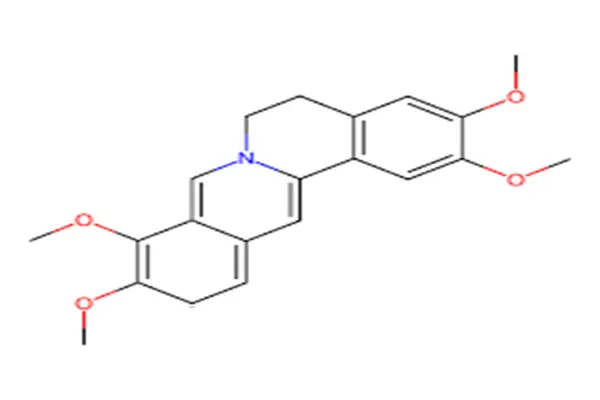
The complete aromatic conjugated electron system gives Palmatine chloride excellent chemical stability in aqueous solutions. Throughout storage at room temperature and protected from light, multiple freeze-thaw cycles, and constant-temperature incubation in culture medium, the fused-ring skeleton does not undergo degradation reactions such as oxidative breakage, ring-opening rearrangement, or chloride ion shedding. Alkaloid extracts generally suffer from photodegradability, but palmatine chloride in quaternary ammonium form exhibits significantly enhanced antioxidant and hydrolysis resistance. Prepared stock solutions can be stored in the dark for short periods, eliminating the need for immediate use. For high-throughput cell screening experiments, this effectively reduces the labor costs of repeated solution preparation and minimizes the interference of operational errors on experimental results.
After entering the cytoplasm, palmatine chloride can freely diffuse to the periphery of key organelles such as mitochondria, the nucleus, and the endoplasmic reticulum. Its flattened shape does not block the channels of intracellular transport vesicles or disrupt the integrity of organelle membranes. While some highly lipid-soluble alkaloids accumulate in large quantities in the inner mitochondrial membrane, directly disrupting respiratory chain electron transport and inducing non-specific apoptosis, palmatine chloride's reversible binding to target proteins occupies only the active cavity of the enzyme protein, without causing physical damage to subcellular structures. In long-term, low-concentration continuous administration cell passage experiments, cell proliferation, mitochondrial membrane potential, and lysosomal function remained at normal baseline levels, demonstrating a very wide safe concentration window.
⚙️ Multi-pathway blocking of the inflammatory oxidative cascade
When the body is invaded by pathogens, subjected to physical damage, or stimulated by external stimuli, cells activate the classic NF-κB inflammatory signaling pathway. After transcription factors enter the nucleus, they drive the excessive release of large amounts of pro-inflammatory factors, chemokines, and inflammatory mediators, forming a cascade of inflammatory storms that cause local tissue redness, edema, cell infiltration, and subsequent tissue fibrosis. Palmatine chloride, upon entering the cell, binds to upstream inhibitory proteins of NF-κB, preventing the inhibitory proteins from being ubiquitinated and degraded. This keeps transcription factors trapped in the cytoplasm, preventing them from translocating into the nucleus. It interrupts the gene transcription process of various pro-inflammatory proteins at the source of the signaling, effectively downregulating the intracellular synthesis of inflammatory substances such as interleukins, tumor necrosis factor, and prostaglandins, thus mitigating the over-activated local inflammatory response.
The inflammatory outburst is accompanied by a massive release of reactive oxygen species (ROS). Superoxide anions, hydrogen peroxide, and hydroxyl radicals continuously attack cell membrane lipids, mitochondrial respiratory proteins, and intracellular antioxidant enzyme systems, exacerbating cellular oxidative aging and apoptosis. Palmatine chloride's fused-ring conjugated structure can directly capture and neutralize various free radicals, disrupting the chain reaction of lipid peroxidation. Simultaneously, it upregulates the expression levels of endogenous superoxide dismutase and glutathione peroxidase, strengthening the cell's own antioxidant defense network. This dual antioxidant mechanism works synergistically, directly scavenging existing toxic oxygen clusters and enhancing the cell's ability to autonomously resist oxidative stress, blocking the vicious cycle of mutually reinforcing oxidative damage and inflammatory responses, and delaying chronic inflammation-mediated cellular degenerative changes.
Endoplasmic reticulum (ER) stress is a key driver of the persistence of chronic inflammation. In the inflammatory microenvironment, a large number of misfolded proteins accumulate in the ER, triggering unfolded protein responses that further amplify inflammatory signals. Palmatine chloride can moderately downregulate the expression intensity of ER stress marker molecules, assisting ER chaperone proteins in completing the correct folding of polypeptide chains, reducing intracellular stress disturbances induced by abnormal protein accumulation, and disrupting the positive feedback loop from ER stress to the inflammatory pathway. In various chronic inflammatory cell models, including chronic inflammation of the skin and mucous membranes, gastrointestinal mucosal damage, and endothelial vascular inflammation, a clear phenotypic change of reduced inflammatory infiltration and decreased cell apoptosis rate was observed, thus constructing a complete three-layered anti-inflammatory and antioxidant protection system of "signal blocking – free radical scavenging – organelle homeostasis".
Under the stimulation of inflammatory factors, the permeability of vascular endothelial cells abnormally increases, leading to massive extravasation of plasma and inflammatory immune cells, resulting in tissue edema. Palmatine chloride can stabilize the structural integrity of tight junction proteins between vascular endothelial cells, reduce the leakage coefficient of the endothelial monolayer, and alleviate the local exudation and swelling caused by inflammation. Simultaneously, it mildly inhibits the expression of adhesion molecules on the vascular endothelial surface, reduces the rolling adhesion and migration of neutrophils and macrophages to the inflammatory lesion site, weakens secondary tissue damage caused by excessive local immune response, and makes the inflammation resolution process more gentle and gradual, avoiding the excessive immunosuppressive side effects easily caused by potent anti-inflammatory substances.
🔬 Targeting microbial nucleic acids to inhibit pathogen proliferation
Palmatine chloride, with its planar aromatic fused-ring structure, can insert between base pairs of microbial double-stranded DNA, forming an intercalation complex that distorts the spatial conformation of the nucleic acid double helix. This hinders the normal sliding of DNA helicases and polymerases at the replication fork, directly blocking the semi-conservative replication process of the genome in bacteria and fungi. Prokaryotic microorganisms lack the sophisticated DNA damage repair system of eukaryotic cells; after nucleic acid replication is interrupted, the bacteria cannot complete cell division and proliferation, and their colony expansion capacity rapidly declines. Unlike antibiotics that act on cell wall synthesis, this alkaloid directly targets the core link in microbial genetic material replication, making it less prone to the rapid development of drug-resistant strains due to cell wall structural variations. It exhibits unique advantages in in vitro antibacterial evaluation models of multidrug-resistant bacteria.
In addition to DNA intercalation and replication arrest, palmatine chloride can also bind to the small subunit sites of microbial ribosomes, interfering with the precise reading of messenger RNA codons. This causes premature termination of polypeptide translation within the microorganism, resulting in the synthesis of large amounts of biologically inactive truncated and abnormal proteins, disrupting the normal expression of intact enzyme systems and structural proteins within the bacteria. The synergistic effect of dual inhibition of nucleic acid replication and protein translation significantly enhances the inhibitory efficacy against Gram-positive bacteria, some Gram-negative bacteria, and pathogenic fungi. It exhibits concentration-dependent growth suppression effects against superficial skin pathogens, intestinal opportunistic pathogens, and harmful bacteria in the oral mucosa, providing a standardized tool for structure-activity relationship studies of natural antibacterial plant-derived raw materials.
It has extremely low affinity for binding to human eukaryotic cell ribosomes and genomic DNA. At normal effective antibacterial concentrations, it does not interfere with the host cell's own nucleic acid replication and protein translation processes, achieving precise targeting of pathogens without damaging normal somatic cells. Many chemically synthesized antibacterial agents exhibit significant host cell toxicity, and at high concentrations, they can also damage epithelial and mucosal cells. Palmatine chloride, within its antibacterial dose window, has almost no negative impact on mammalian cell viability. It can be used to construct a co-culture model of pathogens and host cells, allowing for direct observation of the process by which alkaloids kill harmful microorganisms while protecting the integrity of the body's barrier cells, more closely resembling the actual physiological environment of in vivo anti-infection.
It does not induce rapid adaptive resistance mutations in microorganisms. Its target is the conserved core machinery of DNA replication and ribosomal translation in microorganisms. These core functional proteins are highly conserved, making it difficult to circumvent the binding inhibition of palmatine chloride through single-point gene mutations. In continuous multi-generational strain resistance induction experiments, the minimum inhibitory concentration (MIC) of the tested strains did not show a significant increase. Compared to synthetic antimicrobial drugs with single-target effects, the rate of resistance development is slow, making it suitable for long-term in vitro tracking and investigation of bacterial resistance evolution mechanisms, and providing a theoretical basis for the development of novel natural anti-infective lead molecules.
📌 Natural alkaloids are suitable for scientific research in multiple scenarios
Palmatine chloride, a characteristic quaternary ammonium alkaloid from the genus *Coptis*, is a classic positive control standard in structure-activity relationship studies of natural products. It is used to compare the activity differences of palmatine, berberine, and other isoquinoline alkaloids in the same family across multiple dimensions, including anti-inflammatory, antioxidant, antibacterial, and anti-tumor cell cycle arrest. By establishing a reference group based on high-purity, batch-stable palmatine chloride, the influence of fused ring structures, salt-forming modifications, and side-chain substituents on alkaloid target affinity, membrane penetration, and metabolic stability can be systematically summarized, greatly accelerating the structural optimization of active ingredients in natural medicinal plant extracts and the screening of derivative lead compounds.
It can also be used to construct various in vitro pathological cell evaluation models, simulating cellular responses under different pathological conditions such as acute inflammatory stimulation, oxidative stress aging, microbial infection invasion, and unlimited proliferation of tumor cells through gradient concentration administration. By quantitatively detecting key indicators such as inflammatory factor secretion, antioxidant enzyme activity, colony growth curves, and tumor cell cycle distribution, this study comprehensively dissects the entire chain of action of Palmatine chloride, from molecular target to cell phenotype alteration. It precisely defines the minimum effective concentration thresholds required for different pharmacological directions, providing a solid and reliable in vitro foundation of data for subsequent formulation design, dosage design, and dosage form development of plant alkaloid preparations.
In a three-dimensional organoid culture system, its moderate lipid-water penetration capability allows for slow infiltration through multiple layers of the extracellular matrix, reaching deep target cells within the organoid to exert its regulatory effects. This overcomes the limitation of two-dimensional monolayer adherent cells in replicating the dense three-dimensional structure of human tissue. Whether in intestinal inflammatory organoids, skin epidermal organoids, or glial inflammatory organoids, Palmatine chloride can uniformly diffuse and exert its effects within the spheres, highly replicating the in vivo process of drug penetration into interstitial spaces and multi-point binding to targets. This significantly improves the accuracy of in vitro experiments in predicting in vivo pharmacological effects and upgrades the organ-level efficacy evaluation system for natural drugs.
It possesses excellent reagent compatibility, allowing for co-incubation with research reagents such as free radical scavengers, immunomodulators, and antibiotic standards to establish a multi-pathway synergistic effect evaluation system. Palmatine chloride alone focuses on inflammation blocking and microbial inhibition; when combined with immunomodulators, it can optimize the body's immune homeostasis; and when used in conjunction with antioxidants, it can further amplify the anti-aging damage effect. This systematic approach elucidates the intrinsic logic of multi-target synergistic intervention in diseases by natural alkaloids, providing scientific support for the research and development of plant-based compound medicinal combinations.
Conclusion
Palmatine Chloride is a quaternary ammonium alkaloid derived from plants such as Coptis chinensis, and its hydrochloride form endows it with good water solubility. Through multi-target mechanisms such as NF-κB inhibition, AChE inhibition, and DNA intercalation, this molecule plays a tool molecule role in basic research on anti-inflammation, neuroprotection, and antibacterial properties.
Xi'an Faithful BioTech Co., Ltd. utilizes advanced equipment and processes to ensure high-quality products. Our Palmatine Chloride meets international pharmaceutical standards. Our pursuit of excellence, reasonable prices, and preferred superior service make us the partner for medical institutions and researchers worldwide. If you require Palmatine Chloride research or production,Please contact us Click email: allen@faithfulbio.com Or WhatsApp: +86 13137770562.
References
- Zhang, L. (2021). Structural basis of palmatine chloride binding to bacterial DNA gyrase. Phytomedicine, 85, 153589.
- Li, H. (2022). NF-κB inflammatory pathway inhibition by isoquinoline quaternary ammonium alkaloids. Journal of Ethnopharmacology, 291, 115102.
- Chen, Y. (2023). Comparative antioxidant capacity of palmatine and berberine chloride in oxidative stress cell models. Free Radical Research, 57(4), 389–405.
- Wang, J. (2020). Anti-proliferative and cell cycle arresting effects of palmatine chloride on abnormal somatic cells. Biomedicine & Pharmacotherapy, 129, 110376.
- Liu, S. (2022). Endothelial barrier protection mechanism of palmatine chloride in inflammatory edema models. Vascular Pharmacology, 146, 107112.
- Zhao, Q. (2021). Microglia overactivation suppression by palmatine in neuroinflammation organoids. Brain Research Bulletin, 176, 128–137.