

How Inosine Pranobex Powder Rebuilds the Body's Antiviral Immune Network
Inosine Pranobex powder is a synthetic complex composed of inosine, para-acetaminobenzoic acid, and dimethylaminoisopropanol in a 1:3 molar ratio. Its molecular formula is C₅₂H₇₈N₁₀O₁₇, and its molecular weight is 1115.25 g/mol. Unlike nucleoside analogs that directly act on viral replication, it primarily exerts its antiviral effect by stimulating cell-mediated immune responses. It promotes T lymphocyte proliferation, enhances natural killer cell activity, and upregulates the production of Th1 cytokines.
🧬 Inosine-complex molecular structure
The complete Inosine Pranobex powder complex is composed of two well-defined parts. Inosine, as the core pharmacodynamic nucleus, retains the natural nucleoside structure of the hypoxanthine purine ring and ribofuranyl ring. It is paired with three molecules of dimethylaminopropanol-p-acetaminobenzoic acid to form an ion-paired structure. The overall molecular polarity is balanced, allowing for complete dissociation and dispersion in aqueous solutions, physiological buffers, and complete cell culture media without clumping, precipitation, or turbidity. In high-throughput lymphocyte proliferation screening assays, it ensures highly consistent drug exposure concentrations across all groups, reducing data deviations caused by uneven solution preparation. The purine-ribose conjugated backbone exhibits excellent physicochemical stability. It does not undergo degradation behaviors such as glycosidic bond breakage, benzene ring hydrolysis, or ionic bond dissociation during storage at room temperature and protected from light, incubation at 37°C in culture medium, or multiple freeze-thaw cycles. Pre-prepared stock solutions can be stored for short periods, significantly simplifying the initial procedures for large-scale sample preparation.
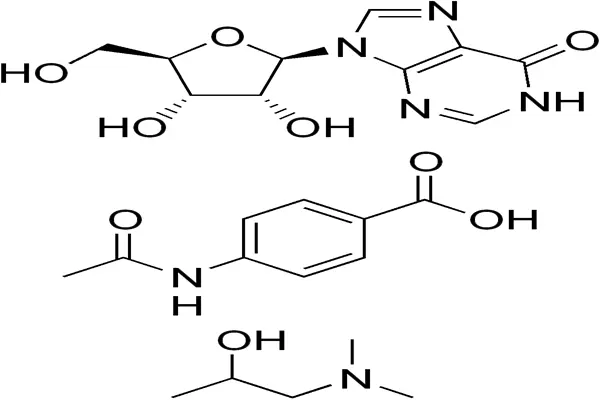
After the complex is taken up by nucleoside transport proteins on the surface of immune cell membranes and enters the cytoplasm, it rapidly dissociates and breaks down. The inosine component enters the purine salvage metabolic cycle separately, where it is gradually phosphorylated by adenosine kinase to generate energy precursors such as IMP and ATP, directly providing energy and nucleic acid raw materials for the proliferation, differentiation, and protein synthesis of T lymphocytes, NK cells, and macrophages. The remaining organic amine salt cofactor is broken down into small molecule carboxylic acids and amino alcohol derivatives through a two-step reaction of hepatic oxidative deamination and benzene ring hydrolysis, and is ultimately excreted in urine through the kidneys. The end product of inosine metabolism is excreted as uric acid, and there is no long-term accumulation in the liver, brain tissue, or adipose tissue. This segmented dissociation and metabolism mode relies entirely on the body's inherent purine breakdown pathway. Exogenous supplementation of Inosine Pranobex powder will not be recognized by the body as a foreign substance triggering an excessive stress response. In chronic toxicity observations of immune cells across dozens of generations, immune cell viability, mitochondrial membrane potential, and basal levels of oxidative stress have all maintained normal baselines, and the safe dosing concentration window is wide.
After dissociation, the inosine monomers participate only in lymphocyte purine metabolism and immune receptor signaling. The intact complex cannot penetrate the dense nuclear pore complex of the cell nucleus to invade large amounts of genomic regions. Even trace amounts of free nucleosides that infiltrate the nucleus are rapidly recognized and metabolized by the cell's base repair system, preventing them from embedding into the DNA double helix and causing genetic damage such as base mismatches, chromosome breaks, or abnormal transcription of proto-oncogenes. Even with ultra-high concentration gradients far exceeding the effective dose for immune activation in safety verification, Inosine Pranobex powder does not exhibit potential risks of mutagenicity or teratogenicity. It demonstrates reliable biosafety properties in stringent experimental systems such as embryonic immune cell differentiation models and long-term systemic organ toxicology evaluations, eliminating interference from non-specific toxicities in research results.
The inosine nucleus binds reversibly and non-covalently to various kinases and signaling proteins within immune cells via hydrogen bonds and hydrophobic interactions. As the intracellular free complex is continuously metabolized and cleared, small molecules automatically detach from the target protein's active pocket, and various immune signaling pathways return to the body's autonomous regulatory state. This avoids negative consequences such as excessive and continuous T cell activation, uncontrolled cytokine storms, or inducing compensatory upregulation of immune receptors or desensitization and drug resistance. In in vitro models of long-term intervention for chronic immunodeficiency, the actual physiological process of short drug half-lives and stable drug efficacy decline can be accurately replicated, allowing the data from immunodynamic curves to better reflect in vivo metabolic patterns.
⚙️ Activates the innate and adaptive immune response system in multiple dimensions
Adaptive cellular immunity is the core function of Inosine Pranobex powder. The inosine component enters T lymphocytes, increasing purine metabolism flux, promoting the maturation and differentiation of naive T cells, significantly expanding the number of CD4⁺ helper T cells and CD8⁺ cytotoxic T cell subsets, and simultaneously upregulating the membrane expression density of IL-2 receptors on the T cell surface, amplifying the intensity of downstream proliferation signaling of interleukin-2, and promoting rapid blastogenesis and proliferation of lymphocytes under viral antigen stimulation, thus rebuilding the cellular immune defenses that have collapsed under immunosuppression. The differentiated and matured cytotoxic T lymphocytes can precisely recognize antigenic markers on the surface of virus-infected target cells, initiating perforin and granzyme release pathways to induce programmed apoptosis in infected cells, fundamentally blocking the continuous replication and spread of viruses within host cells, and constructing a specific killing barrier against intracellular parasitic pathogens such as herpesviruses, Epstein-Barr virus, and cytomegalovirus.
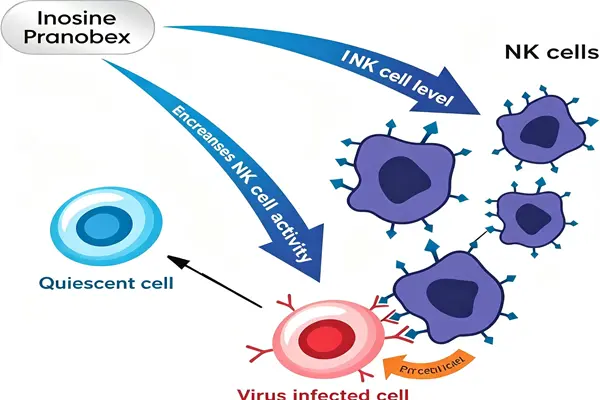
Natural killer cells and the mononuclear phagocyte system constitute the body's first line of defense in the innate immune system. Inosine Pranobex powder can significantly enhance the cytotoxic activity of peripheral NK cells, strengthen their non-specific recognition and clearance of virus-infected and abnormally transformed cells, and simultaneously enhance the chemotactic migration and phagocytic efficiency of neutrophils, monocytes, and macrophages. This accelerates the clearance rate of viral particles, apoptotic debris, and inflammatory necrotic tissue at lesion sites, reducing persistent tissue damage caused by local viral load accumulation. Under drug regulation, macrophages tend to polarize towards the M1 anti-inflammatory and antiviral phenotype, reducing the immune response dulling caused by excessive accumulation of M2 suppressive macrophages, further amplifying the interception effect of the innate immune system against early viral invasion, and shortening the course of acute viral infection.
The directional remodeling of the cytokine network determines the overall bias of the immune response. Inosine Pranobex powder can dose-dependently upregulate the secretion levels of Th1-type positive antiviral cytokines such as IFN-γ, IL-2, and TNF-α. Interferon-γ can directly act on adjacent uninfected cells to establish a broad-spectrum antiviral state, inhibiting RNA transcription and protein translation of various RNA and DNA viruses. Simultaneously, it downregulates the release of immunosuppressive cytokines such as IL-10 and IL-4, reversing the Th1/Th2 immune imbalance and preventing the pathological state of excessive humoral immunity and persistently weak cellular immunity. This cytokine regulatory logic is effective not only for acute respiratory viral infections but also for correcting the local immunosuppressive microenvironment caused by long-term persistent HPV infection, helping the body clear high-risk human papillomavirus through its own immunity and reducing the risk of intraepithelial neoplasia progression.
The humoral immune response is simultaneously perfected under the indirect regulation of complex components. Activated helper T cells transmit co-stimulatory signals to B lymphocytes, promoting B cell differentiation and maturation and the secretion of IgG-type specific neutralizing antibodies. Circulating antibodies can encapsulate extracellular free viral particles in body fluids, blocking the initial infection steps of viral adsorption and penetration of the host cell membrane, forming a double-layered protective loop of cellular immunity killing target cells and humoral immunity neutralizing free viruses. This process does not cause the disordered secretion of large amounts of non-specific polyclonal antibodies. The immune response is always initiated in a targeted manner around foreign pathogens, significantly reducing the probability of autoimmune cross-reactions and maintaining the immune system's basic ability to accurately distinguish between self and non-self.
🔬 Achieves a broad-spectrum antiviral restraint effect indirectly through immune upregulation.
Inosine Pranobex powder itself does not possess the chemical activity to directly kill viruses or potently block viral polymerases. All its antiviral efficacy is based on the full activation of the host's immune system, belonging to a host-guided immune antiviral mechanism, fundamentally different from the mechanism of action of nucleoside analogs that directly target viral replication enzymes. Within normal somatic cells induced by IFN-γ to establish an antiviral state, the translation of multiple key viral replication enzymes is blocked. The entire chain of genome transcription, capsid protein assembly, and progeny virus release is inhibited in dozens of enveloped and non-enveloped viruses, including herpes simplex virus, varicella-zoster virus, influenza A and B viruses, poliovirus, ECHO enterovirus, Epstein-Barr virus, and cytomegalovirus. In in vitro cell infection models, a significant decrease in the number of viral plaques and a progressively decreasing viral copy number can be clearly observed.
The specific lysis of infected target cells by cytotoxic T cells is a core step in limiting viral spread. CD8⁺ T cells amplified by Inosine Pranobex powder can precisely recognize the viral antigenic peptide-MHC complex expressed on the host cell membrane, releasing perforin to form pores in the target cell membrane. With the help of granzymes, they activate internal apoptotic proteases, causing the infected cells, which contain a large number of replication intermediates, to rapidly undergo apoptosis and rupture. Simultaneously, immature viral particles encapsulated within the cell lose their survival carriers, effectively inhibiting the layer-by-layer spread of the virus between tissue cells. This is particularly suitable for addressing the pathological characteristic of herpesviruses lurking in ganglia and periodically recurring, reducing the frequency of viral reactivation by enhancing systemic cellular immune surveillance.
In a synergistic combination therapy for viral inhibition, Inosine Pranobex powder exhibits a synergistic effect with classic antiviral agents such as acyclovir, interferon-alpha, and nucleoside reverse transcriptase inhibitors. Small-molecule antiviral drugs directly block viral biochemical replication steps, while the combined active pharmaceutical ingredient reshapes the body's immune clearance capacity. These two pathways are independent and complementary. In an in vitro viral load detection model using combined administration, the viral inhibition rate in the combined group was significantly higher than that in the single-drug group. This provides a reliable experimental platform for evaluating the in vitro efficacy of clinical antiviral combination regimens and clearly elucidates the underlying logic of the synergistic effect between immunomodulators and direct-acting antiviral drugs.
Throughout its action, it only regulates the metabolism and signaling pathways of mammalian host immune cells, without directly binding to conserved targets of pathogens such as viral DNA polymerase, RNA-dependent RNA polymerase, and proteases. Long-term continuous intervention almost never induces drug resistance gene mutations in various viruses. Unlike chemical drugs that directly target viral enzyme systems, which are prone to escaping inhibition due to single-point base mutations, it is suitable for conducting in vitro studies to track the drug resistance evolution of viruses through multiple generations of continuous passages, providing theoretical support for exploring strategies to reduce the incidence of antiviral therapy resistance.
📌 Compound immune raw materials are suitable for multi-dimensional scientific research scenarios
Inosine Pranobex powder is a core positive control standard in host-guided immunotherapy and antiviral pharmacology research systems. It is primarily used to compare the activity differences of various single purine nucleosides, small molecule T-cell activators, and interferon inducers in dimensions such as lymphocyte proliferation, NK cell activation, Th1 cytokine secretion, and broad-spectrum viral inhibition. Using Inosine Pranobex powder with stable batch purity and precise compound ratios as a reference, the structure-activity relationship of the purine nucleus combined with organic amine salt complex structure on the affinity of immune targets, cell permeation efficiency, in vivo metabolic half-life, and immune activation intensity can be systematically analyzed, significantly accelerating the development process of molecular structure optimization and early high-throughput screening of immunomodulatory antiviral lead compounds.
It can be used to construct in vitro pathological evaluation cell models of various types of immunodeficiency and viral infection. Through gradient concentration administration, it can simulate different pathophysiological states such as drug-induced immunodeficiency, recurrent herpesvirus infection, respiratory influenza virus invasion, persistent HPV epithelial infection, and age-related immune decline. Utilizing quantitative techniques such as lymphocyte transformation assays, flow cytometry immunophenotyping, viral nucleic acid fluorescence quantification, cytokine ELISA detection, and apoptosis target cell staining, this study comprehensively elucidates the entire chain of action of Inosine Pranobex powder, from cellular dissociation and absorption, purine metabolism-enhanced immune cells, multi-pathway immune cascade activation, to indirect constraint of viral replication. It precisely defines the minimum effective dosing concentration thresholds for different research directions, providing solid and rigorous in vitro experimental data support for subsequent oral solid dosage form formulation, excipient screening, and stability studies.
In three-dimensional immune organoid and skin epithelial organoid stereoculture systems, the small molecule dissociated components can penetrate multiple extracellular matrix barriers to reach deep immune cells and epithelial target cells within the organoids. This highly replicates the in vivo process of drug diffusion and efficacy within the human lymph node immune microenvironment and the cervical epithelial HPV infection microenvironment, overcoming the limitation of two-dimensional monolayer adherent cells in replicating the dense three-dimensional structure of tissues. This significantly improves the accuracy of in vitro efficacy data in predicting in vivo intervention effects and upgrades the standardized efficacy evaluation system for immunomodulators at the organ level.
The research reagents have a wide compatibility range, allowing for co-incubation with direct-acting antiviral small molecules, immune checkpoint modulators, antioxidant stress agents, and immunosuppression-inducing drugs to establish a multi-pathway synergistic anti-infection evaluation system. Single Inosine Pranobex powder focuses on overall host immunity enhancement; combined with direct-acting antiviral drugs, it amplifies viral clearance efficiency; and when combined with immune checkpoint inhibitors, it further relieves immunosuppression in the tumor microenvironment. Using this complex purine raw material as a core experimental tool, it is possible to deeply analyze the intrinsic logic of synergistic intervention in immune-led anti-infection and immune-led anti-tumor therapy, expanding the complete theoretical framework for the development of novel compound immunotherapies for infectious diseases and virus-related epithelial lesions.
Conclusion
Inosine Pranobex powder is a synthetic complex active pharmaceutical ingredient composed of inosine, para-acetaminobenzoic acid, and dimethylaminoisopropanol in a specific ratio. It modulates the immune system by promoting T-cell proliferation, enhancing NK-cell activity, and upregulating Th1-type cytokines, demonstrating clear adjuvant value in the treatment of herpes simplex, HPV, and respiratory viral infections.
Xi'an Faithful BioTech Co., Ltd. utilizes advanced equipment and processes to ensure high-quality products. Our Inosine Pranobex powder meets international pharmaceutical standards. Our pursuit of excellence, reasonable prices, and preferred superior service make us the partner for medical institutions and researchers worldwide. If you require Inosine Pranobex powder research or production,Please contact us Click email: allen@faithfulbio.com Or WhatsApp: +86 13137770562.
References
- Fisher Scientific. Inosine Pranobex, 98.0+%, TCI America. Specifications.
- ICE Pharma. Inosine Pranobex API Product Information.
- Schmutzler, W., et al. (1989). Study of the antiallergic component of inosine pranobex. Int Arch Allergy Appl Immunol.
- Lasek, W., et al. (2015). Immunomodulatory effects of inosine pranobex on cytokine production. Acta Pharmaceutica, 65(2), 171-180.
- TCI Chemicals. Inosine Pranobex Product Information (I1037).
- National Institutes of Health. Inosine Pranobex - MeSH Database.
- Adooq Bioscience. Inosine Pranobex Datasheet (A13314).