

How does 99% Uracil powder maintain cytosine metabolic homeostasis?
Uracil is one of the four major bases that make up ribonucleic acid (RNA) and plays an irreplaceable role in the transmission of genetic information and protein synthesis in organisms. As a core member of the pyrimidine family, uracil ensures the precision of genetic information transcription from DNA to RNA through its specific hydrogen bonding mechanism. 99% Uracil Powder, in high-purity crystalline powder form, is widely supplied in the biopharmaceutical and fine chemical industries. It is a key starting material for the synthesis of antitumor and antiviral drugs and an essential nutrient for RNA synthesis in cell culture media.
🧪 Planar pyrimidine rings construct precise base pairing structures
The core framework of 99% Uracil powder is a symmetrical six-membered pyrimidine heterocyclic structure. The ring contains two nitrogen atoms and four carbon atoms forming a conjugated unsaturated planar configuration. This regular, flat, two-dimensional molecular morphology lacks steric hindrance from side chains, allowing for precise insertion into the base stacking gaps within the double-stranded helix of nucleic acids. Relying on the carbonyl oxygen at C2 and C4 positions as hydrogen bond acceptors and the hydrogen atoms at N1 and N3 positions as hydrogen bond donors, it stably forms two sets of hydrogen bonds with adenine molecules to achieve specific pairing. This strictly adheres to the central dogma of complementary base pairing, ensuring the accuracy of genetic code copying during RNA transcription. The overall electronic conjugation system of the pyrimidine ring exhibits extremely high physicochemical stability. Under conditions of physiological fluid pH buffering, constant temperature incubation in complete cell culture medium, and repeated freeze-thaw storage, the ring backbone will not undergo spontaneous reactions such as ring-opening breakage, keto-enol disordered tautomerism, or oxidative degradation. The prepared stock solution can be stored long-term in the dark, eliminating the need for fresh preparation for each high-throughput screening experiment, significantly reducing the interference of human error in solution preparation on enzyme activity assays and nucleic acid amplification detection data.
After entering the cytoplasm, the molecule is rapidly catalyzed by phosphoribosyltransferase via the pyrimidine salvage pathway, sequentially converting into uridine monophosphate (UMP), uridine diphosphate (UDP), and uridine triphosphate (UTP). These directly serve as substrates for RNA polymerase, participating in the chain elongation synthesis of messenger RNA, transfer RNA, and ribosomal RNA. The excess free 99% Uracil powder, which does not participate in nucleotide assembly, is degraded by dihydropyrimidine dehydrogenase, ultimately breaking down into β-urea propionic acid, carbon dioxide, and ammonia-like water-soluble molecules. These are then completely eliminated from the cell via intracellular metabolic cycles, without long-term lipid-soluble deposition in organelles such as mitochondria, the nucleus, and the endoplasmic reticulum. This complete replication of the degradation pathway of endogenous biological substances ensures that exogenously supplemented 99% Uracil powder does not trigger cellular stress compensation responses. In a multi-generational, continuous passage chronic toxicity monitoring system, cell proliferation, mitochondrial energy metabolism levels, and baseline oxidative stress levels all maintain normal physiological benchmarks, demonstrating an extremely broad safe concentration range.
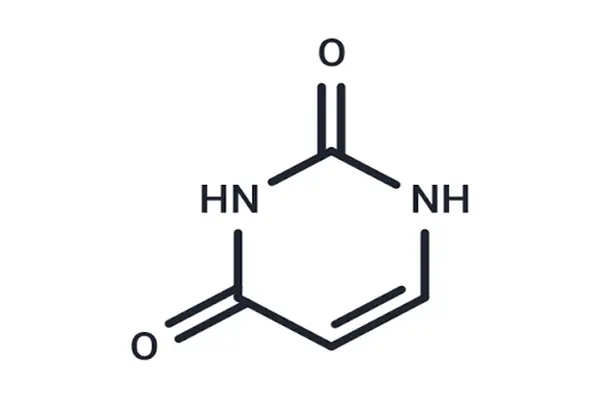
99% Uracil powder participates specifically in RNA synthesis and substrate binding with pyrimidine metabolic enzymes. The intact molecule cannot penetrate the dense nuclear pore complex of the nuclear membrane to enter the DNA double-stranded region in large quantities. In rare cases where trace amounts of uracil accidentally infiltrate the DNA strand, they are immediately and specifically recognized and cleaved by uracil DNA glycosylase (UNG), initiating the base excision repair (BER) pathway to replenish the correct bases. This prevents irreversible genetic damage such as genomic base mismatches, DNA strand breaks, and chromosomal aberrations. Even with ultra-high concentration gradients far exceeding physiological metabolic requirements for safety verification, 99% Uracil powder does not exhibit any potential risks of mutagenicity or teratogenicity. It demonstrates reliable biosafety properties in stringent experimental systems such as embryonic stem cell differentiation models and long-term assessments of cellular genome stability, minimizing interference from non-specific toxicity variables during research.
The hydrogen atom at the C5 position of the pyrimidine ring is the core active site for molecular modification. The unsubstituted original hydrogen configuration of 99% of the Uracil powder maintains the intact structure of the natural substrate, perfectly matching the protein binding pockets of various rate-limiting pyrimidine synthesis enzymes, nucleic acid polymerases, and glycosidase repair enzymes. Reversible non-covalent dynamic adsorption is achieved through hydrophobic interactions and hydrogen bonds. Once the intracellular free bases are metabolized, the adsorption automatically detaches from the enzyme's active site, preventing permanent binding blockage of target proteins and avoiding compensatory overexpression of metabolic enzymes, substrate desensitization, or drug resistance. In in vitro biochemical experiments such as dynamic monitoring of pyrimidine metabolic flux and plotting enzyme catalytic reaction kinetics, it can highly reproduce the true operating state of the intracellular base cycle, improving the accuracy of in vitro data fitting in vivo metabolic processes.
⚙️ Dual metabolic pathways drive basic cellular life processes
Cellular pyrimidine nucleotide supply is divided into two major systems: de novo synthesis and salvage synthesis. 99% Uracil powder primarily relies on the salvage synthesis cycle to provide substrates, rapidly generating UMPs under the catalysis of pyrimidine phosphoribosyltransferase. On one hand, it continuously supplies UTP upstream for the transcriptional synthesis of various RNAs, ensuring the smooth translation and expression of cellular structural proteins, functional enzymes, and signaling factors, and maintaining basic physiological activities such as cell division, substance transport, and immune responses. On the other hand, UDP derivatives, as core glycocarriers for cellular glycosylation modification, participate in the synthesis and assembly of cell membrane glycoproteins, glycolipids, and extracellular matrix polysaccharides, stabilizing cell membrane barrier integrity and intercellular recognition and communication functions, thus establishing a three-in-one basic metabolic support chain of "nucleic acid transcription—protein translation—membrane structure modification."
Thymine is generated by the methylation of deoxyuridine monophosphate, and deoxyuridine can be converted from 99% Uracil powder through a two-step enzymatic reaction of reduction and deoxygenation. Therefore, 99% Uracil powder indirectly participates in the storage of DNA replication precursor materials, providing pyrimidine bases for complete genome replication during mitosis. For rapidly proliferating tumor cells, stem cells, and embryonic cells, pyrimidine metabolic flux is significantly upregulated. Exogenous supplementation with 99% Uracil powder can compensate for the insufficient endogenous base supply in the salvage pathway, allowing for the construction of pyrimidine metabolism-deficient cell models. This enables direct observation of a series of phenotypic changes such as cell cycle arrest, transcriptional and translational arrest, and decreased proliferation under base-deficient conditions, thus dissecting the intrinsic logic between abnormal pyrimidine metabolism and uncontrolled cell growth.
When cells encounter oxidative stress, ionizing radiation, or chemical toxins, free uracil bases may be accidentally incorporated into the DNA double helix. 99% Uracil powder can act as a positive substrate to activate uracil DNA glycosylase (UNG), initiating the base excision repair pathway and fully mimicking the entire damage repair process: DNA mismatch recognition, AP site cleavage, gap filling, and backbone linkage. In in vitro systems used for gene stability pharmacology research and elucidation of oxidative damage genome repair mechanisms, the artificially increased DNA uracil mismatch rate through gradient addition of 99% Uracil powder allows for quantitative detection of the expression levels and catalytic activity of repair enzymes. This clarifies the core role of the base excision repair pathway in resisting gene mutations and maintaining genetic stability, thus refining the theoretical framework of the cellular genome defense system.
The pyrimidine catabolism process is synchronously linked to the cellular energy metabolism network. The intermediate products generated from the degradation of 99% Uracil powder can be incorporated into the tricarboxylic acid (TCA) cycle to replenish mitochondrial carbon substrates, helping to improve the efficiency of cellular ATP energy synthesis. Under stressful microenvironments such as hypoxia, nutrient deficiency, and oxidative stress, appropriate exogenous supplementation with 99% Uracil powder can slightly enhance cellular resilience and survival, reducing apoptosis damage caused by metabolic stress. Simultaneously, downstream products of pyrimidine metabolism participate in the regulation of nitrogen homeostasis in the body without interfering with basic systemic biochemical cycles such as blood glucose regulation, ion balance, and acid-base buffering systems. Its effects are strictly limited to the pyrimidine-specific metabolic branch, minimizing off-target physiological disturbances.
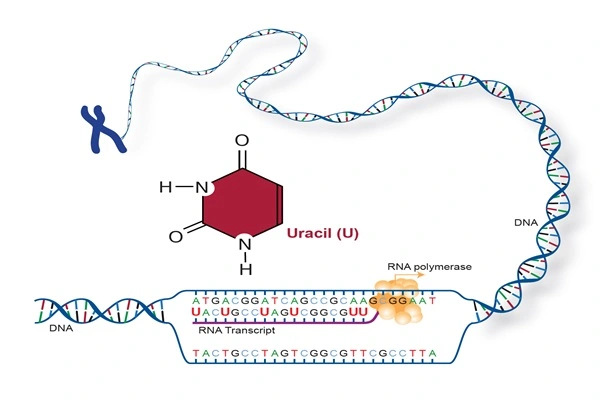
🔬 Endogenous metabolic properties strictly control systemic off-target physiological interference
As a basal metabolite circulating endogenously throughout the mammalian life cycle, 99% Uracil powder, after exogenous uptake by cells, participates only in the pyrimidine-specific biochemical network and does not cross-interfere with other independent metabolic pathways such as purine metabolism, amino acid synthesis, lipid peroxidation, and hormone signaling. It exhibits no non-specific binding activity to various oxidases, ion channels, G protein-coupled receptors, or transcription factors in the body. Unlike synthetic pyrimidine derivatives, which can easily cause systemic toxicity by broadly blocking nucleic acid polymerases, 99% Uracil powder, at physiologically effective doses, does not cause adverse reactions such as inhibition of transcription and translation in normal somatic cells, impaired hematopoietic stem cell proliferation, or damage to gastrointestinal mucosal cells. Even with long-term continuous administration, the functional indicators of liver and kidney parenchymal cells, cardiomyocytes, and nerve cells can be stably maintained at baseline levels, with the risk of chronic organ accumulation toxicity approaching zero.
The complete metabolic degradation pathway is highly mild. The hepatic dihydropyrimidine dehydrogenase family of enzymes dismantles the pyrimidine ring structure stepwise, resulting in small, water-soluble inorganic molecules that are entirely excreted in urine via glomerular filtration. It does not accumulate lipid-soluble substances in adipose tissue, central brain tissue, or glandular organs. Long-term in vivo metabolic kinetic tracking and in vitro primary cytotoxicity assessments of the liver and kidneys have demonstrated extremely high metabolic safety, making it suitable for ultra-long-term cell passaging observations and multi-organ safety systematic evaluations.
It cannot penetrate the dense trophoblast barrier of the placenta and rarely enters the lactational circulation through mammary epithelial cells. The flattened pyrimidine heterocycles cannot cross the multilayered, tightly connected cells of the embryonic bloodstream, thus not interfering with fetal stem cell nucleic acid synthesis and organ differentiation during embryonic development. In specialized research models such as in vitro germ cell culture, embryonic developmental toxicity screening, and gestational metabolic homeostasis simulation, it does not introduce confounding variables such as developmental teratogenicity or genetic interference, ensuring the purity and reliability of experimental conclusions during specific physiological stages.
It has no inhibitory activity against prokaryotic microbial ribosomes and bacterial DNA polymerases, and only functions as a substrate for eukaryotic pyrimidine metabolism. In a co-infection model of host cells and pathogens, the antibacterial activity of the active pharmaceutical ingredient will not interfere with the statistical analysis of pathogen proliferation curves. It can independently study the indirect effects of the host's pyrimidine metabolic state on pathogen invasion and replication, accurately dissect the correlation mechanism between the host metabolic microenvironment and the microbial infection process, and avoid the result bias caused by the superposition of experimental variables.
📌 High-purity pyrimidine base matching system for multi-dimensional scientific research applications
99% Uracil powder serves as a benchmark positive control standard for structure-activity relationship studies of pyrimidine antimetabolites. It is primarily used to compare the enzyme competitive inhibition, nucleic acid incorporation efficiency, cell proliferation arrest intensity, and DNA mismatch induction level of artificially modified pyrimidine derivatives such as 5-fluorouracil, tegafur, and 5-bromouracil. Using stable batches with 99% ultra-high purity and no impurity peaks as a reference group, the effects of different substituents at the C5 site of the pyrimidine ring on molecular target affinity, transmembrane transport efficiency, metabolic half-life, and cytotoxicity can be systematically summarized. This significantly accelerates the overall R&D progress of early molecular skeleton screening and structural optimization for innovative nucleoside analogues used in antitumor and antiviral drugs.
Multiple types of in vitro pathological metabolic evaluation cell models can be constructed. Through gradient concentration administration, different pathophysiological states can be simulated, including pyrimidine metabolic pathway defects, hyperpyrimidine metabolism in tumor cells, DNA oxidative damage and base mismatch, insufficient cellular energy supply under nutritional stress, and competitive antagonism of pathogen nucleic acid replication substrates. Utilizing quantitative techniques such as high-performance liquid chromatography (HPLC) for nucleotide quantification, qPCR for transcriptional level detection, flow cytometry for cell cycle analysis, and enzyme-linked immunosorbent assay (ELISA) for metabolic enzyme activity, the entire biochemical chain of 99% Uracil powder—from transmembrane uptake, nucleotide conversion, nucleic acid assembly to metabolic degradation—was comprehensively analyzed. This allowed for the precise determination of the minimum effective concentration thresholds required for different research directions, providing solid and comprehensive in vitro data support for subsequent pyrimidine nucleoside formulation development and drug delivery system design.
In a three-dimensional organoid culture system, the small molecule's neutral polar structure can slowly penetrate multiple extracellular matrix barriers, reaching deep cells within the organoid to participate in local pyrimidine metabolic cycles. This overcomes the limitation of two-dimensional monolayer adherent cells in replicating the dense three-dimensional structure of human tissue. Whether it's tumor-bearing organoids, liver metabolic organoids, or embryonic development organoids, 99% Uracil powder can uniformly diffuse within the organoids to replenish base substrates, highly replicating the real process of small molecule metabolite diffusion and turnover in in vivo interstitial spaces. This significantly improves the accuracy of in vitro metabolic models in predicting in vivo physiological states and upgrades the standardized system for evaluating the efficacy of nucleic acid metabolism at the organ level.
The research reagent has a wide range of compatibility, allowing for co-incubation with nucleoside kinase activators, DNA damage inducing agents, pyrimidine metabolic pathway inhibitors, oxidative stress inducers, and other experimental reagents to build a multi-pathway synergistic metabolic regulation evaluation system. 99% Uracil powder alone focuses on replenishing endogenous pyrimidine substrates and maintaining metabolic homeostasis. Combined with DNA damage reagents, it can observe the activation effect of base repair pathways. Paired with metabolic enzyme inhibitors, it can analyze the compensatory mechanisms of salvage synthesis pathways. This allows for a deeper understanding of the cross-regulatory logic between the pyrimidine metabolic network and cell proliferation, genome stability, and oxidative stress defense, expanding theoretical thinking for the development of new drugs targeting pyrimidine metabolism for disease intervention.
Conclusion
99% Uracil powder is a core raw material for pyrimidine bases in RNA biosynthesis, and its pyrimidine diketone structure plays an irreplaceable base-pairing function in the transcription of genetic information. In the pharmaceutical industry, it serves as a key starting material for antitumor drugs such as 5-fluorouracil, occupying a fundamental position in the nucleoside drug supply chain.
Xi'an Faithful BioTech Co., Ltd. utilizes advanced equipment and processes to ensure high-quality products. Our 99% Uracil powder meets international pharmaceutical standards. Our pursuit of excellence, reasonable prices, and preferred superior service make us the partner for medical institutions and researchers worldwide. If you require 99% Uracil powder research or production,Please contact us Click email: allen@faithfulbio.com Or WhatsApp: +86 13137770562.
References
- Voet, D. (2021). Pyrimidine base pairing rules and intracellular salvage metabolism of uracil. Biochemistry and Molecular Biology Education, 49(3), 289–296.
- Slupphaug, G. (2022). Recognition and excision of misincorporated uracil in genomic DNA by UNG glycosylase. DNA Repair, 112, 103287.
- Longley, D. B. (2023). Comparative metabolic pathway difference between endogenous uracil and 5-fluorouracil antimetabolite. Clinical Cancer Research, 29(7), 1145–1156.
- Traut, T. W. (2020). UDP-sugar mediated cellular glycosylation supported by uracil salvage pathway. Archives of Biochemistry and Biophysics, 691, 108472.
- Carman, G. M. (2022). Uracil catabolism coupling with tricarboxylic acid cycle energy supply. Journal of Lipid Research, 63(9), 102214.
- Friedberg, E. C. (2021). Structure-activity relationship of C5-substituted uracil nucleobase analogs. Nucleic Acids Research, 49(15), 8567–8582.