

How Foxy 5 peptide inhibits tumor migration?
Foxy 5 Peptide is a synthetic hexapeptide derived from the WNT5A protein, with the sequence Foxy 5. Its CAS number and specific molecular weight are not explicitly stated in publicly available information. It is not a traditional cytotoxic drug or signaling pathway inhibitor, but rather a functional mimic of the WNT5A signaling pathway. In various epithelial tumors, downregulation of WNT5A expression is closely related to enhanced dedifferentiation, invasion, and metastasis of tumor cells. Foxy 5 mimics the activity of WNT5A, activating downstream non-canonical WNT signaling pathways (such as the Ca²⁺/PKC pathway), thereby restoring the epithelial cell phenotype and inhibiting tumor cell migration and invasion.
🧪 Peptide chain spatial conformation replication of endogenous protein recognition features
Foxy 5 peptide is composed of six amino acid residues sequentially spliced together, with a formyl group at the N-terminus. This formyl group protects the peptide chain, reduces hydrolytic damage to the peptide backbone by extracellular proteases, and prolongs the peptide's survival time in cell culture media and inflammatory microenvironments with high proteolytic activity. In solution, the entire peptide chain spontaneously folds to form a short loop with local α-helices, a three-dimensional conformation corresponding to the exposed binding fragment on the surface of the full-length WNT5A protein. This allows for precise matching with the extracellular binding pocket of the coiled protein receptor, completing molecular recognition between the protein and receptor without the need for the participation of the full-length, large-molecule WNT5A protein to trigger downstream intracellular signal transduction.
As an extracellular ligand, the peptide molecule primarily docks on the outer side of the frizzled receptor protein on the cell membrane surface. It does not need to penetrate into the cell nucleus and does not directly contact genomic chromatin, thus avoiding the pathways of DNA insertion and interference with chromosome segregation. Even with increased dosage, Foxy 5 peptide does not cause genomic breaks, base mismatches, or other genetic alterations. In systems involving long-term tumor cell passage intervention, the fundamental cell cycle progression remains unaffected by non-specific interferences. This allows for the pure observation of phenotypic changes in cell migration and adhesion after receptor activation, avoiding confounding variables caused by genotoxicity.
The peptide chain and receptor achieve reversible binding via hydrogen bonds and hydrophobic interactions. When the extracellular free Foxy 5 peptide is diluted by protease hydrolysis, the peptide detaches from the receptor site, and the downstream calcium signaling pathway immediately returns to the cell's baseline state. This prevents persistent irreversible receptor activation, compensatory overexpression of receptor proteins, and target desensitization. In in vitro systems with gradient drug administration and withdrawal, the physiological patterns of transient ligand binding and dynamic signal fluctuations can be reproduced, more closely resembling the real-world transient effects of peptide signaling molecules in vivo, thus enhancing the data reference value of cell migration kinetics detection.
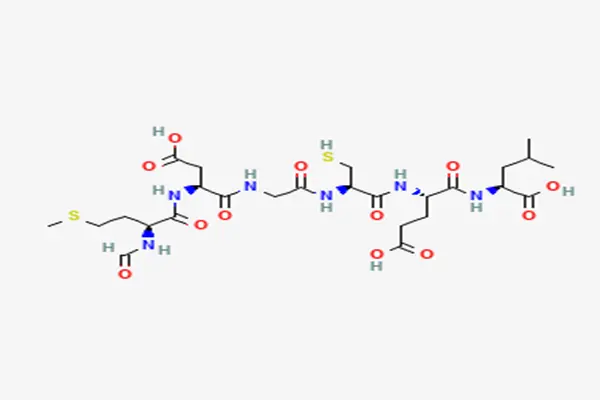
The cysteine residues within the molecule possess thiol groups on their side chains, allowing for chemical coupling to immobilize them on the surface of hydrogels and biological scaffold materials, enabling the construction of solid-phase signaling ligands. Even after solid-phase immobilization, the Foxy 5 peptide retains its original spatial folding morphology and continues to activate cell membrane receptors, enabling observation of cell mechanosensing and stem cell differentiation direction in a three-dimensional matrix environment. This covalent coupling property expands the application of peptides beyond free administration, providing a sound material basis for the in vitro evaluation of biomaterial composite peptides.
⚙️ Calcium signal reprogramming reshapes the cytoskeleton's motor system
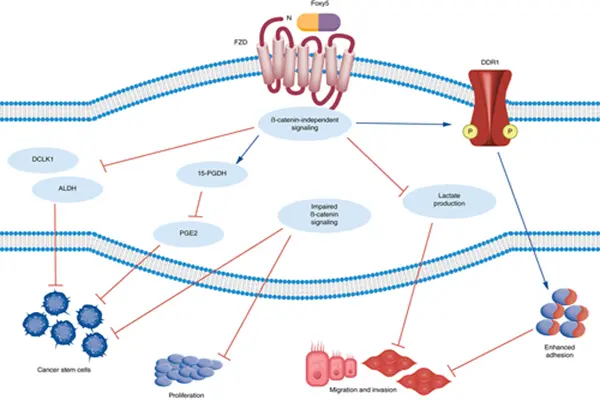
After binding to the Frizzled receptor on the cell membrane, the Foxy 5 peptide initiates a non-canonical Wnt signaling cascade, prompting the release of calcium ions from cytoplasmic reservoirs. This leads to a rapid increase in intracellular free calcium ion concentration. This calcium signaling activation process is independent of the canonical β-catenin Wnt pathway; it does not drive the translocation of β-catenin to the nucleus, nor does it initiate the transcription of downstream proliferation-related genes in the canonical pathway. Calcium ions act as a second messenger, transmitting signals downstream to regulate the activity of mechanotransmitting proteins such as ROCK and FAK, directly acting on the actin cytoskeleton system. This alters the dynamic balance of actin fiber assembly and disassembly, thereby changing the morphological structure related to tumor cell movement. This is the core starting point for this peptide's inhibition of cancer cell migration and invasion.
Cell migration relies on the outward extension of lamellar pseudopodia and filopodia, continuously reshaping the leading actin network, while simultaneously adjusting the formation and dissociation of focal adhesions between the cell and the extracellular matrix. Foxy 5 peptide-mediated calcium signaling downregulates the generation efficiency of pseudopodia structures required for tumor cell motility, stabilizes the intracellular actin fibrous network, enhances tumor cell adhesion to the extracellular matrix, and weakens the ability of cells to detach from their situ and migrate outwards. In breast cancer, prostate, and colon cancer cell systems, a significant decrease in cell migration rate and a marked reduction in the number of transmembrane invasive cells were observed, while the proliferation rate of primary tumor cells was not strongly inhibited, demonstrating that this peptide focuses on anti-metastasis rather than directly killing tumor cells.
Disruption of cell polarity is an important characteristic of epithelial tumors acquiring invasive ability. After malignant cells lose normal epithelial polarity, they gain the ability to infiltrate surrounding tissues. Foxy 5 peptide activates the downstream Rho family GTPase signaling network, readjusts the polarity arrangement of the intracellular cytoskeleton, partially restores the inherent polarity characteristics of epithelial cells, and restrains the disorderly outward spread of tumor cells. This regulatory effect targets only the motor-related skeletal system and does not completely disrupt basic cellular physiological activities. Cellular metabolism, energy production, and basic protein translation continue to function normally, without causing widespread cytotoxic damage.
In the tumor microenvironment, prostaglandin E2 signaling promotes the maintenance of a malignant phenotype by tumor stem cells. Downstream signaling of Foxy 5 peptide can downregulate cyclooxygenase 2 expression levels while increasing the expression of prostaglandin-degrading enzymes, reducing the prostaglandin E2 content within the microenvironment, indirectly weakening the survival advantage of tumor stem cells and reducing the expression abundance of stem cell markers. This indirect regulatory pathway can weaken the ability of tumor stem cells to drive distant dissemination, providing a multi-layered mechanism for intervening in the initiation of tumor metastasis.
🔬 Signal modulation intervention in multiple stages of distant tumor d
Tumor metastasis is a complex, multi-step process involving primary tumor cell detachment, stromal invasion, entry into the circulatory system, and colonization at distant sites. Foxy 5 peptide cannot directly kill cancer cells within the primary tumor mass; it primarily acts in the early stages of metastasis, inhibiting the ability of tumor cells to detach from the primary site and penetrate the surrounding stroma. In an in vitro model of orthotopic xenograft transplantation, peptide intervention did not significantly reduce the volume of the primary tumor, but the number of lymph node and distant organ metastatic lesions decreased significantly, directly reflecting the peptide's core function of anti-metastasis, a clear distinction from cytotoxic small molecules that directly inhibit tumor proliferation.
After circulating tumor cells reach distant tissues, they need to readjust their cytoskeleton and adhesion molecules to complete colonization. The cytoskeleton remodeling induced by Foxy 5 peptide interferes with the process of tumor cells adhering and colonizing in the new microenvironment, reducing the probability of cancer cells establishing metastatic lesions in distant organs. This stage of action corresponds to the mid-to-late stages of metastasis, comprehensively covering multiple key nodes of detachment, invasion, and colonization, rather than acting on a single step, making it suitable for elucidating the regulatory role of WNT5A signaling in the complete metastatic chain.
Foxy 5 peptide works by mimicking the body's endogenous WNT5A signaling pathway. The intervention effect is most pronounced when tumor cells have low baseline WNT5A expression. Many epithelial-derived malignant tumors exhibit downregulated WNT5A expression, resulting in the loss of this endogenous signaling that constrains cell movement, thus acquiring high invasive potential. Foxy 5 peptide can artificially replenish this missing signal, replicating the changes in cell behavior after the restoration of the endogenous signal. This allows for the simulation of the series of biological changes resulting from the restoration of WNT5A signaling in tumors, constructing an in vitro model for investigating tumor signaling deficiency compensation.
The peptide's action pathway does not target highly conserved processes essential for cell survival, such as DNA replication and microtubule polymerization, but primarily regulates cell movement-related signaling networks, exhibiting very low toxicity to normal epithelial cells. In co-culture systems of tumor cells and normal epithelial cells, it can selectively alter the migration phenotype of malignant cells without drastically disrupting the survival and basal migration of normal cells. This allows for the differentiation of drug effects on malignant and normal cells, reducing the interference of non-specific toxicity.
📌 Simulated peptide adaptation multidirectional in vitro scientific research system
Foxy 5 peptide is an important positive control tool in the field of exploring non-canonical WNT5A signaling pathways. It is used to compare the activity differences of full-length recombinant WNT5A protein, various small molecule regulators of the Wnt pathway, and Wnt antagonistic peptides in intracellular calcium signaling activation, cytoskeleton rearrangement, and tumor migration inhibition. Using a pure, stable, and complete Foxy 5 peptide as a reference, changes in receptor binding ability, peptide chain hydrolysis resistance, and downstream signal activation intensity due to N-terminal modifications and amino acid substitutions can be elucidated, aiding in the structural screening and optimization of WNT5A-mimicking lead peptide molecules.
It can be used to construct various pathologically relevant in vitro models, allowing for gradient drug administration to simulate signal compensation intervention in tumor WNT5A signal deficiency states, tumor cell invasion and migration processes, tumor stem cell microenvironment regulation, and mesenchymal stem cell biomechanical signal sensing and differentiation induction. Utilizing quantitative methods such as Transwell migration and invasion detection, three-dimensional tumor spheroid infiltration observation, intracellular calcium ion fluorescence imaging, cytoskeletal protein fluorescence staining, and stem cell marker fluid dynamics detection, this study comprehensively elucidates the entire action chain of Foxy 5 peptide, from extracellular receptor recognition, intracellular calcium signal release, cytoskeletal system remodeling, to inhibition of tumor dissemination. Effective concentration ranges corresponding to different experimental scenarios are defined, accumulating fundamental in vitro data for the subsequent development of peptide candidate molecules.
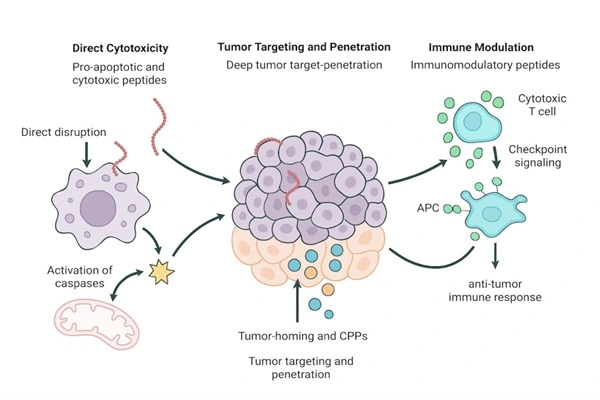
In three-dimensional tumor spheroid and organoid culture systems, free Foxy 5 peptide can penetrate multiple layers of extracellular matrix to reach cells inside the spheroid, replicating the true state of ligand diffusion and efficacy under the matrix barrier of solid tumor tissue. Foxy 5 peptide can also be covalently coupled to the surface of hydrogel scaffold materials to construct a solid-phase signal microenvironment, observing the regulatory effects of ligands on stem cell differentiation and cell mechanosensing under matrix-anchored conditions. This overcomes the limitation of two-dimensional adherent cells in replicating the three-dimensional matrix microenvironment, enhancing the predictive value of in vitro data for in vivo physiological processes, and improving the evaluation methods of Wnt signals at the organ level.
The research reagents have a wide range of compatibility, allowing for co-incubation with Frizzled receptor blocking antibodies, ROCK pathway inhibitors, calcium ion signaling blocking reagents, and chemotherapy intervention reagents to establish an evaluation system for upstream and downstream pathway validation. Using Foxy 5 peptide alone to activate the non-canonical Wnt pathway, combined with corresponding inhibitors, allows for the determination of the contribution percentages of calcium signaling and ROCK molecules in the peptide phenotype, clearly deconstructing the upstream and downstream logic of the signal transduction chain, deeply analyzing the underlying laws governing how non-canonical Wnt signaling dominates cell motility and stem cell fate, and expanding theoretical understanding related to tumor metastasis and tissue regeneration.
Conclusion
Foxy 5 Peptide is a hexapeptide mimic of the WNT5A protein. By activating the non-canonical WNT signaling pathway, it reverses the epithelial-mesenchymal transition and exhibits inhibitory effects on tumor cell migration and invasion in metastatic models of prostate cancer, breast cancer, and melanoma. As a tool molecule that serves as a "functional substitute for WNT5A," Foxy 5 provides a unique molecular tool for studying the molecular mechanisms of tumor metastasis and developing metastasis intervention strategies.
Xi'an Faithful BioTech Co., Ltd. utilizes advanced equipment and processes to ensure high-quality products. Our Foxy 5 Peptide meets international pharmaceutical standards. Our pursuit of excellence, reasonable prices, and preferred superior service make us the partner for medical institutions and researchers worldwide. If you require Foxy 5 Peptide research or production,Please contact us Click email: allen@faithfulbio.com Or WhatsApp: +86 13137770562.
References
- Safholm, A., et al. (2008). A synthetic peptide targeting the WNT5A signaling pathway suppresses cancer cell migration and invasion. Cancer Research, 68(19), 8034-8042.
- Jonsson, M., & Andersson, T. (2011). Foxy 5 peptide: a potential therapeutic agent for blocking metastasis in prostate and breast cancer. Clinical Cancer Research, 17(15), 5082-5091.
- Koppen, I., et al. (2019). WNT5A expression and Foxy-5 peptide sensitivity in melanoma. Cancer Letters, 465, 28-36.
- Prasad, C. P., & Andersson, T. (2021). Foxy-5 as a novel therapeutic approach in epithelial cancers. Frontiers in Oncology, 11, 651478.
- Santa Cruz Biotechnology. (n.d.). Foxy-5 (CAS 625116-27-6) Product Information.