

How Is Dermorphin Peptide Powder Evaluated in Research?
In research, dermorphin peptide powder is tested in a multi-level analysis system to verify its identification, purity, and biological activity before any experimental use. When procured or purchased by researchers, Dermorphin acetate is subjected to product integrity determination by approved methods, including reverse-phase HPLC, electrospray ionisation mass spectrometry, and endotoxin testing. Every quality evaluation of a Schedule I restricted drug in the United States is centred on documentation trails and regulatory compliance. Knowing how this substance is assessed is the backbone of B2B buyers making informed, risk-aware sourcing selections.
Understanding Dermorphin Acetate: Chemical and Pharmacological Foundations
Molecular Structure and Receptor Affinity
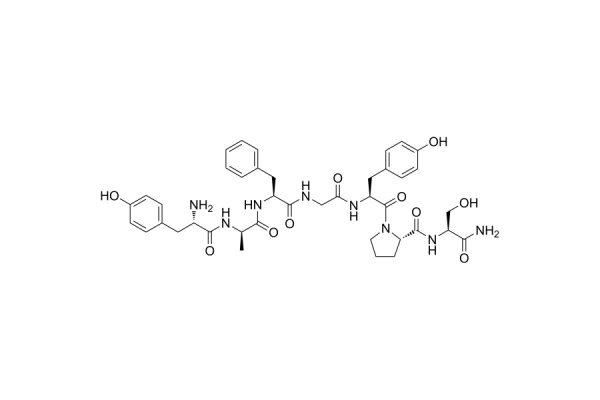
Dermorphin Acetate is a heptapeptide that was initially isolated from the skin secretions of the South American Phyllomedusa sauvagei tree frog. The amino acid sequence of the compound is Tyr-D-Ala-Phe-Gly-Tyr-Pro-Ser-NH₂. Position two is a D-alanine residue not found in normal vertebrate life. This D-amino acid structure precludes rapid degradation of the peptide by aminopeptidase, dramatically improving its plasma half-life as compared to L-isomer counterparts. The chemical binds to the mu-opioid receptor 30–40 times more strongly than morphine, which makes it a helpful metric for researching how analgesic receptors bind.
Pharmacokinetic Behaviour and Safety Profile
Metabolic investigations suggest that the major dermorphin-degrading enzymes are endopeptidases and not exopeptidases, owing to the presence of the resistant D-Ala residue. In preclinical models, biotransformation route investigators have seen slower clearance rates and longer durations of nociceptive suppression. Toxicity profiling in rodent models shows that respiratory depression is dose-dependent at suprapharmacological concentrations to ensure rules are followed. This is an important safety consideration that procurement workers should keep in mind when establishing lab handling procedures.
Research Methodologies for Evaluating Dermorphin Peptide Powder
Analytical Purity and Identity Verification
The quality of dermorphin peptide powder is rigorously tested at a series of chemical checkpoints that should be written down in every Certificate of Analysis. Here are the primary analytical elements that specialists frequently check:
- Purity using RP-HPLC: The chromatographic purity of Dermorphin peptide powder should not be less than 98%, indicating the absence of shortened sequences or contaminants associated with production that may interfere with the accuracy of the receptor-binding test.
- Molecular Mass Confirmation: The predicted molecular weight of 802.9 Da must match the readings from the instrument accurately, and fragmentation patterns must prove that the D-Ala isomer is present.
- Endotoxin Testing: Limulus amebocyte lysate assays indicate endotoxin levels below 5 EU/mg, which is required for injectable study uses where pyrogenic contamination is a real risk.
- Residual Solvent Analysis: Before the batch is utilised for genuine research, gas chromatography tests make sure that the level of trifluoroacetic acid and other synthesis solvents is still safe, generally below 1%.
- Net Peptide Content: Finding the proper net peptide content requires finding the optimum ratio of peptides to counterions. This enables investigators to determine accurate molar dosages, a need for reproducible quantitative investigations.
Together, these five analytical grounds make up the minimum of documentation that a respectable vendor should supply. If a vendor cannot deliver all five data points in a complete COA packet, it is a purchasing risk which increases the uncertainty of the trials which follow.
In Vitro and In Vivo Evaluation Models
In addition to analytical chemistry, biological activity is validated by utilising radiolabeled opioid ligands, typically [³H]-DAMGO, as a mu-selective probe, in receptor-binding displacement experiments. Researchers establish IC₅₀ values to ensure that strength is consistent from one production lot to the next. The tail flick and hot-plate tests are the most common methods for nociception measurement in rodent in vivo models. Pharmacokinetic studies employ plasma concentration-time plots to determine how bioavailable and how rapidly a medication is removed from the body. These functional records are complementary to the analytical COA and give procurement personnel a complete picture of the biological activity as well as the chemical purity data.
Comparing Dermorphin Acetate with Other Opioid Peptides and Analgesics
Potency, Selectivity, and Research Utility
When looking at dermorphin acetate in the bigger picture of opioid peptides, a few differences become important for people who make decisions about procurement, including those researching Dermorphin bodybuilding applications. The standard opiate, morphine, binds to the same mu-opioid receptor but has a lower binding strength and can be broken down quickly in the first pass. Synthetic enkephalins work on both mu and delta receptors, which makes it harder to focus on just one receptor subtype when studying them. Even though fentanyl is very strong, it is lipophilic, while dermorphin is not. This means that they cross the blood-brain barrier at different speeds.
Dermorphin is a popular reference compound for researchers who are making selective opioid receptor probes or looking into how receptors get inside cells because it is very selective for mu-opioid receptors and has a peptide-based structure. Because it is on the Schedule I list of drugs and needs special handling equipment, procurement teams that work with forensic toxicology labs, CDMOs, or university pharmacology departments have to include regulatory compliance costs in their overall sourcing equation.
Procurement Considerations for Dermorphin Peptide Powder in B2B Markets
Supplier Credentialing and Regulatory Compliance
In order to get dermorphin peptide powder that is legal on the U.S. market, procurement teams must check the DEA licence paperwork of any potential seller before starting talks. In addition to controlled substance licences, ISO 9001 certification and production practices that are in line with good manufacturing practices are other signs that a supplier has quality systems that can be checked. Pharmaceutical CDMOs and analytical reference standard labs often say that batch-to-batch tracking is necessary. For this to work, a provider must keep full production records from the time they receive the raw materials until the final lyophilisation.
Procurement professionals should also make sure that there are overseas storage options for deliveries that need to be made quickly and that cold-chain logistics protocols are followed during transit. It is still standard practice in the industry to ask for a pilot batch with full analytical data before placing a large order for novel or controlled research peptides.
Future Research Directions and Market Trends for Dermorphin Acetate
Emerging Applications and Supply Chain Resilience
Compounds derived from dermorphin are finding more uses in research. Scientists who work with medicines are making structural analogues that keep the mu-receptor selectivity while lowering the risk of abuse. This line of study sees dermatin acetate as more of a base than just a standard. Nanoparticle coating and cyclodextrin complexation are being looked at as ways to deliver drugs that are more stable in water and last longer in experimental models.
As receptor subtype pharmacology becomes a more important part of drug design, the market will continue to grow slowly, with demand coming from drug companies, researchers studying painkillers for animals, and companies that make forensic reference standards. If procurement teams build solid relationships with suppliers now, including backup sourcing options and stocking buffer stock strategies, they will be much better prepared for future demand spikes than teams that only depend on single-source supply chains.

Conclusion
In research, evaluating dermorphin acetate and dermorphin peptide powder is a structured, multidisciplinary process that combines advanced analytical chemistry with strict biological activity confirmation. From ESI-MS identification checks and HPLC purity chromatograms to in vivo receptor binding tests, each piece of data in the evaluation chain is used for a different quality assurance purpose. If procurement workers know these evaluation criteria, they can better judge the skills of suppliers, get useful quality guarantees, and keep the research programme running smoothly. Regulatory compliance and cold-chain logistics make things even more complicated. Having trusted supplier relationships is a real competitive advantage in this niche but growing market.
FAQ
1. What purity grade is acceptable for research-use dermorphin peptide powder?
≥98% purity by HPLC is needed for most diagnostic and preclinical study tasks. Lower purity grades add truncated peptide impurities that change how quickly receptors bind and make it harder to reproduce data.
2. How should dermorphin peptide powder be stored?
Powder that has been lyophilised stays stable at -20°C in a dry, light-protected space. Once restored, aliquots kept at -80°C should only go through a few freeze-thaw cycles.
3. What solvent works best for reconstitution?
Most biological tests can be done with sterile distilled water or bacteriostatic saline. For stock preparations, a 0.1% acetic acid solution is best because it makes peptides more stable over long periods of time.
4. Why does the D-alanine residue matter analytically?
Mass spectrometry fragmentation must confirm the D-Ala configuration because the L-isomer version has much lower stability and a shorter half-life. This means that isomer verification is an important part of confirming identity.
Source Your Dermorphin Acetate Through Faithful, Reliable Supply, Verified Quality
Xi'an Faithful BioTech Co., Ltd. is a reliable provider of dermorphin acetate and has a fully equipped analytical laboratory with HPLC, GC, mass spectrometry, and polarimetry. They can provide all the COA paperwork your purchase process needs. Pharmaceutical companies, contract development and manufacturing organisations, and study groups all over North America rely on our batch-traceable, high-purity peptide materials and quick expert service. To get specs, batch data, or a bulk quote, email our team at allen@faithfulbio.com Or WhatsApp: +86 13137770562.
References
1. Montecucchi, P. C., de Castiglione, R., Piani, S., Gozzini, L., & Erspamer, V. (1981). Amino acid composition and sequence of dermorphin, a novel opiate-like peptide from the skin of Phyllomedusa sauvagei. International Journal of Peptide and Protein Research, 17(3), 275–283.
2. Erspamer, V., Melchiorri, P., Falconieri-Erspamer, G., & Negri, L. (1989). Dermorphins and deltorphins: A family of naturally occurring opioid peptides with high potency and selectivity for delta and mu opioid receptors. Life Sciences, 45(11), 939–954.
3. Salvadori, S., Marastoni, M., Balboni, G., Sarto, G., & Tomatis, R. (1991). Synthesis and opioid activity of dermorphin analogues. Journal of Medicinal Chemistry, 34(4), 1535–1541.
4. Lazarus, L. H., Salvadori, S., Santagada, V., Tomatis, R., & Wilson, W. E. (1992). Pharmacophore identification of dermorphin analogues. Journal of Medicinal Chemistry, 35(10), 1727–1734.
5. Amiche, M., Sagan, S., Mor, A., Delfour, A., & Nicolas, P. (1989). Dermorphin gene: Cloning, characterisation, and regulation of expression. Proceedings of the National Academy of Sciences, 86(19), 7496–7500.
6. Benyhe, S., Varga, E., Hepp, J., Magyar, A., Borsodi, A., & Wollemann, M. (1997). Characterisation of kappa-opioid receptor binding in frog (Rana esculenta) brain membrane preparations using novel radioligand dermorphin analogues. Neurochemical Research, 22(11), 1373–1381.