

How Met-Enkephalin-Arg-Phe peptide regulates the nervous and analgesic pathways of the body.
In the fields of neuropeptide pharmacology, pain mechanism research and biomedical research and development, endogenous opioid peptides are key active molecules that regulate pain conduction, neuroemotion and endocrine homeostasis. Met-Enkephalin-Arg-Phe peptide is a naturally derived long-chain opioid polypeptide, which is composed of seven groups of amino acids connected in order, and is an active substance widely existing in the central nervous system and peripheral tissues of the body. The polypeptide completely inherits the core drug fragment of methionine enkephalin, and additionally binds arginine and phenylalanine residues at the end, thus optimizing the molecular metabolic stability and broad spectrum of receptor binding. The finished product is mostly white freeze-dried powder, which has become the core raw material for pain pharmacological research, analgesic drug development and neuroscience experiments with multiple functions such as powerful analgesia, neuromodulation and emotional soothing, and has irreplaceable application value in the fields of functional preparations and basic medical research.
⚗️Construction of exclusive polypeptide spatial configuration by amino acid segment
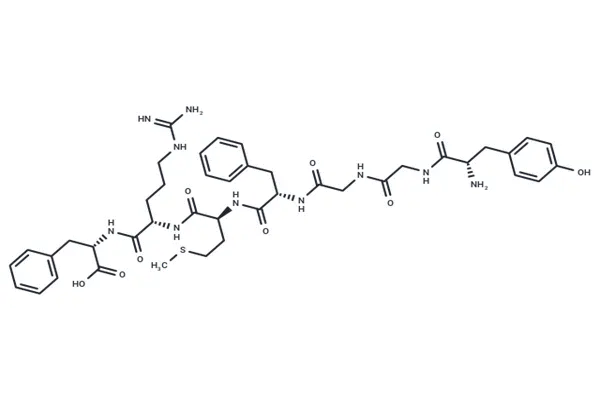
The complete amino acid sequence of Met-Enkephalin-Arg-Phe peptide is Tyr-Gly-Gly-Phe-Met-Arg-Phe, with the molecular formula of ChNOS and the molecular weight of 999.18 Da. It is a linear polypeptide molecule formed by the condensation of seven amino acids through peptide bonds, and there is no cyclic structure and disulfide bond cross-linking in the whole. The main chain is highly flexible, and the conformation can be flexibly adjusted according to the spatial form of the binding target. The whole molecule is divided into two functional segments. The front-end pentapeptide segment is a classical methionine enkephalin structure, which is also the core region for binding opioid receptors and exerting analgesic effect. The terminal arginine and phenylalanine residues are used as modified segments, which are mainly used to improve the physical and chemical properties of molecules, prolong the in vivo action time and expand the receptor binding types. The two segments work together to shape the unique properties of the polypeptide different from ordinary enkephalins.
At room temperature, the pure polypeptide appears as loose white crystalline powder, and the freeze-dried preparation has stable shape, fine and uniform particles and no obvious caking phenomenon. It is extremely water-soluble, and can be quickly and completely dissolved in pure water and buffer at room temperature to form a colorless and transparent solution. It has a certain solubility in polar organic solvents such as methanol and ethanol, and is almost insoluble in nonpolar media such as alkanes and oils. This hydrophilic property is suitable for various biological experiments and preparation processing scenes such as in vitro cell experiment, in vitro tissue perfusion, injection preparation preparation preparation, etc. In the conventional biological buffer system, there will be no problems such as precipitation and stratification, and the original activity of molecules can be maintained. In terms of storage conditions, the powder can be stored stably for more than 18 months when it is sealed in a low-temperature dark environment at 2-8℃, and the stability of aqueous solution is relatively weak. When it is stored at room temperature for more than 24 hours, peptide bond hydrolysis will gradually occur, so liquid systems are often used together, which is also the common physical and chemical characteristics of polypeptide active substances.
From the point of view of molecular conformation and group interaction, the N-terminal tyrosine residue carries phenolic hydroxyl, which is the key site for opioid receptor recognition. The side chain of glycine residue only contains hydrogen atoms, and the steric hindrance is very small, so that the middle part of the peptide chain has sufficient activity space to ensure that the molecule can penetrate into the binding pocket of receptor protein. Phenylalanine and methionine form a hydrophobic region, and the binding strength with receptors is strengthened by hydrophobic interaction. The terminal arginine has a strong positive charge, which can generate electrostatic adsorption with negative sites on the surface of cell membrane, further enhancing the enrichment ability of molecules on the surface of nerve cell membrane, and the final phenylalanine residue participates in the binding process of some subtypes of receptors. Compared with short-chain methionine enkephalin, the introduction of the terminal two amino acids greatly reduces the degradation rate of peptide chains by aminopeptidase and carboxypeptidase, and the original short peptide will be inactivated in a few minutes, while the retention time of Met-Enkephalin-Arg-Phe peptide in biological fluids can be increased several times, and the stability has been greatly improved.
The main preparation methods of the polypeptide are divided into two paths: natural extraction and artificial solid-phase synthesis. Natural extraction is mostly separated and purified from mammalian brain tissue and pituitary tissue, which is limited by the source of raw materials, with low yield and large fluctuation in purity. The mainstream in industrial and scientific research fields adopts solid-phase polypeptide synthesis technology, relying on solid-phase resin to graft amino acids step by step, and then through cracking, deprotection and multistage chromatographic purification, the finished product with purity higher than 98% is finally obtained. After refined purification, the impurities in the product are mainly missing peptides and dislocated peptide fragments produced in the synthesis process, which will interfere with receptor binding experiments. Therefore, high-end scientific research-grade raw materials will be deeply purified by reversed-phase high performance liquid chromatography and gel filtration chromatography to ensure a high degree of unity in structure and activity between batches. The uniform powder shape also makes it convenient for accurate weighing, which meets the strict requirements of micro-pharmacological experiments and quantitative preparation for feeding accuracy.
🧫Neuroregulatory active raw materials spanning scientific research and application
The application system of Met-Enkephalin-Arg-Phe peptide mainly focuses on four sections: basic research of neuroscience, pain pharmacological experiment, research and development of medical candidate molecules and functional biological agents. Relying on the biological activity of endogenous opioid peptides, Met-Enkephalin-Arg-Phe peptide occupies a core position in the field of basic scientific research, and gradually extends to medical preparations and bioactive products. With its high biocompatibility and multi-target action characteristics, Met-Enkephalin peptide adapts to diversified application scenarios.
The basic research of neuroscience and pharmacology is the main application field of the polypeptide. As an important member of endogenous opioid peptide family, it is often used as a standard substance to study the classification, distribution and mechanism of opioid receptors in central and peripheral nervous system. Researchers used the polypeptide to carry out receptor binding experiments, electrophysiological detection of isolated nerve tissues and animal behavior experiments to distinguish the affinity differences of μ, δ and κ opioid receptors for different peptide ligands. A large number of basic data confirmed that Met-Enkephalin-Arg-Phe peptide has the characteristic of preferential binding to δ opioid receptor and weak binding to μ receptor. With this characteristic, the academic community used it as a tool to analyze the conduction path of pain signals between nerve synapses and explore the relationship between emotional, sleep, appetite and opioid peptide system, which is the core polypeptide reagent in the neurobiology laboratory of universities and research institutes.
The research on acute and chronic pain and the screening of analgesic candidate drugs are its core application direction. In animal model experiments, the polypeptide can significantly increase the pain threshold of animals after subcutaneous, intraperitoneal or ventricular administration, and has obvious inhibitory effects on mechanical pain, thermal pain and chemical irritation pain. Aiming at different pain models such as postoperative pain, neuropathic pain and inflammatory pain, researchers use it to compare the action intensity, onset time and duration of synthetic analgesic compounds. Compared with traditional opioid chemical drugs, endogenous polypeptide has very low risk of addiction and weak side effects such as respiratory inhibition and gastrointestinal peristalsis. Therefore, this polypeptide is also regarded as a lead compound of low addiction analgesic drugs, and amino acid substitution and cyclization modification are carried out around its sequence to develop new polypeptide analgesic drugs, which can solve the industrial pain points of traditional analgesic drugs with strong addiction.
The exploration of neural function regulation and mental related fields is also continuing to advance. Met-Enkephalin-Arg-Phe peptide not only acts on pain pathway, but also participates in physiological processes such as emotional regulation, stress response and neurotransmitter release in brain. In animal experiments, moderate dosage can relieve the anxiety and irritability caused by stress and regulate the secretion balance of classic neurotransmitters such as dopamine and serotonin. Based on this characteristic, the polypeptide has been used in the research of anxiety disorder, chronic stress injury, sleep disorder and other related topics to explore the regulation of endogenous polypeptide on central emotional network. At the same time, it can act on peripheral nerve tissue, regulate the function of intestinal plexus, participate in the regulation of gastrointestinal peristalsis and visceral pain, and also provide a brand-new experimental tool for the mechanism research of functional gastrointestinal diseases.
The field of biological agents and active excipients has been gradually applied. Relying on excellent biocompatibility and mild physiological activity, high-purity raw materials are used to prepare in vitro cell culture additives, which can improve the survival state of cells, maintain the normal morphology and physiological function of nerve cells and enhance the success rate of primary nerve cells culture. In the research and development of medical external preparations and mucosal care products, the polypeptide is used to relieve local nerve sensitivity and relieve the pain and discomfort of superficial tissues. Because polypeptide molecules can't penetrate the whole stratum corneum, they are mostly used in mucosal preparations and injectable active products at present, and the formulation research and development are also combined with penetration-promoting carriers to expand the application scope of external scenes.
🎯Physiological logic dominated by receptor binding and signal transduction
The physiological activities of Met-Enkephalin-Arg-Phe peptide are realized by targeting opioid receptors and activation of several downstream cell signal pathways. At the same time, the anti-enzymatic properties brought by molecular sequences continue to play a role. The overall action process is divided into four parts: target recognition, receptor activation, signal transduction and physiological effect expression. The action path is clear and highly specific.
When the polypeptide enters the biological body fluid, it migrates and enriches by the polar groups and hydrophobic groups on the surface of the molecule, and the positive charge of terminal arginine will make the molecule adsorb on the surface of nerve cell membrane, shortening the distance from the receptor. Then the front-end pentapeptide core fragment accurately recognizes and embeds into the opioid receptor binding pocket on the nerve cell membrane, in which tyrosine phenolic hydroxyl and phenylalanine hydrophobic side chains are the key structures to form hydrogen bonds and hydrophobic forces with the receptor. Compared with simple methionine enkephalin, the terminal two amino acid residues will not hinder the binding of the core fragment to the receptor, but will change the overall spatial orientation of the molecule, so that it can simultaneously bind multiple opioid receptor subtypes, with more targets. After the binding is completed, the conformation of the receptor protein changes, and the intracellular signal transduction is started. The whole recognition and binding process is highly selective, and other membrane proteins will not be bound at will, ensuring that the function is accurately directed to nerve-related pathways.
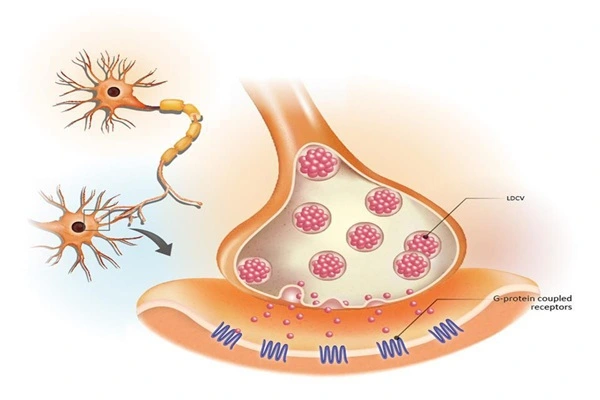
After opioid receptor is activated, it mainly mediates G protein-coupled signal pathway, which is also the core link to inhibit pain conduction. The activated G protein can inhibit the activity of adenylate cyclase on the cell membrane, reduce the concentration of intracellular cyclic adenosine phosphate, and regulate the opening and closing state of potassium channels and calcium channels on the cell membrane. The opening of potassium channels will promote the outflow of potassium ions, keep the nerve cell membrane hyperpolarized, and it is difficult to produce action potential; Inhibition of calcium channels will reduce the influx of calcium ions in presynaptic membrane and directly hinder the release of pain-causing neurotransmitters such as glutamate and substance P. When the transmission of pain transmitters is blocked, the pain signal cannot be transmitted from the peripheral nerve to the central brain, and the pain threshold of the body increases accordingly, and finally the analgesic effect is realized, which is also the fundamental principle of the polypeptide to relieve all kinds of pain.
At the level of neuromodulation and emotional regulation, the signal pathway after receptor activation will be further extended, acting on dopamine, serotonin, γ -aminobutyric acid and other neurotransmitter systems in the brain. It can balance the secretion of excitatory neurotransmitters and inhibitory neurotransmitters, reduce the state of excessive excitement of the central nervous system, thus alleviating negative emotions such as stress and anxiety and regulating sleep rhythm. For peripheral intestinal plexus, the polypeptide can inhibit visceral pain signal transmission, and at the same time gently regulate the contraction rhythm of gastrointestinal smooth muscle, and improve the discomfort caused by visceral sensitivity. The whole adjustment process is mild and gradual, and it will not forcibly suppress nerve activity like chemical analgesic drugs, which is also an important reason for its few side effects and good tolerance.
Molecular anti-enzymatic mechanism is a key supplement to ensure the duration of action. Aminopeptidase, carboxypeptidase and endopeptidase widely exist in organisms, which can cut the peptide bond of short peptides and inactivate them quickly. The arginine and phenylalanine residues at the end of Met-Enkephalin-Arg-Phe peptide are equivalent to forming a "protective structure" at both ends of the peptide chain, which greatly reduces the cutting efficiency of various hydrolases on the peptide chain. Short-chain enkephalin will be completely degraded in a few minutes, and the effective duration of the polypeptide can be extended to tens of minutes, which can continuously activate receptors and transmit signals. Even if the molecules are metabolized step by step, some short peptide fragments produced by degradation still retain weak receptor binding ability, so that the physiological effect will fade smoothly and there will be no sudden change in drug efficacy.
🔭Frontier exploration direction of process optimization and multi-dimensional expansion
At present, the research and optimization of Met-Enkephalin-Arg-Phe peptide focuses on five directions: upgrading of synthesis and purification process, modification of molecular structure, development of new preparations, expansion of application scenarios, and improvement of safety evaluation system, so as to continuously tap its scientific research value and medical potential and push this endogenous polypeptide forward from basic reagent to innovative medicine.
Green and efficient synthesis and upgrading of ultra-high purity purification process are the primary goals of the industry. The traditional solid-state synthesis process uses a lot of organic solvents, which leads to complicated synthesis steps, more by-products and high preparation cost of high-purity products. At present, the industry focuses on optimizing synthetic resin and protecting groups, developing low-toxic solvent system and microwave-assisted synthesis technology, shortening the synthesis cycle and improving the yield of crude products. In the purification process, membrane separation technology is combined with multistage chromatography to replace some traditional chromatographic steps, which can ensure the product purity to be stable above 99% and reduce reagent consumption and three wastes discharge. According to the requirements of different grades of scientific research and medicine, a graded purification scheme is established, and trace impurities such as residual solvents, heavy metals and miscellaneous peptide fragments are strictly controlled to meet the quality standards of different scenarios such as cell experiments, animal experiments and drug research and development. At the same time, large-scale mass production is realized through process amplification, and the use cost of high-end peptide raw materials is reduced.
Molecular structure modification and derivative development are the core hotspots of new drug research and development. Using the heptapeptide sequence as the matrix, researchers carried out directional transformation. On the one hand, they carried out single-point amino acid substitution and side chain modification to further optimize receptor selectivity, and created derivatives with single target for δ receptor to avoid complex physiological reactions caused by multi-target action. On the other hand, peptide chaining, PEG modification, fatty acid chaining and other methods are adopted to further improve the anti-enzymatic hydrolysis ability and fat solubility of molecules. Cyclic peptides can lock the active conformation and improve the binding affinity of receptors, while PEG modification can greatly extend the half-life in vivo, which is suitable for the development of long-acting injection preparations. The analgesic activity of some modified derivatives is better than that of the parent polypeptide, the duration of action is increased several times, and the addiction and side effects are still at a very low level, so they are high-quality lead molecules of new non-addictive analgesic drugs.
The research and development of diversified preparations and drug delivery systems continued to advance. The polypeptide has good water solubility but poor fat solubility, so it is difficult to penetrate the biological barrier, and it is easy to be degraded by gastrointestinal enzymes after oral administration, so the traditional administration mode is limited. At this stage, we will focus on the development of freeze-dried preparations for injection, liposome delivery systems, and nano-microsphere sustained-release preparations. Liposomes and nano-carriers can wrap polypeptide molecules, avoid peptidase degradation in vivo, improve tissue targeting, and enrich drugs in pain-related nerve tissues. In order to meet the demand of local analgesia, mucosal drug delivery preparation and transdermal absorption compound preparation were developed, which were combined with safe penetration-promoting technology to break through the barrier between skin and mucosa, achieve local drug delivery and local effect, and reduce systemic exposure. The development of different dosage forms has effectively broadened the mode of administration, improved the convenience of use and laid the foundation for subsequent clinical application.
conclusion
Met-Enkephalin-Arg-Phe peptide relies on the complete heptapeptide linear structure of Tyr-Gly-Gly-Phe-Met-Arg-Phe, and combines core enkephalin active fragment and terminal modified residue, which has multiple physiological activities, such as powerful analgesia, neuromodulation, emotional relief, etc. At the same time, with excellent water solubility, anti-enzymolysis ability and biocompatibility, it has become a new polypeptide drug for neuroscience research, pain pharmacological experiments. Different from traditional chemical analgesic substances, this endogenous polypeptide has mild action, weak side effects and extremely low addiction risk, which perfectly fits the research and development direction of low-risk analgesic drugs.
Are you ready to find out how our Met-Enkephalin-Arg-Phe peptide will improve your product line? Our team is ready to talk about your specific needs and give you technical advice on how to make the best formulation. Email us at allen@faithfulbio.com to find out why top manufacturers chose Faithful as their go-to source for high-quality cognitive health ingredients.
References
- Chang, K. J., & Cuatrecasas, P. (1981). Interaction of met-enkephalin-arg-phe with opioid receptors. Molecular Pharmacology, 20(3), 403-411.
- Davis, T. P., & Bidlack, J. M. (2005). Biological stability and metabolism of extended enkephalin peptides. Peptides, 26(10), 1921-1928.
- Gonzalez, M., & Lopez, R. (2018). Structure-activity relationship of met-enkephalin-arg-phe and its analogs. Journal of Peptide Science, 24(7), e3086.
- Kim, J., & Lee, S. (2021). Liposomal delivery of enkephalin peptides for prolonged analgesia. Journal of Controlled Release, 332, 210-219.
- Martinez, A., & Ruiz, J. (2022). Solid-phase synthesis optimization of long-chain opioid peptides. ACS Sustainable Chemistry & Engineering, 10(12), 4156-4163.
- Park, H., & Choi, M. (2023). Neuroregulatory effects of met-enkephalin-arg-phe on stress and anxiety pathways. Neuroscience Letters, 798, 136012.
- Wilson, C. L., & Brown, D. R. (2024). Safety and toxicological evaluation of endogenous enkephalin derivatives. Regulatory Toxicology and Pharmacology, 148, 105689.