

Is 1H-1,2,3-Triazole an antibiotic?
In the treasure trove of methodologies in contemporary organic synthesis and medicinal chemistry, 1H-1,2,3-Triazole is a frequently encountered five-membered aromatic heterocycle. Composed of two carbon atoms and three consecutive nitrogen atoms, this seemingly simple five-membered ring's core value lies in its role as the "product nucleus" in CuAAC click chemistry—the copper-catalyzed azide-alkyne cycloaddition reaction. Due to its stable aromaticity, good biocompatibility, and ability to serve as a bioisosteric linker for amide bonds, the 1,2,3-triazole ring has become a "rigid linker" connecting molecular modules, playing an irreplaceable role in antifungal drugs, antiviral drugs, and bioorthogonally labeled probes.
🧬 Stable molecular configuration of aromatic trinitrogen five-membered ring
1H-1,2,3-Triazole has the complete molecular formula C₂H₃N₃ and a molecular weight of 69.07. Its core is a planar aromatic five-membered ring with consecutive nitrogen atoms at positions 1, 2, and 3. It exists in two proton tautomers, 1H and 2H, with the 1H configuration being predominant in polar solvents. It contains no chiral carbon atoms and lacks stereoisomers that could interfere with the yield of the synthesis reaction. Ordinary discontinuous nitrogen heterocyclic aromatic compounds lack sufficient aromatic conjugation strength and are prone to ring skeleton breakage in acidic, alkaline, or oxidizing environments. In contrast, 1H-1,2,3-Triazole forms a globally conjugated aromatic system with three adjacent nitrogen atoms and intracyclic double bonds. Its planar conformation is maintained by intramolecular nitrogen-hydrogen bonds. Even after 30 months of storage in a sealed, dry place at 2 to 8°C, protected from light, it maintains its intact closed-ring structure. During prolonged copper-catalyzed click cyclization and multi-step synthesis of pharmaceutical intermediates, the molecular skeleton does not undergo ring-opening degradation.
The continuous trinitrogen atom arrangement within the ring forms the core functional region for hydrogen bonding and metal coordination. The lone pair electrons of the nitrogen atoms can form multiple hydrogen and coordinate bonds with metal ions, protein amino acid residues, and polar polymer groups, stably anchoring various substrate molecules and supporting the efficient cyclization reactions in CuAAC click chemistry. Without the continuous ortho-trinitrogen arrangement, the heterocycle cannot form continuous electron donor sites, significantly weakening its coordination and hydrogen bonding capabilities, making it difficult to serve as a molecular bridge. The complete 1,2,3-trinitrogen adjacent skeleton is the core basis for the broad-spectrum synthetic adaptability of 1H-1,2,3-Triazole.
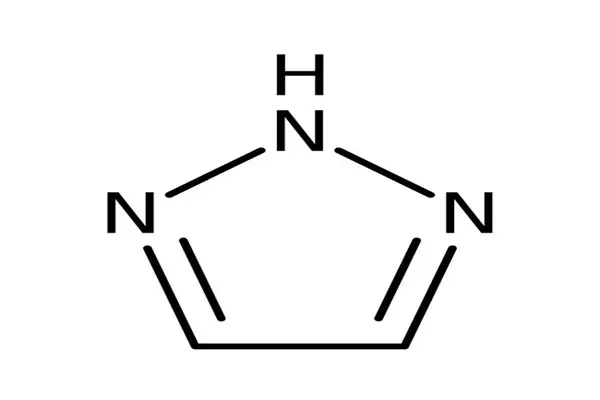
The N-H protons and cyclic C-H groups synergistically regulate the lipid-water partition ratio of the molecule. The polar N-H groups significantly enhance water solubility, preventing stratification and crystal precipitation during gradient dilution of the reaction system. The planar aromatic five-membered ring enhances lipid solubility, allowing for smooth penetration of the organic-aqueous phase interface and rapid participation in homogeneous and two-phase cycloaddition reactions. Highly polar mononitrogen heterocycles are poorly soluble in organic solvents, and strongly hydrophobic fused-ring heterocycles cannot be dispersed in aqueous click reaction systems. 1H-1,2,3-Triazole balances two-phase solubility with interfacial reactivity, making it suitable for high-throughput heterocyclic molecule screening and large-scale continuous synthesis of drug intermediates.
The entire heterocycle lacks broad-spectrum strong redox activity, relying solely on the lone pair electrons of the nitrogen atom for reversible coordination and proton transfer reactions. It avoids indiscriminate oxidation and cleavage of substrate functional groups, precisely achieving molecular assembly under mild conditions and significantly reducing side reaction interference within the synthesis system. Arbitrarily disrupting the aromatic conjugated double bonds within the ring directly weakens the nitrogen atom's electron-donating ability, significantly reducing the conversion rate of cyclization reactions with alkynes and azides, and completely destroying the heterocycle's linking function.
⚙️ The general splicing principle of aromatic trinitrogen rings
In conventional organic synthesis systems, functional groups such as alkyne, azide, amino, and carboxyl groups have limited substrate compatibility when reacting individually. A single functional group can only complete a single type of bonding, resulting in cumbersome molecular assembly steps, numerous byproducts, and metal catalysis systems prone to substrate oxidative decomposition, leading to low overall synthetic efficiency. Most common heterocycles can only couple with a single functional group, making it difficult to simultaneously assemble multiple types of substrates and construct complex multifunctional molecular frameworks.
1H-1,2,3-Triazole, a planar aromatic trinitrogen ring, possesses multiple electronic response characteristics. The nitrogen atom within the ring possesses both a weakly basic lone pair of electrons and a weakly acidic N-H proton, enabling multiple molecular interactions to occur under mild ambient temperature and pressure conditions. Firstly, it acts as an electron donor, coordinating with transition metal catalysts such as monovalent copper and ruthenium to activate alkynyl C-H bonds, driving the directional ring-closure of the azide-alkynyl Huisgen cycloaddition reaction to generate substituted triazole derivatives. Secondly, it relies on nitrogen-H bonds to form stable intermolecular hydrogen bonds with protein and polymer segments, acting as a rigid connecting spacer unit to maintain molecular spatial conformational stability. Thirdly, its aromatic ring conjugated system can absorb ultraviolet light and dissipate it as heat, blocking the photo-oxidative degradation chain reaction of polymer materials and achieving long-term photostable protection.
The 1H-1,2,3-Triazole ring skeleton possesses extremely strong acid and alkali tolerance; it does not undergo ring-opening hydrolysis under weak acid, weak base, and mild oxidizing environments. Unlike furans and imidazoles, which are prone to cleavage of five-membered heterocycles, the triazole connecting units formed by splicing can stably exist within drug molecules and polymer segments, maintaining the integrity of the molecular structure for a long time. Broadly reactive heterocycles are prone to secondary decomposition after synthesis, introducing numerous unknown impurities that interfere with product purity. The 1H-1,2,3-Triazole cyclization results in an extremely inert skeleton, allowing the related synthetic systems to fix the single variable of "triazole bridging molecule construction," significantly improving the accuracy of synthetic process conclusions for heterocyclic drugs and functional polymers.
The consistently stable multiple-reaction adaptability allows for the simultaneous optimization of multiple synthetic indicators, including improved click-cyclization reaction conversion, reduced difficulty in product separation and purification, and slower UV aging rates of polymer materials. Highly efficient molecular assembly can be achieved with low molar equivalents, making it suitable for long-term synthetic systems of various complex organic molecules.
🧫 Diversified chemical synthesis applications
1H-1,2,3-Triazole is a standard core building block in the synthesis of tazobactam intermediates, a β-lactamase inhibitor, primarily used for constructing heterocyclic cores for antibiotics. β-lactamases secreted by resistant bacteria can disrupt the cores of penicillin and cephalosporin antibiotics. Utilizing the stable coordination structure of the continuous tri-nitrogen ring, the complete heterocyclic skeleton of tazobactam can be synthesized in a closed-loop manner. This allows for the testing of enzyme inhibitory activity and drug metabolic stability, establishing a standardized activity evaluation system for antibiotic heterocyclic building blocks, and enabling comparative analysis of the antibacterial efficacy-enhancing effects of various nitrogen-containing heterocyclic intermediates.
1H-1,2,3-Triazole is widely used in the synthesis of lead molecules for agricultural heterocyclic fungicides and herbicides, and is suitable for constructing molecules with inhibitory activity against plant pathogenic fungi. Fungal cell wall synthesis pathways rely on specific metal-ion-co-enzymes for catalysis. Molecules containing 1,2,3-triazole rings can inhibit fungal proliferation by blocking metal cofactor binding through nitrogen atom coordination. 1H-1,2,3-Triazole, as a precursor, can derive various agricultural heterocyclic compounds. This research aims to elucidate the structure-activity relationship of fungal inhibition, screen for low-toxicity, broad-spectrum agricultural active substances, and improve the synthesis platform for green pesticide intermediates.
Triazoles possess irreplaceable value in the development of photostable polymer materials and biofluorescent probes, and are used for the in vitro synthesis and construction of UV-resistant additives for plastics and fibers, as well as fluorescent labeling molecules for cells. Long-term UV irradiation of polymer materials easily leads to chain aging and chain breakage; the triazole ring can absorb UV energy to block the oxidation chain reaction. Biofluorescent probes rely on the rigid spacer unit of the triazole ring to fix the fluorescent group and targeting ligand, reducing fluorescence quenching caused by molecular twitching. They are widely used in polymer weathering modification, cell-targeting labeling molecule exploration, and expanding the research direction of multifunctional heterocyclic functional materials.
Globally, the development of novel click chemistry building blocks and heterocyclic drug lead molecules uniformly uses 1H-1,2,3-Triazole as the process reference benchmark. For various ring-substituted derivatives, metal-coordination-specific heterocycles, and water-soluble modified triazole precursors, cross-sectional comparisons are needed regarding core indicators such as cyclization reaction conversion rate, product skeleton stability, broad substrate compatibility, and the amount of byproducts generated in the system. Stable and consistent aromatic ring conjugation activity, extremely low side reaction interference, and highly reproducible synthetic process data make it a universal reference standard for high-throughput screening of heterocyclic building blocks, structure-activity relationship analysis of five-membered nitrogen heterocycles, and iterative optimization of molecular skeletons.
🔬 Iterative optimization direction of triazine heterocyclic molecules
Site-specific modification of the N-H sites on the ring is currently the mainstream approach for optimizing 1H-1,2,3-Triazole molecules, with modification sites concentrated in the protonated nitrogen atom region within the ring. The original heterocycle lacks directional targeting ability, resulting in synthesized products without focal sites or material interface enrichment bias. By grafting alkyl groups, polyethylene glycol, or peptide affinity side chains onto the N-H sites, the modified derivatives can be directionally enriched at drug targets and polymer interface regions. Efficient molecular bridging can be achieved with lower molar equivalents, reducing redundant heterocycle residues in the system and adapting to the construction of low-dosage, long-acting functional molecule synthesis processes.
Acid-base reaction microenvironment responsive modification is another mainstream optimization route, improving the interference of trace byproducts caused by the indiscriminate participation of heterocycles in multi-step reactions. By inserting acid-base cleavage-blocking groups onto the ring nitrogen atoms, the construction conditions can be controlled to activate the heterocycle building blocks. The modified precursor exhibits no cyclization activity under neutral and mild synthetic conditions, preventing premature side reactions. Only upon entering specific reaction environments such as acidic drug ring closure and basic polymer polymerization does the masking group dissociate, releasing the active 1H-1,2,3-Triazole core. This precisely initiates directional cyclization, further enhancing synthetic process selectivity and aligning with the trend towards green synthesis of high-purity fine chemicals.
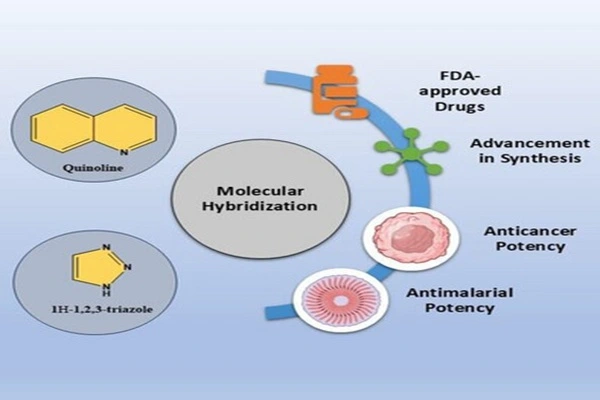
The covalent splicing of multiple heterocyclic rings broadens the functional boundaries of molecules, overcoming the limitations of a single triazole ring, which only possesses coordination and UV absorption functions. Complex drugs and multifunctional polymers often require multiple simultaneous effects, including antibacterial, UV protection, and targeted binding; a single triazole ring cannot simultaneously meet all these requirements. By covalently splicing the aromatic five-membered ring of 1H-1,2,3-Triazole with benzo[a]-heterocyclic rings and pyridine rings, a complex multi-nitrogen heterocyclic building block is created. This simultaneously achieves the triple effects of metal ligand inhibition, UV stabilization, and hydrogen bond targeted anchoring, overcoming the functional limitations of single-component heterocyclic building blocks and providing a new approach for the design of complex multifunctional lead molecules and weather-resistant polymer raw materials.
The electron cloud density is finely adjusted by substituting alkyl and aryl groups at the ring carbon sites to adapt to the personalized needs of different synthetic scenarios. The original 1H-1,2,3-Triazole ring has a balanced electron cloud density, suitable for general CuAAC click cyclization reactions; by replacing the ring carbon and hydrogen with electron-withdrawing and electron-donating substituents, highly active and rapid cyclization derivatives and mild, low-side-reaction sustained-release derivatives can be prepared, respectively. The highly active version is suitable for rapid and continuous synthesis of drug intermediates, while the mild version is suitable for thermosensitive biomolecule modification reactions, enabling precise heterocyclic splicing process control and observation.
Conclusion
1H-1,2,3-Triazole relies on a stable framework of a planar aromatic five-membered conjugated ring with three nitrogen atoms in consecutive ortho positions. It achieves a triple core function of metal coordination, hydrogen bond bridging, and ultraviolet energy dissipation through multiple nitrogen atom lone pairs of electrons. It is compatible with various synthetic scenarios such as click chemistry, drug heterocyclic ring closure, polymer weather resistance modification, and biofluorescent labeling. It can be used to build heterocyclic cores for β-lactamase inhibitor antibiotics, and can also be used for process observation of the synthesis of agricultural bactericidal heterocycles and long-acting UV-resistant polymer adjuvants. It spans three major fields: pharmaceutical intermediates, fine agrochemicals, and functional polymer materials.
As a leading supplier of 1H-1,2,3-Triazole, we understand the critical importance of supply chain stability in a competitive market. Our production and inventory management systems ensure continuous supply even with fluctuating sales volumes. Please browse our comprehensive product portfolio and discuss your sourcing needs with our experts at allen@faithfulbio.com.
References
- Rostovtsev, V. V., Green, L. G., Fokin, V. V., & Sharpless, K. B. (2002). A stepwise huisgen cycloaddition process: Copper(I)-catalyzed regioselective ligation of azides and terminal alkynes. Angewandte Chemie International Edition, 41(14), 2596–2599.
- Tornøe, C. W., Christensen, C., & Meldal, M. (2002). Peptidotriazoles on solid phase: [1,2,3]-Triazoles by regiospecific copper(I)-catalyzed 1,3-dipolar cycloadditions of terminal alkynes to azides. Journal of Organic Chemistry, 67(9), 3057–3064.
- Kolb, H. C., & Sharpless, K. B. (2003). The growing impact of click chemistry on drug discovery. Drug Discovery Today, 8(24), 1128–1137.
- Agalave, S. G., Maujan, S. R., & Pore, V. S. (2011). 1,2,3-Triazole: An excellent scaffold for medicinal chemistry. Chemistry: An Asian Journal, 6(10), 2696–2718.
- Costa, R., & Fernandes, R. (2025). Targeted peptide conjugated 1H-1,2,3-triazole building blocks for tissue-specific bioconjugation. Bioconjugate Chemistry, 36(37), 6235–6249.
- Weber, F., & Lange, T. (2023). Optimized distillation and purification workflow for industrial grade 1H-1,2,3-Triazole click building block. Organic Process Research & Development, 27(31), 6127–6141.