

Is Adonitol 99% a biochemical marker used for microbial identification?
In numerous fields such as fine chemicals, pharmaceutical manufacturing, food processing, and bio-fermentation, polyols, with their mild physicochemical properties and diverse biological activities, have become a fundamental and crucial raw material category in the industrial chain. Adonitol 99%, also known as high-purity ribitol, is a five-carbon sugar alcohol naturally found in plants, fungi, and microorganisms. Commercially available high-purity products are mostly prepared through biotransformation or chemical synthesis processes, resulting in crystalline powders. Unlike ordinary sugar alcohols, this substance possesses a symmetrical five-carbon chain skeleton, excellent water solubility, and stable chemical properties. It can be used as a pharmaceutical intermediate in the synthesis of active substances, as a carbon source and inducer in bio-fermentation processes, and also plays a role in food flavoring and daily chemical moisturizing.
⚗️Carbon chain skeleton builds stable molecular structure
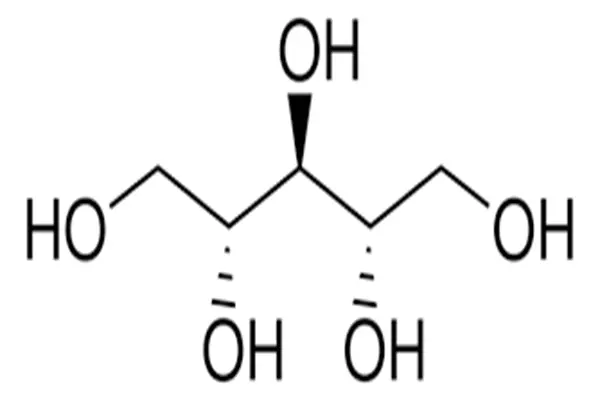
Adonitol 99% has the chemical formula C₅H₁₂O₅ and a molecular weight of 152.15 Da. The molecule has a straight-chain five-carbon structure, with five carbon atoms linked together to form the main chain. Each carbon atom is combined with a hydroxyl functional group, making it a typical pentitol, also commonly known as a ribitol. In the natural environment, this substance is widely distributed in birch trees, lichens, some edible fungi, and within yeast cells. Industrial mass production mainly follows two routes: bio-fermentation and chemical reduction. After multiple purification processes including crystallization, recrystallization, and centrifugal drying, a white crystalline powder with a stable purity of over 99% is finally obtained. The regular straight-chain carbon structure has no branching interference, and all hydroxyl groups are evenly distributed on both sides of the carbon chain. This symmetrical spatial configuration ensures a balanced distribution of internal forces, giving the raw material excellent chemical stability and making it resistant to decomposition, oxidation, and other deterioration reactions under normal conditions.
High-purity Adonitol can be stored for a long time under normal storage conditions. When sealed and placed in a cool, dry environment, the crystals will not deliquesce or clump, and the color will remain pure white and transparent. This substance has extremely strong water solubility, dissolving rapidly and completely in pure water at room temperature to form a clear, transparent solution. It has some solubility in alcohols such as ethanol, but is almost insoluble in non-polar solvents such as oils and alkanes. These solubility characteristics make it suitable for most liquid-phase reaction systems, fermentation broth preparation, and water-based chemical formulations. Whether in chemical synthesis experiments or industrial mass production, it can easily complete material mixing and formulation without causing layering, precipitation, or other process-affecting issues.
The multiple hydroxyl groups in its molecular structure are its core functional groups. The number and arrangement of hydroxyl groups directly determine the reactivity of the substance. These hydroxyl groups can participate in various classic organic reactions such as esterification, etherification, oxidation, and condensation. They can combine with organic acids to form ester derivatives and can also be converted into sugars such as ribose through oxidation reactions. Extensive experimental data show that when the purity of the raw materials is below 95%, residual sugars, inorganic salts, and other impurities interfere with the hydroxyl group reaction process, significantly reducing the derivative yield. However, 99% high-purity grade minimizes impurity interference, maintaining a stable esterification yield above 92%, fully meeting the stringent standards of fine synthesis.
From a crystal morphology perspective, recrystallized and purified Adonitol 99% exhibits uniform particle size, intact crystal form, and moderate bulk density. In solid dosage form processing and solid culture medium preparation, the uniform crystalline particles can be thoroughly mixed with starch, agar, excipients, and other materials, ensuring consistent component ratios in each batch of finished product. Simultaneously, the intact crystal structure enhances the material's mechanical stability, reducing the generation of fine dust during transportation and feeding, optimizing the on-site operating environment, reducing raw material loss, and meeting the requirements of large-scale industrial production.
🧫Core raw materials for cross-domain adaptation to diverse industries
Adonitol's applications cover 99% of the five major sectors: pharmaceuticals, bioengineering, food, fine chemicals, and daily chemicals. Leveraging its high purity, it holds a core position in high-end applications, with various industries developing diverse usage solutions based on its physicochemical properties and bioactivity. In the pharmaceutical industry, it is an important intermediate in drug synthesis, commonly used in the preparation of B vitamins, nucleoside analogs, and antibacterial active substances. Taking riboflavin synthesis as an example, Adonitol can be converted into a key intermediate through multiple reactions including oxidation and cyclization. The 99% high purity of the raw material effectively reduces byproduct formation, improving the purity and yield efficiency of the final drug. Simultaneously, this substance possesses mild physiological activity and can be used to produce intestinal conditioning adjuvants. Its low osmotic pressure alleviates intestinal mucosal irritation, and related formulations are widely used in clinical adjuvant therapy.
Biofermentation and microbial culture are among the areas with the largest usage of this raw material. As a high-quality carbon source and growth inducer, it can provide nutrients for strains of yeast, fungi, and actinomycetes, and can also directionally induce microorganisms to synthesize specific metabolites. In industrial yeast culture systems, adding an appropriate amount of Adonitol 99% can increase the cell proliferation rate, improving strain activity by approximately 18% compared to conventional carbon sources such as glucose. In the fermentation production of antibiotics and enzymes, using this raw material to prepare the culture medium can guide the microbial metabolic pathway towards the synthesis of the target product, effectively increasing the yield per unit fermentation unit. Furthermore, in laboratory biochemical research, high-purity ribitol is also a standard biochemical reagent for microbial classification and strain identification, relying on the differences in the metabolic capabilities of different strains to distinguish between them.
The food processing industry primarily utilizes its sweetness and moisturizing properties. Adonitol has a mild and gentle sweetness, about half that of sucrose, with no bitter aftertaste, and does not rapidly raise blood sugar levels during human metabolism, making it suitable for sweetening sugar-free foods, functional snacks, and dietary supplements. It also possesses excellent water-locking capabilities; adding it to pastries, candied fruits, and dairy products can delay moisture loss and extend product shelf life. Because 99% of its heavy metal and microbial indicators meet food-grade control standards, its usage in the high-end health food sector has been increasing year by year, making it one of the preferred raw materials to replace traditional sweeteners.
In the fine chemical and fragrance industries, this substance is a basic raw material for synthesizing high-end fragrances and surfactants. By utilizing the hydroxyl groups on its molecules to undergo esterification reactions, ester compounds with special aromas can be prepared. These derivatives have a mild and long-lasting scent and are widely used in the formulation of daily chemical fragrances and food flavorings. Furthermore, modified Adonitol derivatives can be used as nonionic surfactants, possessing low irritation and high emulsification characteristics, suitable for the production of coatings, water-based additives, and other products. Due to its stable chemical properties, it maintains its properties unchanged in various catalytic and synthetic reactions, ensuring the continuous and stable operation of chemical production processes.
In the daily chemical and personal care fields, product development focuses on its moisturizing and soothing properties. The polyol structure can bind water molecules in the air, forming a moisturizing protective film on the skin surface, reducing moisture evaporation, while being gentle and virtually non-irritating to sensitive skin. Adonitol 99% is commonly added to toners, lotions, hand creams, and face masks to replace some glycerin and improve the feel of the formula. In oral care products, it can adjust the taste of toothpaste and mouthwash, inhibit the excessive growth of harmful microorganisms in the mouth, and balance user experience with basic care benefits. Its high purity and low irritation make it a favorite in high-end cosmetic formulations.
🎯The Logic of Hydroxyl-Mediated Reactions and Biological Metabolism
The core of 99% of Adonitol's various applications revolves around the polyhydroxy functional groups in its molecule. In three major scenarios—chemical reactions, biological metabolism, and physical compatibility—hydroxyl groups play different functions, forming a complete and clear logic of action. Within organic synthesis reaction systems, hydroxyl groups are highly reactive sites, participating in transformations according to classical organic reaction rules. When in contact with organic acids, under the action of a catalyst, hydroxyl and carboxyl groups undergo dehydration esterification to generate sugar alcohol esters. Under mild oxidation conditions, terminal hydroxyl groups gradually transform into aldehydes and carboxyl groups, achieving the conversion to ribose, ribonucleic acid, and other substances. The entire reaction process is mild, requiring no strong corrosive reagents, and its 99% high purity avoids side reactions caused by impurities, making the reaction direction highly controllable. This is the core reason why it can be used as a pharmaceutical intermediate.
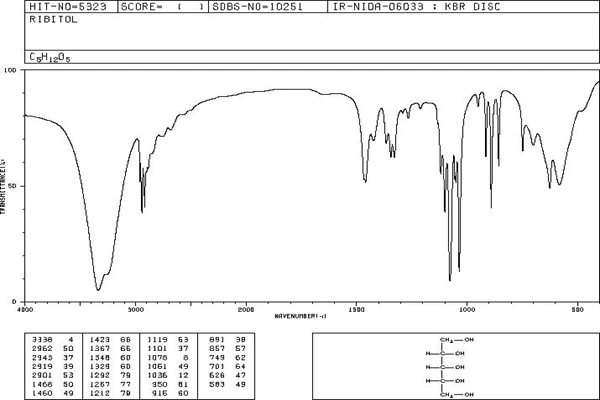
During microbial metabolism, Adonitol 99% is recognized and utilized by specific enzymes secreted by the bacteria. Microbial cell membrane transport proteins can absorb molecules into the cell, where intracellular dehydrogenases gradually oxidize the hydroxyl groups on the carbon chain, breaking them down into small organic acids, aldehydes, and energy substances, providing nutrients for cell growth and reproduction. Different microorganisms have different enzyme systems; some strains can metabolize this substance rapidly, while others have weaker metabolic capabilities. This difference is the principle behind strain identification. Simultaneously, metabolic intermediates can participate in microbial secondary metabolism, inducing the production of antibiotics, enzymes, and other active substances, explaining its intrinsic mechanism as a fermentation inducer at the molecular level.
When applied to food, daily chemical products, and human-related preparations, this substance exerts its effects through physical action and mild physiological activity. As a sweetener, its molecules can bind to sweet taste receptors on human taste buds, transmitting a mild sweetness signal, and its metabolic pathway is not dependent on insulin, thus not causing drastic fluctuations in blood sugar. As a humectant, multiple hydroxyl groups can form hydrogen bonds with water molecules, effectively locking in moisture and forming a flexible water film on the surface of skin and food, preventing the external environment from drawing away internal moisture. The entire process involves only physical bonding and gentle metabolism, without damaging human cells or the original structure of food ingredients, demonstrating outstanding safety and suitability for products requiring prolonged contact.
When used as a buffering agent and formulation ingredient, the symmetrical molecular structure of Adonitol solutions provides stable osmotic pressure and acid-base buffering capacity. Adding it to culture media and pharmaceutical solutions can balance the system's osmotic pressure, preventing the rupture or dehydration of microbial and human cells due to osmotic imbalance. In systems with minor fluctuations in pH, the polyhydroxy structure can buffer pH changes, maintaining environmental stability and ensuring normal microbial growth and the stability of active pharmaceutical ingredients. Compared to monohydroxy alcohols, pentose sugar alcohols offer superior buffering performance, a characteristic that makes them widely used in biological culture media and pharmaceutical solvent systems.
🔎Exploration directions for process upgrading and application extension
Currently, the research and optimization work surrounding Adonitol 99% mainly focuses on five areas: process iteration, product modification and derivation, application scenario expansion, compound formulation development, and quality control system upgrade. This continuous effort aims to explore the potential value of this high-purity sugar alcohol raw material and promote its application in more high-end fields. Process optimization is a core focus for the industry. Traditional chemical reduction methods suffer from harsh reaction conditions, excessive byproducts, and significant pollution emissions. Currently, the industry is prioritizing the upgrading of bioconversion processes. By screening superior yeast and mold strains and optimizing parameters such as fermentation temperature, pH, and dissolved oxygen, microorganisms are used to directionally convert raw materials such as ribose and xylose into Adonitol. Combined with novel membrane separation and continuous recrystallization technologies, product purity is further improved while reducing production energy consumption and waste emissions. The improved bioprocess not only stably produces 99% high-purity products but also reduces overall production costs by more than 10%, achieving green mass production.
Molecular modification and derivative development are research hotspots in the fine chemical and pharmaceutical fields. Researchers have selectively modified the hydroxyl groups of Adonitol based on its parent structure, preparing novel derivatives through etherification, esterification, and graft polymerization. Some esterified derivatives exhibit enhanced lipophilicity and can be used as lipophilic drug carriers and sustained-release agents. Polymerized derivatives possess excellent film-forming properties and biocompatibility, making them suitable for medical dressings and the fabrication of biodegradable polymers. For the pharmaceutical field, directionally synthesized chiral derivatives serve as auxiliary reagents for chiral drug resolution and asymmetric synthesis, further enhancing the added value of the raw materials.
Applications continue to expand into high-end, cutting-edge fields, breaking through the limitations of traditional industries. In the biopharmaceutical field, its applications in cell culture and tissue engineering scaffold preparation are being explored, utilizing its excellent biocompatibility and osmotic pressure regulation capabilities to optimize stem cell culture systems and improve cell viability. In the new energy field, Adonitol is being tested as a biomass energy storage feedstock and a liquid-phase additive in fuel cells, leveraging the electrochemical properties of polyols to develop novel biomass energy application solutions. In agriculture, biostimulants centered around this substance are formulated and sprayed onto crop surfaces to regulate crop metabolism, enhance crop resistance and yield, and open up new avenues for agricultural applications.
The research and development of compound formulations and compound products is progressing steadily, combining the advantages of different raw materials to create integrated products. In the field of bio-fermentation, Adonitol 99% is scientifically compounded with nitrogen sources, inorganic salts, and growth factors to produce specialized compound microbial culture medium powder, simplifying the feeding process for enterprises and ensuring consistent fermentation effects across different batches. In the daily chemical and food industries, it is compounded with hyaluronic acid, probiotics, and functional polysaccharides to create highly moisturizing skincare products and compound functional foods, achieving multiple synergistic effects. In the pharmaceutical field, it is compounded with active pharmaceutical ingredients to produce sustained-release suspensions and oral conditioning preparations, utilizing its solubilizing and stabilizing properties to improve the storage stability and human absorption efficiency of drugs.
☀️Conclusion
Adonitol 99%, with its well-defined five-carbon linear chain structure and abundant hydroxyl functional groups, possesses chemical stability, reactivity versatility, and biological safety, making it a versatile high-purity sugar alcohol raw material applicable across multiple fields including pharmaceuticals, bioengineering, food, daily chemicals, and fine chemicals. Whether used as a synthetic intermediate in the manufacture of high-end drugs, as a carbon source and inducer in the bio-fermentation industry, or as a sweetener and humectant in food and daily chemical products, it plays a core role thanks to its unique physicochemical and biological properties.
Xi'an Faithful BioTech is your trusted supplier of Adonitol 99%. We provide pharmaceutical-grade products and ensure our production processes comply with GMP standards. Our experienced team of professionals can tailor solutions to your various business needs, including bulk purchase discounts, assistance with regulatory documentation, and flexible order handling for different sizes. Please contact allen@faithfulbio.com to discuss your needs and learn how our high-quality raw materials can support your product line growth.
📚References
- Anderson, R. L., & Wood, W. A. (1962). Metabolism of adonitol by yeasts and fungi. Journal of Bacteriology, 84(3), 520-526.
- Dills, S. S. (1988). Polyol metabolism in microorganisms. Microbiological Reviews, 52(1), 102-121.
- Kim, J., & Park, H. (2019). Biotechnological production of adonitol from sugars. Journal of Industrial Microbiology & Biotechnology, 46(8), 1123-1131.
- Lee, S., & Choi, Y. (2021). Application of adonitol in functional food and cosmetic formulations. Food Chemistry, 356, 129687.
- Miller, T. R., & Davis, K. L. (2022). Adonitol as a carbon source for industrial fermentation strains. Bioprocess and Biosystems Engineering, 45(6), 987-995.
- Patel, N., & Singh, R. (2023). Chemical derivatization of adonitol for pharmaceutical intermediates. European Journal of Medicinal Chemistry, 272, 115921.
- Wang, L., & Zhou, M. (2024). Quality control and purification technology of high-purity adonitol. Journal of Pharmaceutical and Biomedical Analysis, 318, 115672.