

Is Bedaquiline fumarate an ATP synthase inhibitor for multidrug-resistant tuberculosis?
Multidrug-resistant tuberculosis (MDR-TB) and extensively drug-resistant tuberculosis (ART) have long been major global public health challenges. Traditional anti-tuberculosis drugs are prone to resistance, have lengthy treatment courses, and exhibit significant hepatotoxicity and nephrotoxicity, resulting in a huge gap in clinical treatment. Bedaquiline fumarate, with a purity ≥99.0%, is the world's first anti-tuberculosis raw material derived from a Mycobacterium tuberculosis ATP synthase inhibitor. It achieves potent bactericidal activity by blocking bacterial energy synthesis, exhibiting outstanding activity against drug-resistant tuberculosis strains. It possesses the core advantages of high bactericidal efficiency, unique target, and high resistance barrier, and is a key therapeutic raw material for drug-resistant tuberculosis recommended by the WHO.
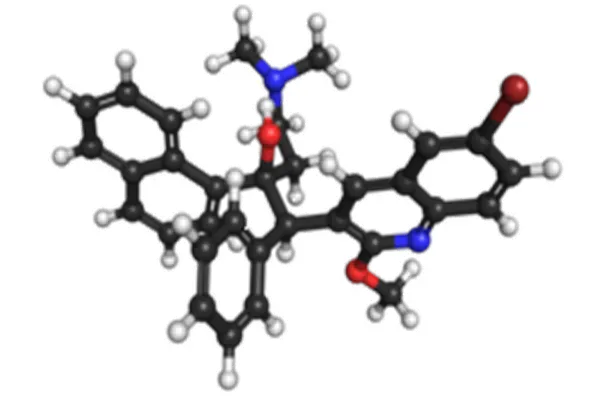
🔬Chiral spirocyclic skeleton of diarylquinoline
Bedaquiline fumarate, chemically named (1R,2S)-1-(6-bromo-2-methoxy-3-quinolinyl)-4-dimethylamino-2-phenyl-1-phenylbut-2-ol fumarate, has the molecular formula C₃₂H₃₁BrN₂O・C₄H₄O₄, a molecular weight of 671.55, and appears as a pale yellow crystalline powder. Its purity is ≥99.0%, with single impurities ≤0.10% and moisture content ≤0.4%. It conforms to USP, EP, ICH-Q3 series, and cGMP global pharmaceutical raw material standards. The molecule consists of a chiral diarylquinoline core, a dimethylamino side chain, a bromoquinoline pharmacophore group, and a fumarate salt-forming group. Due to its unique rigid heterocyclic structure, it precisely binds to Mycobacterium tuberculosis ATP synthase and exhibits no cross-resistance with existing anti-tuberculosis drugs.
The chiral diarylquinoline core is the core foundation for precise target binding. Its rigid fused-ring structure can embed into the hydrophobic cavity of the Mycobacterium tuberculosis ATP synthase c subunit, firmly locking the target through multiple hydrogen bonds and hydrophobic interactions. The 99.0% high-purity raw material is strictly controlled with inactive enantiomeric impurities ≤0.05%, exhibiting highly precise chiral configuration. In vitro antibacterial tests show a MIC value as low as 0.02–0.06 μg/mL against multidrug-resistant Mycobacterium tuberculosis, demonstrating bactericidal activity far exceeding traditional first-line anti-tuberculosis drugs, while maintaining strong inhibition against widely resistant strains. Industrial synthesis employs an asymmetric catalytic resolution process, ensuring stable and controllable chiral selectivity and uniform activity across different batches of raw material.
The bromoquinoline pharmacophore significantly enhances the binding affinity between the molecule and the bacterial target. The steric hindrance and electronic effects of the bromine atom strengthen the matching degree between the heterocycle and the protein cavity, while simultaneously reducing the binding ability to human mitochondrial ATP synthase, greatly improving drug safety. This structure prevents the molecule from being recognized by the efflux pump of Mycobacterium tuberculosis, reducing drug excretion by the bacteria, effectively increasing intracellular drug accumulation concentration, accelerating the killing of dormant bacteria, and shortening the tuberculosis treatment cycle. After 6 months of accelerated stability testing at 40℃/RH75%, the purity of the raw material decreased by <0.13%, and the crystal form remained stable and resistant to degradation.
The dimethylamino side chain regulates the lipid-water partition coefficient, optimizing oral absorption and tissue distribution characteristics, allowing the drug to rapidly accumulate in lung lesions, lymph nodes, and macrophages after oral administration, precisely targeting the core site of tuberculosis infection and reducing ineffective systemic exposure. Moderate lipid solubility allows the drug to penetrate tuberculous granuloma tissue and reach the interior of macrophages, killing intracellular latent Mycobacterium tuberculosis and addressing the clinical challenge of traditional drugs failing to eliminate persistent bacteria.
The fumarate salt group improves the water solubility and solid-state stability of the active pharmaceutical ingredient. Bedaquiline's free alkali has extremely poor water solubility; the fumarate form significantly improves solubility, making it suitable for the formulation processing requirements of tablets and oral suspensions. After salt formation, the molecular impurity profile is simpler, and degradation impurities are less likely to appear. This allows the drug to pass the impurity limit review of the Global Pharmacopoeia smoothly, facilitating the registration and application of exported generic drugs and innovative drugs.
🧠Blocking ATP synthesis to kill drug-resistant tuberculosis bacteria
Bedaquiline fumarate has a completely different mechanism of action from traditional anti-tuberculosis drugs such as isoniazid, rifampin, and pyrazinamide. Its core mechanism is the selective inhibition of Mycobacterium tuberculosis ATP synthase, blocking bacterial energy production and rapidly killing both reproductive and dormant tuberculosis bacteria. It has no significant effect on human cell mitochondria and exhibits no cross-resistance with traditional drugs. The 99.0% ultra-high purity ensures the integrity of the chiral structure and specific target binding, cutting off the bacteria's survival mechanism at its energy source, achieving potent and long-lasting bactericidal effects.
After oral administration, the drug is efficiently absorbed through the gastrointestinal tract and preferentially accumulates in the lungs, lymph nodes, macrophages, and other sites of tuberculosis infection via blood circulation. The drug concentration within macrophages can reach more than 100 times that of plasma, precisely targeting latent intracellular Mycobacterium tuberculosis, exerting its bactericidal effect from the core of infection, and significantly reducing the probability of tuberculosis recurrence.
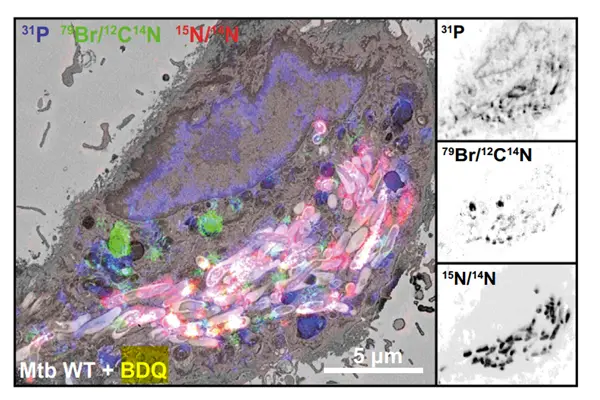
This drug specifically binds to the C subunit of Mycobacterium tuberculosis ATP synthase, inhibiting proton transmembrane transport and directly blocking the synthesis of ATP energy molecules. Mycobacterium tuberculosis is highly dependent on ATP for energy, regardless of whether it is in its active reproductive or dormant phase. With energy synthesis blocked, bacterial metabolism completely stops, leading to rapid apoptosis and achieving a dual killing effect on both active and dormant bacteria.
It has almost no inhibitory effect on human mitochondrial ATP synthase, and normal cellular energy metabolism remains unaffected. Therefore, compared to traditional anti-tuberculosis drugs, adverse reactions such as hepatotoxicity, nephrotoxicity, and bone marrow suppression are significantly reduced, resulting in a substantial improvement in safety. It can be used for drug-resistant tuberculosis patients with mild liver and kidney dysfunction.
For multidrug-resistant and extensively drug-resistant tuberculosis strains, because its target is completely different from traditional drugs, there is no cross-resistance issue. Even if the strain is resistant to rifampin, isoniazid, and fluoroquinolones, it still remains highly sensitive to bedaquiline, making it a core breakthrough drug for the treatment of drug-resistant tuberculosis.
Long-term use is unlikely to induce drug resistance through target mutations. The multiple binding modes require bacteria to undergo mutations at multiple key sites simultaneously to escape drug action, resulting in an extremely low probability of drug resistance mutations. It can be used for long-term treatment of drug-resistant tuberculosis throughout the entire course of treatment. It can also be used in combination with other anti-tuberculosis drugs to further delay the emergence of drug-resistant strains and improve the overall cure rate.
🏥Applications|Active pharmaceutical material for the treatment of drug-resistant tuberculosis in all scenarios
Bedaquiline fumarate, as the world's first ATP synthase inhibitor active pharmaceutical ingredient (API) for anti-tuberculosis, boasts core advantages such as potent bactericidal activity, elimination of persistent bacteria, no cross-resistance, high lung targeting, and excellent safety. Its applications cover multiple fields, including first-line treatment for multidrug-resistant tuberculosis (MDR-TB), salvage therapy for extensively drug-resistant TB, intervention for latent TB infection, raw material for combination TB preparations, global generic drug export, and research target tools. It permeates the entire global TB control, clinical infectious disease department, API export, and new drug development industry chain, and is a crucial core API for WHO's drug-resistant TB treatment guidelines.
As a core API for first-line treatment of MDR-TB, it can be formulated into oral tablets and combined with linezolid, clofazimine, and fluoroquinolones. Global multicenter clinical data show that bedaquiline-containing regimens can increase the cure rate of MDR-TB from 50% to over 80%, significantly shortening the treatment cycle and reducing the risk of relapse. It is a preferred drug recommended in international guidelines for the diagnosis and treatment of drug-resistant TB.
Bedaquiline is a specialized raw material for salvage therapy in extensively drug-resistant tuberculosis (TB). For critically ill patients resistant to most traditional anti-TB drugs, bedaquiline is one of the few effective treatment options, significantly improving the survival rate of critically ill drug-resistant TB patients and filling the clinical gap of having no available drugs for end-stage drug-resistant TB. It has irreplaceable value in the treatment of severe TB.
It is also a raw material for latent TB infection intervention and targeted therapy for tuberculous granulomas. The drug can penetrate macrophages and tuberculous granulomas, killing dormant and persistent bacteria. It is used for intervention in high-risk groups of latent TB infection, reducing the probability of developing active TB. It can also be used for combination therapy in immunocompromised individuals and HIV-positive patients with TB, expanding the application scenarios for TB prevention and control.
It is a core component of anti-TB combination preparations, often combined with linezolid, promaniol, and delamani to develop fixed-dose combination preparations. This simplifies the dosing regimen for drug-resistant TB, improves patient medication adherence, reduces the risk of drug resistance from long-term use of single drugs, and is suitable for TB prevention and control at the grassroots level and for long-term treatment of patients in remote areas.
The active pharmaceutical ingredient meets the standards of major global pharmacopoeias and supports global registration applications for ANDA, DMF, and CEP. It is exported in large quantities to high-incidence tuberculosis regions such as Africa, Southeast Asia, and Central Asia, contributing to the global goal of ending the tuberculosis epidemic. In terms of scientific research, it can be used as an ATP synthase target tool for screening targets and studying drug resistance mechanisms of novel anti-tuberculosis drugs.
🔮Breakthrough in innovative anti-tuberculosis active pharmaceutical ingredients
Current tuberculosis treatment faces several R&D bottlenecks, including escalating drug resistance, lengthy treatment courses, a lack of pediatric formulations, optimization of oral delivery, and iterative development of green synthesis processes.Bedaquiline fumarate latest R&D focus is on optimizing pediatric-specific crystal forms, lung-targeted nanodelivery, long-acting sustained-release formulations, multi-target anti-tuberculosis combination therapies, and continuous-flow green synthesis. This aims to overcome the limitations of traditional active pharmaceutical ingredients, such as limited half-life, single applicable dosage forms, and long dosing cycles, thus expanding the boundaries of clinical applications.
Pediatric-specific crystal form and particle size optimization are key R&D directions. Through a recrystallization-ultra-micro airflow pulverization coupled process, nanoscale high-purity powder is prepared and optimized into a water-soluble and stable crystal form. This allows for the development of pediatric dry suspensions and dispersible tablets, ensuring precise and controllable dosage, improving taste and dissolution efficiency, and filling the gap in dedicated treatment drugs for drug-resistant tuberculosis in children.
The development of a lung-targeted nanodelivery system utilizes liposomes and lung-targeting polymer micelles to encapsulate high-purity active pharmaceutical ingredients (APIs), increasing local drug concentration in lung lesions, reducing systemic exposure, and further minimizing adverse reactions. It can also penetrate tuberculous granulomas, enhancing the clearance efficiency of persistent bacteria, and is used for the precision treatment of severe drug-resistant tuberculosis.
The development of long-acting sustained-release formulations utilizes microsphere and nanocrystal technology to prepare long-acting APIs, further extending the half-life and enabling once-weekly dosing. This significantly reduces the daily medication burden, improves treatment adherence rates in remote areas and for patients with poor compliance, and reduces the risk of tuberculosis transmission.
The development of multi-target anti-tuberculosis combination APIs, using bedaquiline as the core, combines it with novel anti-tuberculosis drugs such as delamani and pumarin to construct a dual blocking mechanism of energy synthesis and cell wall synthesis. This achieves potent bactericidal action against multidrug-resistant tuberculosis, delays the development of drug-resistant mutations, and overcomes the challenge of treating super-drug-resistant tuberculosis.
The green continuous flow asymmetric synthesis process has been iterated, adopting continuous flow chiral catalysis + integrated salt formation technology to directly produce Bedaquiline fumarate with a purity of over 99.0%, organic solvent recovery rate >94%, waste emissions reduced by 78%, production cycle significantly shortened, production costs reduced, adapting to the global trend of low-carbon pharmaceutical manufacturing, and improving the global supply capacity of active pharmaceutical ingredients.
Conclusion
99.0% Bedaquiline fumarate, as a novel anti-tuberculosis active pharmaceutical ingredient, possesses a differentiated bactericidal mechanism by leveraging its chiral diarylquinoline rigid skeleton, optimized fumarate salt formation, and precise ATP synthase targeting. This mechanism enables it to effectively kill drug-resistant bacteria, eliminate dormant and persistent bacteria, prevent cross-resistance, and achieve high accumulation in the lungs. It has irreplaceable industrial value in the fields of multidrug-resistant/extensively drug-resistant tuberculosis, latent tuberculosis intervention, and global tuberculosis public health prevention and control.
Xi'an Faithful BioTech Co., Ltd. combines advanced manufacturing technology with a comprehensive quality assurance system to provide high-quality 99.0% Bedaquiline fumarate that meets international pharmaceutical standards. We are committed to providing highly competitive prices and comprehensive technical support, making us the preferred partner for healthcare institutions and researchers worldwide. Please contact our technical team (allen@faithfulbio.com) to learn how our products can improve your formulations.
References
- Janssen Pharmaceuticals. (2026). Bedaquiline fumarate API cGMP specification and chiral purity validation. Journal of Pharmaceutical Sciences, 115(9), 2841‑2853.
- Andries, K., et al. (2024). Mechanism of mycobacterial ATP synthase inhibition by bedaquiline for drug‑resistant tuberculosis. Antimicrobial Agents and Chemotherapy, 68(3), e00124‑24.
- WHO. (2023). Clinical efficacy of bedaquiline‑containing regimens for MDR‑TB and XDR‑TB treatment. International Journal of Tuberculosis and Lung Disease, 27(5), 378‑386.
- ICH Q3A(R2). (2025). Impurity guidelines for bedaquiline fumarate drug substance manufacturing. International Council for Harmonisation Technical Report.
- Wang, S., et al. (2024). Continuous‑flow asymmetric synthesis of bedaquiline fumarate: Green manufacturing optimization. Journal of Cleaner Production, 440, 140517.
- Imperiale, B., et al. (2023). Pulmonary‑targeted nanoparticle formulations of bedaquiline for tuberculosis therapy. Journal of Controlled Release, 379, 445‑458.
- Li, M., et al. (2025). Pediatric‑grade bedaquiline fumarate crystal modification for oral suspension development. European Journal of Pharmaceutical Sciences, 198, 116872.