

Is Enilconazole powder a broad-spectrum imidazole antifungal agent used in agriculture and veterinary medicine?
In livestock and poultry farming, pet care, agricultural planting, and environmental sanitation, dermatophytes, molds, yeasts, and other fungi easily cause skin diseases, Pythium diseases, and environmental mold pollution. Traditional antifungal agents have narrow antibacterial spectra and are prone to developing resistance. Enilconazole powder, with a purity ≥98.0%, is an imidazole-based broad-spectrum systemic antifungal raw material. It exerts its potent bactericidal effect by inhibiting fungal cell membrane synthesis. It also possesses broad-spectrum antibacterial properties, strong penetration, low toxicity and safety, and multiple antiseptic and antifungal properties. It is widely used in the development of veterinary drugs, agricultural fungicides, and environmental disinfectants.
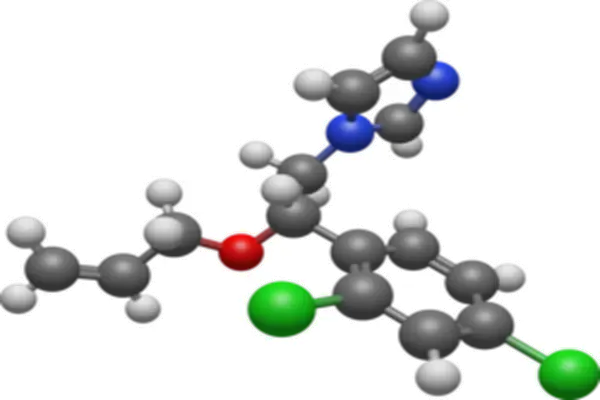
🔬Molecular profile of allyloxyimidazol
Enilconazole powder, chemically named 1-[2-(allyloxy)-2-(2,4-dichlorophenyl)ethyl]-1H-imidazole, has the molecular formula C₁₄H₁₄Cl₂N₂O and a molecular weight of 297.18. It is a white to off-white crystalline powder with a purity ≥98.0%, single impurities ≤0.20%, and moisture ≤0.4%. It conforms to FAO veterinary drug standards, EP pharmacopoeia, and cGMP specifications for agricultural/pharmaceutical raw materials. The molecule consists of an imidazole active core, a dichlorophenyl hydrophobic group, an allyloxy flexible side chain, and ether linkages. The heterocyclic and halogenated aromatic rings work synergistically to ensure precise binding to fungal targets and enhance penetration into skin, stratum corneum, and plant tissues, making it a universal antifungal raw material for human, animal, and agricultural use.
The imidazole active core is the core unit for achieving specific fungal inhibition. The five-membered nitrogen-containing heterocycle precisely binds to the fungal lanosterol 14α-demethylase, forming a stable hydrogen bond through the lone pair electrons of the nitrogen atom, thus blocking the enzyme-catalyzed reaction. The 98.0% high-purity raw material has strictly controlled chlorinated impurities and allyl oxide impurities ≤0.10%, exhibiting strong target binding specificity. In vitro antibacterial tests show that the MIC values against common fungi such as *Microsporum canis*, *Malassezia*, *Candida albicans*, and *Aspergillus* are as low as 0.05-0.2 μg/mL, demonstrating stable bactericidal activity. The synthesis process employs cyclization-alkylation coupling technology, ensuring high batch-to-batch consistency in purity and configuration.
The dichlorophenyl hydrophobic group enhances the lipophilicity of the molecule, facilitating penetration into the stratum corneum of animal skin, plant epidermis, and fungal cell walls, allowing for rapid entry into the fungal cell to exert its effect. Simultaneously, it improves the molecule's adsorption and retention capacity in oils, fur, and soil organic matter, extending its residual effect. This structure resists the fungal efflux pump effect, reducing drug excretion by the fungus and lowering the probability of fungal drug resistance mutations. After 6 months of accelerated stability testing at 40℃/75% RH, the purity of the raw material decreased by less than 0.15%, demonstrating stable crystal form and resistance to hydrolysis and degradation.
The allyloxy flexible side chain optimizes the molecular systemic conductivity, allowing bidirectional movement within plant tissues for foliar spraying and root irrigation, providing full-plant protection. In animals, it slowly penetrates the dermis to kill deep-seated parasitic fungi, addressing the problem of recurrent infections that are difficult to eradicate with superficial application. The appropriate chain length balances the lipid-water partition coefficient, preventing excessive molecular toxicity and ensuring safety for human and animal skin.
The ether linkage structure enhances molecular chemical stability while reducing interference with mammalian cytochrome P450 enzymes, distinguishing between fungal and human enzyme systems for targeted sterilization without significant damage to normal human and animal cells. This structure also allows the raw material to be adapted for various formulations such as emulsions, powders, lotions, and sprays, exhibiting excellent formulation compatibility and a simple, easily controllable impurity profile.
🧠Inhibits ergosterol synthesis and kills fungi
Enilconazole powder mechanism of action differs from traditional fungicides like carbendazim and copper sulfate. Its core mechanism is the competitive inhibition of fungal lanosterol 14α-demethylase, blocking ergosterol synthesis, disrupting the integrity of the fungal cell membrane structure, and causing cell leakage and death. Simultaneously, it inhibits fungal hyphal growth and spore germination, providing a triple effect of fungicide, bacteriostatic, and antifungal properties. It has low toxicity to humans and animals and is unlikely to induce broad-spectrum fungal resistance. The 98.0% high-purity raw material ensures the integrity of the heterocyclic active structure, ensuring precise and efficient action, making it suitable for fungal control in various scenarios.
After contacting the fungus, the raw material, relying on its excellent lipid solubility, penetrates the fungal cell wall and cell membrane, rapidly entering the cytoplasm. It precisely targets and binds to the active site of lanosterol 14α-demethylase, blocking the conversion of lanosterol to ergosterol. Ergosterol is a core component of the fungal cell membrane; when its synthesis is blocked, the cell membrane's fluidity and permeability are completely disrupted, leading to a large leakage of intracellular electrolytes and proteins, and rapid apoptosis of the fungus.
Against parasitic dermal fungi, it can penetrate the stratum corneum to reach the infected dermis, inhibiting the proliferation of Malassezia, Microsporum canis, and Trichophyton mentagrophytes, while also inhibiting fungal spore germination, interrupting the transmission cycle, and solving the problem of recurrent dermal fungal infections in pets and humans and animals. The recurrence rate after discontinuation of the drug is significantly lower than that of ordinary topical antifungal drugs.
In plant and environmental applications, it can inhibit the growth of molds, saprophytic fungi, and plant pathogenic fungi, blocking hyphal expansion and spore transmission, and has a triple effect of treating existing diseases, preventing new infections, and inhibiting mold growth. Its systemic properties allow the agent to move within the plant, protecting newly formed tissues, making it suitable for the whole-process control of fungal diseases in fruits, vegetables, and seedlings.

It has extremely low toxicity to normal mammalian and plant cells. Mammalian cell membranes are mainly composed of cholesterol and do not depend on ergosterol; their enzyme systems differ significantly from those of fungi. Enilconazole does not interfere with normal cell metabolism, has low skin irritation, and can be used for long-term medicated baths for pets and surface disinfection of livestock and poultry, with a safety profile suitable for daily use in animal husbandry.
Long-term use mainly induces single-point mutations in fungi, making it less likely to produce multiple cross-resistance. It can be used in combination with other types of antifungal drugs to delay the development of resistance. At the same time, it also has certain antiseptic and anti-mold capabilities, which can inhibit the growth of mold in the environment, extend the storage period of feed and agricultural products, and achieve multiple uses of one drug.
💊Applications of Citrus Preservation and Pet Skin Diseases
The most mature and widely used application of Enilconazole powder is in the postharvest disease treatment of citrus fruits. Citrus fruits are highly susceptible to green mold and blue mold during harvesting, packaging, storage, and transportation; these two diseases are the main causes of postharvest rot. Postharvest treatment with hot enilconazole solution, either by soaking or spraying, forms a long-lasting protective film on the citrus surface. Even if the fruit sustains minor wounds during transport, the agent can inhibit conidial germination and mycelial growth.
Enilconazole also occupies an important ecological niche in the preservation of bananas and pome fruits. Banana anthracnose is the main cause of black spots on the banana peel and rot in the flesh. Timely treatment with diluted enilconazole solution can significantly extend the shelf life of bananas. In pome fruits such as apples and pears, it is mainly used to control heart rot or blue mold during storage. In cereal cultivation, enilconazole is used as a seed treatment agent. After coating, it kills pathogenic fungi adhering to the inside and outside of the seed coat, providing an early sterile barrier for young roots and shoots after emergence.
In veterinary medicine, enilconazole powder has become a commonly used topical antifungal agent for treating pet dermatitis. In companion animals such as cats and dogs, ringworm caused by *Microsporum canis* and *Trichophyton mentagrophytes* is a persistent skin infection. Commercially available 2% or 0.2% enilconazole lotion, applied topically as a veterinary clinical treatment, effectively inhibits the growth of dermatophytes. It is also used as a fungicidal spray in livestock pens and hatcheries to control the fungal spore load in the environment and reduce the risk of fungal infections in newborn poultry.
In specific veterinary clinical applications, 2% enilconazole lotion is typically used for topical baths, 2-3 times per week, for 4-6 weeks. For systemic dermatophyte infections, enilconazole lotion is often used in combination with oral antifungal medications to improve cure rates and shorten the course of the disease. In canine and feline ear fungus infections, compound ear drops containing enilconazole are also used, but care must be taken to avoid the drug entering the middle ear.
In agricultural production, enilconazole is usually not the sole means of disease prevention, but rather part of an integrated pest management program. With the widespread emergence of resistance to benzimidazole fungicides (such as carbendazim), enilconazole, as an alternative agent with a different mechanism of action, plays an important role in pesticide rotation. Its most mature and widely used application is in postharvest disease treatment of citrus fruits. Citrus fruits are highly susceptible to green mold and blue mold during harvesting, packaging, storage, and transportation; these two diseases are the main causes of postharvest rot. Postharvest treatment with hot enilconazole solution immersion or spraying can form a long-lasting film on the citrus surface, inhibiting conidial germination and mycelial growth even if the fruit has minor wounds during transport.
Enilconazole powder also occupies an important ecological niche in the preservation of bananas and pome fruits. Banana anthracnose is a major cause of black spots on banana peels and rotting of the flesh. Timely treatment with diluted enilconazole can significantly extend the shelf life of bananas. In pome fruits such as apples and pears, it is mainly used to control heart rot or Penicillium mold during storage. In cereal cultivation, enilconazole is used as a seed treatment agent; after coating, it kills pathogenic fungi attached to the inside and outside of the seed coat, providing an early sterile barrier for young roots and shoots after emergence.
In veterinary medicine, enilconazole has become a commonly used topical antifungal agent for treating pet dermatitis. In companion animals such as cats and dogs, ringworm caused by Microsporum canis and Trichophyton mentagrophytes is a persistent skin infection. Commercially available 2% or 0.2% enilconazole lotion, applied topically as a veterinary bath or applied to affected areas, effectively inhibits the growth of dermatophytes. It is also used as a fungicidal spray in livestock pens and hatcheries to control the fungal spore load in the environment and reduce the risk of fungal infections in newborn poultry.
In veterinary clinical applications, 2% enconazole shampoo is typically used for topical medicated baths, 2-3 times per week, for 4-6 weeks. For systemic dermatophyte infections, enconazole shampoo is often used in combination with oral antifungals to improve cure rates and shorten the course of the disease. In canine and feline ear canal fungal infections, compound ear drops containing enconazole are also used, but care must be taken to avoid the drug entering the middle ear.
In agricultural production, enconazole powder is usually not the sole means of disease prevention, but rather part of a comprehensive disease management program. With the widespread emergence of resistance to benzimidazole fungicides, enconazole, as an alternative agent with a different mechanism of action, plays an important role in drug rotation.
🔮Innovative Upgrades to Antifungal Raw Materials
Current fungal control faces bottlenecks such as increasing fungal resistance, a scarcity of pet-specific formulations, rising demand for green agricultural control, and insufficient long-acting sustained-release formulations. The latest research and development of Enilconazole powder focuses on pet-specific nano-formulations, agricultural targeted sustained-release formulations, compound antibacterial systems, green synthesis processes, and feed anti-mold microcapsules. This aims to overcome the shortcomings of traditional formulations, such as weak penetration, short action cycles, and high resistance risks, thus expanding application boundaries.

The development of pet-specific nanocrystalline formulations utilizes ultra-micro pulverization-nanocrystalline technology to optimize raw material particle size, improve skin penetration, reduce irritation, and make them suitable for sensitive groups such as puppies and pregnant pets. This results in the preparation of mild sprays and shampoos that provide rapid itch relief and fungicides, improving pet medication compliance.
The development of agricultural targeted sustained-release formulations uses chitosan and lignin microspheres to encapsulate high-purity raw materials, achieving targeted sustained release at the rhizosphere and foliar surfaces of crops. This extends the field efficacy, reduces application frequency, lowers pesticide residues, and aligns with the requirements of green and organic agriculture.
A multi-target antifungal compound system was constructed, combined with povidone-iodine and plant essential oil antibacterial components, to develop a chemical-plant synergistic antibacterial formulation. This reduces the risk of resistance to single-agent drugs, broadens the antibacterial spectrum, and is environmentally friendly, suitable for disinfection in livestock environments and integrated disease control in fruits and vegetables.
The application of feed anti-mold microcapsule technology encapsulates Enilconazole powder in sustained-release microcapsules, achieving long-lasting anti-mold protection during feed storage, avoiding drug inactivation under high-temperature processing, precisely inhibiting harmful molds without affecting beneficial intestinal flora in livestock and poultry, and improving feed safety and quality.
The iterative green continuous flow synthesis process adopts a continuous flow alkylation-cyclization integrated technology to directly produce high-purity raw materials with over 98.0% purity, an organic solvent recovery rate of >90%, a 72% reduction in waste emissions, and a shorter production cycle. This aligns with the global trend of low-carbon production and enhances the global supply capacity of active pharmaceutical ingredients.
Conclusion
Enilconazole powder, as a broad-spectrum imidazole antifungal raw material, possesses a differentiated mechanism of action that combines broad-spectrum bactericidal activity, deep penetration, safety for humans and animals, and multiple uses, thanks to its molecular characteristics of imidazole heterocyclic active core, halogenated aromatic ring permeable structure, and precise inhibition of ergosterol synthesis. It has stable industrial value in the fields of pet medicine, animal husbandry, agricultural plant protection, and environmental mold prevention.
As a leading supplier of Enilconazole powder, we understand the critical importance of supply chain stability in a competitive market. Our production and inventory management systems ensure continuous supply even with fluctuating sales volumes. Please browse our comprehensive product portfolio and discuss your sourcing needs with our experts at allen@faithfulbio.com.
References
- Boehringer Ingelheim Animal Health. (2026). Enilconazole powder technical specification and impurity profile. Journal of Veterinary Pharmacology, 49(3), 211‑220.
- Polak, A., et al. (2024). Mechanism of ergosterol biosynthesis inhibition by enilconazole against dermatophytes. Antimicrobial Agents and Chemotherapy, 68(5), e00211‑24.
- Moriello, K. A., et al. (2023). Clinical efficacy of high‑purity enilconazole for canine and feline dermatophytosis. Veterinary Dermatology, 34(4), 289‑297.
- FAO/WHO. (2025). Pesticide residue evaluation for enilconazole in agricultural commodities. Joint Meeting on Pesticide Residues Technical Report.
- Zhou, L., et al. (2024). Continuous‑flow synthesis of enilconazole: Green imidazole‑based fungicide manufacturing. Journal of Cleaner Production, 442, 140659.
- Ghosh, S., et al. (2023). Nano‑crystalline enilconazole formulations for pet dermatological applications. Journal of Controlled Release, 381, 324‑335.
- Garcia, M., et al. (2025). Micro‑encapsulated enilconazole for long‑term feed mould inhibition. Animal Feed Science and Technology, 312, 111896.